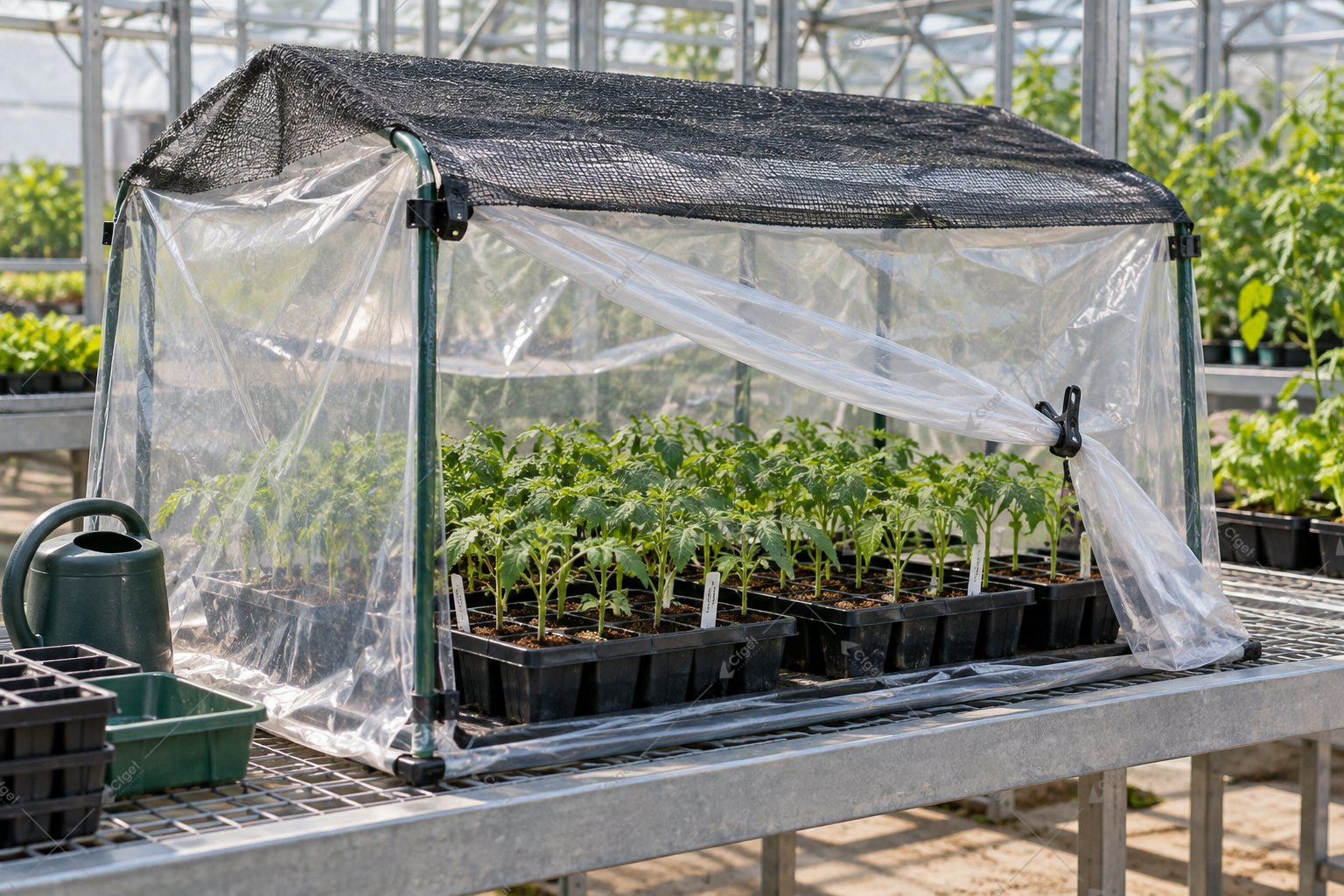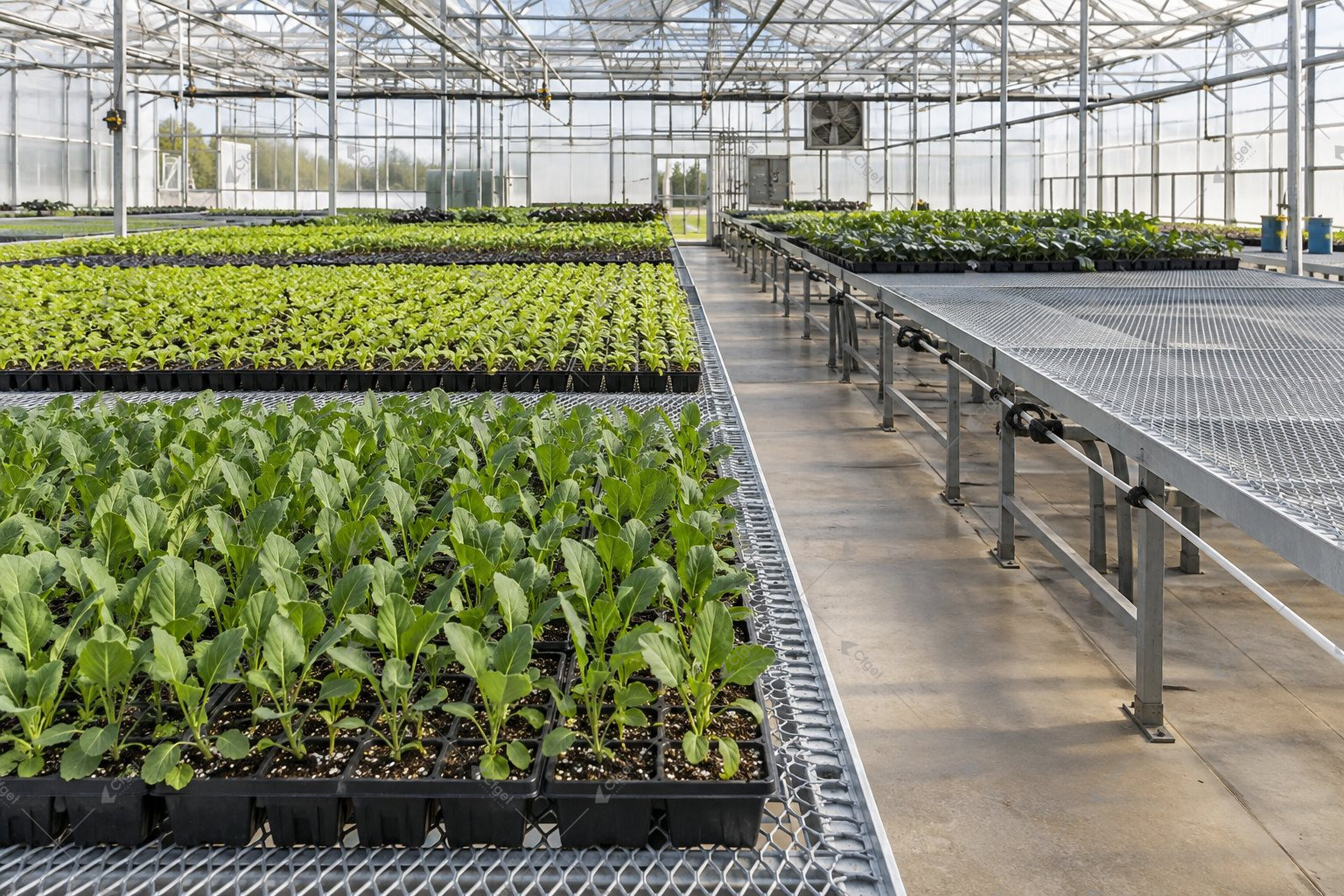
A greenhouse can be cleaned and ready, then receive its next pest problem on a trolley of transplants. Equally, a transport-stressed but recoverable batch can be rejected because nobody recorded its condition when it arrived. A receiving inspection protects both the crop and the discussion with the nursery.
Inspect plants before distributing them among production rows. Keep each lot identifiable, photograph relevant defects, and make an explicit decision: accept, hold separately for clarification, or escalate a problem to the supplier. A quick glance at the top tray cannot establish the condition of an entire delivery.
Agree on the receiving conditions before dispatch
The purchase order should identify cultivar, rootstock where applicable, tray format, quantity, expected developmental stage and delivery window. Ask for the recent crop-protection history, because incoming residues can matter to a planned biological-control program. Legal plant-health documents depend on origin and destination; confirm them with the responsible authority rather than assuming a supplier invoice is sufficient.
Also agree on a practical discrepancy process: who is contacted, what photographs and counts are needed, where questionable plants can be held, and how quickly a decision is expected. A delivery driver should not have to invent the farm’s acceptance policy.
Sample across the load, then follow suspicious patterns
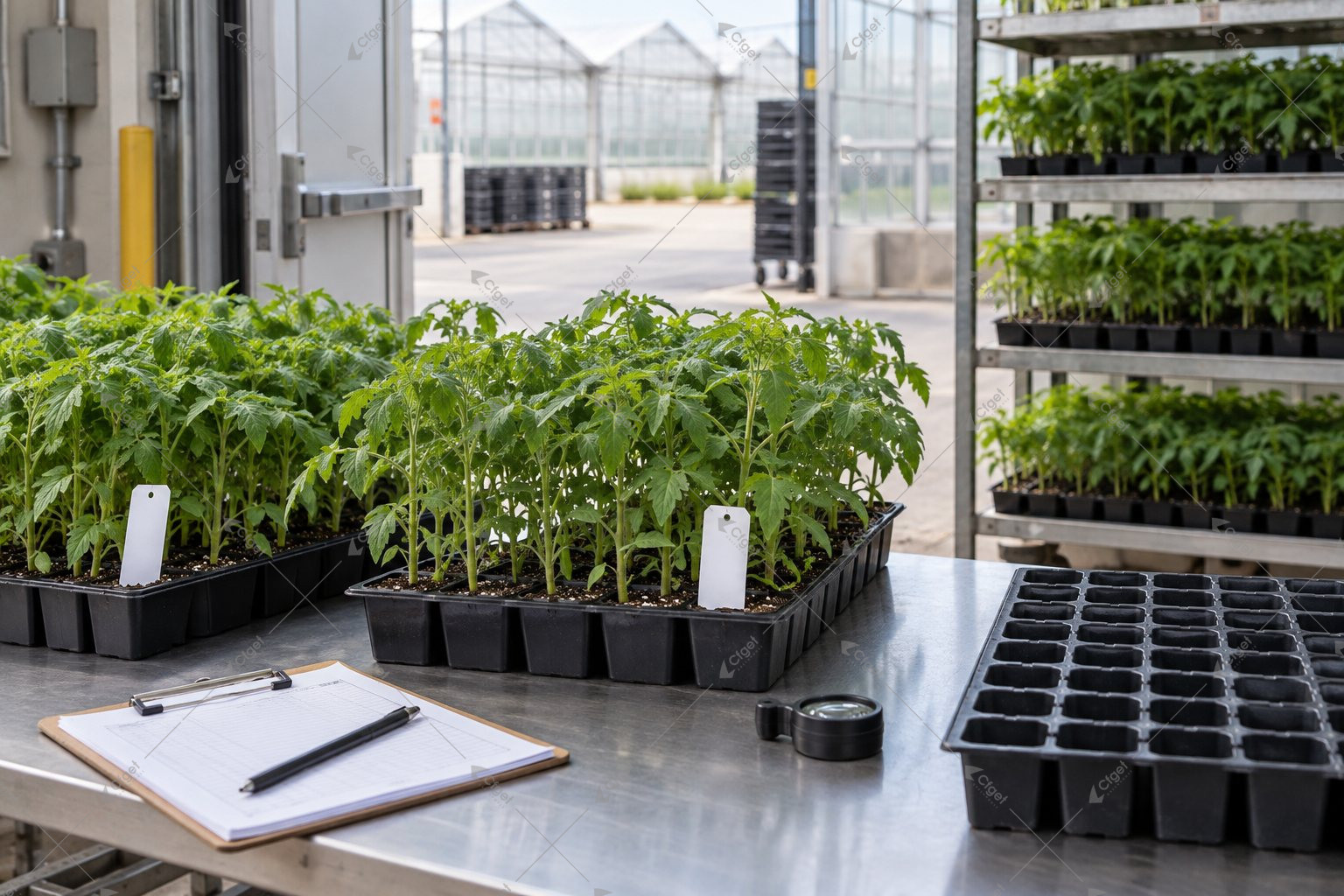
Choose trays from different trolley levels and positions, and from every separately identified lot. Record how many trays and plants were inspected. Expand inspection when damage or pests appear clustered; a sample is a screening tool, not proof that unexamined plants are clean.
UMass greenhouse scouting guidance emphasizes inspecting incoming plants and examining plant tissues directly. Sticky cards cannot replace that inspection, particularly for nonflying stages. Use a hand lens on leaf undersides, growing points and suspicious material, and obtain a diagnosis when identification is uncertain.
| Inspect | Record | Possible receiving decision |
|---|---|---|
| Labels and paperwork | Lot, cultivar, rootstock, quantity and mismatches | Hold unidentified trays rather than mixing them into labeled rows |
| Shoots and growing points | Breakage, uneven development, wilting and where it occurs | Document a pattern before deciding whether it is transport damage |
| Root plugs from selected trays | Moisture, plug integrity and unusual root appearance or odor | Request diagnostic advice for suspect roots; appearance alone is not a pathogen test |
| Grafted plants | Union damage, clip condition and shoots below the union | Separate plants needing closer assessment |
| Pests, lesions or unusual residue | Photos, location and affected sample count | Keep the lot apart until the crop-protection lead decides |
A holding area needs an owner
Putting suspect trays beside the main crop and calling them quarantined provides little separation. Plan a designated area, separate handling tools where needed, runoff management and a route that does not send questionable plants through established crops. The suitable arrangement depends on the suspected problem and the farm’s layout; seek local plant-health advice for regulated pests.
Plants on hold still need suitable light, temperature and irrigation. Assign a person and a next-review time. Record any treatment or watering after arrival so that the original delivery condition is not confused with later handling. Do not apply a pesticide merely to make the delivery appear clean; use an identified problem, the approved crop label and the farm’s control plan.
Release plants with their records intact
When a lot is accepted, map it to the rows or bays where it goes. Retain the receiving photographs and count discrepancies. If symptoms emerge later, that map allows comparison with other lots and supplier records instead of blaming the entire greenhouse environment.
Before your next delivery, prepare a one-page receiving sheet and walk the unloading route with an empty trolley. Check that there is room to inspect, hold and turn without blocking normal work. The guide to collapsing seedlings helps separate a symptom from a diagnosis; the nursery capacity guide helps reserve holding space. For a new CFGET nursery layout, include receiving and temporary holding in the design brief, not only the growing benches.