If a prospective buyer asks for GLOBALG.A.P. certification, first identify the business that would hold the certificate and the people who would maintain the supporting work. An individual route and a producer-group route place that work within different organizational arrangements.
Start with the buyer’s actual requirement for the intended crop and supply route. Then discuss your business structure with a certification body. Choosing a group because an audit appears cheaper leaves the more important question unanswered: can the shared system support your farm’s continuing responsibilities?
Several greenhouse sites do not automatically make a producer group
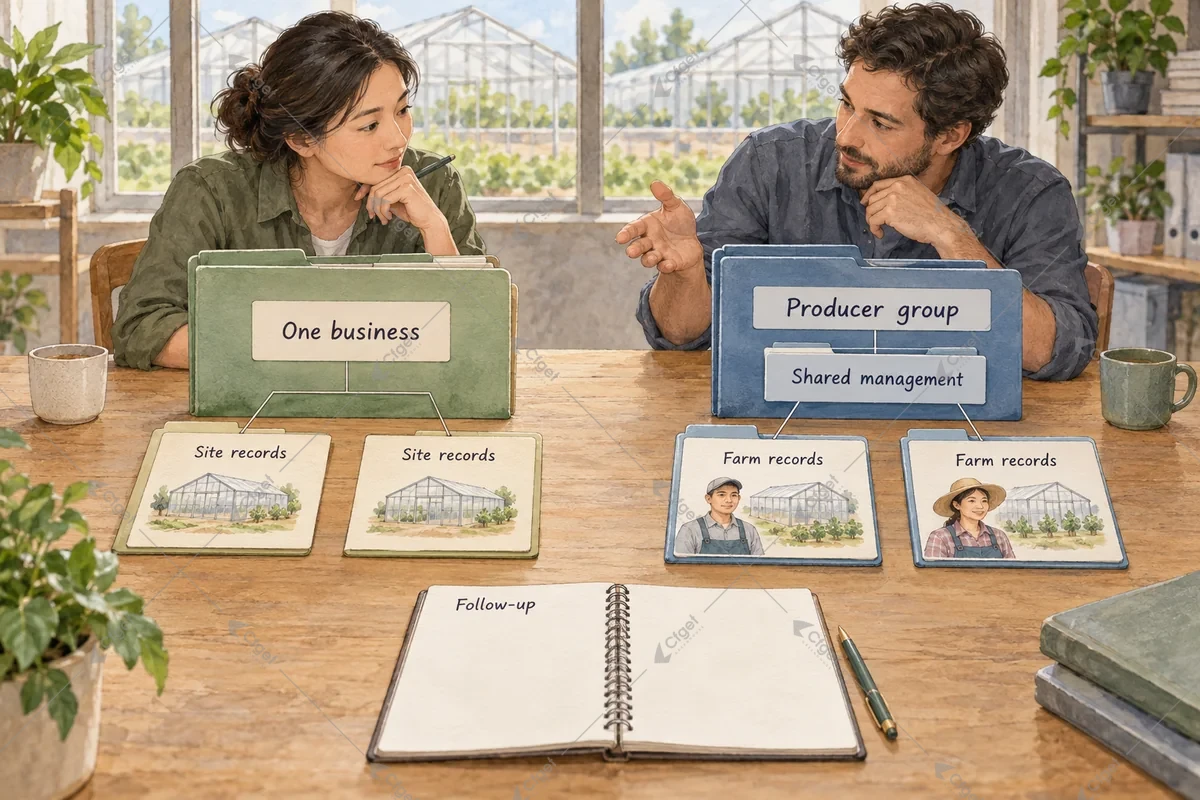
The official GLOBALG.A.P. producer FAQ distinguishes two routes. Under Option 1, an individual producer can operate one site or several sites that are not separate legal entities. The producer becomes the certificate holder once certified. An organization operating multiple sites with a quality management system can also remain an individual applicant.
Under Option 2, the producer group’s legal entity holds the certificate once certified, and the group must implement a quality management system, or QMS. In plain language, this is the organized set of procedures, records, checks and follow-up that supports consistent work across the participating farms.
For a hypothetical company operating several greenhouse locations, counting the buildings does not settle the route. For separate growers considering a shared programme, using a common trading name does not describe who will run the group. Show the actual entities, sites and management arrangement to the certification body rather than choosing by the number of farms alone.
The scheme’s QMS rules, version 6.0 of August 2024, provide a concrete illustration of that work: maintaining member and site information, carrying out internal checks, keeping findings and following corrective actions. The organizational question is who can sustain those functions in the proposed arrangement.
Ask a prospective group to explain how a farm’s information becomes part of its shared records and how changes are communicated. Who keeps the included sites and products accurate? Who coordinates the internal checks? When a problem is identified, who tells the farm what needs attention and follows the evidence that it was addressed?
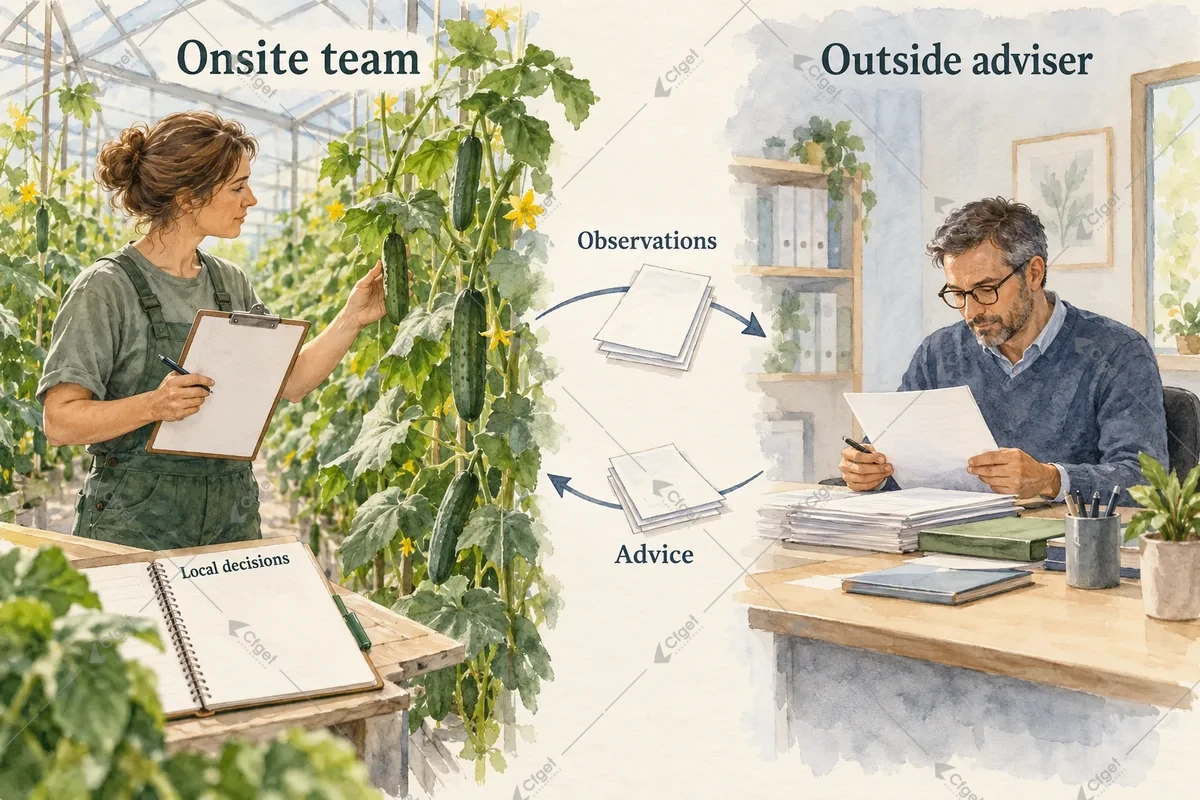
Obtain an equally clear explanation of what remains with your greenhouse team. Joining a group does not make local observations, records or corrective work happen automatically. The farm needs to know what it must provide and who can answer questions when the ordinary contact is unavailable.
Consider a hypothetical group offer that explains the external audit booking but leaves nobody responsible for updating member information or following unresolved findings. The offer has not yet explained how the shared management will operate. Resolve those responsibilities before relying on the group route in a buyer commitment.
Compare arrangements your team could actually operate
For an individual route, identify who within your business will maintain the necessary management and evidence, including coordination across sites where relevant. External help may support that work, but the proposal should still make your own business’s role clear.
For a group route, examine the real group’s management capacity and the work expected from each participating farm. Ask for a concise description of the proposed certificate holder, included farms and products, shared responsibilities and farm-level tasks. Discuss the actual charges only alongside that defined service and workload, rather than assuming the group label establishes a saving.
Confirm with the buyer that the proposed scope and arrangement answer its requirement, and with the certification body that the route fits the actual structure. A promising customer conversation does not itself establish acceptance or certification.
Where export herbs are the intended market, the Kenya basil export-planning overview gives the wider production and delivery context. The choice here remains narrower: who holds the certificate and who maintains the continuing management work?
Choose the route whose responsibilities your business and any proposed group can explain and support. If the holder or shared work remains unclear, settle that organizational gap before building the sales plan around it.