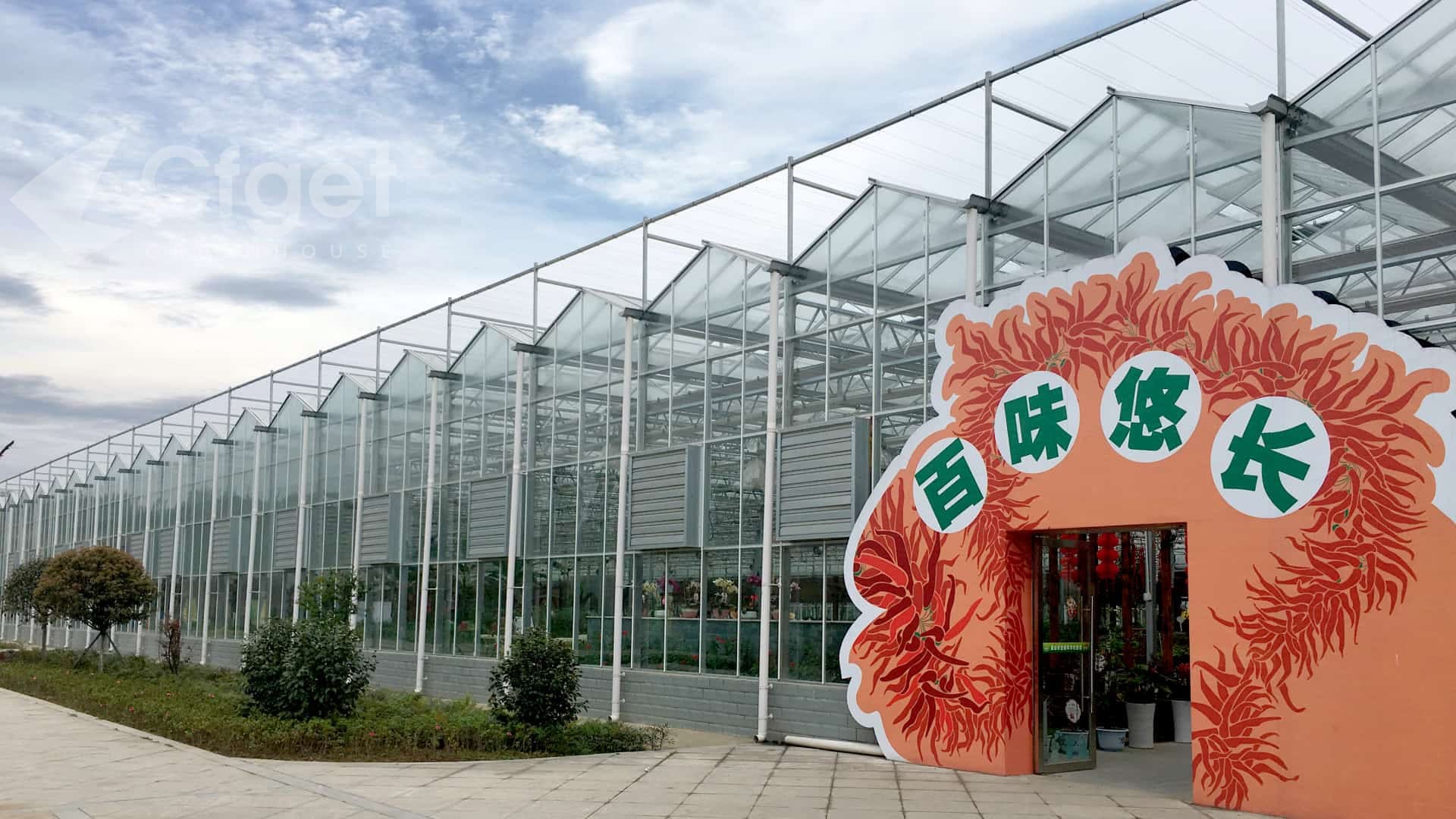
Define the production brief before choosing a hydroponic method
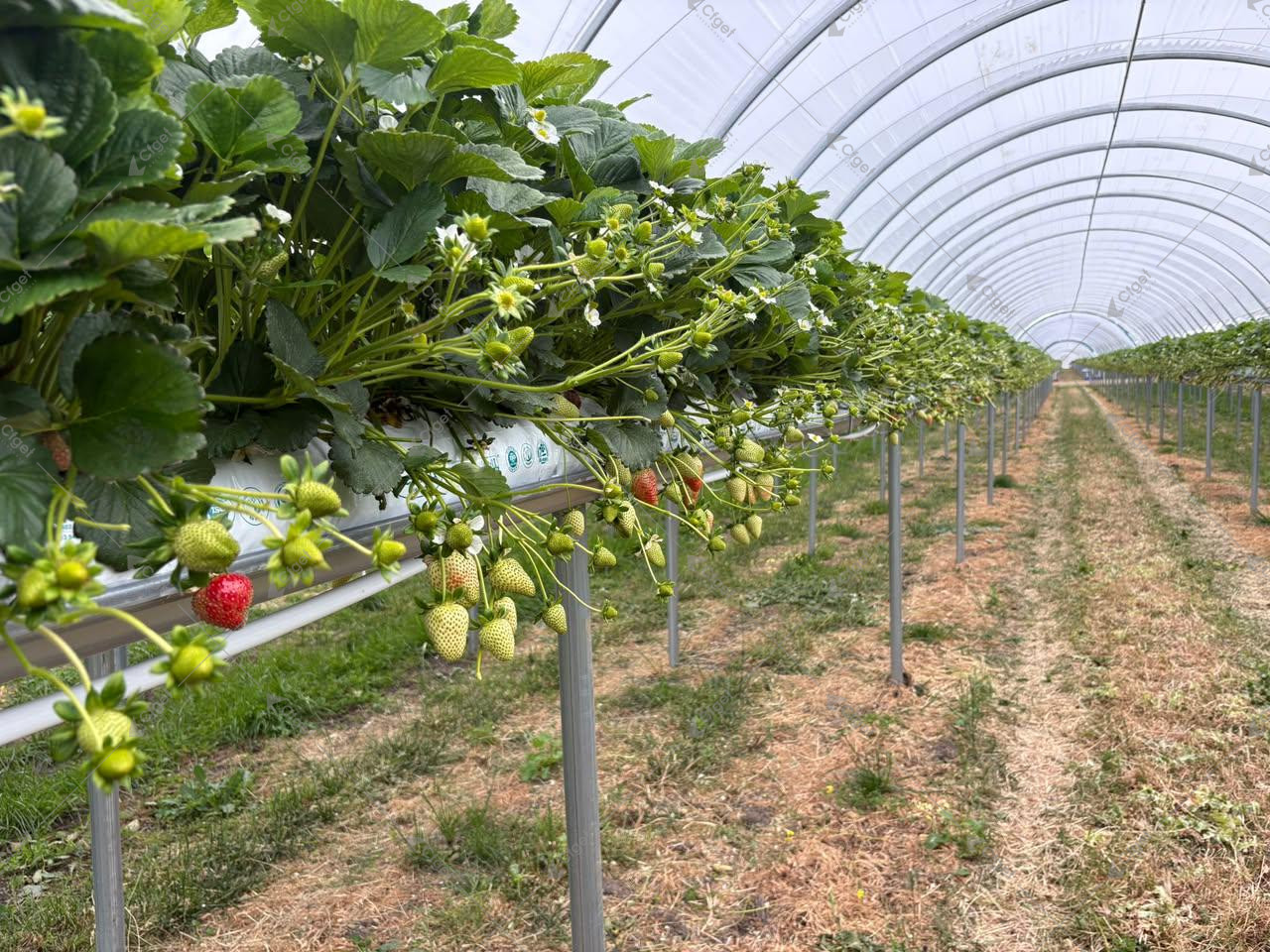
Start with crop, cultivar type, market specification, planting density, crop cycle, target production months and usable growing area. Add labor skill, sanitation level, allowable downtime and expansion plan. A lettuce facility, vine-crop house and propagation nursery place different demands on channels, substrate, drainage, climate and material flow.
The design should separate gross covered area from net crop area. Allocate space for tanks, dosing, filtration, disinfection, pumps, electrical panels, packing, hygiene, storage and safe maintenance. If those rooms appear only after the crop layout is priced, the project will either lose growing area or push critical equipment into unsuitable spaces.
Select the root-zone system by failure mode
| System family | Useful design question | Failure or operating boundary |
|---|---|---|
| Nutrient film or shallow channels | Does the crop and layout suit a thin recirculating flow? | Pump interruption, channel level, root blockage, temperature and sanitation |
| Deep-flow or raft systems | Can the project manage solution volume, aeration and hygiene? | Oxygen loss, water temperature, contamination spread and tank access |
| Substrate drip | How will shot size, drain fraction and media moisture be controlled? | Emitter variation, drain collection, salt balance and media disposal |
| Non-recirculating arrangements | Is water discharge acceptable and measurable? | Water and nutrient use, drainage treatment and local compliance |
The choice is not a ranking of acronyms. It is a match between crop roots, hydraulic response, operating skill and acceptable failure duration. The separate CFGET NFT, DFT, DWC and drip comparison explains method differences. This page focuses on integrating the selected method into a commercial greenhouse project.
Use a water balance, not a tank-size guess
Obtain a laboratory water analysis before selecting treatment and fertilizer equipment. Include pH, electrical conductivity, alkalinity, major ions, sodium, chloride, bicarbonate, iron and source-specific microbiological indicators. UF/IFAS fertigation guidance identifies water analysis as an important step and lists chemical measures that can affect treatment and emitter clogging.
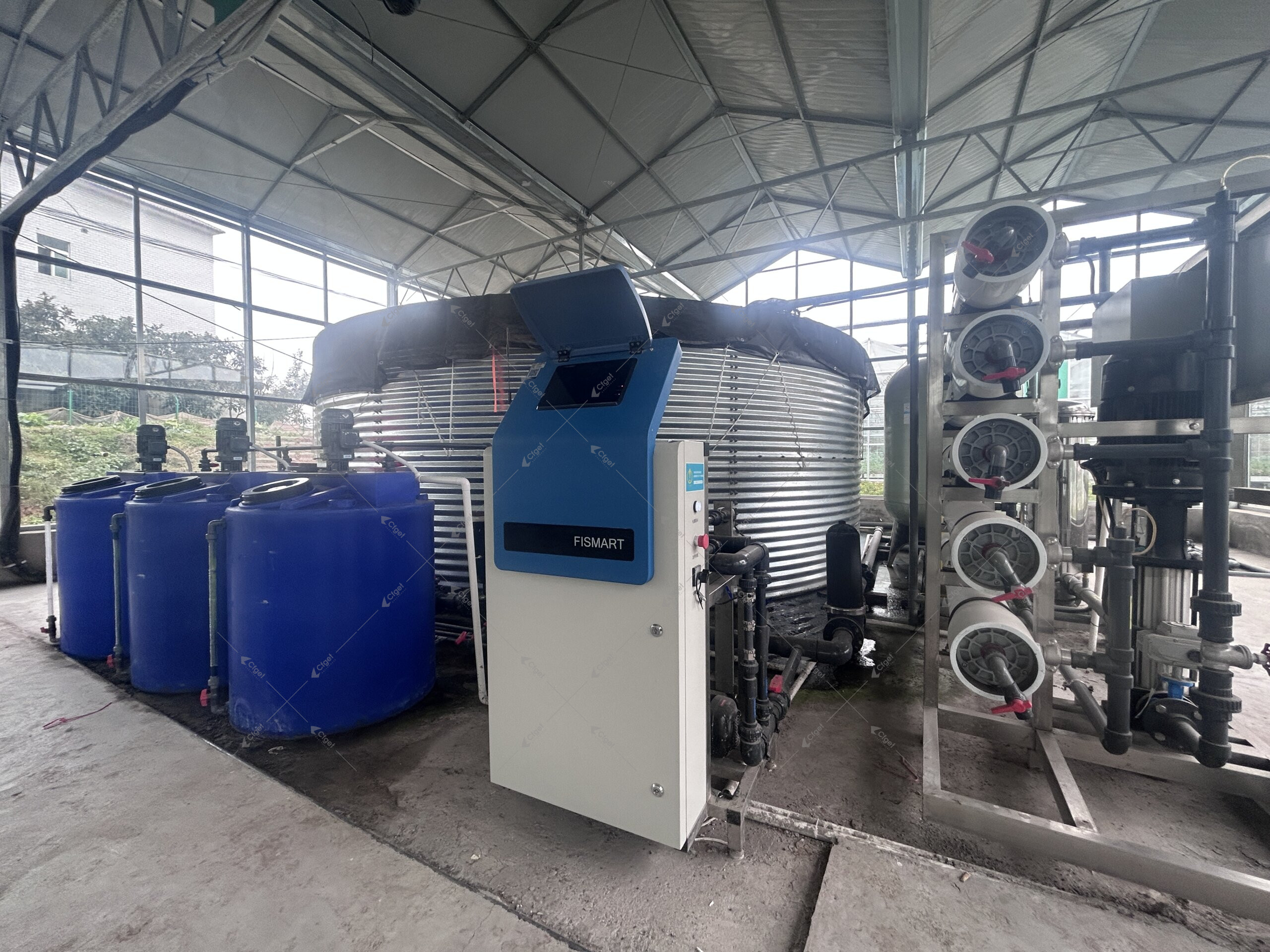
Map incoming water, storage, blending, dosing, irrigation, crop uptake, drain collection, disinfection, reuse, concentrate and discharge. Size peak flow by irrigation zone and show which demands can overlap. The design must also state how operators verify stock concentration, dosing response, sensor calibration and nutrient solution temperature.
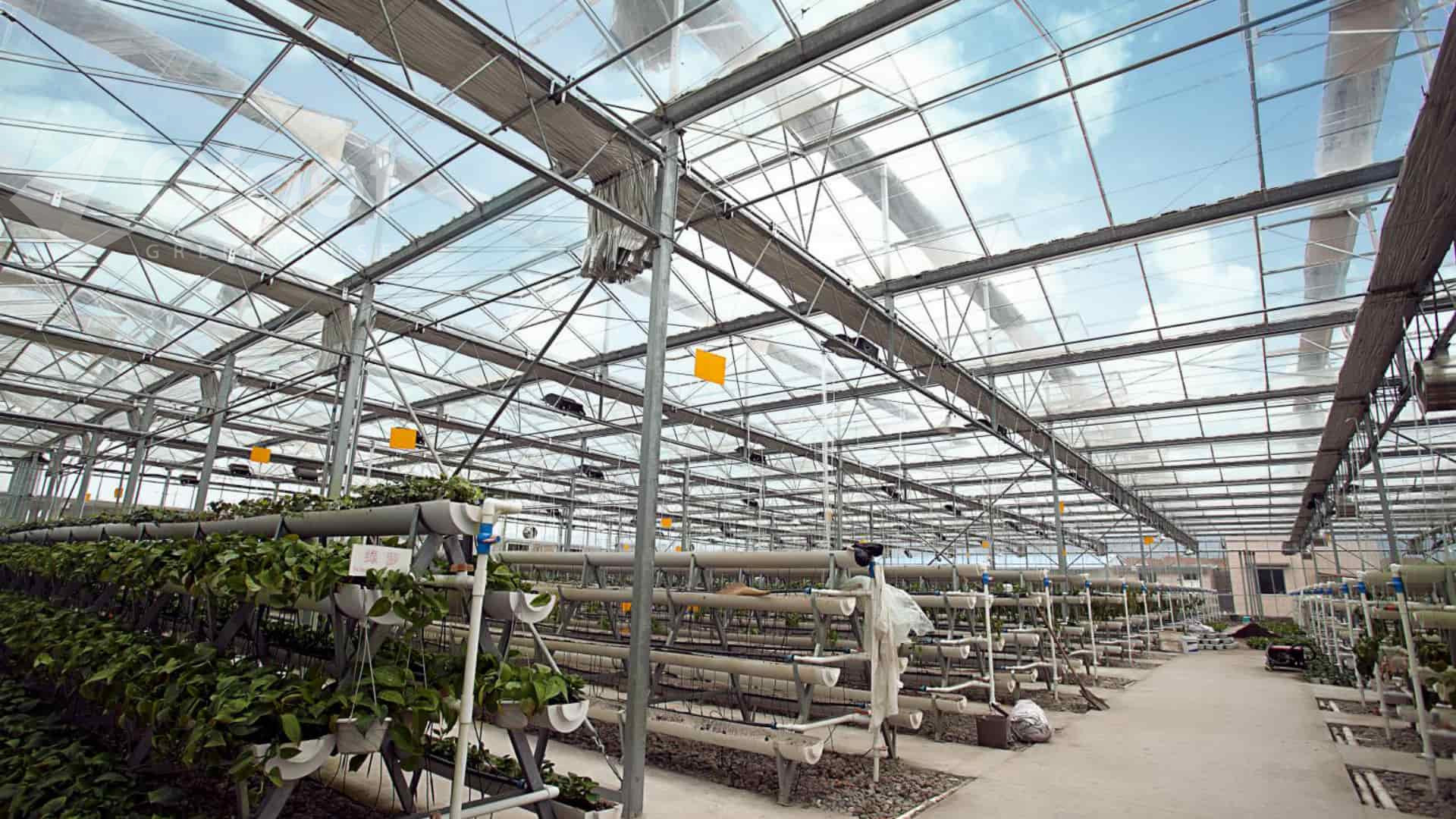
Make climate capacity part of the crop-system design
Root-zone performance cannot compensate for an envelope or climate system that misses the crop boundary. Give bidders coordinates, hourly weather, day and night crop limits, humidity boundary, light target and production calendar. Request peak and part-load calculations for ventilation, cooling, heating, humidity control and circulation at named outside conditions.
Show sensor locations and control stages. Define safe positions for vents, pumps, valves, screens and dosing when communications or power fail. Alarms need an owner, escalation route and action window. A control dashboard is useful only if the hardware, logic and operating procedure agree.
List every utility and control interface
Prepare an electrical load list that separates continuous, intermittent and emergency loads. Include pumps, dosing, disinfection, ventilation, cooling, heating, lighting, controls, communications and service equipment. The incoming supply, panels, cable routes, grounding, protection and backup system must match local rules and the site’s available capacity. Identify which crop functions cannot tolerate a normal restart delay.
Controls need an input and output schedule, not only a screen image. The schedule should name each sensor, its range, location, calibration method and failed-signal action. It should also identify controlled devices, interlocks, manual overrides, user permissions and data-retention needs. Ask who owns remote access, software licenses, passwords, backups and change approval after handover. If an internet connection is lost, local control and alarms should follow an agreed operating state rather than become undefined.
Design sanitation into the pipework and workflow
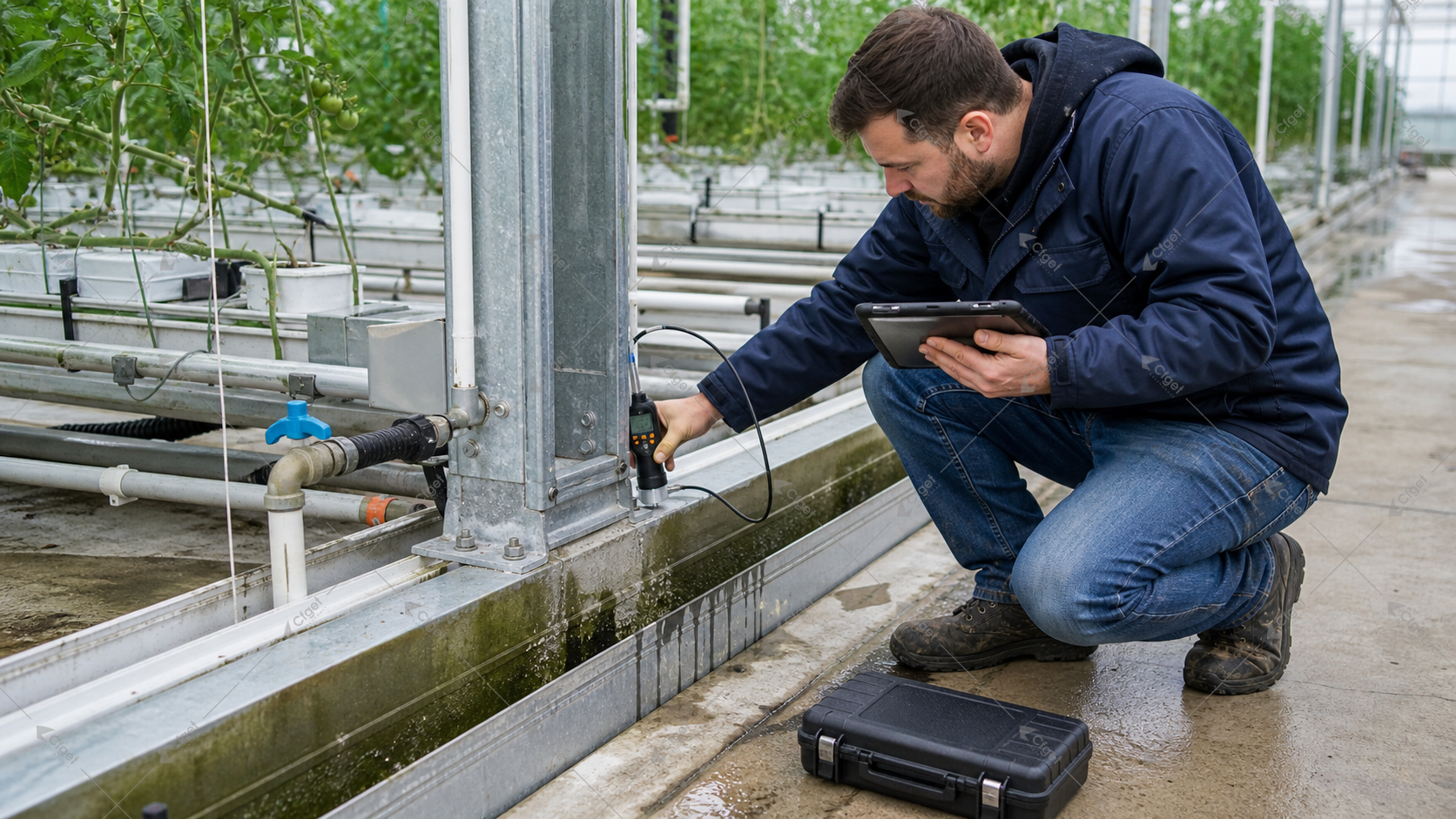
FAO’s hydroponics overview notes both resource-efficiency opportunities and the need for technical management. In a recirculating system, water can also move a problem through the crop quickly. The project therefore needs drainability, cleanable surfaces, isolation zones, sampling points and a documented response to contamination.
Separate clean and dirty movement where practical. Show how tanks, filters, channels, gutters and return lines are accessed and drained. Specify materials compatible with the intended cleaning agents and operating chemistry. The buyer should own the sanitation standard, while the supplier documents which components can meet it.
Commission the whole system under load
| Test | Record | Pass condition |
|---|---|---|
| Hydraulic distribution | Zone flow, pressure and emitter or channel variation | Agreed range at simultaneous design demand |
| Dosing response | Stock settings, sensor readings, laboratory or reference checks | Stable response within the buyer’s operating band |
| Drain and reuse | Collection flow, tank levels, overflow and discharge route | No unintended pooling, cross-connection or unrecorded discharge |
| Climate stages | Vent, fan, pad, heat, screen and alarm sequence | Correct actions and safe states at simulated thresholds |
| Failure recovery | Power, pump, sensor, communications and dosing faults | Alarm, safe response and documented restoration procedure |
Commissioning should produce an issue list, retest record, as-built drawings, settings backup, spare-parts list and operator training record. Seasonal systems may need a later test when outside conditions reach the design range. Define who returns, what is measured and what constitutes acceptance.
Build the financial case from explicit assumptions
Do not accept a universal return-on-investment percentage. Record installed scope, financing, crop cycles, graded output, selling price, labor, energy, water, nutrients, media, testing, sanitation, packaging, replacements and downtime. Separate the supplier quotation from the buyer’s market and operating assumptions.
Compare alternatives with base, downside and stress cases. A more automated option may reduce some manual tasks while increasing sensor, software and maintenance dependencies. A cheaper system may place more responsibility on the operating team. Those tradeoffs belong in the model rather than being hidden in one payback number.
Inputs for a commercial hydroponic greenhouse RFQ
- Site, weather file, structural criteria, survey, drainage and expansion plan.
- Crop, market grade, planting density, crop cycle and production calendar.
- Gross covered area, usable crop area, row or bench layout and service rooms.
- Water analysis, capacity, storage, discharge and treatment constraints.
- Selected or shortlisted root-zone methods with operating rationale.
- Temperature, humidity, light and root-zone boundaries.
- Electrical supply, backup power, fuel, network and utility tariffs.
- Hygiene zones, sanitation method, sampling and waste routes.
- Supplier, buyer and local-contractor responsibility matrix.
- Commissioning tests, pass criteria, training, documentation and service terms.
Related CFGET planning resources
Review the commercial irrigation system guide for water and zone inputs, the greenhouse ventilation system guide for airflow evidence, and the greenhouse construction process for delivery and responsibility stages.
Technical references
- FAO: hydroponics fundamentals, advantages and limits
- UF/IFAS Extension: water analysis and fertigation system integrity
- University of Minnesota Extension: hydroponic system operating principles
Planning a commercial hydroponic greenhouse? Send CFGET the site, crop brief, water analysis, climate limits, utilities and responsibility matrix. The proposal should show the integrated design basis, exclusions and commissioning evidence.