Polycarbonate and glass cannot be compared as two generic materials. A commercial greenhouse buyer must compare exact products and complete assemblies: panel or pane type, thickness, layers, coatings, light transmission, heat transfer, weight, framing, seals, fire data, impact exposure, maintenance, replacement and warranty. Glass often preserves high light transmission, while multiwall polycarbonate can reduce weight and heat loss. The project climate and crop decide which tradeoff matters.
Claims such as “glass lasts longer” or “polycarbonate insulates better” leave out the product grade and installed details. Single glass, insulated glass, diffuse horticultural glass, twin-wall polycarbonate and thicker multiwall panels have different optical and thermal properties. Profiles, fasteners, thermal movement, condensation paths and structure loads can change the result after the material reaches site.
Define the covering duty before choosing a product
Start with the crop and market, project location, production season, heating and cooling strategy, supplemental lighting plan, wind, snow, hail, fire requirements, cleaning method, water quality and expected project life. Decide whether the covering is for the roof, sidewalls, end walls or internal partitions. One material can be suitable for a wall and unsuitable for the roof.
| Project input | Question it answers | Required design record |
|---|---|---|
| Crop light duty | How much direct, diffuse and seasonal light is needed at the crop? | Target, greenhouse transmission basis and screen or lighting interaction |
| Climate duty | Which heating, cooling, condensation and snow conditions govern? | Weather source, inside setpoints and energy-model assumptions |
| External hazards | Are hail, debris, fire exposure or corrosive chemicals material risks? | Named test classes, thickness, protection and replacement plan |
| Service plan | How will the covering be cleaned, inspected and replaced? | Access, compatible products, spare strategy and downtime boundary |
Compare product data on the same basis
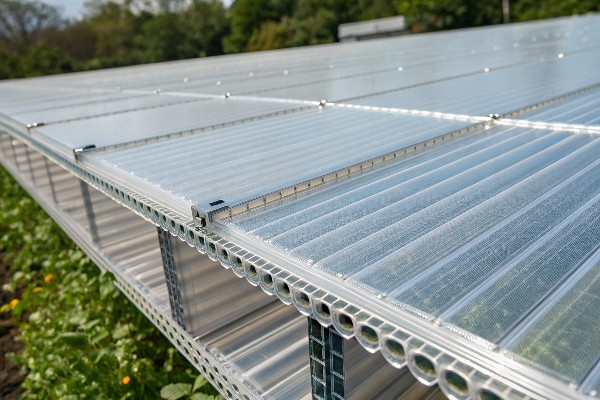
Ask for current manufacturer data for the exact offered item. Optical values should name the test method, sample thickness, coating and whether the value is initial or aged. Thermal values should identify the assembly and boundary conditions. Weight must be tied to pane or panel dimensions so the structural engineer can check purlins, glazing bars, connections and foundations.
| Property | Glass submittal | Polycarbonate submittal |
|---|---|---|
| Product identity | Glass type, thickness, tempering, laminate or coating | Resin, wall structure, thickness, UV side and color |
| Light | PAR or relevant transmission, haze or diffusion and coating data | Transmission, diffusion, UV protection and aging basis |
| Heat | U-value for single or insulated assembly and edge details | U-value for the stated multiwall panel and profile system |
| Strength | Pane dimensions, support, safety treatment and breakage basis | Support spacing, impact data, thermal movement and fastener limits |
| Fire | Applicable product and assembly classification | Applicable panel grade, thickness and assembly classification |
| Warranty | Covered properties, exclusions, cleaning and installation rules | Light or yellowing terms, exclusions, installation and orientation rules |
A 2026 Penn State technical review compared several greenhouse covering systems through optical and energy simulation. The study shows why covering choice is a balance among heat transfer, solar irradiance and interior lighting rather than one universal ranking. Its model results should not be copied into another climate without the same product and operating assumptions.
Model light and energy together
A covering with lower heat transfer can reduce heating demand, but lower crop-level light may increase supplemental lighting or change crop performance. High solar transmission can help in a cold, dark season and add cooling load in a hot, bright season. Condensation and dirt also change transmission. A useful comparison states the weather file, crop target, indoor setpoints, screen strategy, lighting system, ventilation and equipment efficiency.
University of California, Davis extension material lists light and heat-transfer properties for specific greenhouse covering products. The ranges differ by panel thickness and construction. That variation supports project-specific comparison, not a blanket claim that one covering wins every climate or crop.
Keep test results within their boundaries
If a supplier provides a percentage for light, energy or yield, ask for the exact product, test method, climate, structure and control conditions. Laboratory material data is not the same as whole-greenhouse performance. A case result from another farm is not a guarantee for a new project. Put every assumption beside the number in the comparison table.
Check structure, interfaces and replacement
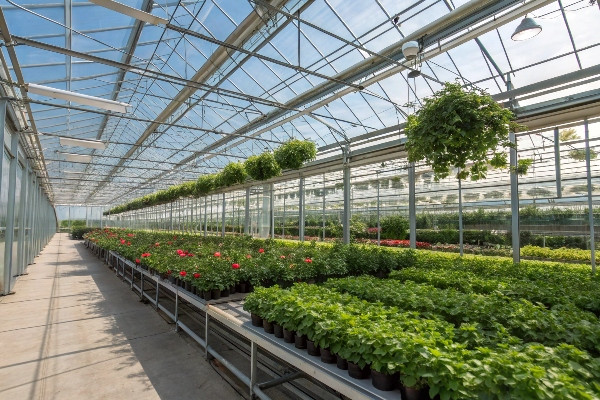
Glass weight and breakage behavior affect lifting, support, safety and replacement access. Polycarbonate is lighter, but it moves with temperature and needs compatible profiles, fastener clearances, sealed channels and the correct UV orientation. Both systems need water-shedding details at roof, gutter, ridge, vent, door, end wall and service penetrations.
Ask who designs each interface and who accepts it. The covering supplier, greenhouse fabricator and installer may each assume another party owns the flashing, seals or movement joint. Drawings should name the material, profile, gasket, fastener, spacing, tolerances and installation sequence. Photograph concealed interfaces before they are covered.
Replacement planning belongs in the initial cost comparison. Record expected access equipment, crop removal, weather protection, spare material, disposal and downtime. Do not use a warranty term as the service-life prediction. Warranty coverage, product life and the owner’s economic analysis are different documents.
Build a comparable life-cycle cost
Use the same project period, area, weather, crop and discount assumptions for both options. Separate material, framing, seals, installation, freight and commissioning. Add modeled heating, cooling and supplemental lighting, along with cleaning, inspections, repairs, replacement, insurance requirements, crop downtime and disposal. Mark estimates that still need local contractor input.
The Venlo greenhouse page shows a structure commonly associated with glass and rigid coverings. The multi-span greenhouse page shows another structure family. Use the commercial greenhouse overview to define the complete project before sending the covering comparison for quotation.
Commission the installed covering
Verify delivery labels, product identity, thickness, coating or UV orientation, profiles, fasteners, seals, support spacing and movement details. Inspect chips, cracks, scratches, crushed panel channels and contamination before installation. After installation, check alignment, visible defects, drainage, leaks under agreed conditions, condensate paths and contact with vents, screens or service equipment.
Handover should include product data, test reports, as-built drawings, cleaning instructions, compatible chemicals, repair methods, spare material, warranties and a defect-response route. Record a baseline inspection and photographs so later yellowing, seal failure, breakage or leakage can be compared with the accepted condition.
RFQ inputs for polycarbonate and glass
- Project location, greenhouse geometry, roof and wall zones, crop and production season
- Weather source, wind, snow, hail, temperature, humidity, fire and chemical exposure
- Exact glass type, thickness, treatment, coating, pane size and insulated assembly
- Exact polycarbonate resin, wall structure, thickness, color, UV side and profiles
- Optical, diffusion, thermal, impact and fire data with current test methods
- Support spacing, glazing bars, seals, fasteners, thermal movement and tolerances
- Vent, gutter, ridge, door, end-wall and penetration interface drawings
- Cleaning, inspection, repair, spare material, replacement access and disposal
- Warranty properties, exclusions, installation conditions and claim records
- Installed cost, energy assumptions, maintenance, replacement, downtime and acceptance tests
Technical references
- Penn State: Assessing greenhouse covering systems for energy efficiency and solar irradiance modulation
- UC Davis: Greenhouse glazing material properties
- Michigan State University: Improving Greenhouse Production Efficiency
Send the completed material and project brief through the CFGET contact page. Require product-specific data and interface drawings from every bidder before comparing price.