Greenhouse lifecycle cost combines installed capital with energy, water, labor, maintenance, crop-risk downtime, replacement cycles, financing, and residual value over a stated study period. A lower purchase price can be more expensive once scope and operating assumptions are normalized.
*By Coraline Liao, CEO, CFGET | Updated: September 5, 2026*
*Reviewed by CFGET Project Planning Team*
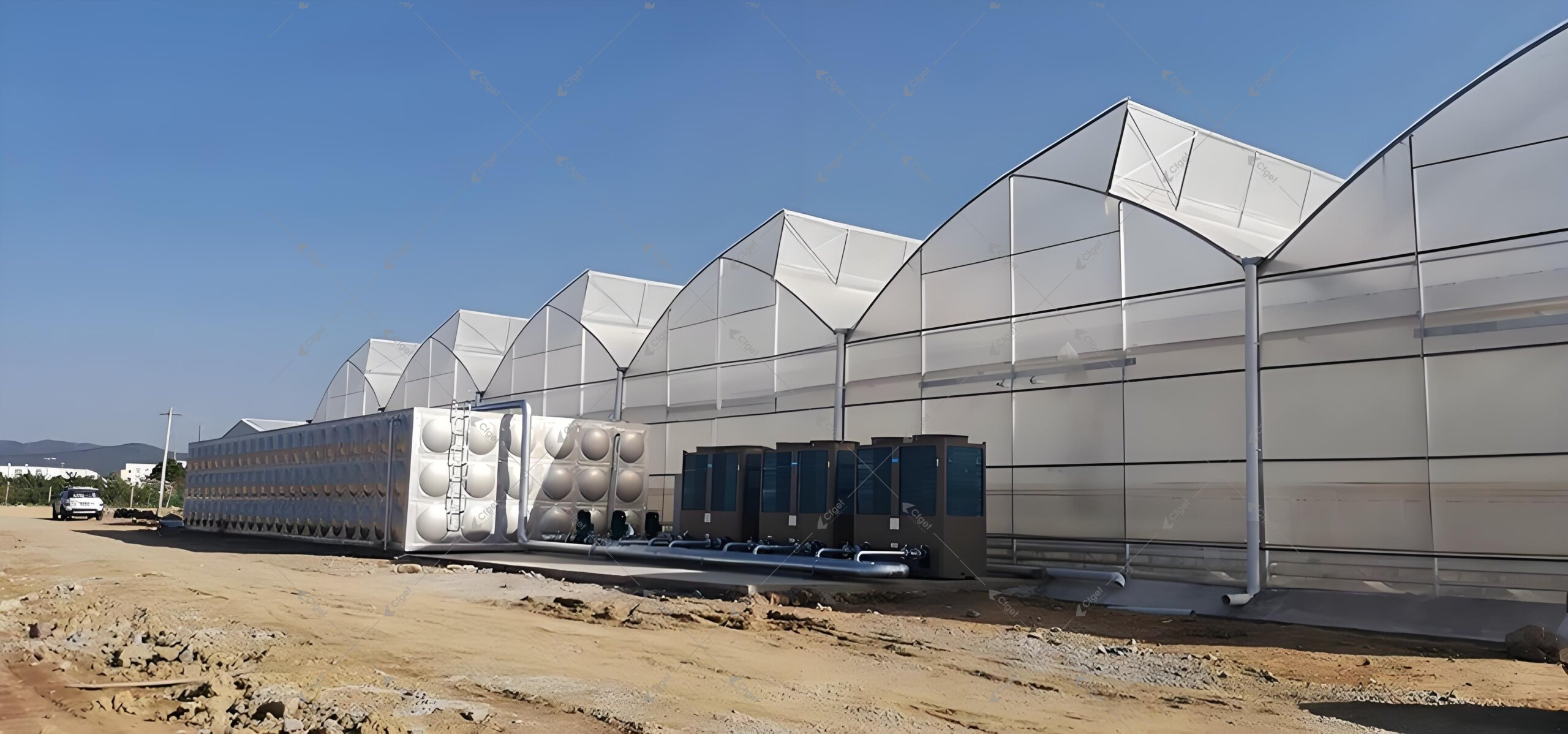
Two greenhouse offers can have similar equipment and very different long-term economics. The difference often sits outside the headline price: local work, energy schedules, consumables, replacement cycles, service response, and the cost of losing a critical function during production.
Use this with our Commercial Greenhouse Buying Guide topic cluster. For a full project, keep it beside Commercial Greenhouse Solutions so the structure, systems, and crop plan do not drift apart.
Where should the decision start?
- Set one study period, currency basis, discount method, production schedule, and project boundary for every option.
- Separate imported supply, local works, utilities, consumables, planned maintenance, failures, crop downtime, covering renewal, and end-of-life value.
- Use measured or traceable energy and replacement assumptions, then test climate, tariff, utilization, and failure uncertainty.
- Keep yield or revenue scenarios outside the equipment claim unless crop, grower, market, and operating assumptions are explicit.
Key facts worth checking
| Cost layer | Examples | Evidence |
| Installed capital | Design, supply, freight, civil, utilities, erection, commissioning | Leveled scope and quotations |
| Operation and risk | Energy, water, labor, consumables, service, downtime | Operating model and records |
| Renewal and value | Covering, equipment cycles, major repair, residual value | Replacement schedule and assumptions |
My project review method
I would rebuild each option under one scope and timeline, then test energy, utilization, replacement, failure, currency, and service assumptions one by one to see whether the apparent saving survives a realistic downside case.
What I would inspect in the drawings
- I would first level the scope because missing foundations, wiring, controls, freight, supervision, and commissioning can overwhelm small equipment-price differences.
- Replacement timing matters: a covering, screen, pump, sensor, or control component may recur several times within the structural study period.
- The useful model shows which assumption changes the decision rather than hiding precision inside one net-present-value result.
What the buyer needs to fix in writing
| Buyer question | What to decide before requesting a price | Why it protects the project |
| Design basis | Installed capital: Design, supply, freight, civil, utilities, erection, commissioning | Leveled scope and quotations |
| Difficult operating case | Operation and risk: Energy, water, labor, consumables, service, downtime | Operating model and records |
| Acceptance evidence | Renewal and value: Covering, equipment cycles, major repair, residual value | Replacement schedule and assumptions |
Evidence pack
Use the following evidence to challenge the design basis. A checklist item is useful only when the supplier attaches a value, drawing, calculation, test, or named responsibility.
Climate and project assumptions to confirm
- Confirm the project-specific study basis: Common period, currency, discount, and utilization. State who verifies it and when.
- Confirm the project-specific operating case: Hourly or monthly climate and crop schedule. State who verifies it and when.
- Confirm the project-specific renewals: Covering and equipment replacement years. State who verifies it and when.
Sources worth checking
- Life Cycle Cost Analysis Guidelines
- Life cycle cost analysis of tomato production in innovative urban…
- A comprehensive quantitative lifecycle cost and…
Neutral source to keep beside the quote
CFGET project planning note
CFGET’s review would begin by reconciling design, supply, freight, civil, utilities, erection, commissioning with leveled scope and quotations, then marking every unresolved interface on the drawings and responsibility matrix.
Buyer risk signal
Pause the comparison when frame price is compared with turnkey price; nameplate power becomes annual energy; or one precise payback is presented as certain.
Ask the supplier for these exact specs
Require a completed response for Study basis, Operating case, Renewals, Sensitivity, supported by the relevant drawings, calculations, settings, or test records. Do not accept “standard” or “as required” where a project value can be stated.
Project video: greenhouse irrigation and growing equipment
This field video shows greenhouse production equipment in use, which helps buyers connect the quote with daily operation.
Which costs belong in a greenhouse lifecycle model?
Define the boundary. Include site preparation, foundations, drainage, structure, covering, climate systems, irrigation, controls, electrical work, freight, customs, local labor, supervision, testing, training, and initial spares where they differ between options.
Use a common base year and study period. Record taxes, escalation, exchange rate, financing, discounting, and residual value separately so commercial assumptions do not become hidden engineering facts.
Technical reference for this decision: Government agriculture resource.
How should alternatives be normalized before comparison?
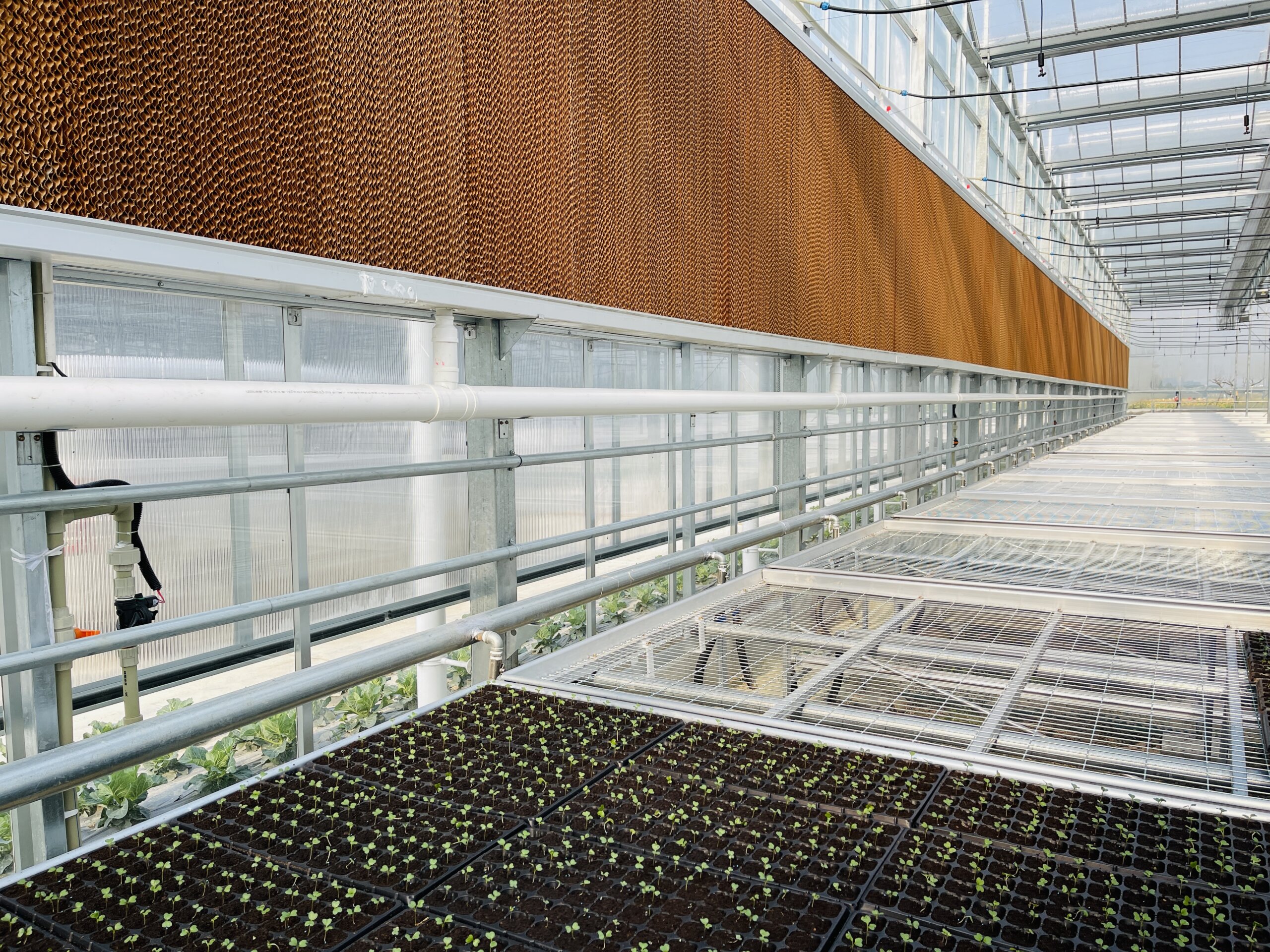
Build annual operating cases from local weather, crop schedule, utility tariffs, equipment efficiency, water treatment, labor, planned service, consumables, and expected replacement. Do not multiply catalog maximum power by every hour or use one average energy number without an operating schedule.
Include downtime by consequence and recovery, not a fabricated universal crop-loss percentage. Redundancy, local spares, service response, and manual operation can change the duration and should be visible in the comparison.
Technical reference for this decision: Life Cycle Cost Analysis Guidelines.
| Check | Good sign | Risk sign |
| Boundary | All alternatives include the same installed scope | Frame price is compared with turnkey price |
| Operation | Loads follow weather and schedules | Nameplate power becomes annual energy |
| Uncertainty | Sensitivity and downside cases are visible | One precise payback is presented as certain |
What to request from a supplier
Ask for a leveled scope matrix, installed-cost breakdown, utility and labor assumptions, performance curves, maintenance plan, consumables, warranties, service response, replacement lives, downtime logic, residual value, study-period basis, sensitivities, and the source for every major input.
Which sensitivity tests expose the risky option?
Run sensitivities for energy price, production utilization, covering life, major component failure, exchange rate, maintenance labor, and climate severity. Show the crossover point where the preferred option changes.
Use the model to identify evidence gaps and contract requirements. If one option wins only because of an unverified efficiency or lifespan claim, make that claim an acceptance test, warranty term, or conservative downside assumption.
Technical reference for this decision: Life cycle cost analysis of tomato production in innovative urban….

| Model field | Example | Why it matters |
| Study basis | Common period, currency, discount, and utilization | Makes options comparable |
| Operating case | Hourly or monthly climate and crop schedule | Sets utility demand |
| Renewals | Covering and equipment replacement years | Captures recurring capital |
| Sensitivity | Energy, lifespan, utilization, and failure | Shows decision robustness |
Practical next step
Prepare one page covering Study basis, Operating case, Renewals, Sensitivity. Add the project city, crop, greenhouse area, available utilities, relevant drawings, and the party responsible for local work. Send that evidence to [email protected] for a first technical-scope review.
Before you use this recommendation
- Treat the article as a decision and RFQ guide, not a final engineering design.
- Replace every example with project-specific climate, crop, utility, code, and operating data.
- Require calculations, drawings, test records, or named assumptions for every important supplier claim.
Research and review method
This guide combines the current search evidence listed above with a greenhouse project planning checklist: define the failure case, trace the interfaces, identify measurements, and turn unresolved assumptions into RFQ fields. CFGET observations are labeled as project-review judgment; local engineering and operating data remain the final authority.
Coraline Liao is CEO of CFGET. Her public LinkedIn profile describes her as a Greenhouse Technical Director with more than 15 years in the greenhouse industry, focused on customized climate-control and greenhouse solutions. Her published technical topics include greenhouse structures, climate control, light management, hydroponics, and fertigation. Her article reviews begin with the crop, climate, site, project scope, installation boundaries, and operating constraints. Technical recommendations should be adapted to local climate data, crop plans, budgets, and professional engineering review before implementation.
Professional profile: Coraline Liao on LinkedIn
Company details
CFGET: Founded in 1996, CFGET designs, manufactures, and delivers greenhouse systems and smart farming solutions from its own factory in Sichuan, China.
Address: NO 108, South Area Chengdu Modern Industrial Park, Sichuan, China
Email: [email protected]
About the company: https://cfgreenway.com/about/
Company profile: GreenWay on LinkedIn
Technical videos: Greenhouse project channel on YouTube
Where this fits in the greenhouse buying cluster
Start with the hub, then open the system or crop pages that match your decision.