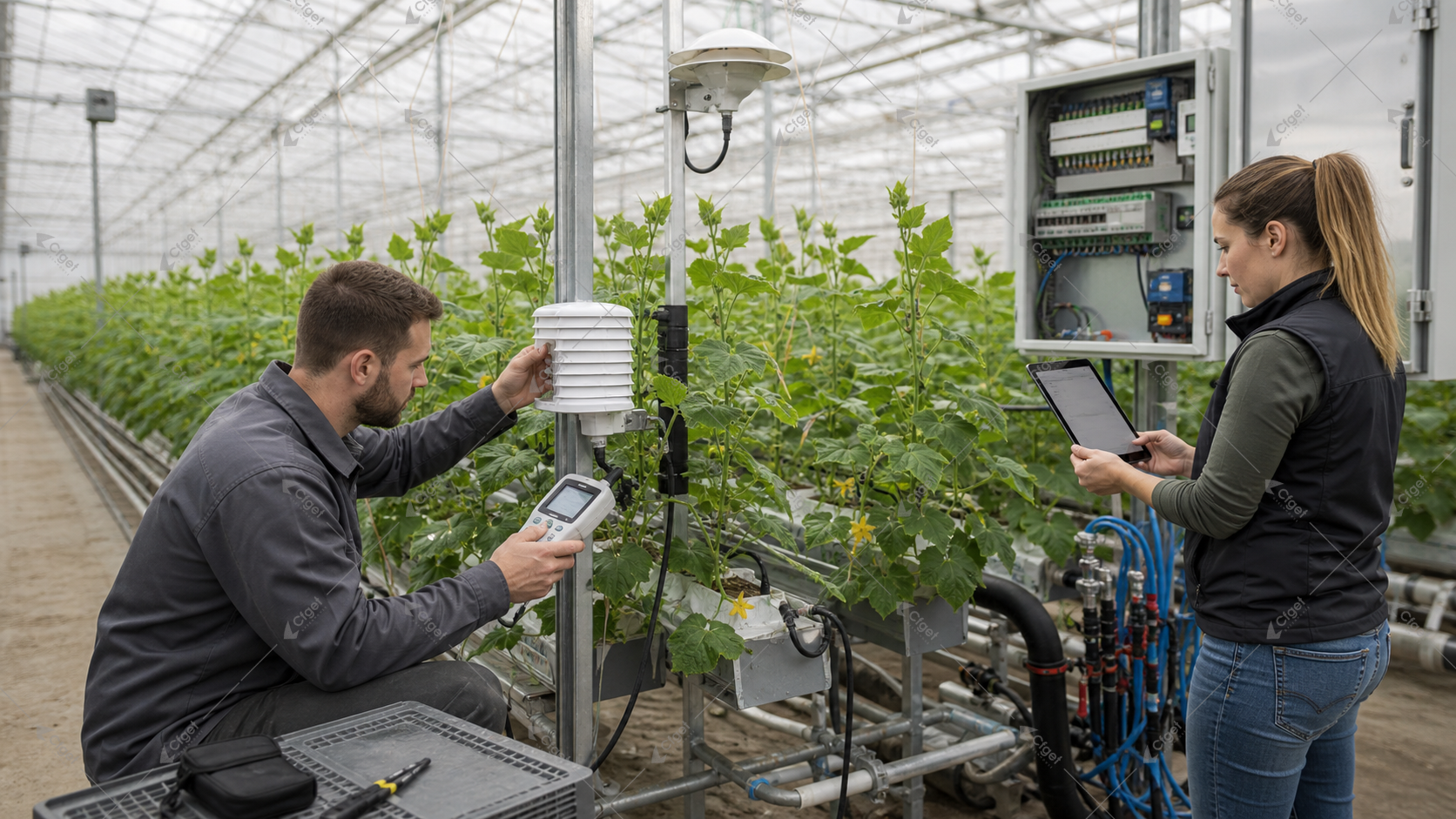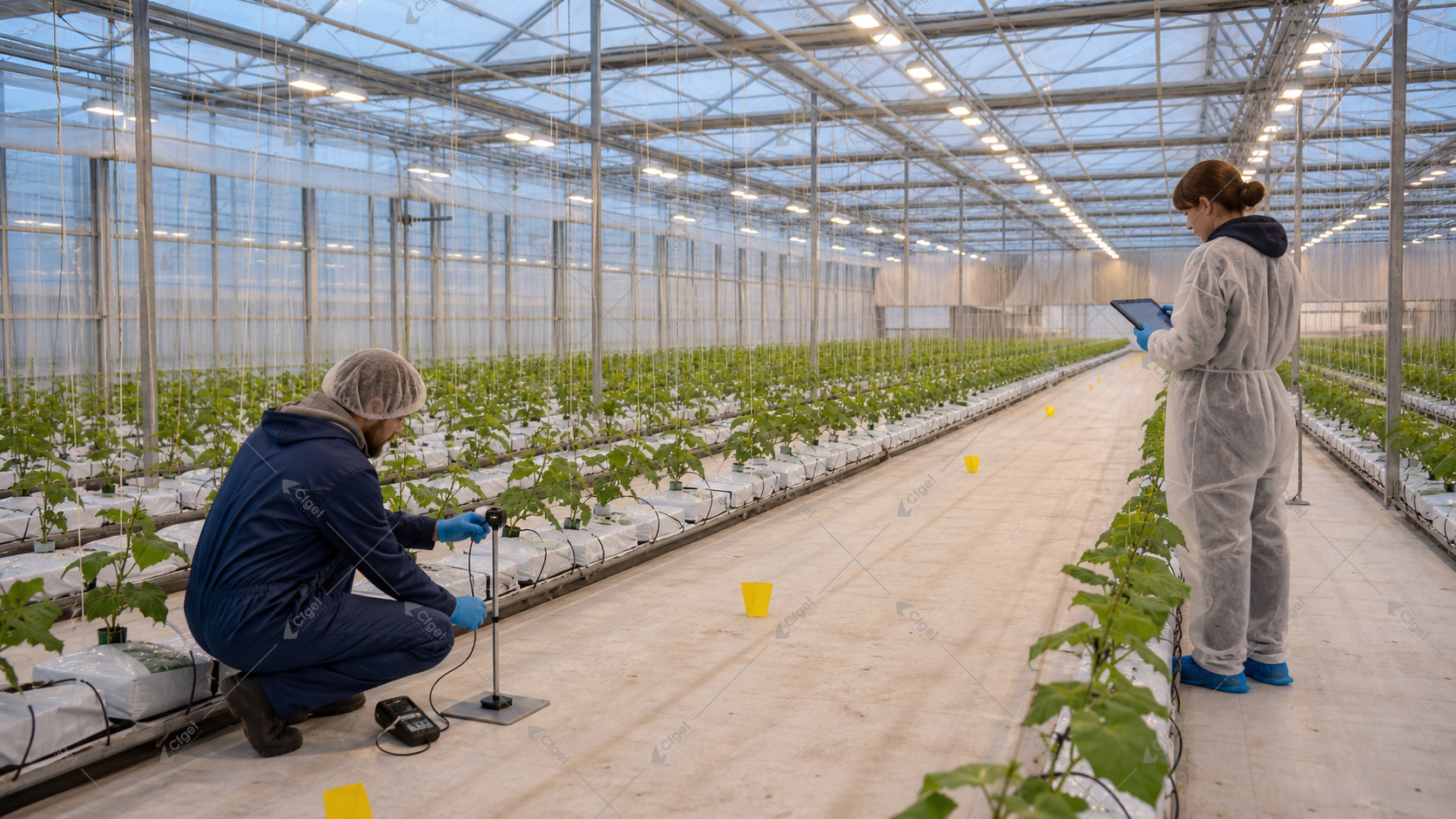
A laboratory report and a handheld meter can give different electrical conductivity readings without either instrument being faulty. Before reducing fertilizer or flushing a greenhouse crop, check how each sample was obtained. A pour-through extract, a saturated media extract and a diluted substrate sample need their own interpretation ranges.
Electrical conductivity, or EC, describes how readily a solution conducts electricity. It is a useful indicator of dissolved salts, but it does not identify the individual nutrients or distinguish useful fertilizer ions from unwanted salts. The first decision is whether the two numbers are comparable at all.
Put the method beside the number
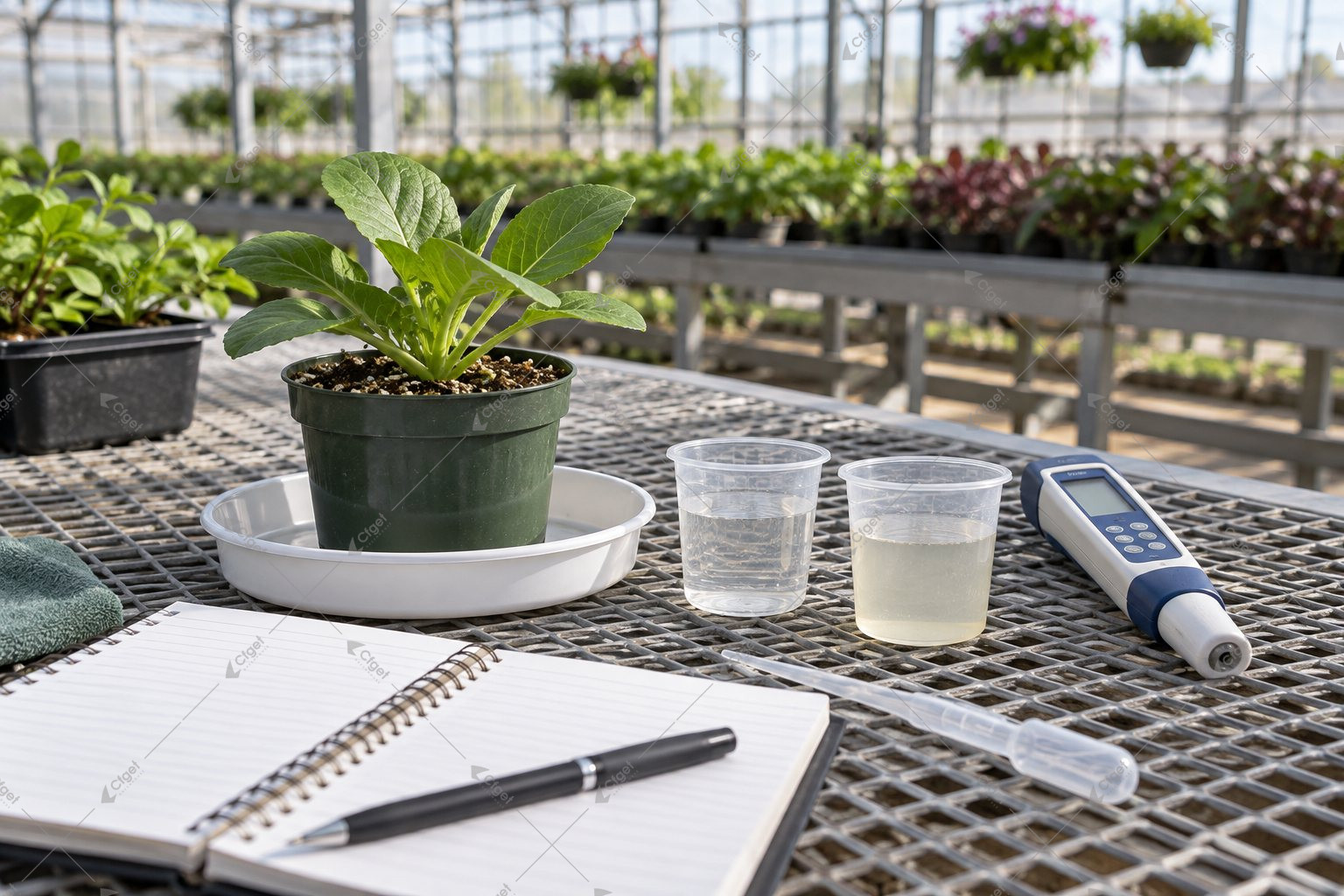
Purdue’s guide to pH and EC measurements in soilless substrates distinguishes pour-through, saturated media extract and 1:2 dilution procedures. Adding different quantities of water during extraction changes the concentration being measured. Its interpretation tables are method-specific; they should not be treated as one universal EC limit for every crop.
| Result on the record | Question to resolve | What to compare it with |
|---|---|---|
| Pour-through EC | Was the pot prepared and drained consistently, and was the collection volume controlled? | Earlier pour-through results from comparable plants and a crop-appropriate range |
| Laboratory substrate EC | Which extraction method did the laboratory use? | The laboratory’s interpretation for that method, substrate and crop |
| Feed or drain-tank EC | Which water stream and time interval does this sample represent? | Other samples of the same stream, not a substrate extraction threshold |
A report labeled only “EC 2.0” is incomplete. It needs units, sample identity and method. For unit checking, 1 mS/cm equals 1 dS/m and 1,000 microsiemens/cm. A correct unit conversion does not convert one extraction method into another.
Investigate a disagreement without changing the crop twice
Suppose a grower sees a higher pour-through result than last week’s laboratory result and immediately lowers the feed. If the difference arose from sample preparation, the adjustment introduces a new variable before the original problem is understood. Instead, keep the normal crop-safe program in place while the grower or adviser checks the record, unless plant condition requires urgent action.
- Identify the irrigation zone, cultivar, substrate lot, container size and growth stage for each sample. Keep visibly affected plants separate from representative healthy plants.
- Check meter calibration with the manufacturer’s appropriate standard. Note whether the instrument is reporting EC directly or an estimated total-dissolved-solids value.
- Repeat the chosen extraction procedure consistently. Use clean collection vessels and the specified extraction water. Do not improvise a larger rinse because the first sample looks small.
- Record irrigation timing and moisture condition. Photograph the sampled plants and label the samples before sending them away.
- Ask the laboratory to explain its method and crop interpretation before comparing the result with an on-site chart.
UMass provides demonstrations of greenhouse sampling and extraction methods. Use one documented procedure to train everyone taking samples. A second person following the same method is a useful check on technique; it is not a substitute for meter calibration.
Keep the spatial pattern, not just the average
Maintain one row per sample location. A single blended result can hide a dry bench end, an emitter problem or a separate substrate batch. If all high readings belong to one irrigation zone, investigate that zone before changing the recipe for the whole house. If readings rise across several zones after a source-water change, test the source and delivered solution as well.
Keep the individual results alongside a summary. When the method changes, start a new series and run a short overlap comparison on matched samples. Do not splice the new numbers into the old chart as though nothing changed.
For the wider root-zone decision, the substrate selection guide considers container geometry, water quality and irrigation together. A comparable EC record is one input to that decision, not a ranking of substrate materials.
When EC cannot answer the question
A normal EC does not establish that calcium, sodium or every micronutrient is acceptable. Persistent symptoms, unusual source water or a recirculating system may require an ion analysis, tissue testing or plant-health diagnosis. The crop adviser should choose those tests from the symptom pattern and production history.
Before the next feed adjustment, assemble the method, units, sample map, irrigation record and crop photographs. Where sampling is difficult because drains or feed lines are inaccessible, send the layout to CFGET with the points you need to monitor. Access for representative samples is a design requirement worth resolving before equipment is installed.