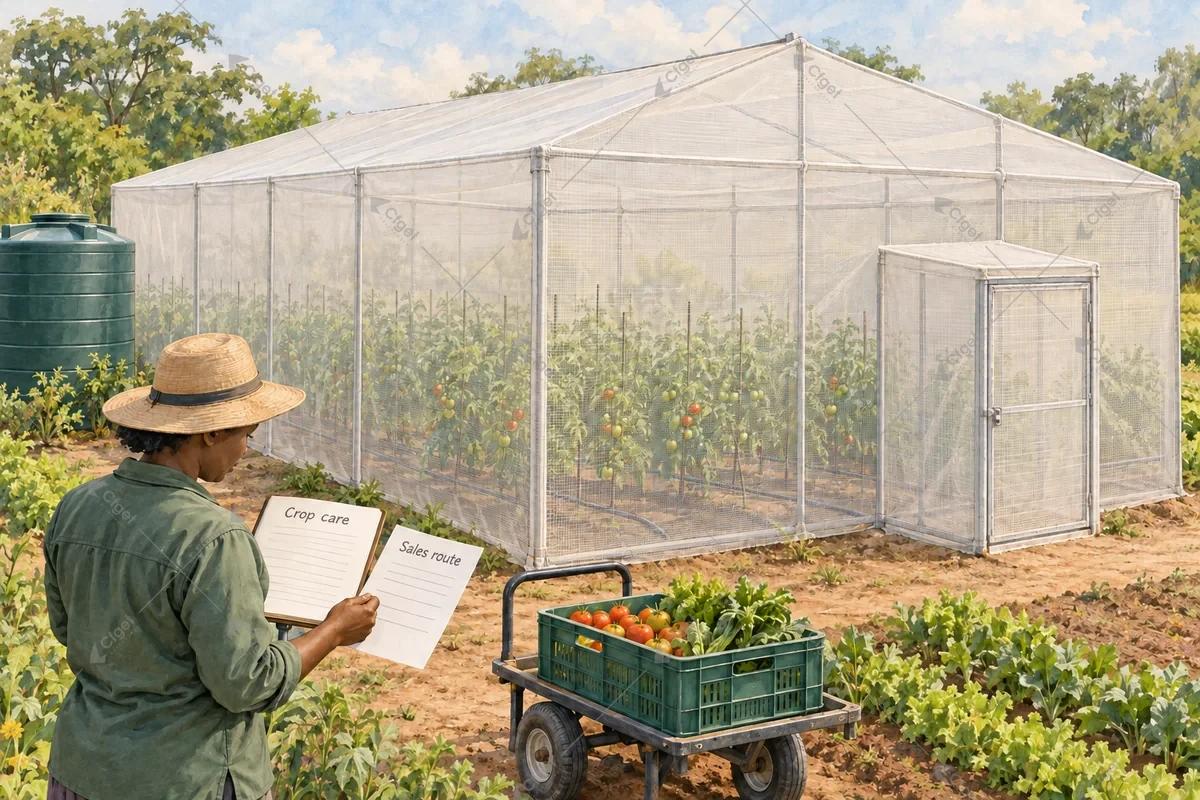
An insect-exclusion net house is worth considering when you can fund and run the crop inside it, then sell what it produces. If the available budget buys only the enclosure, the useful next move may be a smaller supported production block or a delay while the missing operating resources are secured.
This decision concerns a house enclosed with insect-exclusion netting. A generic shade house answers a different question about sunlight. First establish that the proposed system suits your crop and local conditions; then decide how much production the business can actually support.
What the Kenyan farms reveal
A study published in 2023 by Mujuka and colleagues followed Kenyan smallholder production in 2017–2018. Researchers supplied 160 m² net houses; the package involved drip irrigation and adapted varieties, with differing uptake. That area describes the research setting, not a CFGET commercial size recommendation.
After exclusions, the sample comprised 25 farms across five counties, including nine tomato farms. For first-season tomatoes, the reported cost-benefit ratios ranged from 0.61 to 2.47. Revenue was divided by costs including allocated depreciation; family labour was valued too. Below one meant revenue failed to cover those included costs. This ratio is not a payback period. The result offers no assurance that net-house production will outperform the field.
The purchase question is therefore more useful when phrased as: “Can we finance a crop that has a workable path from planting to payment?” A structure-only price does not answer it.
Give water and daily management a place in the budget
The paper describes an experienced tomato grower using drip and an indeterminate variety successfully, but also a failed crop despite those two components. Equipment and planting material still required competent management.
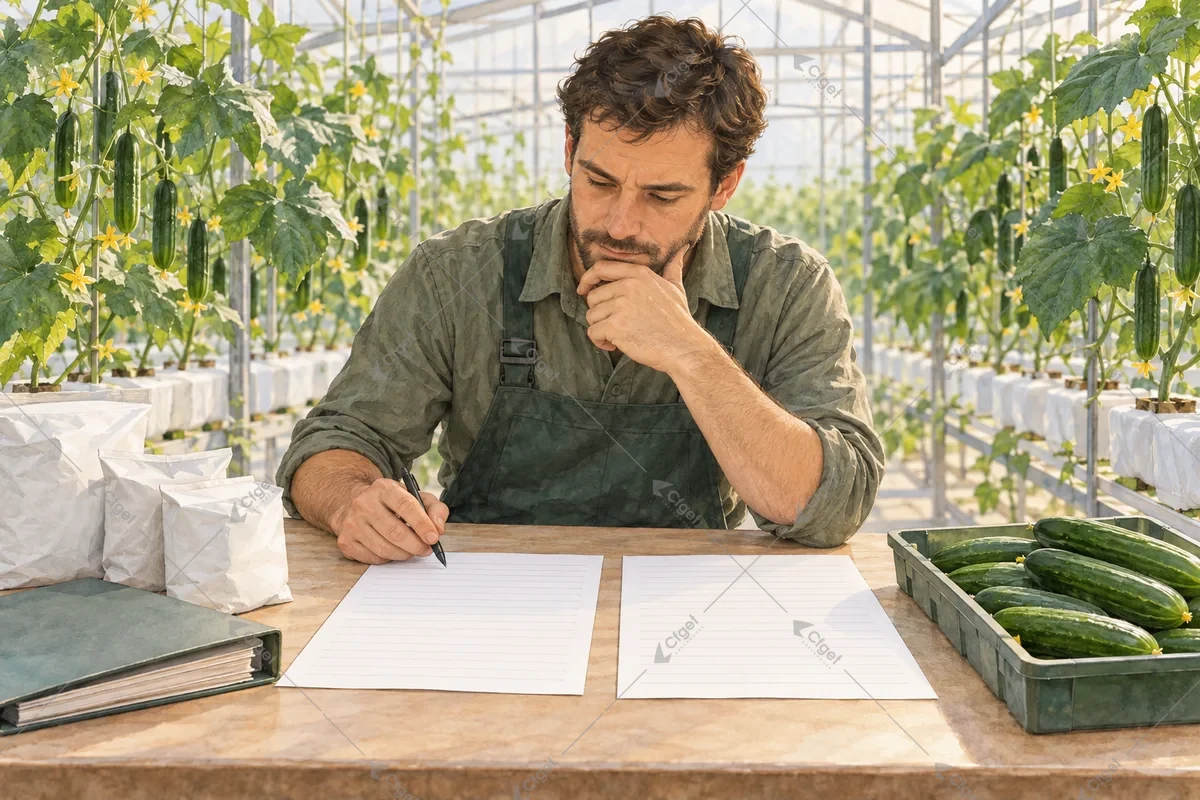
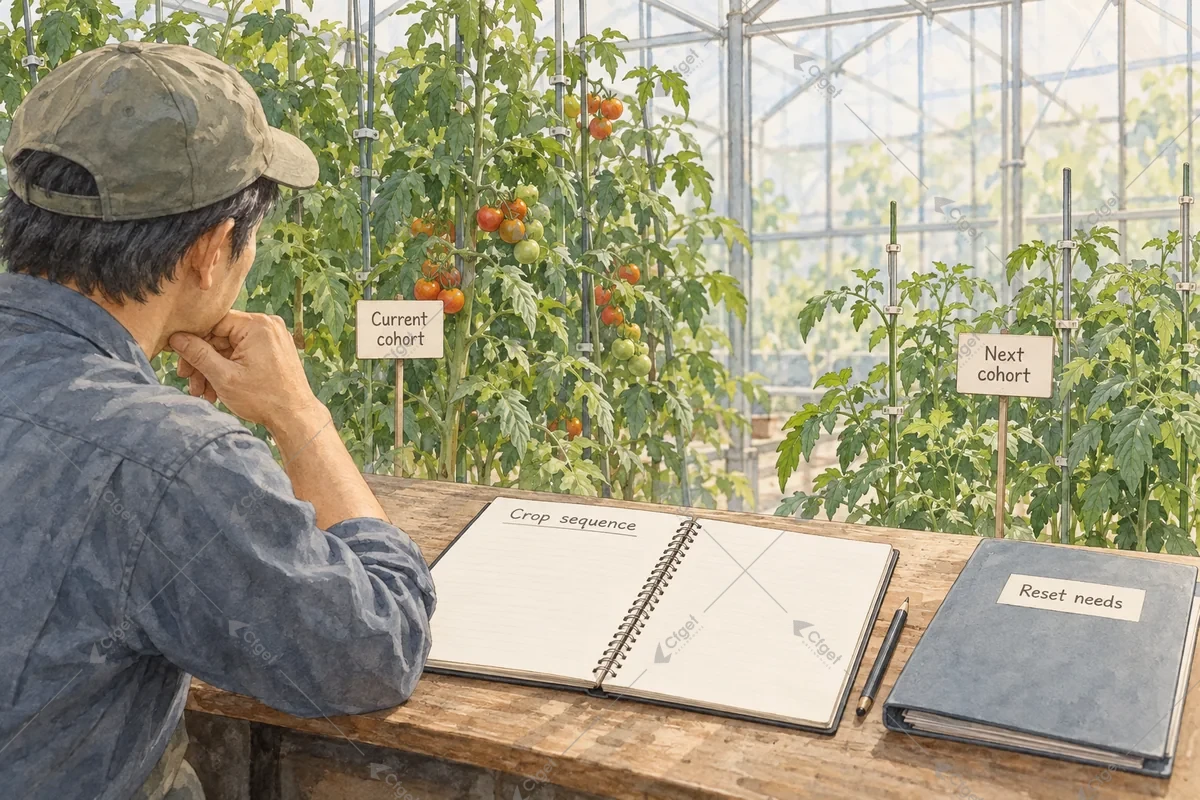
For your own plan, identify the person responsible for the crop before approving the area. Ask what they already know about the proposed crop and season, what support they need, and who will help when the crop departs from the plan. If that support must be purchased, allow for it before the construction budget consumes the available funds.
Next, check the connection between an irrigation purchase and water reaching the crop. Who will operate and maintain the system? Is the water supply dependable during the intended season? What money and work are needed to keep it available? These are operating commitments to resolve with the local team, rather than reasons to copy a system from a research project.
A useful spending test is to ask what would become unfunded if you added another block. If the answer is crop supervision, irrigation operation or essential inputs for the first planting, the larger enclosure is getting ahead of the business.
Choose the outlet before relying on its price
In the Kenyan study, two French-bean growers were left selling cheaply after an exporter failed to buy as expected. The researchers also observed no special farm-gate premium for the residue or quality proposition.
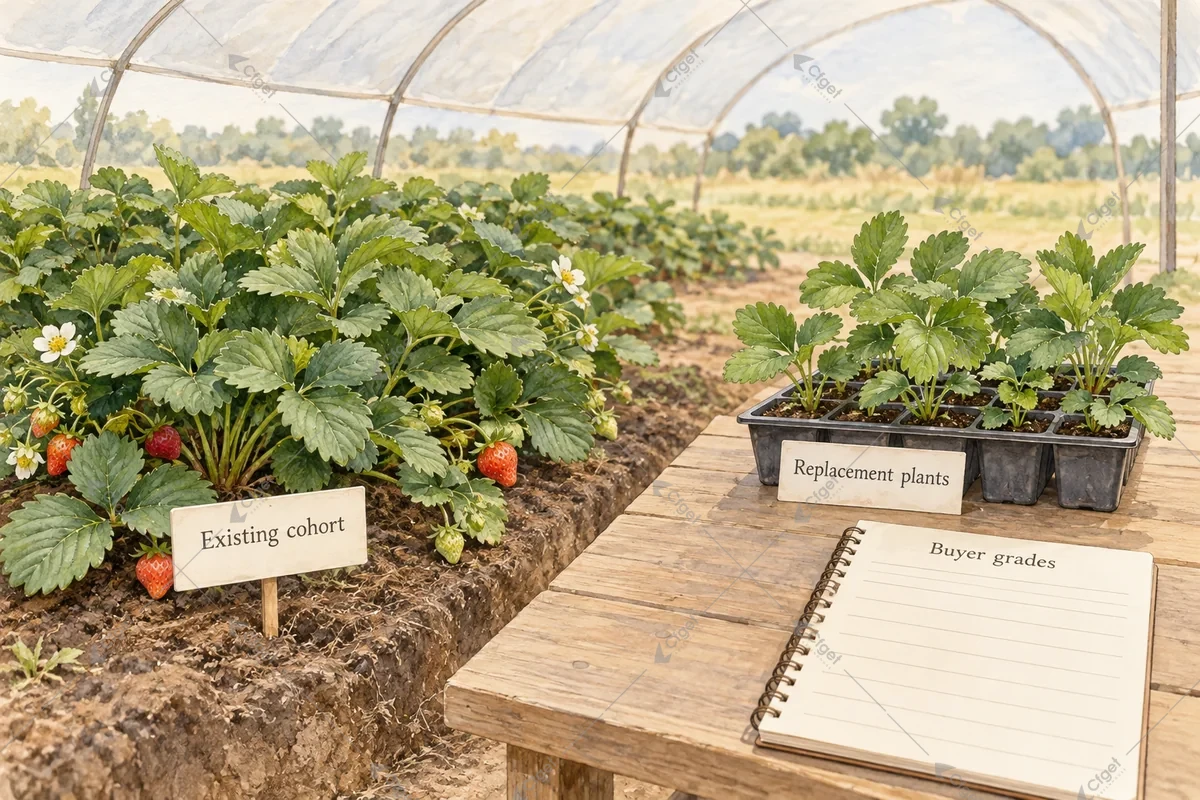
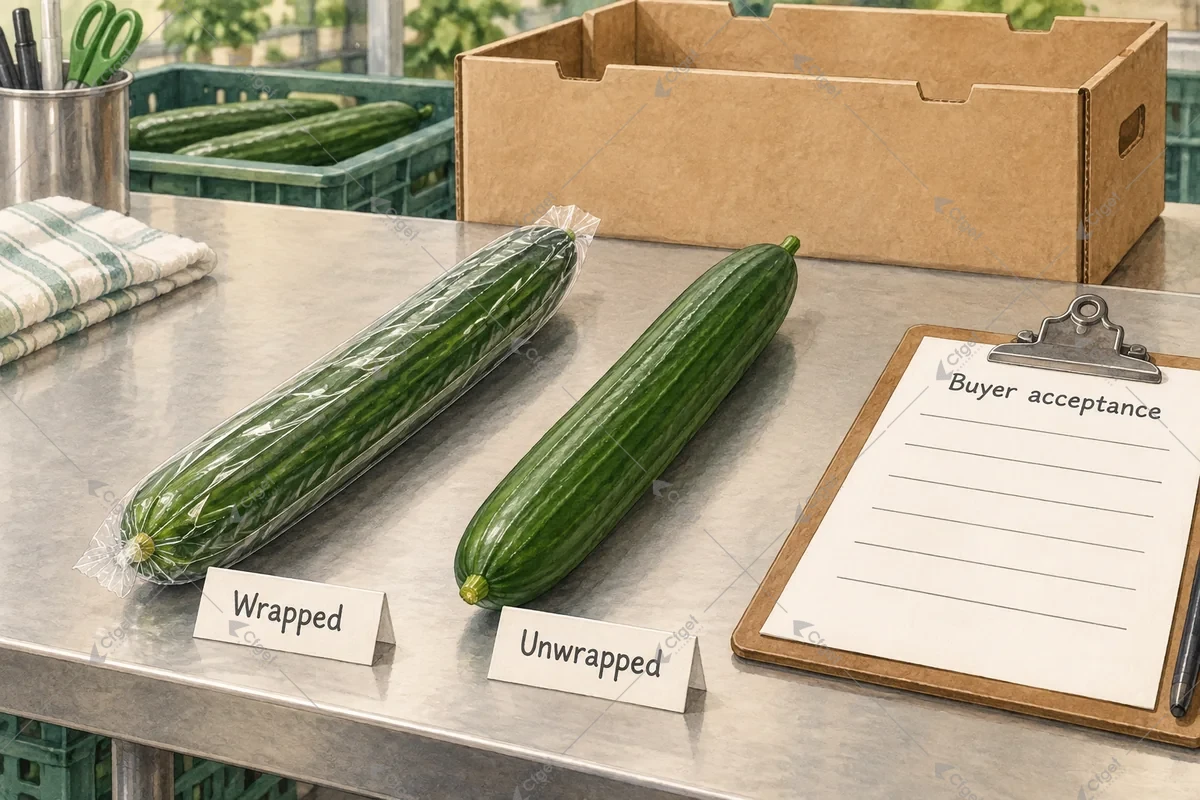
Build your initial sales plan around a buyer and product that you can describe. What crop and grades does the buyer want, during which weeks, in what practical quantities? Who arranges collection or delivery? When is payment expected? A statement that net-grown vegetables should attract a better price is not a purchasing programme.
Consider what happens if the intended buyer takes less than expected. A fallback outlet must be able to use that crop, not simply be a nearby market on a map. If the alternative changes the price, packing work or transport distance, put those conditions into the local budget before planting.
Adopt, start with support, or wait
Proceed when the proposed crop and system fit the site, the daily work has an owner, water and inputs are funded, and the selling route is credible. A supported first block can make sense when these conditions can be met at limited scale but not yet across the whole intended area.
Wait when a critical dependency remains only an expectation, such as a water source becoming available or a specialist buyer appearing after harvest. Use the time to resolve that dependency instead of expanding the exposed commitment.
Once the operating plan is ready, the separate insect-screen and ventilation review can inform technical selection. Take the crop, season, supported area, water arrangement and management plan into that discussion. The enclosure should serve a viable growing operation.