A greenhouse insect screen is an airflow component as well as a pest barrier. Select it from the target insect and verified opening size, then recalculate natural-vent area or fan pressure so exclusion does not create a summer heat problem.
*By Coraline Liao, CEO, CFGET | Updated: September 2, 2026*
*Reviewed by CFGET Project Planning Team*
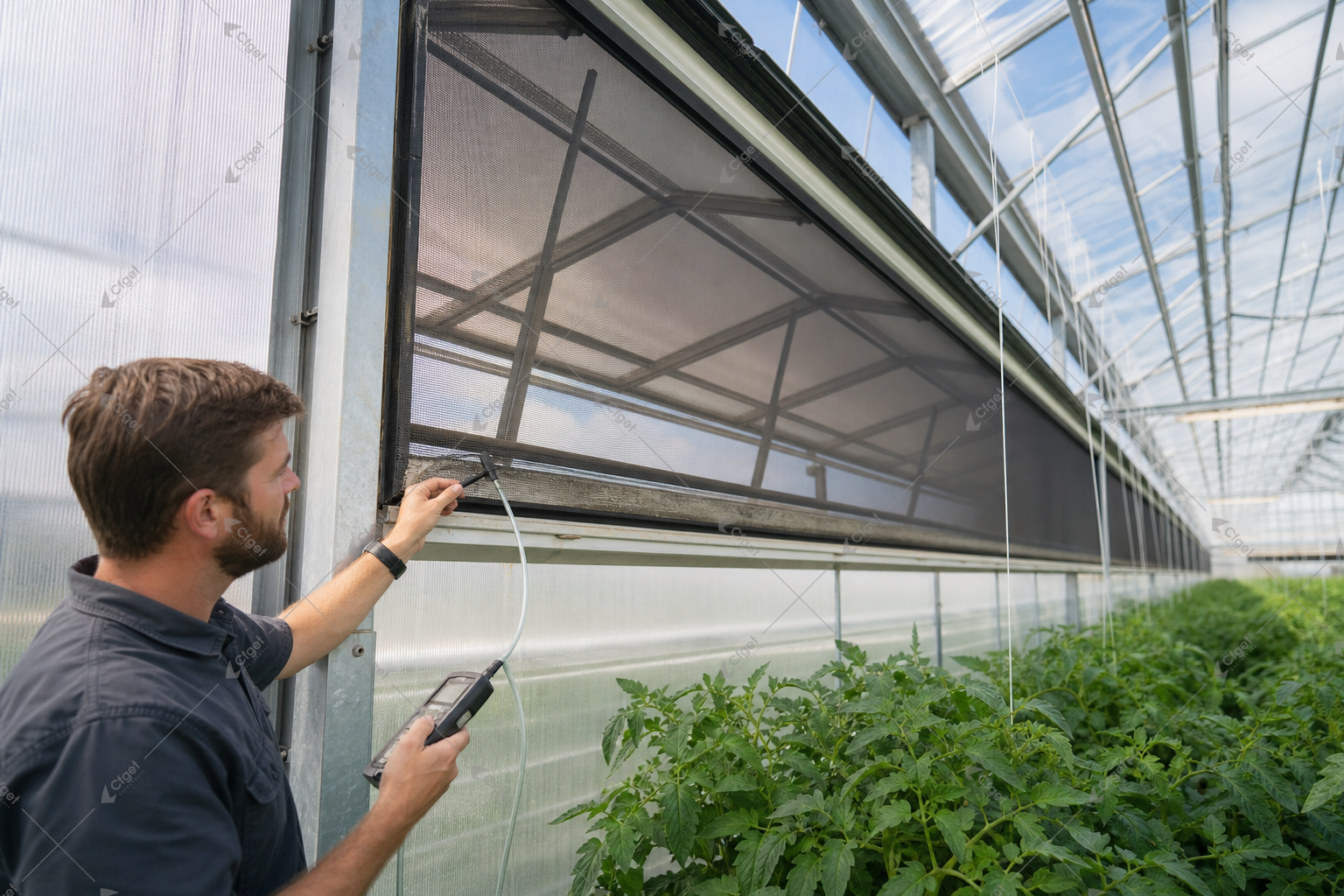
When I review greenhouse insect screen ventilation, I start with the crop and the operator. Equipment that looks advanced can still fail if water quality, climate, labor skill, or maintenance is not planned.
Use this with our Commercial Greenhouse Buying Guide topic cluster. For a full project, keep it beside Commercial Greenhouse Solutions so the structure, systems, and crop plan do not drift apart.
Where should the decision start?
- Name the target pest and its vulnerable life stage before choosing mesh; a mesh count alone does not prove exclusion.
- Ask for opening dimensions, porosity, clean and dirty pressure-drop data, UV stability, and the installed support detail.
- Treat roof vents, side vents, fan inlets, doors, cable penetrations, and service openings as one exclusion boundary.
- Recheck peak-day temperature and airflow after installation, because dust loading and folded screen area can erase catalog performance.
Key facts worth checking
| Question | Answer to make visible |
| What changes the recommendation? | Greenhouse insect screen ventilation depends on climate, crop, site services, budget, installation, and maintenance ability. |
| What should the buyer send? | Location, crop, area, target season, climate issue, required systems, timeline, and installation scope. |
| What should the supplier prove? | The system layout, equipment scope, assumptions, limitations, spare parts, and support process. |
My project review method
On a real project, I first ask what the greenhouse has to survive and what the crop has to earn. That keeps the decision away from catalog language.
Then I test the recommendation against the same project checklist: climate, crop, structure, systems, budget, installation, and maintenance.
Before ordering, a buyer should still confirm local wind load, snow load, permit rules, energy price, water quality, and crop economics. This can narrow the decision, but the final design still needs project engineering.
What I would inspect in the drawings
- I would mark every air opening on the elevation and assign a screen type, frame detail, and cleaning route before pricing.
- For fan ventilation, I would plot the fan operating point with the screen, louver, pad, and dirty-filter resistance included.
- For natural ventilation, I would compare effective free area rather than nominal vent dimensions and keep a hot-weather fallback plan.
What the buyer needs to fix in writing
| Buyer question | What to decide before requesting a price | Why it protects the project |
| Crop target | Temperature, humidity, irrigation, drainage, and harvest window. | Keeps equipment sizing tied to the growing plan. |
| Site limits | Water quality, power supply, heat, cold, wind, dust, and maintenance skill. | Prevents over-design or under-design. |
| Serviceability | Spare parts, controls, installation drawings, and operator training. | Reduces downtime after the greenhouse is built. |
Evidence pack
Greenhouse insect screen ventilation needs project evidence before product names or a single price mean much.
| Project input | What to verify | Why it matters |
| Climate data | Monthly temperature, wind, snow, humidity, radiation, and extreme events. | The greenhouse has to fit the site, not just the catalog. |
| Crop plan | Crop, growing method, row spacing, target season, and labor skill. | Crop requirements change height, ventilation, irrigation, and control needs. |
| Supplier scope | Drawings, bill of materials, packing list, installation support, and after sales process. | Clear scope reduces hidden cost and wrong expectations. |
Climate and project assumptions to confirm
- Use local wind and snow load assumptions before confirming structure.
- Check the hottest and coldest operating months, the annual average alone.
- Confirm water quality and power availability before selecting irrigation or climate equipment.
Suitable when
- The crop, climate, structure, systems, and budget are defined together.
- The supplier can provide drawings, specifications, and a clear responsibility boundary.
- The buyer has a realistic plan for installation, operation, and maintenance.
Not suitable when
- The design is copied from another country without local climate review.
- The quote lists only product names and total price.
- Yield, payback, or lifespan is promised without assumptions.
What this guide adds to the basic answer
- Replace general product claims with project assumptions, measurable specifications, and a clear buyer risk boundary.
- Give the buyer documents and acceptance evidence that can be requested from the supplier.
Sources worth checking
- Effect of Insect-proof Screens and Roof Openings on…
- UConn commercial greenhouse design resource
- UMass greenhouse selection and building resource
Neutral source to keep beside the quote
CFGET project planning note
For greenhouse insect screen ventilation, I would first check the local climate file, crop workflow, structure drawings, system scope, installation boundary, and spare parts plan before treating any supplier answer as complete.
Buyer risk signal
Risk signal: the answer sounds confident but does not state climate assumptions, crop requirements, equipment scope, or maintenance responsibility.
Ask the supplier for these exact specs
| Spec to request | Why it matters |
| Steel specification, load assumptions, bay/span size, and foundation boundary | These decide whether the structure offer is comparable. |
| Covering material, ventilation, irrigation, controls, and optional systems | Missing systems often explain why one quote looks cheaper. |
| Packing list, installation responsibility, spare parts, and warranty boundary | These details matter after payment and delivery, when fixes become expensive. |
Project video: greenhouse climate control in practice
This field video shows a greenhouse climate system in use, which helps buyers check whether the quoted equipment matches the site conditions.
Which pest must the screen stop, and what airflow will it remove?
Begin with the pest list, not a generic request for fine mesh. Thrips exclusion, whitefly management, and moth exclusion impose different opening requirements and different airflow penalties. The supplier should identify actual aperture dimensions and porosity; two fabrics sold under the same mesh count can behave differently because thread diameter and weave are different.
Exclusion also fails at the edges. A fine roof-vent screen does little if doors remain open, louvers have gaps, or service penetrations are unsealed. Draw the screened boundary and decide how staff, trolleys, pollinators, and maintenance work will cross it.
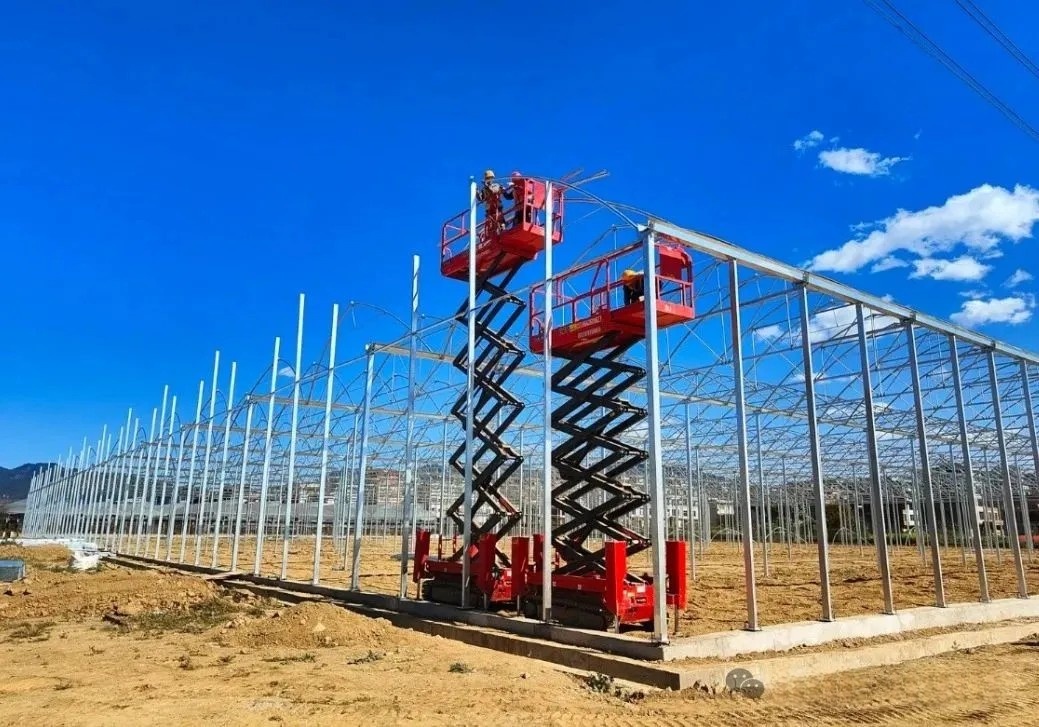
| Screen decision | Value to verify | Evidence to request |
| Exclusion target | Pest, life stage, body width, and virus-vector risk | Crop IPM plan and verified aperture data |
| Airflow penalty | Porosity and pressure drop at expected face velocity | Manufacturer curve plus system calculation |
| Installed condition | Frame area, folds, seals, access, and dirty-screen allowance | Vent detail and summer acceptance test |
How I would evaluate it
I would trace pests and air through the same boundary: target insect, aperture, free area, screen resistance, vent or fan capacity, edge sealing, door practice, cleaning access, and measured peak-day performance.
How should vent area and fan duty change after screening?
A screen adds resistance. In a fan-and-pad house, that resistance shifts the fan operating point and may reduce air volume. In a naturally ventilated house, it reduces effective opening area and changes wind-driven flow. The correction may require a larger screen surface, a pleated or stand-off frame, more vent area, or a different cooling strategy.
Do the check at the difficult hour: full canopy, warm screen, realistic wind, pads or louvers in place, and a dirty-screen allowance. A clean sample held to the light is not evidence that the installed greenhouse can remove heat.
| Check | Good sign | Risk sign |
| Selection | Aperture and porosity match a named pest | The quote states only 40 or 50 mesh |
| Airflow | Pressure loss or effective opening is recalculated | Vent size is unchanged after adding fine screen |
| Maintenance | Dirty-screen limits and access are defined | Cleaning is left to the operator without a trigger |
What to request from a supplier
Ask for the target-pest basis, aperture and porosity test data, pressure-drop curve, UV and chemical compatibility, framed free area, edge and door details, fan or natural-vent recalculation, cleaning method, spare material, and hot-weather acceptance criteria.
What should be measured before the screened greenhouse is accepted?
Commission the enclosure in warm weather. Record outdoor conditions, representative indoor temperatures, fan current or vent position, differential pressure where applicable, and airflow at several crop-level points. Keep the results as a baseline for future cleaning decisions.
The maintenance plan should state how the fabric is back-washed or vacuumed, who checks tears and edge seals, and what pressure or temperature trend triggers cleaning. Replacement rolls and compatible fixing parts should be identified before the original product changes.
| RFQ field | Example | Why it matters |
| Target pest | Thrips and whitefly as virus vectors | Sets the exclusion opening |
| Vent system | Roof and side natural vents with stated geometry | Sets available free area |
| Design condition | Peak summer hour at full canopy | Tests heat-removal risk |
| Acceptance | Temperature, vent position, pressure, and airflow map | Proves the installed result |
Practical next step
For a first CFGET review of this pest exclusion decision, send country and city, crop, area, target season, covering preference, cooling or heating need, irrigation method, and installation scope. Include the climate challenge, crop method, required systems, and installation scope. Photos, water data, climate files, drawings, or a site sketch also help. Email [email protected].
Final buying note
Greenhouse insect screen ventilation works best when the buyer writes down the assumptions before looking at product names. A good decision combines engineering trade-offs with supplier proof and a realistic operating plan.
Before you use this recommendation
- Treat this as a planning guide, not a final engineering design.
- Check the local climate data, crop plan, water quality, energy cost, and building rules before ordering.
- Ask the supplier to show drawings, material specifications, equipment scope, packing details, and installation responsibilities.
- Avoid any quotation that promises yield, payback, or structural performance without stating the assumptions.
Research and review method
I prepare these notes the same way I review an early buyer request: start with the search question, translate it into a greenhouse project planning checklist, check available project media, and keep neutral technical sources beside the quote when reliable public references are available. The point is to make assumptions, limits, and RFQ requirements visible before a buyer compares suppliers.
Coraline Liao is CEO of CFGET. Her public LinkedIn profile describes her as a Greenhouse Technical Director with more than 15 years in the greenhouse industry, focused on customized climate-control and greenhouse solutions. Her published technical topics include greenhouse structures, climate control, light management, hydroponics, and fertigation. Her article reviews begin with the crop, climate, site, project scope, installation boundaries, and operating constraints. Technical recommendations should be adapted to local climate data, crop plans, budgets, and professional engineering review before implementation.
Professional profile: Coraline Liao on LinkedIn
Company details
CFGET: Founded in 1996, CFGET designs, manufactures, and delivers greenhouse systems and smart farming solutions from its own factory in Sichuan, China.
Address: NO 108, South Area Chengdu Modern Industrial Park, Sichuan, China
Email: [email protected]
About the company: https://cfgreenway.com/about/
Company profile: GreenWay on LinkedIn
Technical videos: Greenhouse project channel on YouTube
Where this fits in the greenhouse buying cluster
Start with the hub, then open the system or crop pages that match your decision.
- Commercial Greenhouse Buying Guide
- Commercial Greenhouse Solutions
- Greenhouse Climate Control
- Greenhouse Humidity Control
- Smart Greenhouse Control
- Greenhouse Project Cases