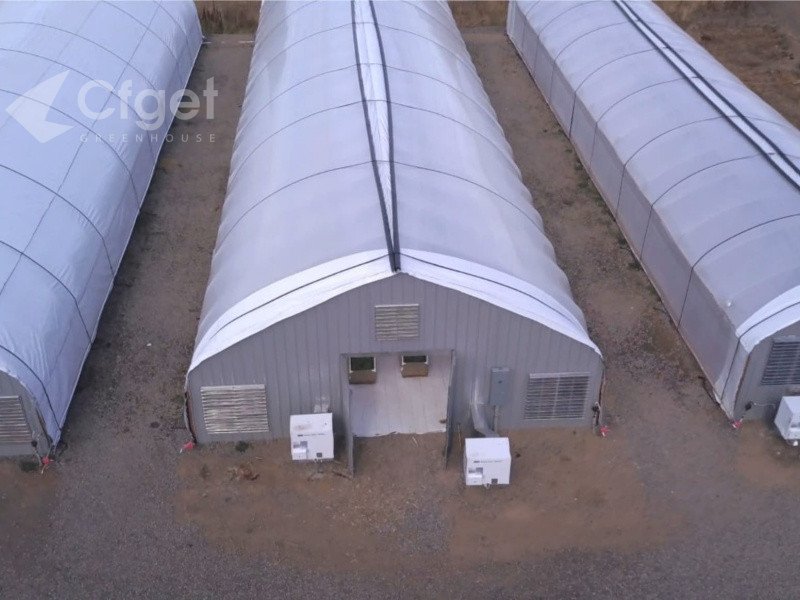
A standard greenhouse, a light deprivation greenhouse, and an indoor farm solve different production problems. A standard greenhouse uses the natural day length unless screens or lighting alter it. A light deprivation greenhouse adds an opaque curtain and a timed sequence to control the dark period. An indoor farm excludes sunlight and supplies the crop environment with mechanical systems. The right choice depends on crop photoperiod, outside climate, market schedule, utility limits, biosecurity, and the operator’s ability to maintain the system.
Start with the production problem
Do not begin with a building label. Write the crop stages, planting density, natural day length, required uninterrupted darkness, target production weeks, acceptable temperature and humidity range, and harvest criteria. State whether the project needs seasonal extension, scheduled flowering, year-round production, strict odour control, or a high level of exclusion from outdoor pests and weather.
These requirements are not interchangeable. A crop that needs a controlled dark period may suit a light deprivation system. A leafy crop with a compact canopy may suit a multi-level indoor layout if electricity, cooling, and market value support it. A crop that benefits from sunlight and does not need blackout control may be better served by a standard greenhouse with appropriate climate systems.
Standard greenhouse, light deprivation, or indoor farm
| Decision | Standard greenhouse | Light deprivation greenhouse | Indoor farm |
|---|---|---|---|
| Primary light source | Sunlight, with optional supplemental lighting | Sunlight, with an opaque curtain to schedule darkness | Electric lighting |
| Envelope | Transmitting roof and walls | Transmitting envelope plus blackout layers, drives, seals, and interfaces | Opaque, insulated, tightly controlled room |
| Main control challenge | Weather response and seasonal light | Dark-period integrity without trapping heat or moisture | Heat removal, air distribution, lighting, dehumidification, and power continuity |
| Useful comparison basis | Crop output and quality per unit of land, energy, water, and labour | The same measures plus curtain cycles, light leakage, and blackout cooling duty | The same measures plus lighting energy, cooling duty, rack utilisation, and redundancy |
What makes a light deprivation greenhouse different
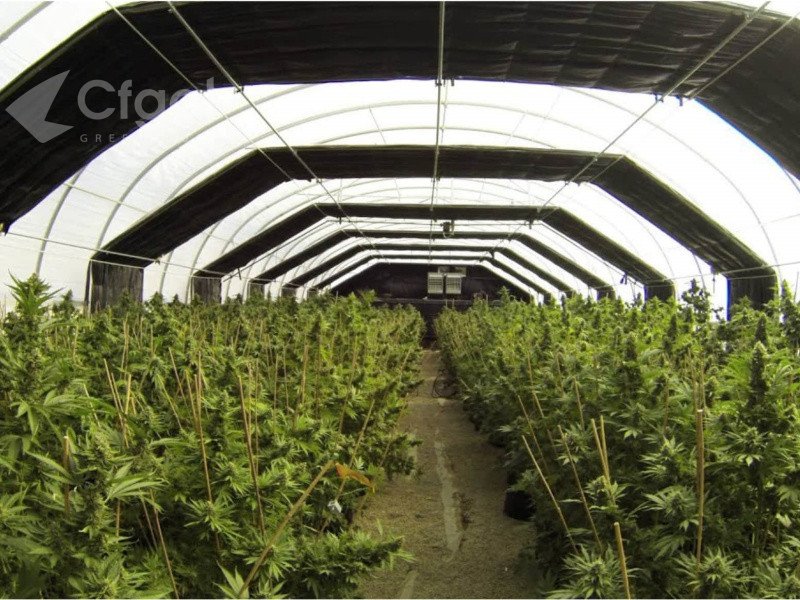
The defining feature is a repeatable dark period, not the shape of the frame. The curtain must reach its closed position on schedule, limit unintended light, and open again without damaging the crop or obstructing other systems. Its drive, support wires, pockets, overlaps, controls, wind restrictions, emergency release, and maintenance access all need a written design.
Closing an opaque curtain can reduce ventilation and trap sensible and latent heat. The designer should calculate the closed-curtain case as well as the open-curtain case. Show how roof vents, side vents, circulation fans, exhaust, cooling, heating, and dehumidification operate during transition and full blackout. A curtain that meets the light target but creates condensation over the canopy is not a complete solution.
Photoperiod control is crop specific
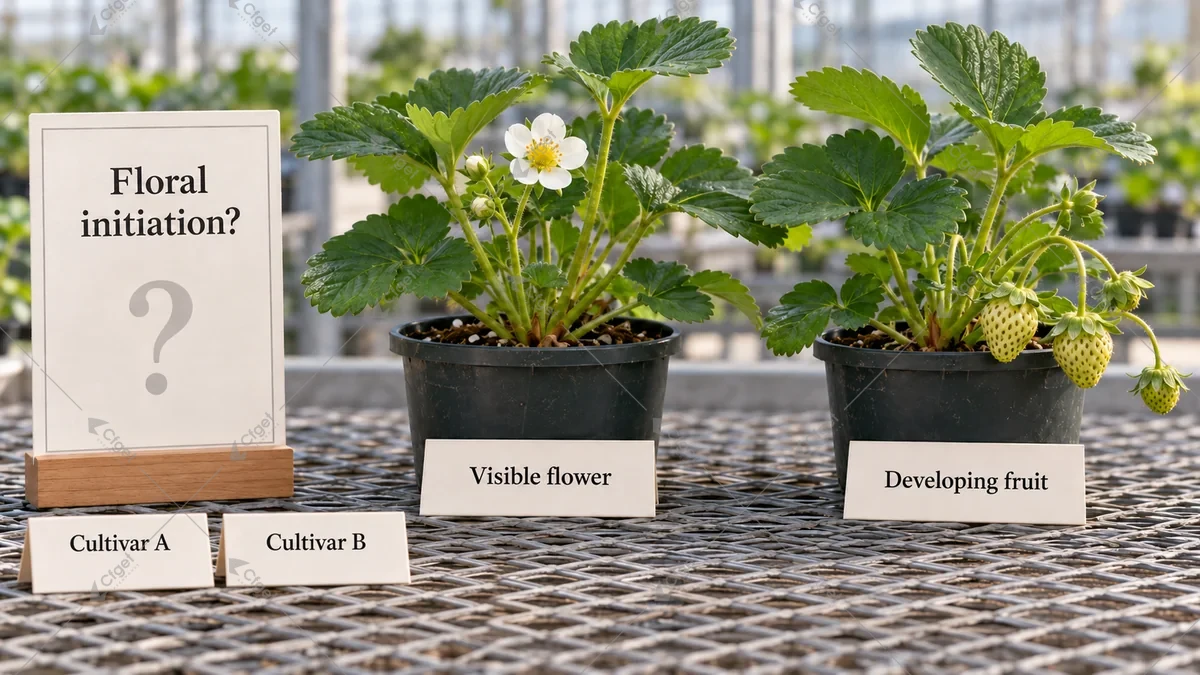
University greenhouse guidance distinguishes photoperiod control from photosynthetic lighting. A short-day response is created by protecting the required dark interval. The crop adviser should define the required duration, timing, permitted interruption, measurement point, and stage of production. Do not transfer a schedule from another crop or variety without review.
Commission the dark period at crop height. Check curtain overlaps, perimeter seals, penetrations, doors, equipment lights, controller indicators, and outside light sources. Record the meter, test locations, curtain position, weather, and acceptance limit. Repeat the check after maintenance or curtain replacement.
Compare climate and utility loads
A greenhouse receives solar energy through the envelope. An indoor farm converts electrical input to light and heat inside the room. A light deprivation greenhouse changes between open and closed modes, so its peak cooling and moisture cases may occur at different times from a standard greenhouse. Compare hourly loads rather than a single annual energy claim.
Ask for electrical demand, monthly energy model, peak cooling duty, heating duty, humidification or dehumidification load, ventilation sequence, water treatment, drainage, and backup requirements. State the weather file, crop moisture assumptions, lighting schedule, equipment efficiencies, setpoints, and operating hours used in the model. The greenhouse grow-light electricity guide explains how to build a lighting energy estimate. The greenhouse dehumidification guide covers moisture-load decisions.
Do not compare headline cost or yield
Cost depends on scope. A greenhouse quotation may omit site work, power upgrades, water treatment, crop systems, controls, installation, commissioning, permits, and local taxes. An indoor quotation may omit the building shell, utility service, cooling plant, racks, fire systems, drainage, and backup power. Place both offers into the same scope matrix before calculating an installed budget.
Yield and quality claims need the same discipline. Record crop, variety, plant density, production days, saleable output, grade standard, rejected product, energy, labour, water, nutrients, and downtime. A result from a different site or market is not a project guarantee. Use a crop enterprise model with conservative, base, and stress cases instead of a universal payback claim.
Check system interfaces before selecting a facility
For a light deprivation greenhouse, check the curtain against vents, trusses, heating pipes, lighting, irrigation booms, sensors, crop supports, fire requirements, and maintenance routes. For an indoor farm, check lighting, racks, air distribution, cooling, condensate, electrical rooms, sanitation flow, and emergency access. For a standard greenhouse, check the envelope and climate equipment against local wind, snow, rain, dust, humidity, and temperature cases.
Define which contractor owns each interface. A curtain supplier should not assume the greenhouse contractor will provide every support and control point. The controls contractor should not assume the mechanical supplier has supplied every interlock. The CFGET light deprivation system page shows the equipment family. The light management system page covers related screens and controls. This article remains the comparison and procurement guide.
Commission the operating modes
Witness curtain travel, end limits, manual release, obstruction response, power recovery, scheduled closing, scheduled opening, alarms, ventilation changes, circulation, cooling, heating, and dehumidification. Trend temperature and humidity above and within the canopy through at least one transition. Verify that the blackout schedule survives a controller restart and that operators can recover from a stuck drive or failed sensor.
Indoor acceptance should also test lighting groups, power failure, cooling redundancy, condensate, air distribution, sensor calibration, sanitation, and restart sequence. A standard greenhouse still needs vent, fan, screen, heating, cooling, alarm, and safe-state tests. Record open items and agree a seasonal test if the required weather is not available at handover.
RFQ inputs for a useful comparison
- Country, site, weather file, wind and snow basis, codes, and expansion plan
- Crop, variety, production stages, density, calendar, and market quality standard
- Required photoperiod, uninterrupted darkness, light level, and measurement method
- Target temperature, humidity or VPD, CO2, air speed, and permitted excursions
- Envelope, curtain, vents, screens, lighting, HVAC, and dehumidification scope
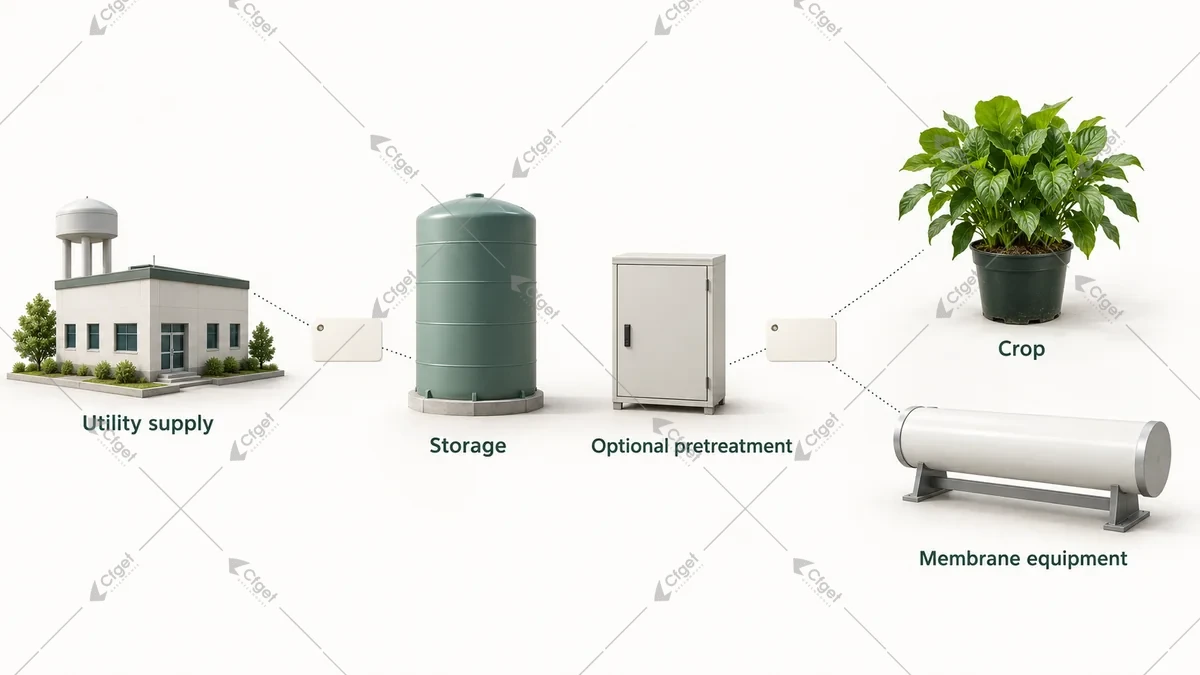
- Water analysis, flow, storage, treatment, irrigation, drainage, and recovery
- Electrical service, peak demand, energy assumptions, backup power, and safe states
- Controls, sensor map, trends, alarms, interlocks, manual modes, and data access
- Supplier, owner, and local contractor interfaces, exclusions, permits, and inspections
- Factory tests, site tests, dark-period test, seasonal verification, training, and records
Technical references
- UMass Extension: photoperiod control systems for greenhouse crops
- University of Arkansas: greenhouse lighting and photoperiod control
- Chiba University review: resource use in closed plant production systems
Send one project brief through the CFGET contact page and require each option to return assumptions, interfaces, calculated duties, exclusions, acceptance tests, and an installed scope.