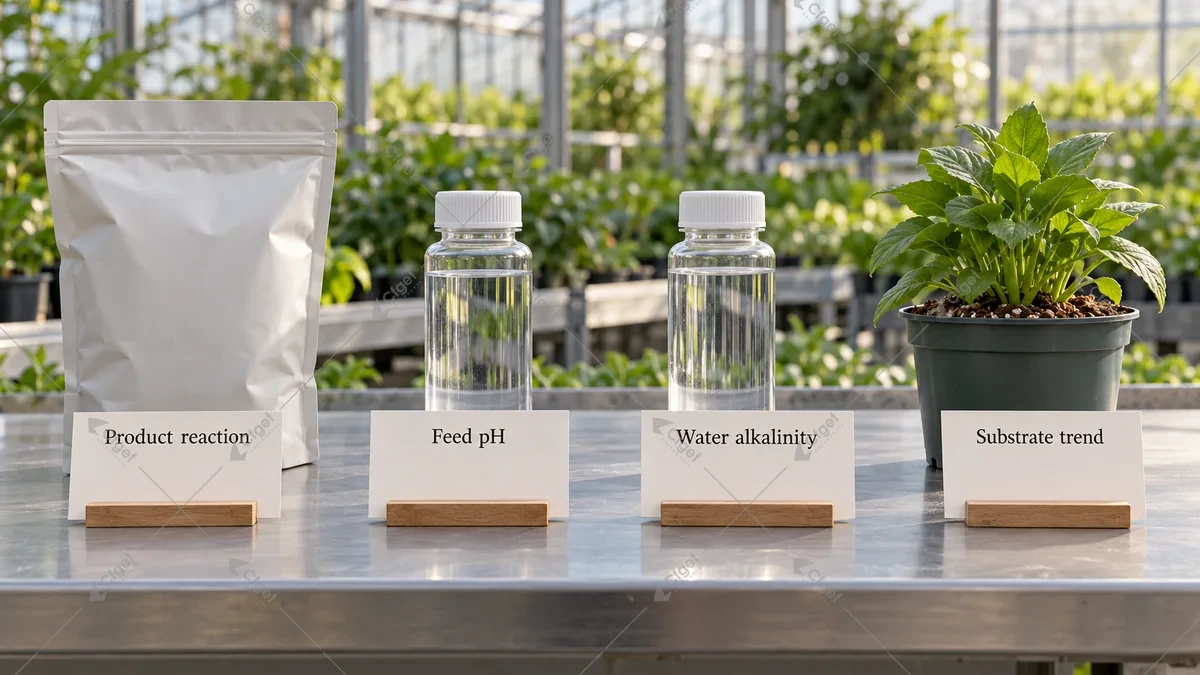
A controlled-release fertilizer sold as a five- or six-month product is rated under stated conditions. Before matching that number to a crop calendar, identify the exact product and the temperature basis. The greenhouse air setpoint alone does not establish the conditions experienced by fertilizer in the root zone.
Compare a temperature-conditioned release rating with the actual production and customer window. Keep nutrient release, crop uptake and calendar time separate. A month range can inform a fertilizer review, but it does not guarantee that one application will meet every stage of a crop’s needs.
Read the temperature beside the month rating
A named example is ICL UK’s Osmocote 5 5–6M page, checked October 3, 2026. It states that longevity is determined at 21°C and lists these temperature cases:
| Listed temperature | Manufacturer-listed longevity | How to use the information |
|---|---|---|
| 16°C | 5–7 months | Retain as a named-product rating case |
| 21°C | 5–6 months | Identify as the stated reference condition |
| 26°C | 4–5 months | Recognize that warmer conditions change the listed duration |
These are manufacturer values for that UK ornamental/nursery product, not observations from a CFGET project or instructions to hold a crop at any of those temperatures. Do not transfer the table to another coating, formulation or region’s product with a similar name.
The comparison already changes a purchasing question. “Will a five-to-six-month fertilizer cover my five-month commitment?” becomes “Which product, which root-zone conditions and which nutrient-supply window are we comparing?” The label has not become less useful; it has become properly specified.
Distinguish release duration from plant uptake
Purdue’s greenhouse and nursery fertilization publication explains that controlled-release behavior depends on the product’s coating as well as temperature and substrate moisture. It also discusses different release patterns and nutrient supply beyond the production period. A shared month rating therefore does not, by itself, establish identical release behavior between two products.
Release means nutrients become available from the product over time. Uptake concerns what the plant takes in under the crop’s actual conditions. A duration label does not prove that release and uptake match at every stage, nor that other fertilizer already in the substrate or irrigation water can be ignored.
Ask the crop adviser to reconcile all nutrient contributions. Keep the complete formulation, coating/version and locally supplied label attached to the comparison. “Slow release” is a broad description; it should not be treated as one uniform technology.
Put the root-zone history beside the crop window
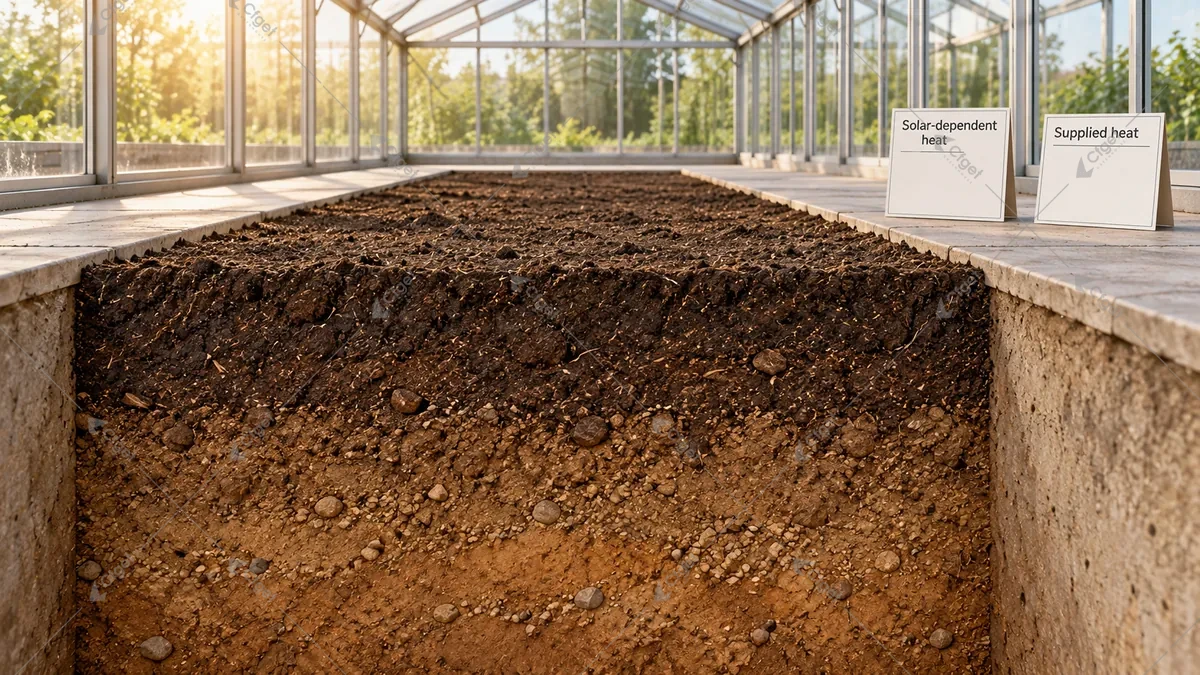
Separate measured root-zone temperatures from an air-control setting or a planning assumption. Record where and when the temperature evidence applies and which crop block it represents. If no root-zone history exists for the proposed season, label that gap rather than rewriting the air setpoint as a measured substrate temperature.
A fluctuating greenhouse profile is also not one of the fixed cases in the product table. Do not average two listed longevity ranges, multiply months by a temperature ratio or invent a depletion curve. Ask the manufacturer or adviser what supported interpretation is available for the actual conditions.
The crop calendar needs equally clear boundaries. Record the product’s approved application/start date, the expected finish date and any onward holding or customer period the nutrition plan is intended to support. Shipment from the nursery may end the grower’s production period while leaving a longer commercial commitment.
A simple calendar exposes the unsupported promise
Consider a hypothetical nursery plan with product applied at the start of production, crop shipment at the end of month four and a further month of customer holding included in the discussion. The calendar commitment is five months. The quoted product carries a five-to-six-month rating at its reference temperature.
That is a plausible reason to investigate the product, not proof of coverage. If the relevant root-zone conditions are closer to the named manufacturer’s warmer case, the listed duration is different. Even then, the comparison does not establish precisely when nutrients become limiting or whether the crop’s uptake is met.
Now suppose shipment is delayed. The production window has changed even if the fertilizer bag has not. Reopen the adviser’s assessment rather than treating the original month count as an automatic guarantee. Conversely, an early sale does not show how much nutrient remains in the visible prills.
The useful planning outcome is a documented nutrition plan for the intended window, with the unsupported portion clearly identified. It may require further product evidence or a revised crop plan. It is not a conclusion that a longer-rated product is always preferable.
Use monitoring without confusing the sampling method
UMass growing-media guidance warns that controlled-release pellets can affect sample results and emphasizes consistent sampling. Tell the laboratory or crop adviser which product is present and follow the agreed method. A changed extraction method can obscure a trend just when the team is trying to understand nutrient supply.
The substrate EC test-method guide explains why unlike test results should not be compared as one series. Keep the product review connected to the substrate and irrigation choice, while leaving product rates and crop targets to the agreed nutrition program.
Complete the product-and-window review
Download the controlled-release product and crop-window review. This is a manual worksheet without release or depletion formulas. Open the UTF-8, comma-separated file and enter the exact product rating, reference temperature and evidence for your root-zone conditions in separate fields.
Add the crop finish and onward holding dates, existing nutrient inputs and adviser’s response. Mark unknowns explicitly. A completed comparison should say which conditions support the intended window and which still need evidence. It should never turn the word “months” into a promise that the crop will need no further review.