Before buying a line for “microgreens,” describe what will actually grow, when it will be harvested and who will do the cutting. A marketed name does not settle the U.S. food-safety scope. The same broad young-greens business idea can conceal different production and handover routes.
Have the actual route reviewed before assigning equipment, space and recordkeeping responsibilities. This is U.S.-market planning information, based on official material checked October 2, 2026. It does not classify a real business, certify compliance or establish that a product is safe to eat.
Describe the production route before naming the rule
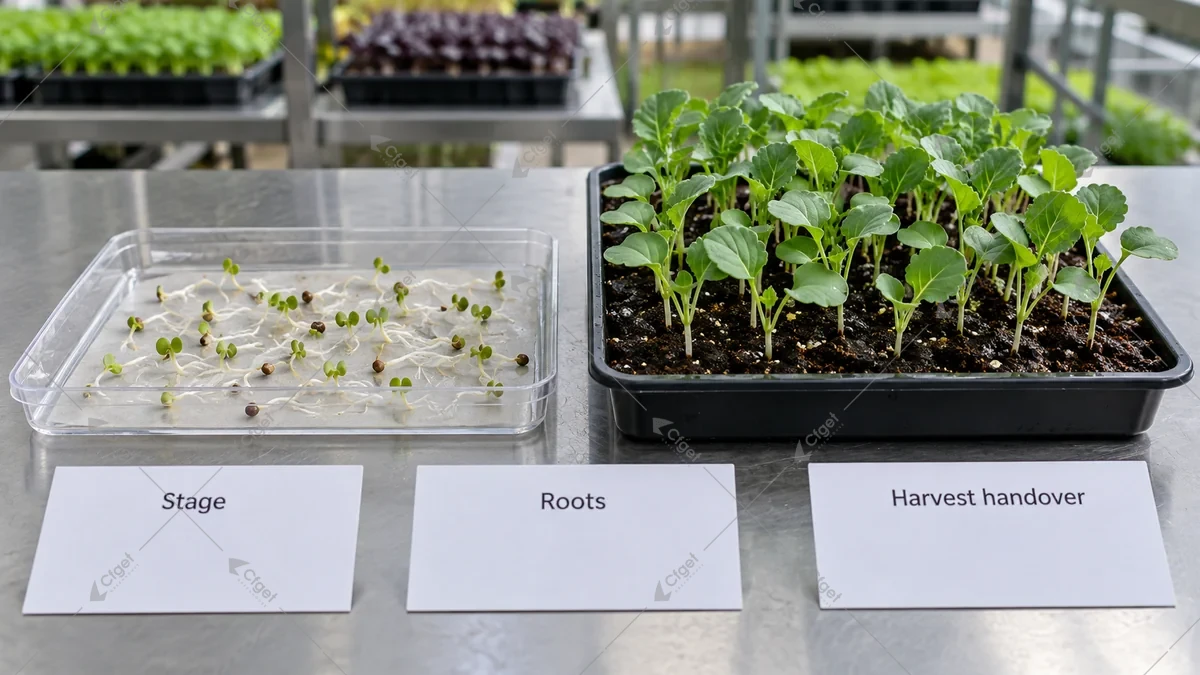
FDA’s September 2023 final sprout guidance, coverage sections B and C, distinguishes sprouts from microgreens using actual growth and harvest characteristics. Leaf development is central: sprouts are generally harvested earlier, whereas microgreens reach a later stage associated with true-leaf emergence. The guidance’s description of typical substrate-grown microgreens does not mean hydroponic microgreens automatically become sprouts.
For sprouts, method and harvest boundary also matter. Hydroponically grown sprouts remain within sprout-specific Subpart M even when roots are removed. Some soil- or substrate-grown sprouts harvested above the medium are outside Subpart M, while those harvested with roots fall within it. Other applicable Produce Safety Rule duties may remain.
Whole-tray delivery to a commercial customer who later cuts above the substrate has a separate conditional enforcement-discretion discussion in the guidance. It is not a blanket exemption. Refer that branch, including the required assurances and current policy, to qualified review. Do not redesign a route simply to claim that one word or root-removal step avoids the rules.
Keep guidance status and rule requirements distinct
The FDA guidance landing page identifies the September 2023 final guidance and a separate revised draft. It explains which sections were finalized and which were reissued as draft. A downloaded document’s date and status belong in the review record.
Guidance recommendations and binding regulatory provisions do not have identical status. Ask the reviewer to identify the applicable provision or current policy for each conclusion, rather than attaching a generic “FDA compliant” label to the whole equipment quotation. The page also describes broader Produce Safety Rule subjects, including agricultural water, personnel hygiene, buildings, equipment and sanitation. Being outside one sprout-specific subpart does not erase all such responsibilities.
No general article can determine your farm’s exclusion, exemption or other obligations from a product name. Include the actual business activities and market route in the qualified review, and check current federal, state and local requirements where relevant.
Build a production-route evidence card
Prepare the card before requesting a final facility price. It should contain enough detail for someone who has never visited the operation to understand the proposed product and its movement.
| Record | Describe the actual proposal |
|---|---|
| Identity and stage | Botanical crop, marketed name and observed or intended leaf stage at harvest |
| Growing route | Method and medium, with the relevant water/production arrangement described |
| Harvested material | Whether roots, seed and growing medium remain with the product |
| Handover | Where cutting occurs, who performs it and whether whole trays leave the operation |
| Later activity | Raw-product handling versus any further-processing boundary |
| Review | Document edition, applicable provisions, reviewer’s conclusion and open questions |
Use drawings, representative stage images and a process description as evidence, without treating a single picture as a legal classification. Where the route is still undecided, show both alternatives. A reviewer cannot give a useful route-specific answer if the proposal quietly switches from cut product to whole-tray supply halfway through the discussion.
Three planning examples expose different gaps
Example one: a hypothetical quotation calls the product microgreens, but the operating description stops at germinated seed and cotyledons. The team has not specified the actual harvest stage. The immediate task is to complete that description and obtain a classification review. Relabeling the invoice does not close the gap.
Example two: a proposed hydroponic sprout route removes roots at harvest. The team assumes this step eliminates Subpart M. That assumption conflicts with the FDA distinction described above. Keep the actual route in the review and establish the relevant responsibilities before pricing the line as though those duties do not exist.
Example three: a nursery proposes to supply intact substrate trays to restaurants, with cutting performed there. The handover location and recipient activity are essential facts. Ask the reviewer whether the current conditional enforcement policy applies and what evidence and continuing obligations follow. A customer’s informal intention to cut later is not a completed regulatory review.
These examples are fictional planning situations. They give different next actions because the missing facts differ. None authorizes production release or substitutes for a food-safety plan.
Translate the reviewed route into purchasing responsibilities
Once the route is described, connect each identified obligation to an owner and a quoted boundary. Who supplies the relevant equipment or space? Who prepares and maintains the records? Which tasks remain with the grower after installation? Keep unresolved responsibilities visible instead of assuming that buying an indoor line transfers them to the vendor.
The University of Vermont’s Legacy Greens field case illustrates practical attention to food-contact surfaces and cleanability in an indoor microgreens operation. It is a third-party example, not proof that copying its equipment establishes compliance or safe product. It supports asking concrete design questions even when the business is described as microgreens.
Download the production-route review card and equipment and responsibility register. Keep the reviewed version with the quotation and reopen affected questions if the crop stage, growing method, harvest party or customer handover changes.
Carry unresolved route and responsibility assumptions into the commercial greenhouse feasibility review. A useful purchasing outcome is a clearly described route, a qualified scope assessment and assigned responsibilities. Test methods, sanitation procedures and product-release decisions require their own properly qualified work.