If a U.S. greenhouse project includes “crop insurance” in its risk plan, identify the actual program before relying on that assumption. USDA’s Controlled Environment pilot has particular structure, crop, location and loss conditions. It is not a general name for insurance against everything that can damage a greenhouse business.
For a construction or risk-budget discussion, take the actual project and intended loss scenario to a qualified crop-insurance agent. This article is educational planning information for the U.S. program, using official materials checked on October 2, 2026. It does not determine eligibility, recommend a policy or establish whether a claim would be paid.
Use the document for the intended crop year
Version differences are material here. At the date checked, RMA’s general Controlled Environment landing page still describes a regulated plant disease. RMA’s February 3, 2026 announcement says the word “regulated” was removed for the 2027 and succeeding crop years. The change broadens the disease wording; it does not eliminate the program’s other conditions.
Use the 2027-and-later Controlled Environment Insurance Standards Handbook and the applicable policy documents for the proposed crop year. Ask the agent to identify the governing version and current county availability. An old summary saved with an equipment quotation is not enough to settle either question.
Keep the crop year distinct from the date you plan to sign a construction contract or receive plants. A dated answer should identify which program year and location it addresses. If the facility plan changes, return that change to the agent rather than assuming the earlier response follows the project automatically.
Take the actual structure drawing to the agent
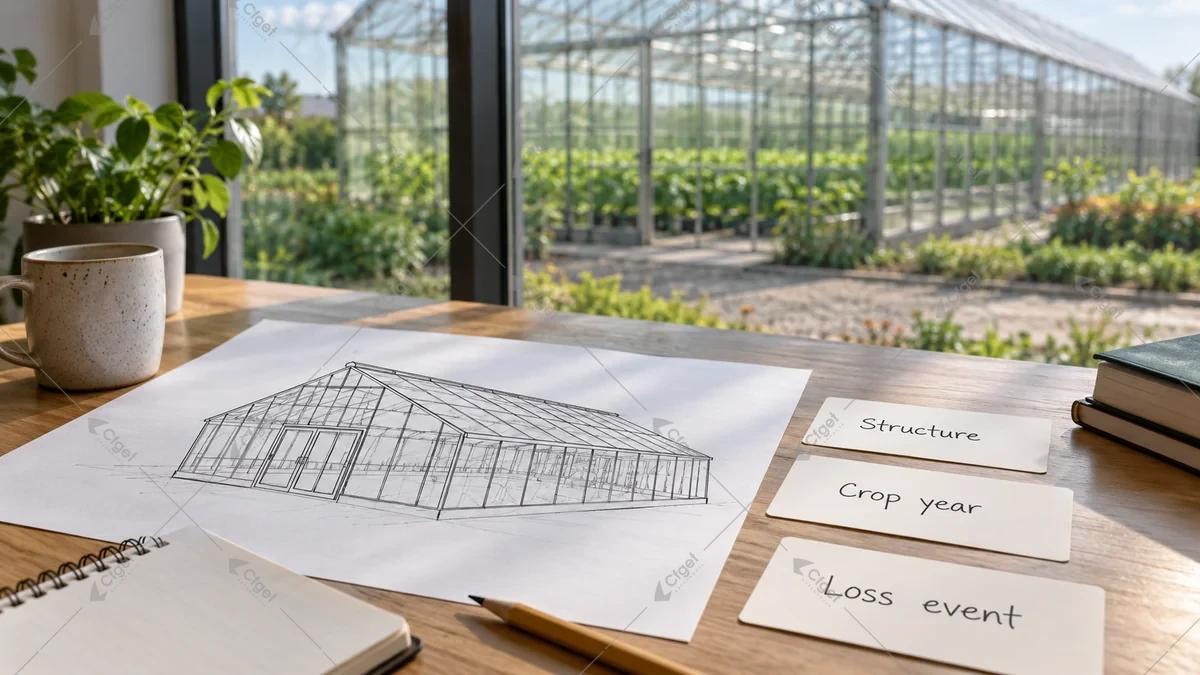
Paragraph 11 of the 2027 handbook requires fully enclosed structures while the plants are present. It allows ventilation windows or panels and access points, but excludes plants in structures with openable vertical surfaces such as roll-up sides. These are conditions of this named program, not a rule for every commercial insurance policy.
The distinction makes the actual drawings important. Do not decide an ambiguous side-vent design from a photograph or from the word “greenhouse.” Ask the approved insurance provider to assess the roof, walls, openable surfaces and operating arrangement shown in the current design.
Imagine a hypothetical project team that budgets for CE protection while its preferred house has roll-up sides. That is a material mismatch to raise before committing to construction. The useful next step is an insurer review of the real arrangement and a separate discussion of other risk coverage. It is not an automatic instruction to rebuild the house to pursue one insurance program.
Describe the event as well as the damaged asset
The February 2026 RMA FAQ describes the unknown introduction of plant disease or contamination, at no fault of the operator, leading to specified destruction-order or quarantine conditions. In the quarantine branch, the alternate quarantine release strategy and the actual destruction conditions matter. A disease observation alone does not establish the insured trigger. Nor does the presence of an order guarantee payment under the complete policy.
Separate the questions in a hypothetical incident. A heating-system failure damages equipment and interrupts production; plants also become unsaleable. Writing “greenhouse crop loss” beside all three consequences does not demonstrate that CE addresses them. Ask which program or policy, if any, addresses each event and asset. Have the agent identify exclusions, documentation and other conditions without assuming that one answer covers the entire incident.
The University of Kentucky’s January 2025 horticultural insurance checklist is useful for keeping structure, plant and equipment conversations separate. Its older program summaries should not replace current RMA materials. Business interruption also deserves its own explicit discussion rather than being inferred from plant coverage.
Record the questions that can change the project assumption
| Discussion item | Bring to the agent | Retain in the project file |
|---|---|---|
| Program and location | Exact crop year, county and proposed production | Applicable documents and the provider’s response |
| Structure | Current drawings and descriptions of openable surfaces | The configuration actually assessed |
| Business and plants | Crop/practice description and wholesale-business evidence | Requested supporting records and unresolved conditions |
| Loss scenario | Event, affected plants/assets and assumed trigger | Relevant clause and any separate coverage question |
| Timing | Application, documentation and planned crop dates | Confirmed attachment date and remaining prerequisites |
This record should preserve the question and response, not award an eligibility score. “Drawing review pending” is more useful than an optimistic tick beside “fully enclosed.” Likewise, “plant disease identified” and “policy trigger established” must remain separate entries.
Check attachment timing instead of guessing from one date
The RMA FAQ distinguishes the sales closing date from when insurance attaches. It describes waiting conditions for new or first-year insureds applying after that date, while carryover documentation has different timing requirements. Therefore, “September 1 has passed, so no new application is possible” is not a sound general conclusion. The agent needs the county, crop year, applicant status and acceptable-document dates.
Download the CE pre-purchase discussion sheet. Use it to prepare the meeting, then retain the provider’s dated written answers and document references. The sheet is not an application, claim form or instruction to destroy plants.
Before treating CE as part of an investment assumption, resolve the applicable structure, business, plant/practice, location, event and timing questions through the actual policy and insurer. Carry any unanswered item into the greenhouse feasibility review as an unresolved risk-plan assumption. Recheck current official material before relying on the program in a project, especially when the intended crop year changes.