Start with the sales and crop plan
State whether the project will serve a seasonal peak, extend shoulder months or target a winter program. Record the intended customer, pack specification, delivery frequency and acceptable grade-out. These choices affect cultivar, plant type, planting dates, harvest labor, cooling capacity and the value of supplemental light. A winter strategy should not be added after the greenhouse and utilities are already priced.
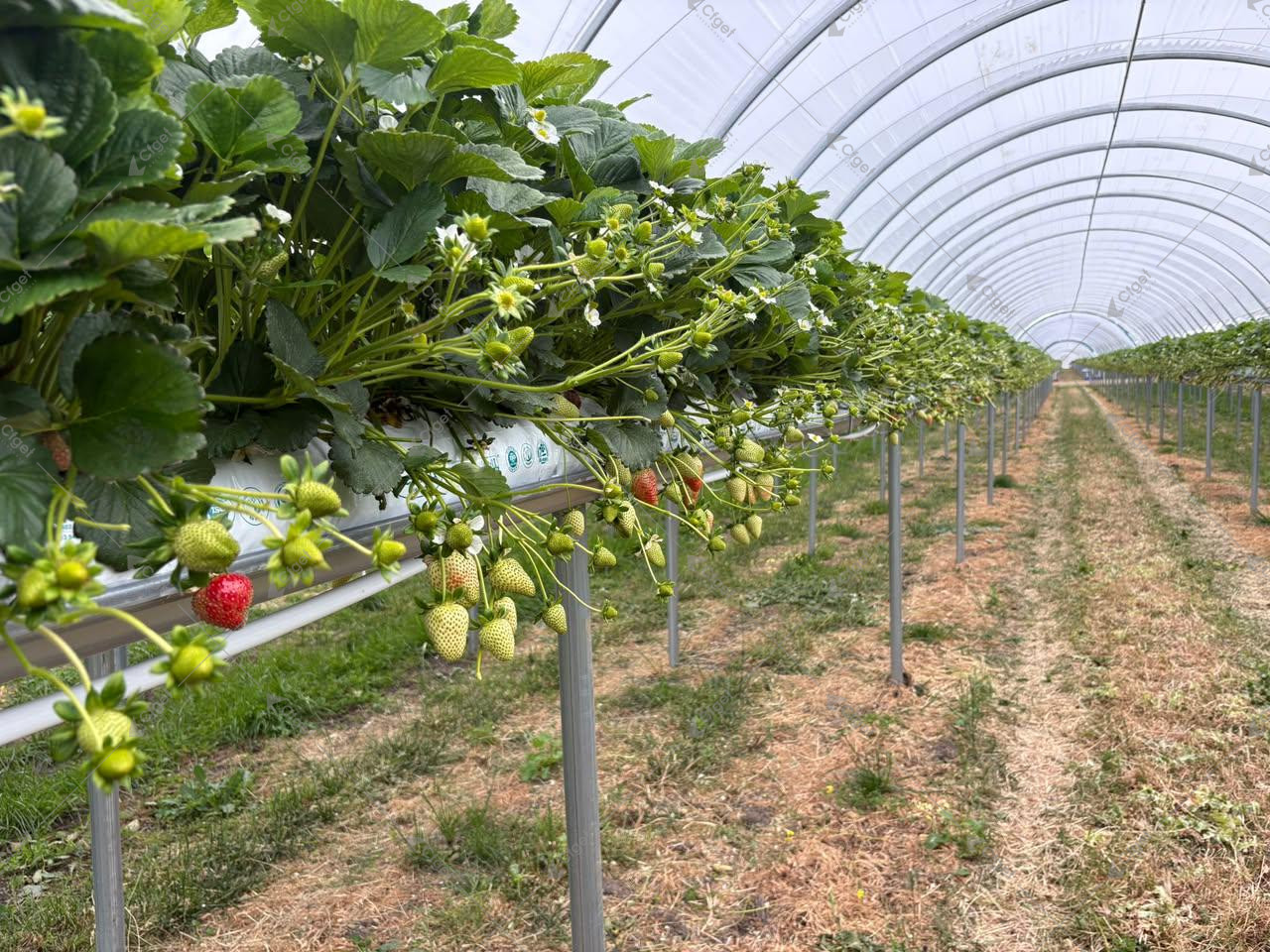
The crop brief should name the cultivar groups, chill and photoperiod assumptions, plant source, gutter or tabletop system, planting density, substrate volume, row direction and working height. It should also show propagation, quarantine and crop removal. CBS production statistics can describe national trends, but they do not prove that a particular greenhouse will be profitable. The business case still needs the buyer’s own market, energy and labor data.
Compare envelopes with the same design basis
| Decision | Buyer input | Evidence to request |
|---|---|---|
| Structure | Site wind, snow, suspended crop and equipment loads | Governing standard, load combinations, reactions, connections and corrosion protection |
| Covering | Useful light, insulation, condensation control and cleaning access | Installed assembly data, joints, seals, gutters, replacement plan and warranties |
| Ventilation | Crop zones, screen resistance, rain and wind operating limits | Net opening after screens, airflow basis and safe operating sequence |
| Energy screens | Light loss, heat retention, moisture movement and maintenance | Screen properties, deployment logic, gaps, drive layout and acceptance test |
Glass may support a high-light, long-life project with tightly integrated equipment. Film can reduce initial envelope cost and may suit a different production window or replacement plan. Tunnels can fit seasonal protection. Compare options against identical outside design conditions and crop duties. A proposal that changes the weather file, internal setpoints or included equipment between options is not a fair comparison.
Build an hourly energy and moisture model
Dutch strawberry production can require heating while also needing moisture removal. Ask for an hourly model that states the weather file, crop transpiration assumptions, ventilation leakage, screen positions, heating supply and return temperatures, dehumidification strategy and lighting schedule. Annual totals alone can hide the hours when heat, electricity or dehumidification capacity is unavailable.
Wageningen research on low-chill strawberries documents the interaction among crop schedule, heat-pump electricity, recovered heat, dehumidification and seasonal storage. Those trial results are useful inputs for questions, not a guaranteed consumption figure for another greenhouse. The bidder should show which parts of its calculation come from measured project data, a simulation, equipment ratings or buyer assumptions.
Control dew risk in the crop zone
Botrytis risk is affected by free moisture, crop density, dead tissue, air movement and how long flowers and fruit remain wet. A wall sensor cannot describe every corner of a dense canopy. Place temperature and humidity sensors where the crop adviser expects representative conditions, then define how readings will be checked with portable instruments. The controls narrative should state what happens before sunrise, during screen movement and after irrigation.
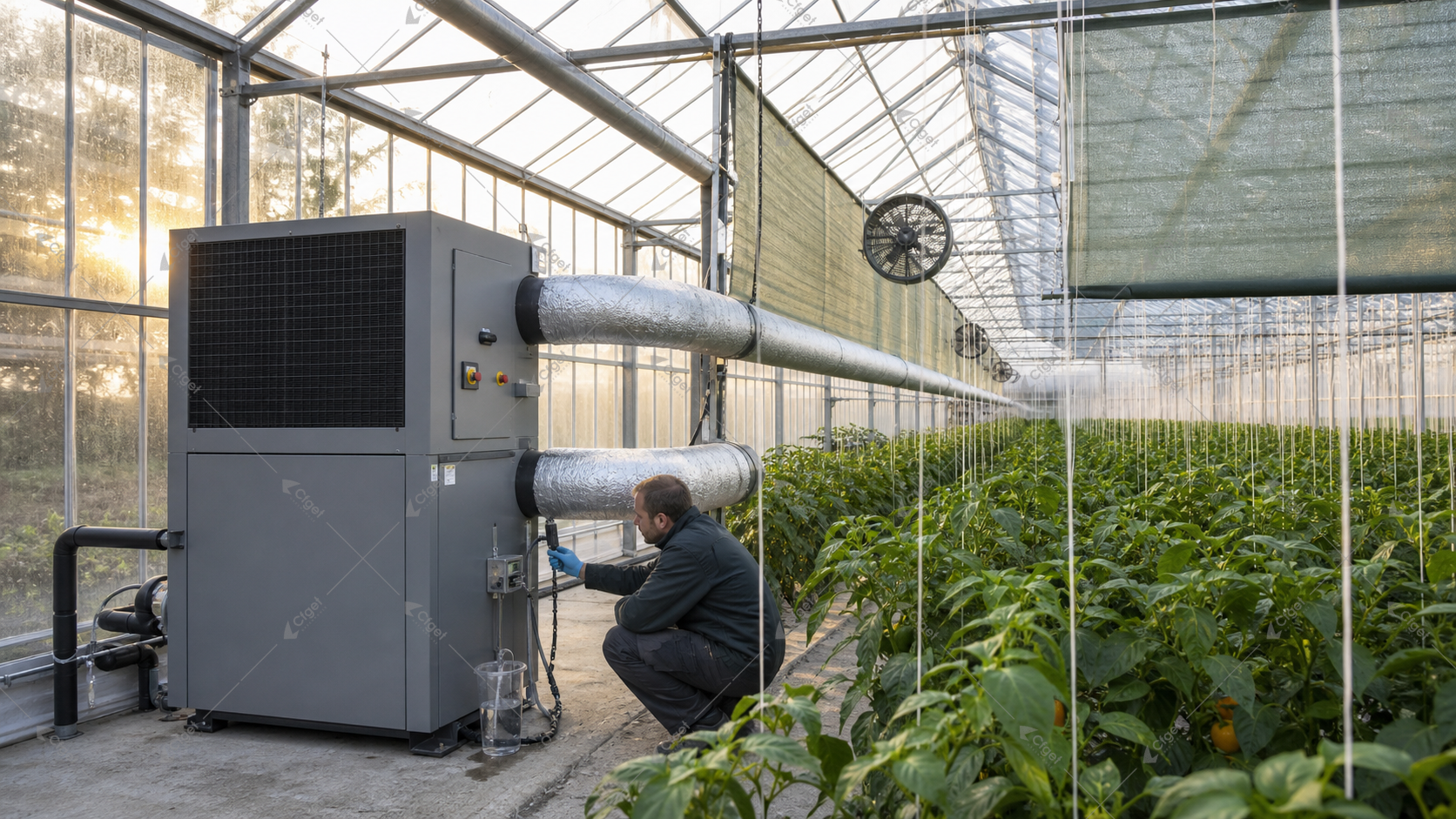
Ask the designer to show air supply, return, circulation and purge paths at plant level. Heat and ventilation used together for moisture control must have a written sequence. If active dehumidification is proposed, record condensate drainage, cleaning access, filter maintenance, heat rejection or recovery, redundancy and the safe response to a failed unit.
Coordinate lighting, screens and electrical capacity
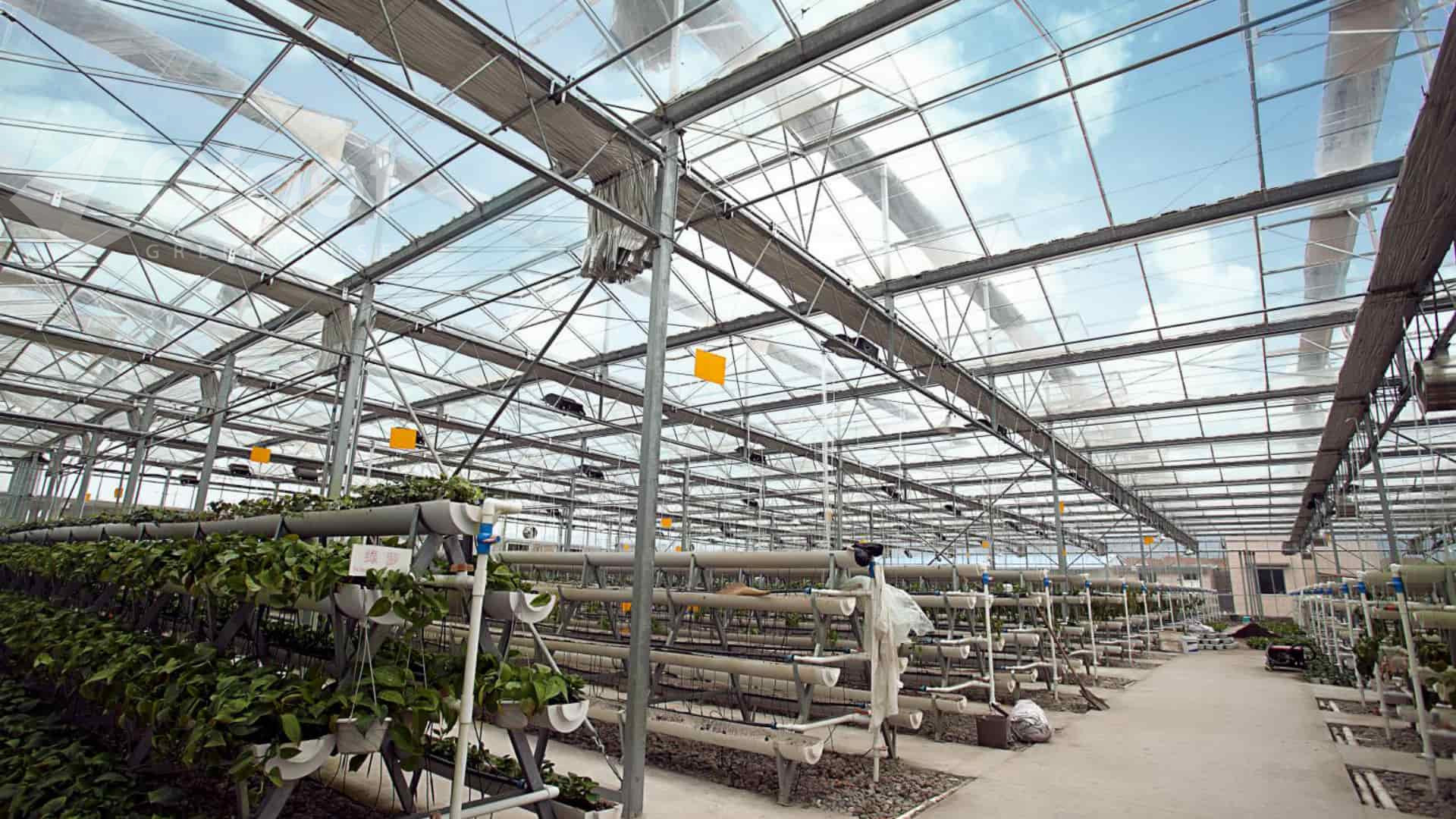
Supplemental lighting needs a cultivar, production window and economic boundary. Ask for fixture location, useful light at the crop, dimming zones, connected load, heat contribution, maintenance access and the interaction with screens and structural members. Do not accept a yield increase copied from one trial without its cultivar, plant density, background light, treatment and crop schedule.
Prepare the electrical single-line concept before quotation comparison. It should include lighting, pumps, fans, controls, cold storage, staff areas and future expansion. State which loads need backup power, how long backup must operate and who is responsible for the generator, transfer equipment and fuel system.
Design the root zone from water analysis
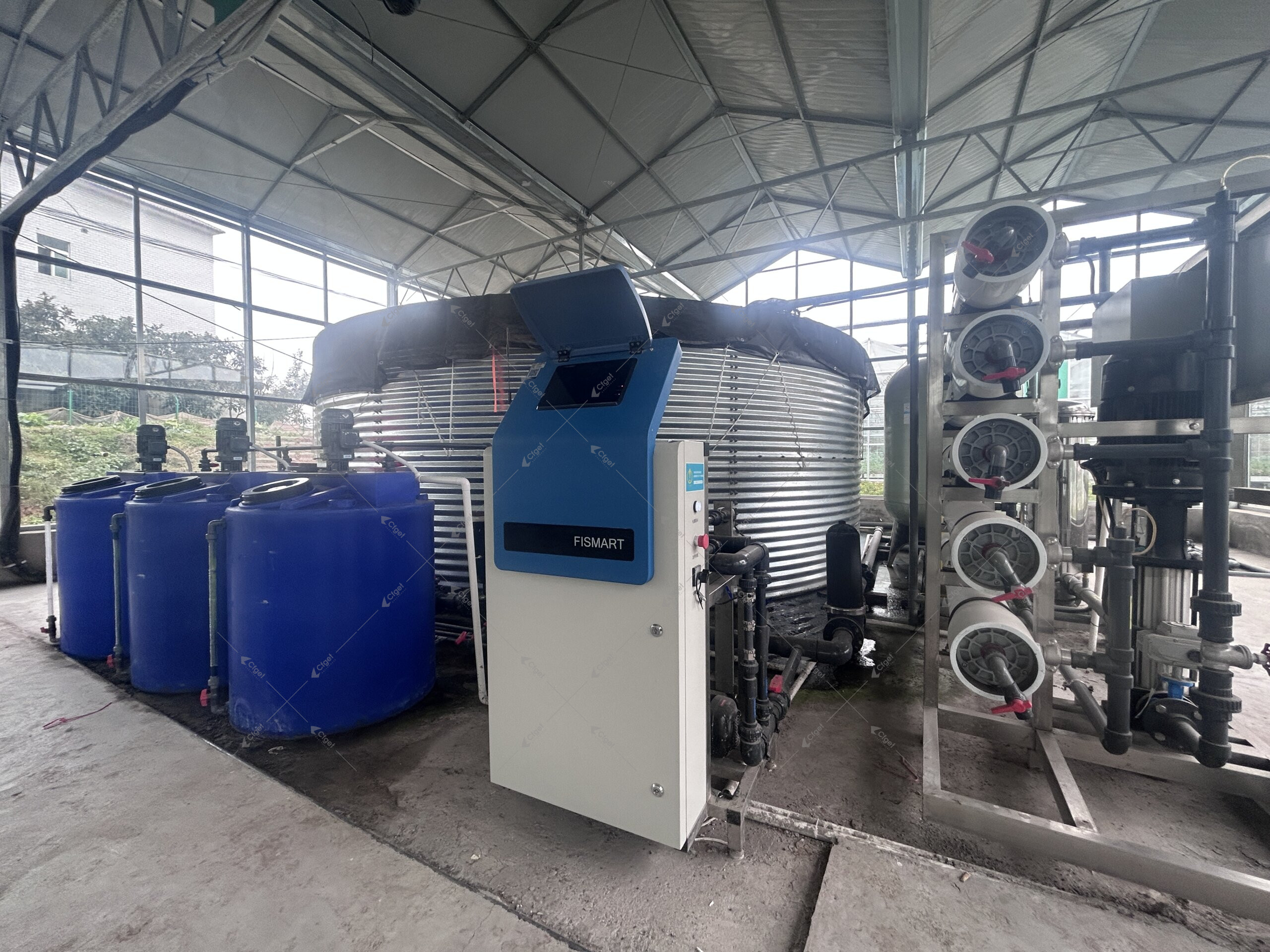
Send each bidder the same laboratory water report and source capacity. Include pH, electrical conductivity, alkalinity, sodium, chloride, bicarbonate, calcium, magnesium, iron and relevant microbiological indicators. Define storage, treatment, disinfection, dosing, drain collection and discharge boundaries. The project team should agree whether drain water will be reused and how sanitation will be verified.
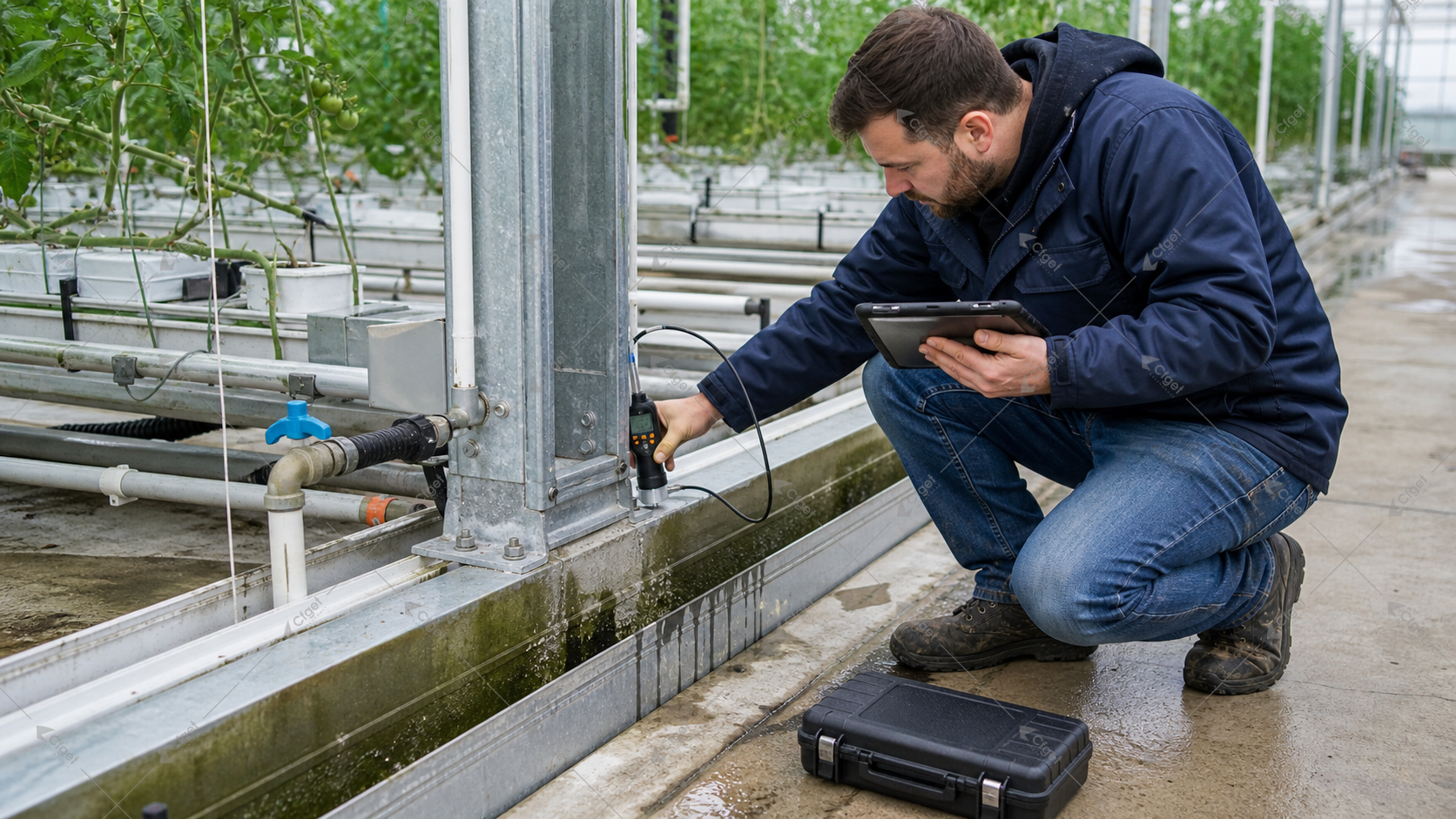
Gutter slope, emitter uniformity, substrate choice and irrigation-zone size affect crop consistency. Ask for sampling points, calibration access, cleanout methods and a commissioning test for flow and drain distribution. The supplier should state materials that contact fertilizers and cleaning agents.
Map labor, pollination and cold-chain flow
Show plant delivery, propagation, crop work, harvesting, grading, packing, cooling, dispatch and waste routes. Record trolley sizes, aisle widths, crossings, door clearances and work heights. A greenhouse can have strong climate equipment and still lose marketable fruit through slow harvest flow or insufficient cooling.
Pollination equipment and insect movement also need space and operating rules. Coordinate hive locations, pesticide restrictions, staff access and cleaning procedures with the crop adviser. Put hygiene transitions, handwashing, chemical storage and quarantine on the layout instead of leaving them as later operating notes.
Normalize the commercial quotations
Separate structure, covering, screens, climate equipment, irrigation, growing system, lighting, electrical work, civil work, utilities, freight, duties, installation, permits, commissioning and training. Record exclusions beside each line. Compare equipment at the same installed duty, not by brand name or nominal capacity.
The operating model should use local energy tariffs, labor, plant cost, packaging, crop cycles, marketable grade, maintenance and replacement intervals. Test a base and downside case. CFGET can provide capacities, layouts and scope boundaries, but cannot guarantee crop price, yield or payback.
Commission normal and failed operation
Commission vents, screens, heating, dehumidification, circulation, irrigation, lighting, alarms and backup power. Include sensor plausibility, communication loss, power loss, pump failure and a stuck vent or screen in the agreed tests. Record the expected safe state, recovery time, acceptance limit and responsible person.
Handover should include approved drawings, equipment schedules, controls narrative, setpoint ranges, calibration records, software backups, spare parts, manuals and training. These records allow operators to distinguish a design fault from a later settings change.
RFQ inputs for a Dutch strawberry greenhouse
- Site coordinates, survey, drainage, access, expansion plan and governing design criteria.
- Hourly weather file, utility connections, tariffs and available electrical capacity.
- Market window, customer specification, cultivar groups, plant type and crop calendar.
- Gutter layout, working height, planting density, substrate and suspended loads.
- Temperature, humidity, light and dew-risk boundaries by crop stage and hour.
- Water analysis, source capacity, treatment, storage, drain reuse and discharge limits.
- Heating, screens, dehumidification, ventilation, lighting and control responsibilities.
- Labor, pollination, hygiene, packing, cooling, waste and maintenance flows.
- Backup power, alarm ownership, remote support and spare-parts expectations.
- Installation, permits, commissioning tests, training, warranties and exclusions.
Related CFGET resources
Use the greenhouse installation guide to assign project stages, the climate-control scope to define equipment interfaces, the light-management overview for screens and fixtures, and the irrigation and fertigation scope for the water brief.
Technical references
- Wageningen University and Research: Energy use in low-chill strawberries
- Statistics Netherlands: Dutch strawberry production trend
- Penn State Extension: Managing Botrytis in the greenhouse
Send CFGET the site, crop calendar, weather file, utilities, water analysis and responsibility matrix. A useful proposal should show its calculation basis, coordinated drawings, installed equipment, exclusions and acceptance tests.