Skip to content
A greenhouse construction cost in Kenya is useful only when the quote names the site, crop, structure, systems, delivery terms, and installation boundary. A frame-only figure cannot be compared with an offer that includes foundations, covering, ventilation, irrigation, controls, freight, and site supervision. Start with one project brief, then ask every bidder to price the same scope.
The page cannot give a responsible universal price per square metre. County, elevation, wind exposure, drainage, access, imported content, local civil work, and the production season can change the design and the budget. The practical answer is a cost model with stated assumptions, not a single market number presented as current for every Kenyan project.
Define the Kenya project before requesting a price
Send a city or map pin, site boundary, planned growing area, crop, production months, growing method, water source, power availability, and the buyer’s installation plan. A supplier should ask for this information before selecting steel, covering, vents, irrigation, or cooling equipment. If the same standard package is offered for every Kenyan site, the quotation has not yet reached design stage.
| Input | What the buyer should provide | What the quotation should show |
|---|---|---|
| Site and climate | Map pin, elevation, exposure, local weather file, flood history | Named design conditions and the data source used |
| Crop duty | Crop, plant height, crop support, growing system, season | Clear height, hanging loads, bay layout, service access |
| Water and power | Water test, daily supply, voltage, reliability, backup plan | Treatment, storage, pump duties, connected and peak electrical loads |
| Project boundary | Owner work, supplier work, local contractor work | Inclusions, exclusions, interfaces, supervision and acceptance tests |
The FAO greenhouse vegetable guide treats the greenhouse as a combined crop, climate, water, and operating system. That is the right level for a cost brief. The structure price matters, but so do the systems that let the crop operate through the intended season.
Break the estimate into comparable cost packages
Ask for a bill of quantities or an equipment schedule. A total price hides the reason two offers differ. One supplier may include gutters, screens, insect net, control panels, spare parts, and installation tools while another leaves them to the owner. Currency, tax treatment, freight terms, quote validity, and payment milestones also need their own lines.
| Cost package | Items to identify | Common omission |
|---|---|---|
| Site and civil work | Survey, geotechnical work, clearing, drainage, foundations, roads | Ground improvement or stormwater work |
| Structure and covering | Steel grade, coating, connections, gutters, vents, doors, cladding | Fasteners, seals, flashing and replacement access |
| Climate equipment | Natural vents, fans, pads, screens, heating, sensors, controls | Installed airflow, pump head, panel capacity and commissioning |
| Crop systems | Irrigation, fertigation, drainage, crop support, growing channels or beds | Water treatment, return handling and sanitation points |
| Delivery and installation | Packing, inland transport, customs boundary, cranes, labor, supervision | Tools, accommodation, consumables and local permits |
| Handover | Drawings, manuals, spares, training, test records, warranty terms | Named acceptance criteria and defect response |
Keep capital and operating costs separate. A lower initial price can require more labor, water, fuel, film replacement, or maintenance. The operating comparison needs the same production season and crop assumptions. Do not turn a supplier estimate into an ROI promise. Revenue, grade, yield, market price, downtime, finance, and crop losses belong to the owner’s model.
Match the structure and systems to the site
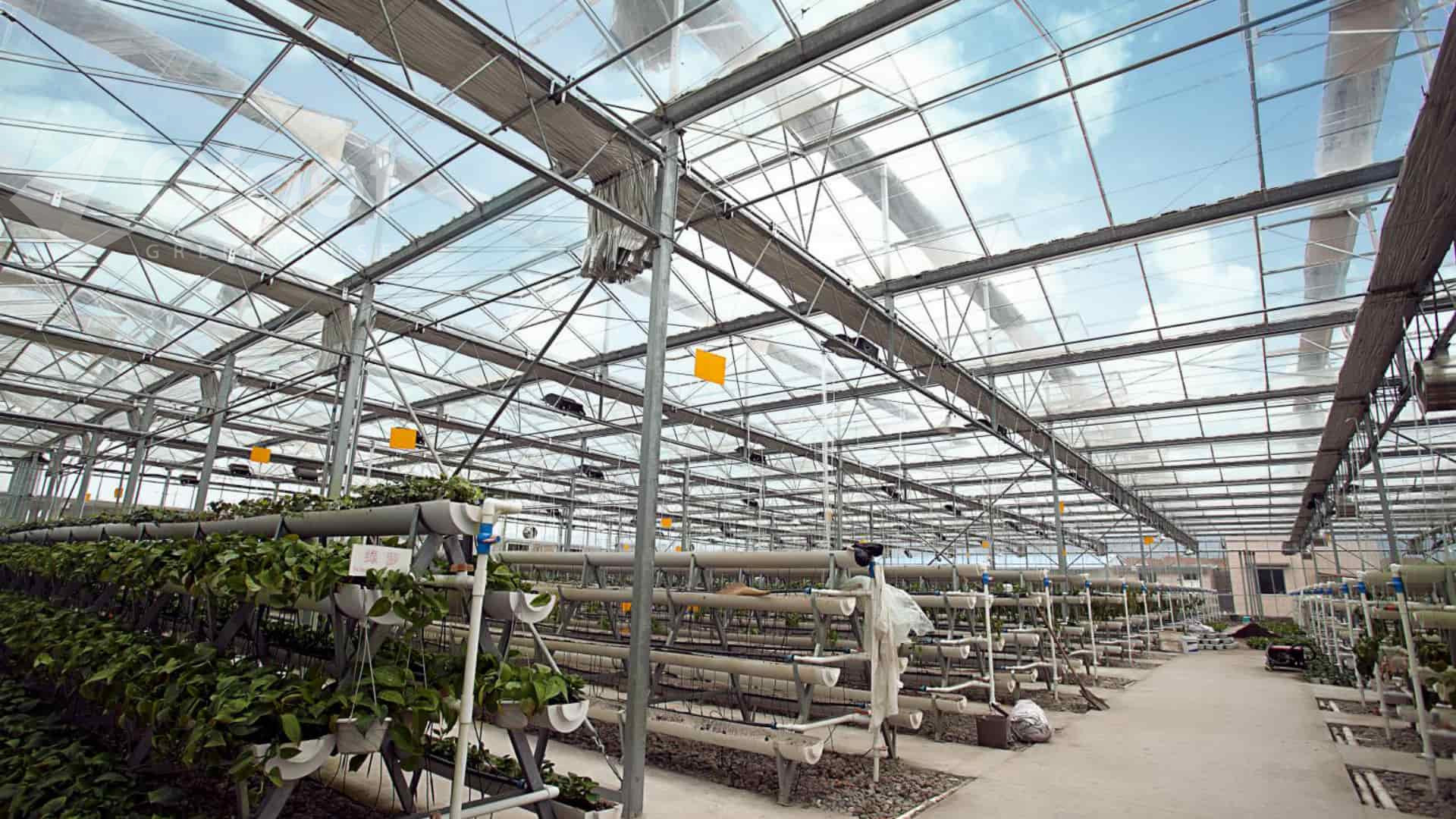
Film, polycarbonate, glass, shade, and rain protection solve different problems. The correct route depends on the local climate and the crop contract. A naturally ventilated film house may suit one production window. Another site may need insect exclusion, staged mechanical cooling, tighter moisture control, or a rigid covering. Each added system changes structure loads, power, water, maintenance, and control logic.
Ventilation must be checked after insect net and screens are included. Water treatment should be based on a laboratory report, not the appearance of the source. Foundations need site soil and local structural review. A greenhouse that is adequate on level, firm ground can need different civil work on expansive soil, fill, a slope, or a flood path.
Compare quotations on one schedule
Normalize each offer before selecting a contractor. Use the same units for greenhouse area, steel, covering, vent area, airflow, cooling water demand, pump duty, electrical load, controls, spares, freight, and installation. Mark every blank as included, excluded, owner supplied, or not yet designed. Do not assume a blank line is included.
The general greenhouse cost guide explains the wider cost buckets. This page owns the Kenya site and procurement brief. For structure options, use the greenhouse system overview. A final request can be checked against the commercial greenhouse RFQ checklist.
Require tests before accepting the project
Handover should be tied to evidence. Structure and foundation records, cladding inspection, leak checks, vent travel, fan rotation, pump curves, filter pressure, irrigation uniformity, sensor calibration, alarm tests, control sequences, and operator training should be recorded. The supplier and owner should agree how defects are logged and closed.
Control quotation revisions and project changes
Give every quotation a revision number, issue date, currency date, validity period and list of referenced drawings. When the greenhouse area, covering, crop system or installation boundary changes, ask the supplier to issue a revised scope matrix instead of changing only the total. This protects both parties from pricing one design and ordering another.
Keep an assumption register beside the price comparison. It should name the weather data, load basis, soil information, water report, utility condition, owner-supplied work and delivery route used for the offer. Mark provisional allowances and items that still need a local contractor’s quotation. A contingency is not a substitute for missing design, but it shows which amounts are still uncertain.
Before contract award, agree who can approve a change, how schedule effects are recorded and which documents must be updated. Drawings, the bill of quantities, equipment schedule, control narrative, packing list and acceptance plan should carry matching revision references. This prevents an early sales drawing from remaining in the contract after the technical scope has moved on.
RFQ inputs for a greenhouse in Kenya
- Company, contact, project city, map pin, and usable site boundary
- Crop, market channel, growing method, crop support, and production months
- Target growing area, preferred expansion phases, service and packhouse flow
- Local weather source, elevation, wind exposure, drainage and flood history
- Water source, laboratory results, daily availability and storage plan
- Power supply, voltage, outage history, backup power and energy limits
- Required covering, ventilation, cooling, irrigation, fertigation and controls
- Owner civil work, supplier work, installation labor and supervision boundary
- Delivery destination, Incoterm, schedule, permit responsibility and quote currency
- Drawings, bill of quantities, manuals, spare parts, training and acceptance tests
Technical references
- FAO: Good Agricultural Practices for greenhouse vegetable crops
- UMass Extension: Selecting and building a commercial greenhouse
Send the completed site brief through the CFGET contact page. Ask for a scope matrix beside the quotation so every price has a stated design basis and responsibility.