Fertigation tank sizing starts by separating concentrated stock tanks from mixed irrigation or day tanks. Calculate zone demand and operating sequence, then add usable-volume, mixing, refill, chemical-compatibility, cleaning, and contingency requirements without relying on floor area alone.
*By Coraline Liao, CEO, CFGET | Updated: August 30, 2026*
*Reviewed by CFGET Project Planning Team*
When I review greenhouse fertigation tank sizing, I start with the crop and the operator. Equipment that looks advanced can still fail if water quality, climate, labor skill, or maintenance is not planned.
Use this with our Commercial Greenhouse Buying Guide topic cluster. For a full project, keep it beside Commercial Greenhouse Solutions so the structure, systems, and crop plan do not drift apart.
What matters before a supplier quotes?
- Define each tank’s fluid, concentration, batch logic, and required autonomy before discussing litres or gallons.
- Build demand from zone flow, irrigation duration, number of cycles, overlap, drain target, and the operating day used for design.
- Separate nominal volume from usable volume after freeboard, minimum mixer level, suction clearance, and sediment allowance.
- Check chemical compatibility, secondary containment, level measurement, agitation, refill rate, cleanout, isolation, and backup procedure.
Key facts worth checking
| Question | Answer to make visible |
| What changes the recommendation? | Greenhouse fertigation tank sizing depends on climate, crop, site services, budget, installation, and maintenance ability. |
| What should the buyer send? | Location, crop, area, target season, climate issue, required systems, timeline, and installation scope. |
| What should the supplier prove? | The system layout, equipment scope, assumptions, limitations, spare parts, and support process. |
The order I would check the project
On a real project, I first ask what the greenhouse has to survive and what the crop has to earn. That keeps the decision away from catalog language.
Then I test the recommendation against the same project checklist: climate, crop, structure, systems, budget, installation, and maintenance.
Before ordering, a buyer should still confirm local wind load, snow load, permit rules, energy price, water quality, and crop economics. This can narrow the decision, but the final design still needs project engineering.
Details I would challenge in the offer
- A tank can be large enough by volume and still fail because refill, mixing, or transfer cannot keep pace with the irrigation sequence.
- I would not mix acid and fertilizer storage assumptions; compatibility, ventilation, bunding, and injection order need their own review.
- The operator should be able to verify concentration and recover from a low-level, mixer, dosing, or transfer fault without guessing.
Buyer checks before price comparison
| Buyer question | What to decide before requesting a price | Why it protects the project |
| Crop target | Temperature, humidity, irrigation, drainage, and harvest window. | Keeps equipment sizing tied to the growing plan. |
| Site limits | Water quality, power supply, heat, cold, wind, dust, and maintenance skill. | Prevents over-design or under-design. |
| Serviceability | Spare parts, controls, installation drawings, and operator training. | Reduces downtime after the greenhouse is built. |
Evidence pack
Greenhouse fertigation tank sizing needs project evidence before product names or a single price mean much.
| Project input | What to verify | Why it matters |
| Climate data | Monthly temperature, wind, snow, humidity, radiation, and extreme events. | The greenhouse has to fit the site, not just the catalog. |
| Crop plan | Crop, growing method, row spacing, target season, and labor skill. | Crop requirements change height, ventilation, irrigation, and control needs. |
| Supplier scope | Drawings, bill of materials, packing list, installation support, and after sales process. | Clear scope reduces hidden cost and wrong expectations. |
Climate and project assumptions to confirm
- Use local wind and snow load assumptions before confirming structure.
- Check the hottest and coldest operating months, the annual average alone.
- Confirm water quality and power availability before selecting irrigation or climate equipment.
Suitable when
- The crop, climate, structure, systems, and budget are defined together.
- The supplier can provide drawings, specifications, and a clear responsibility boundary.
- The buyer has a realistic plan for installation, operation, and maintenance.
Not suitable when
- The design is copied from another country without local climate review.
- The quote lists only product names and total price.
- Yield, payback, or lifespan is promised without assumptions.
What this guide adds to the basic answer
- Replace general product claims with project assumptions, measurable specifications, and a clear buyer risk boundary.
- Give the buyer documents and acceptance evidence that can be requested from the supplier.
Sources worth checking
- The Basics of Fertilizer Calculations for Greenhouse Crops
- cFertigUAL: A fertigation management app for greenhouse…
- UConn commercial greenhouse design resource
- UMass greenhouse selection and building resource
Neutral source to keep beside the quote
CFGET project planning note
For irrigation or fertigation projects, I would check water EC, filtration grade, pump head, zone uniformity, dosing accuracy, drainage path, and maintenance access before choosing equipment.
Buyer risk signal
Risk signal: the answer sounds confident but does not state climate assumptions, crop requirements, equipment scope, or maintenance responsibility.
Ask the supplier for these exact specs
| Spec to request | Why it matters |
| Source-water analysis, design flow, pressure range, filtration grade, and flushing points | These inputs determine emitter reliability and zone uniformity. |
| Emitter flow and spacing, zone layout, pump curve, dosing accuracy, and drainage measurement | The crop cannot be managed consistently when hydraulics and runoff are undefined. |
| Chemical compatibility, spare emitters, filter service access, alarms, and maintenance intervals | Serviceability matters more than controller features after commissioning. |
Project video: greenhouse irrigation and growing equipment
This field video shows greenhouse production equipment in use, which helps buyers connect the quote with daily operation.
Is the tank storing concentrate, mixed feed, or recovered water?
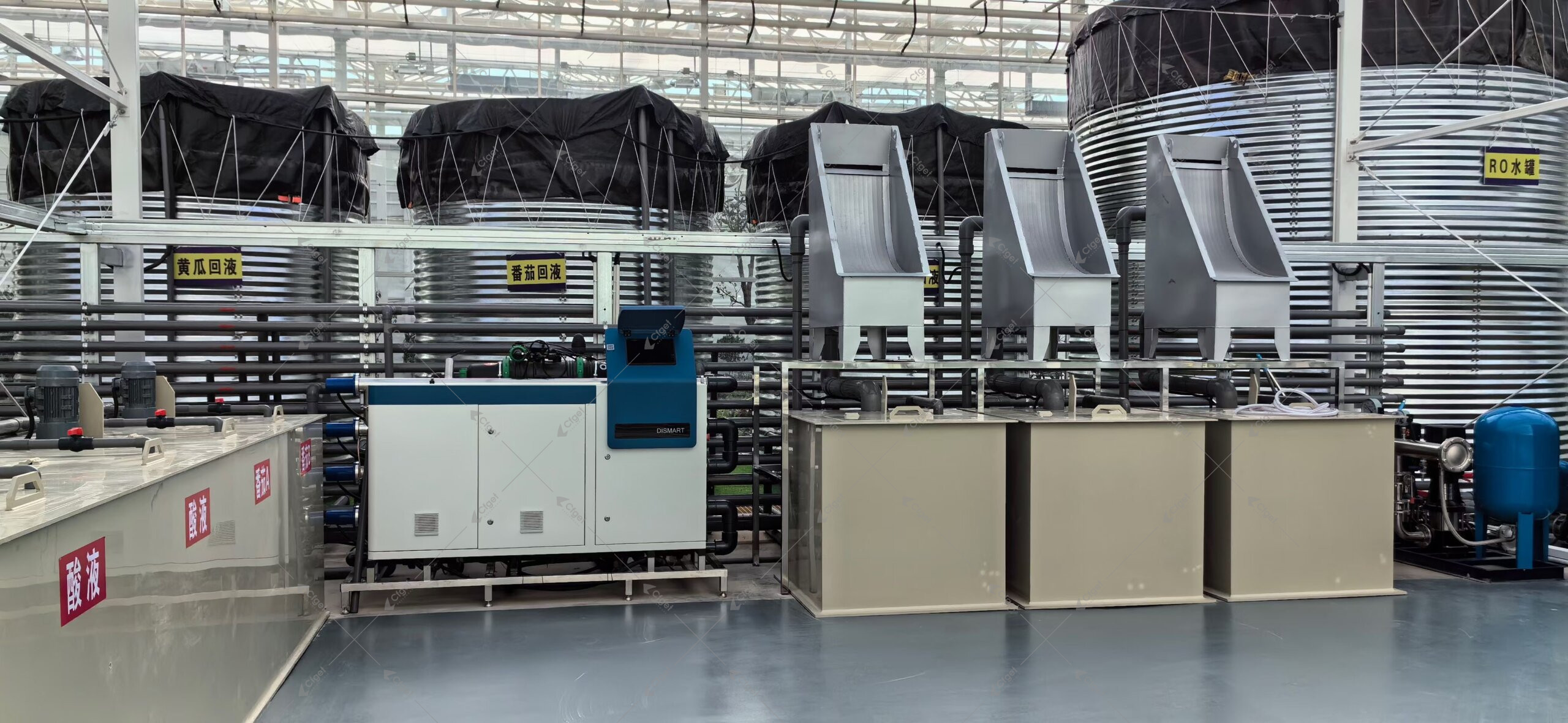
A stock tank holds concentrated fertilizer for proportioning; a day or batch tank holds diluted nutrient solution; a collection tank may hold drain water awaiting treatment. Their sizing equations and material risks are different. Label the process diagram before calculating capacity.
For stock solutions, begin with injector ratio, target nutrient recipe, stock concentration limits, chemical solubility, and desired refill interval. For batch tanks, begin with the largest irrigation sequence that must be completed before remixing.
| Sizing input | Calculation | Evidence |
| Zone demand | Flow multiplied by duration and scheduled cycles | Irrigation program and hydraulic schedule |
| Usable volume | Nominal volume minus freeboard and unusable heel | Tank geometry and level settings |
| Recovery | Refill, mixing, transfer, and contingency time | Operating sequence and fault test |
How I would evaluate it
I would follow the busiest irrigation sequence through source refill, stock draw, mixing, usable tank level, transfer, zone delivery, flushing, and fault recovery, then verify the tank material and containment against every chemical stored.
How do zone demand, refill time, and mixing set usable volume?
Calculate each zone from measured or designed flow and runtime, then apply the real schedule: simultaneous zones, pulse count, flushing, filter backwash, and expected drain fraction. Compare that demand with source-water refill, dosing, mixing, and transfer rates.
Usable volume is smaller than nominal volume. Reserve freeboard, keep the mixer and suction flooded as required, allow for level-control tolerances and sediment, and check whether the selected geometry leaves an unmixable heel.
| Check | Good sign | Risk sign |
| Process | Stock, batch, and recovery tanks are distinguished | One litres-per-area rule sizes every tank |
| Capacity | Usable volume and refill time cover the duty | Nominal tank volume is treated as available |
| Operation | Mixing, level, cleaning, and recovery are tested | The tank is accepted after filling with water |
What to request from a supplier
Ask for the process flow diagram, crop recipe, zone demand schedule, injector ratio, stock concentration, solubility check, usable-volume calculation, refill and mixing rates, tank and seal compatibility, containment, level instruments, cleanout, alarms, spares, and batch acceptance test.
What tank details prevent dosing errors and downtime?
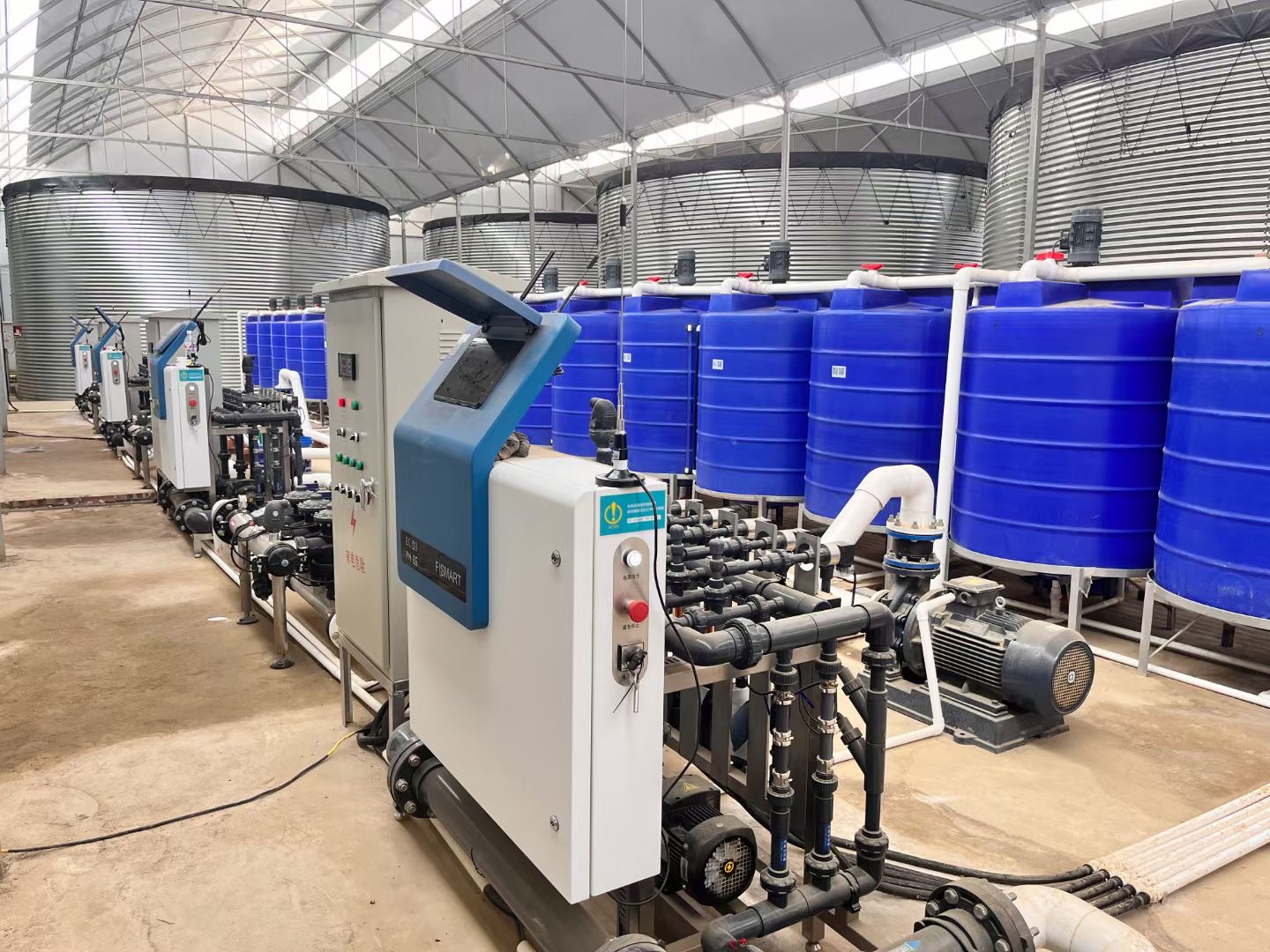
Specify tank material and seals for the actual chemical, concentration, temperature, and cleaning method. Provide safe filling, venting, secondary containment where required, calibrated level indication, drain and sample points, and access that does not require unsafe entry.
Commission by making a representative batch and following concentration, level, mixer operation, transfer, alarms, and recovery. Record fill calibration and verify that the longest irrigation sequence can finish at the required pressure and recipe.
| RFQ field | Example | Why it matters |
| Tank duty | A/B stock tanks plus mixed-water buffer | Defines separate calculations |
| Peak sequence | Largest zones and pulse schedule | Sets working demand |
| Refill and mix | Available source flow and required mix time | Sets recovery between batches |
| Chemistry | Fertilizer, acid, concentration, and temperature | Sets material and safety scope |
Practical next step
For a first CFGET review of this fertigation storage decision, send country and city, crop, area, target season, covering preference, cooling or heating need, irrigation method, and installation scope. Include the climate challenge, crop method, required systems, and installation scope. Photos, water data, climate files, drawings, or a site sketch also help. Email [email protected].
Final buying note
Greenhouse fertigation tank sizing works best when the buyer writes down the assumptions before looking at product names. A good decision combines engineering trade-offs with supplier proof and a realistic operating plan.
Before you use this recommendation
- Treat this as a planning guide, not a final engineering design.
- Check the local climate data, crop plan, water quality, energy cost, and building rules before ordering.
- Ask the supplier to show drawings, material specifications, equipment scope, packing details, and installation responsibilities.
- Avoid any quotation that promises yield, payback, or structural performance without stating the assumptions.
How these recommendations were assembled
I prepare these notes the same way I review an early buyer request: start with the search question, translate it into a greenhouse project planning checklist, check available project media, and keep neutral technical sources beside the quote when reliable public references are available. The point is to make assumptions, limits, and RFQ requirements visible before a buyer compares suppliers.
Coraline Liao is CEO of CFGET. Her public LinkedIn profile describes her as a Greenhouse Technical Director with more than 15 years in the greenhouse industry, focused on customized climate-control and greenhouse solutions. Her published technical topics include greenhouse structures, climate control, light management, hydroponics, and fertigation. Her article reviews begin with the crop, climate, site, project scope, installation boundaries, and operating constraints. Technical recommendations should be adapted to local climate data, crop plans, budgets, and professional engineering review before implementation.
Professional profile: Coraline Liao on LinkedIn
Company details
CFGET: Founded in 1996, CFGET designs, manufactures, and delivers greenhouse systems and smart farming solutions from its own factory in Sichuan, China.
Address: NO 108, South Area Chengdu Modern Industrial Park, Sichuan, China
Email: [email protected]
About the company: https://cfgreenway.com/about/
Company profile: GreenWay on LinkedIn
Technical videos: Greenhouse project channel on YouTube
Where this fits in the greenhouse buying cluster
Start with the hub, then open the system or crop pages that match your decision.
- Commercial Greenhouse Buying Guide
- Commercial Greenhouse Solutions
- Greenhouse Irrigation and Fertilization
- Greenhouse Hydroponics
- Greenhouse Growing Systems
- Greenhouse Project Cases