Design greenhouse reverse osmosis from representative feed-water analysis and an hourly water balance. Set recovery, pretreatment, membrane flux, concentrate disposal, blending, storage, cleaning, monitoring, and fallback supply together, not from nominal permeate flow.
*By Coraline Liao, CEO, CFGET | Updated: September 19, 2026*
*Reviewed by CFGET Project Planning Team*
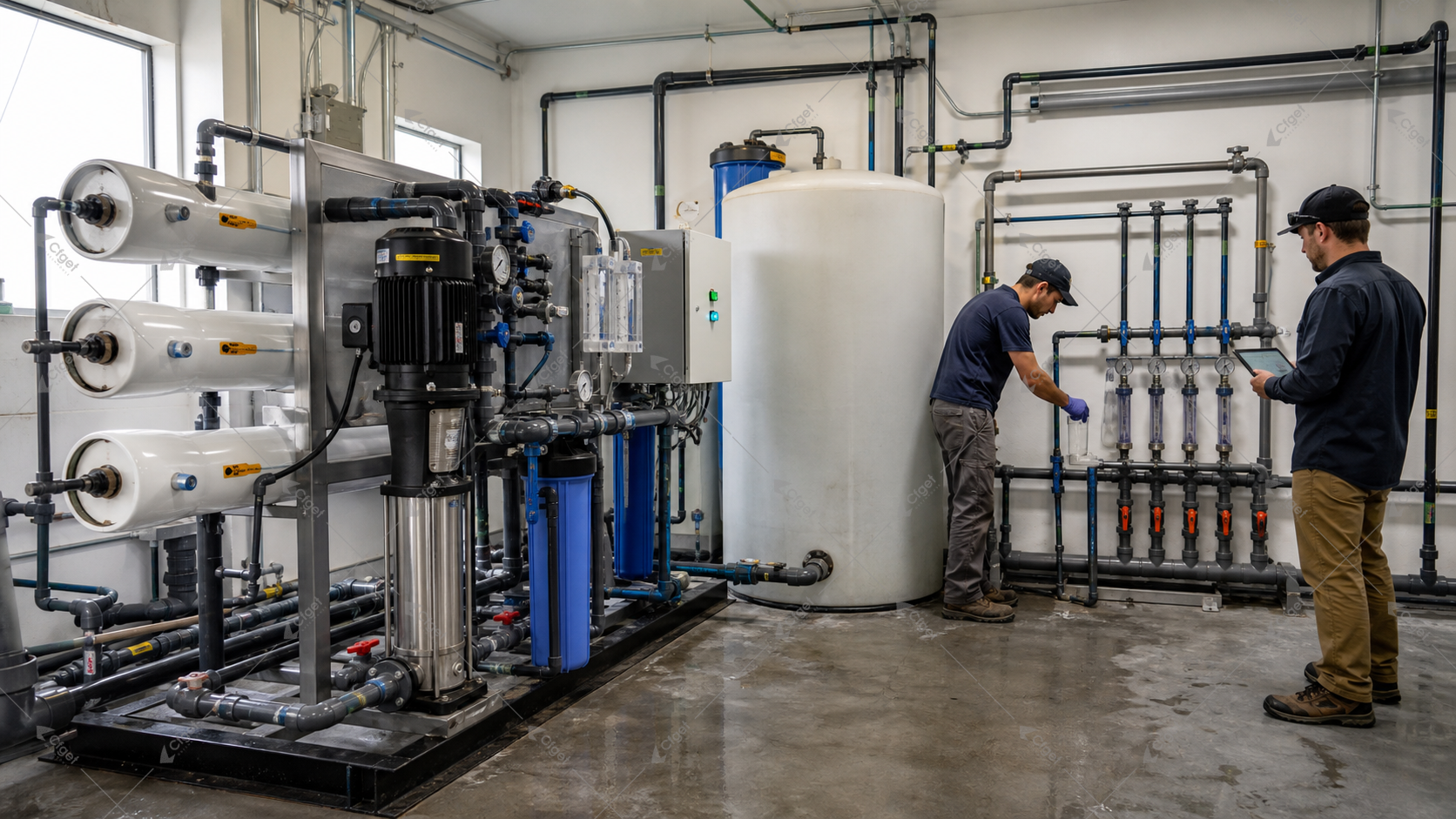
Reverse osmosis can improve irrigation water and still create a fragile greenhouse system if the feed analysis, recovery, pretreatment, concentrate route, blending, storage, cleaning, and backup supply were never designed together.
Use this with our Commercial Greenhouse Buying Guide topic cluster. For a full project, keep it beside Commercial Greenhouse Solutions so the structure, systems, and crop plan do not drift apart.
Quick answer
- Sample the source across relevant seasons and analyze the constituents that drive crop risk, scaling, fouling, disinfection, and concentrate disposal.
- Build an hourly and daily water balance for irrigation, cooling, cleaning, flushing, blending, storage refill, membrane reject, and downtime.
- Set recovery from concentrate chemistry and pretreatment limits, not from a high-efficiency sales target.
- Define product and blended-water acceptance, normalized performance, alarms, clean-in-place triggers, consumables, membrane replacement, and emergency water before ordering.
Key facts worth checking
| RO input | What to establish | Evidence |
| Feed | Seasonal chemistry, temperature, variability, flow, pressure, and biological risk | Representative laboratory analyses |
| Water balance | Permeate demand, recovery, concentrate, blending, storage, flushing, and downtime | Hourly and daily balance |
| Operation | Pretreatment, monitoring, cleaning, alarms, consumables, and fallback | Process diagram and operating plan |
How I would make this decision on a real project
I would close the complete water balance, model concentrate chemistry at the proposed recovery, verify pretreatment and membrane conditions, then test blended water, storage autonomy, normalized performance, alarms, cleaning, and fallback supply under the actual irrigation schedule.
Field notes to check before the quote
- I would ask for the concentrate analysis at the proposed recovery because a feed result alone hides the scaling condition seen by the last membrane element.
- Storage can separate a steady RO production rate from short irrigation peaks, but poor tank hygiene or insufficient usable volume can trade one risk for another.
- Very low-mineral permeate is not automatically the crop recipe. Blending, calcium and magnesium supply, alkalinity correction, fertilizer strategy, and material compatibility need one owner.
Buyer checkpoint
| Buyer question | What to decide before requesting a price | Why it protects the project |
| Design basis | Feed: Seasonal chemistry, temperature, variability, flow, pressure, and biological risk | Representative laboratory analyses |
| Difficult operating case | Water balance: Permeate demand, recovery, concentrate, blending, storage, flushing, and downtime | Hourly and daily balance |
| Acceptance evidence | Operation: Pretreatment, monitoring, cleaning, alarms, consumables, and fallback | Process diagram and operating plan |
Evidence pack
Use the following evidence to challenge the design basis. A checklist item is useful only when the supplier attaches a value, drawing, calculation, test, or named responsibility.
Climate and project assumptions to confirm
- Confirm the project-specific feed basis: Laboratory chemistry, temperature, seasonal range, and source flow. State who verifies it and when.
- Confirm the project-specific water balance: Permeate, concentrate, blend, storage, flushing, and downtime. State who verifies it and when.
- Confirm the project-specific recovery basis: Concentrate chemistry and scaling control. State who verifies it and when.
Sources worth checking
- Texas A&M guide to treating greenhouse irrigation water
- UMass greenhouse irrigation-water quality guide
- UConn commercial greenhouse design resource
Neutral source to keep beside the quote
CFGET project planning note
CFGET’s review would begin by reconciling seasonal chemistry, temperature, variability, flow, pressure, and biological risk with representative laboratory analyses, then marking every unresolved interface on the drawings and responsibility matrix.
Buyer risk signal
Pause the comparison when the offer starts from greenhouse area and nominal permeate flow; higher recovery is presented as universally better; or only membrane model and outlet EC are provided.
Ask the supplier for these exact specs
Require a completed response for Feed basis, Water balance, Recovery basis, Acceptance, supported by the relevant drawings, calculations, settings, or test records. Do not accept “standard” or “as required” where a project value can be stated.
Project video: greenhouse irrigation and growing equipment
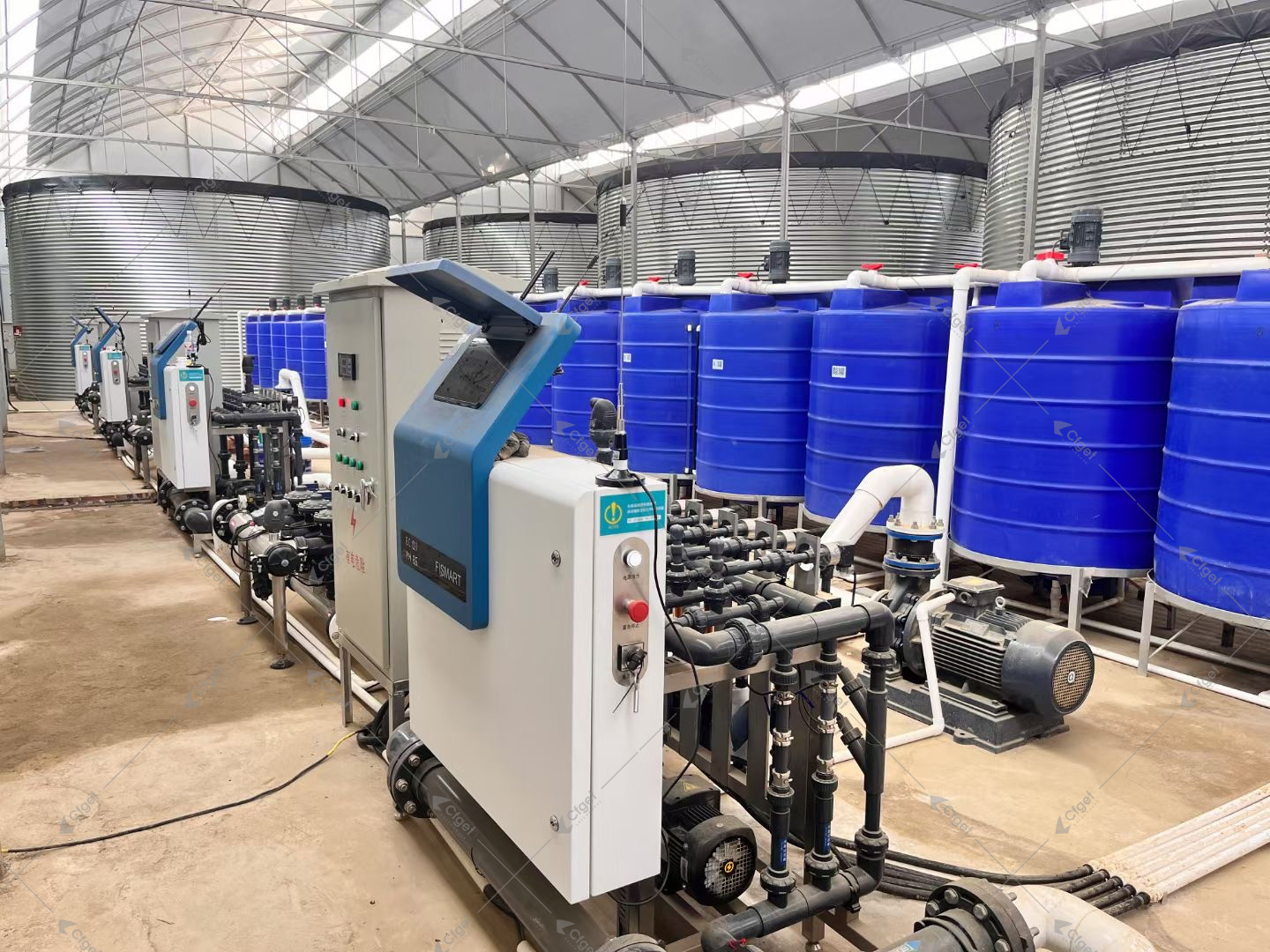
This field video shows greenhouse production equipment in use, which helps buyers connect the quote with daily operation.
Which feed-water and demand data should set the RO design?
Define the required water at the point of use, not only at the RO outlet. List crop and propagation demand, pad or fog use if treated water is required, cleaning, line flushing, filter backwash, blending, tank turnover, and future expansion. Separate peak flow from daily volume.
Use representative feed analyses and temperature. Review pH, alkalinity, hardness, calcium, magnesium, sodium, chloride, sulfate, silica, iron, manganese, suspended solids, organics, disinfectant residual, microbiology where relevant, and any local discharge constraints.
Technical reference for this decision: Reverse osmosis desalination for greenhouse irrigation.
How do recovery, pretreatment, blending, and storage interact?
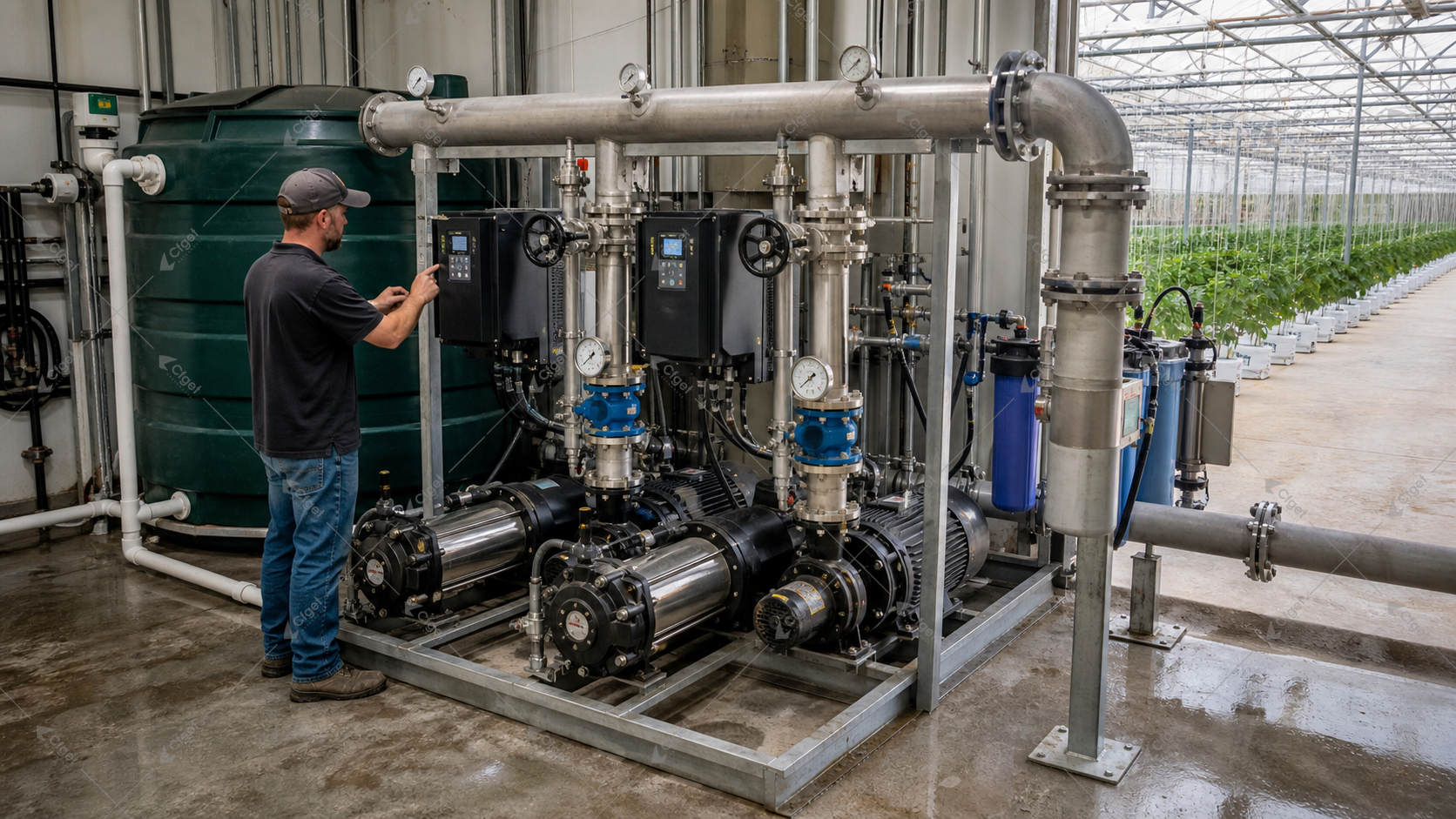
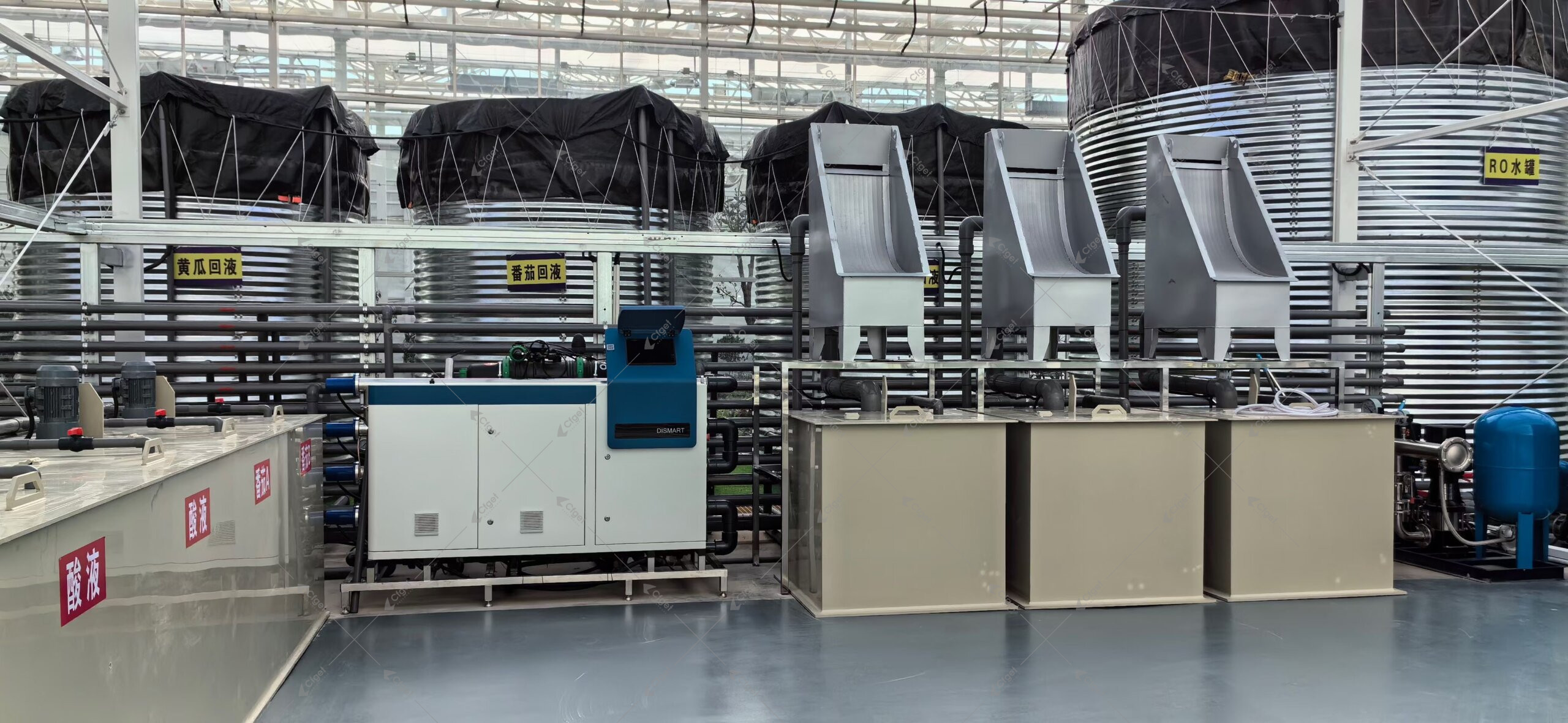
Calculate ion concentration in the reject stream at each recovery case and test scaling or fouling controls. Pretreatment may include screening, media or cartridge filtration, softening, antiscalant, oxidation or dechlorination, pH control, and biological management depending on the source and membrane.
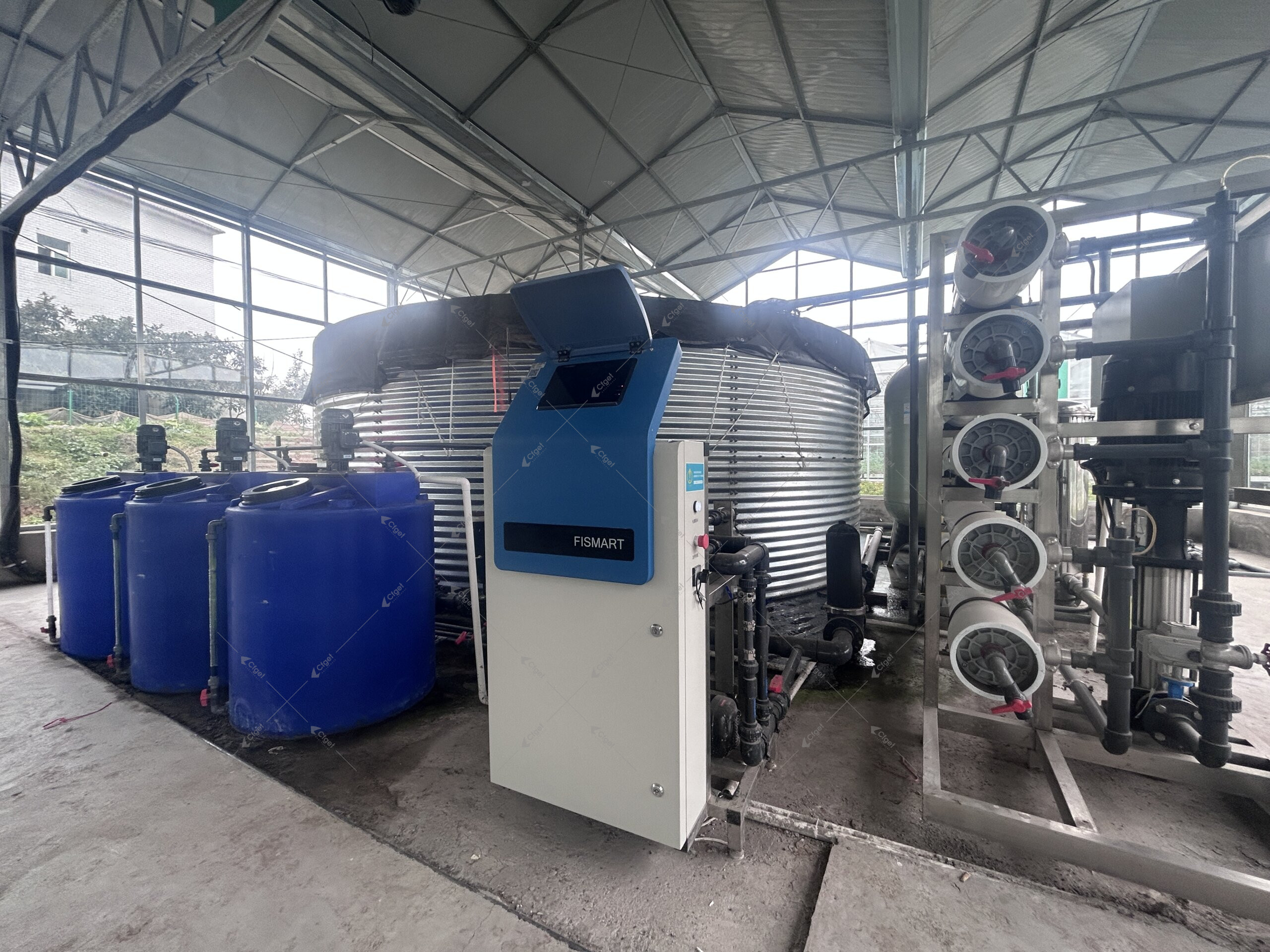
Size membranes at a defensible flux and feed temperature, then design product storage, level control, sanitary overflow and drainage, recirculation where needed, transfer pumps, blending or remineralization, and protection from stagnant low-quality water during shutdown.
Technical reference for this decision: Texas A&M guide to treating greenhouse irrigation water.
| Check | Good sign | Risk sign |
| Basis | Seasonal feed analysis and final blended-water target are stated | The offer starts from greenhouse area and nominal permeate flow |
| Recovery | Concentrate chemistry and disposal are checked | Higher recovery is presented as universally better |
| Operation | Baseline, alarms, cleaning, consumables, and backup water are defined | Only membrane model and outlet EC are provided |
What to request from a supplier
Ask for feed-water analyses and variation, final product and blended-water targets, demand and water balance, recovery cases, concentrate chemistry and disposal, pretreatment design, membrane projection, temperature and flux assumptions, instrumentation, storage and transfer, blending or remineralization, disinfection, controls and alarms, clean-in-place plan, consumables, spares, normalized baseline, warranty conditions, and emergency supply.
What commissioning and operating evidence should the buyer require?
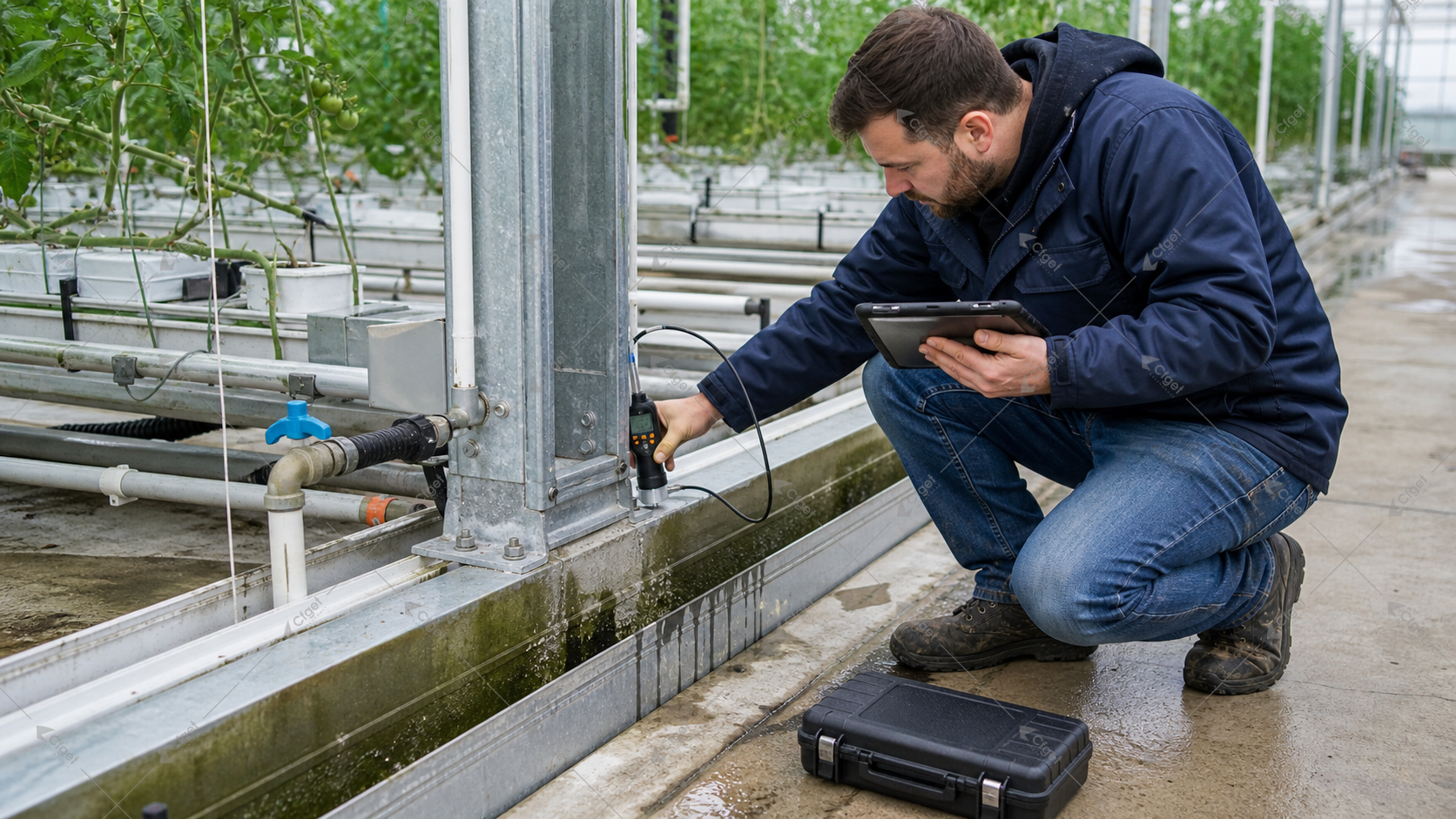
Commission at documented feed temperature and chemistry. Record permeate and concentrate flows, recovery, pressures, pressure drop, conductivity, rejection, energy, pretreatment readings, tank levels, blend ratio, and final water quality at the irrigation point.
Set normalized baseline performance and alarm limits for conductivity, pressure drop, low feed, high pressure, tank level, chemical dosing, leak, and product diversion. Provide cleaning criteria, procedure, chemicals, waste route, spares, membrane preservation, and a plan for water supply during service.
Technical reference for this decision: UMass greenhouse irrigation-water quality guide.
| RFQ field | Example | Why it matters |
| Feed basis | Laboratory chemistry, temperature, seasonal range, and source flow | Sets pretreatment and membrane risk |
| Water balance | Permeate, concentrate, blend, storage, flushing, and downtime | Sets real capacity |
| Recovery basis | Concentrate chemistry and scaling control | Prevents damaging efficiency claims |
| Acceptance | Final blended-water quality and normalized performance | Proves useful water, not just permeate |
Practical next step
Prepare one page covering Feed basis, Water balance, Recovery basis, Acceptance. Add the project city, crop, greenhouse area, available utilities, relevant drawings, and the party responsible for local work. Send that evidence to [email protected] for a first technical-scope review.
Before you use this recommendation
- Treat the article as a decision and RFQ guide, not a final engineering design.
- Replace every example with project-specific climate, crop, utility, code, and operating data.
- Require calculations, drawings, test records, or named assumptions for every important supplier claim.
How this guide was prepared
This guide combines the current search evidence listed above with a greenhouse project planning checklist: define the failure case, trace the interfaces, identify measurements, and turn unresolved assumptions into RFQ fields. CFGET observations are labeled as project-review judgment; local engineering and operating data remain the final authority.
Coraline Liao is CEO of CFGET. Her public LinkedIn profile describes her as a Greenhouse Technical Director with more than 15 years in the greenhouse industry, focused on customized climate-control and greenhouse solutions. Her published technical topics include greenhouse structures, climate control, light management, hydroponics, and fertigation. Her article reviews begin with the crop, climate, site, project scope, installation boundaries, and operating constraints. Technical recommendations should be adapted to local climate data, crop plans, budgets, and professional engineering review before implementation.
Professional profile: Coraline Liao on LinkedIn
Company details
CFGET: Founded in 1996, CFGET designs, manufactures, and delivers greenhouse systems and smart farming solutions from its own factory in Sichuan, China.
Address: NO 108, South Area Chengdu Modern Industrial Park, Sichuan, China
Email: [email protected]
About the company: https://cfgreenway.com/about/
Company profile: GreenWay on LinkedIn
Technical videos: Greenhouse project channel on YouTube
Where this fits in the greenhouse buying cluster
Start with the hub, then open the system or crop pages that match your decision.