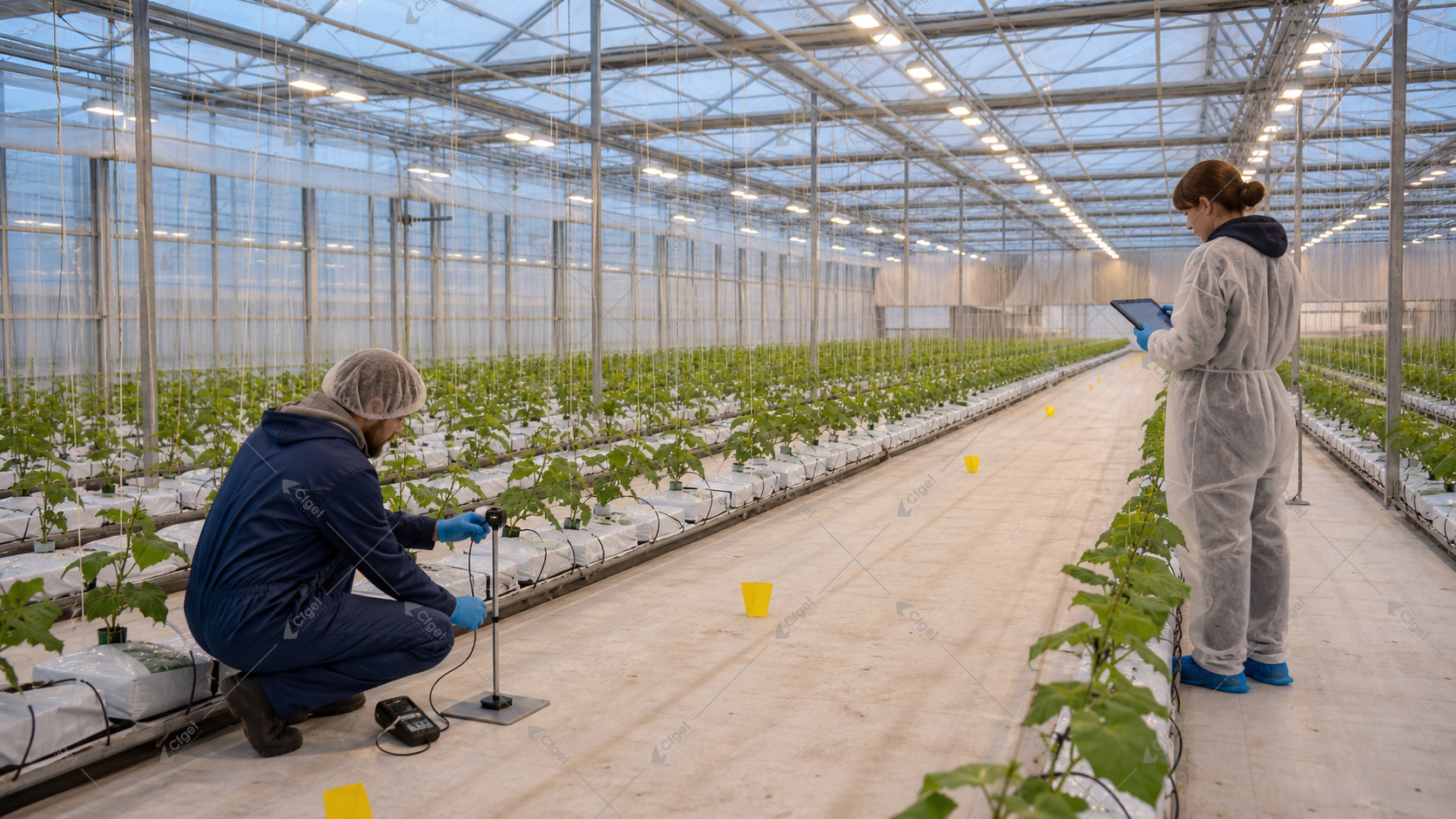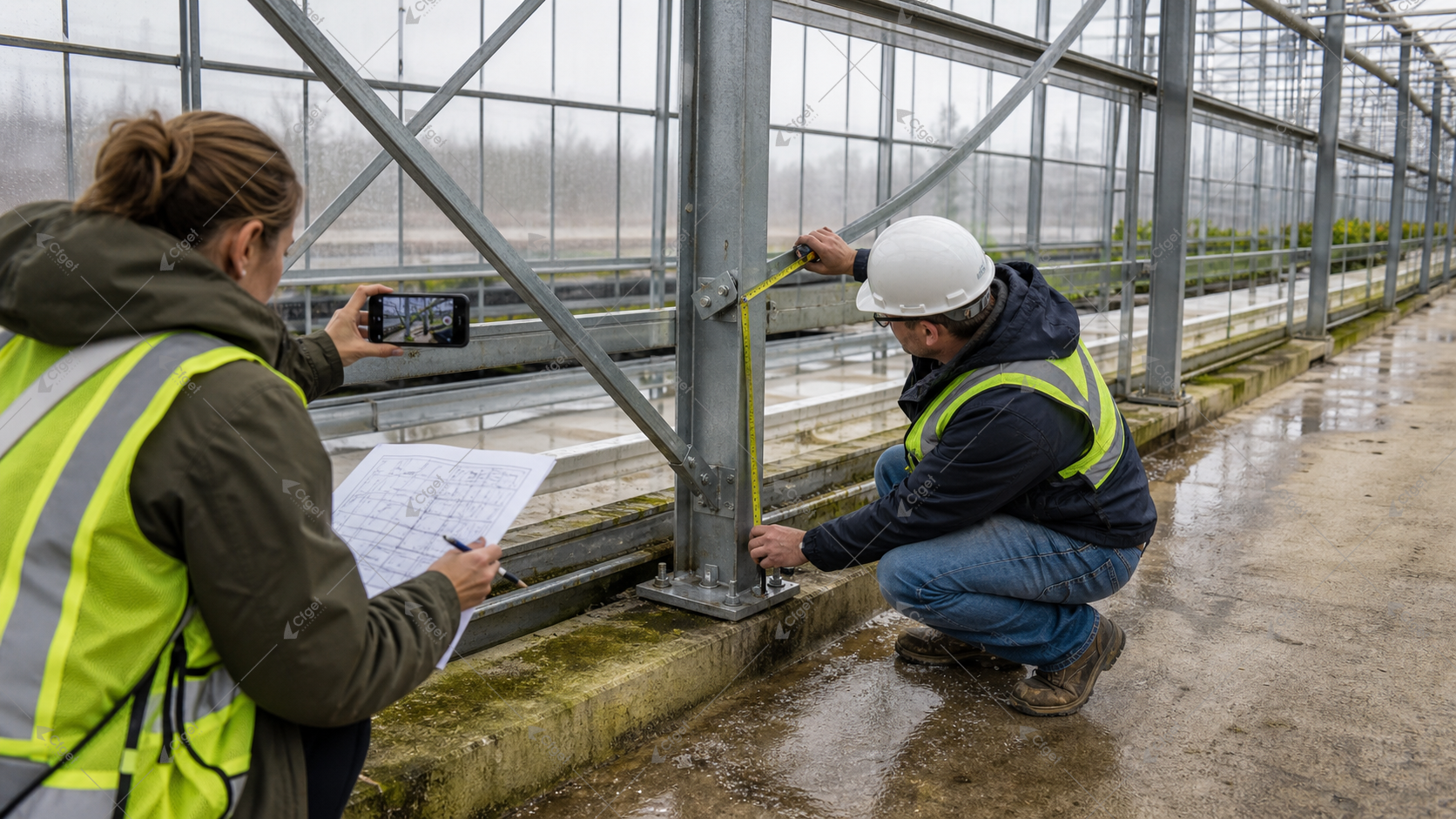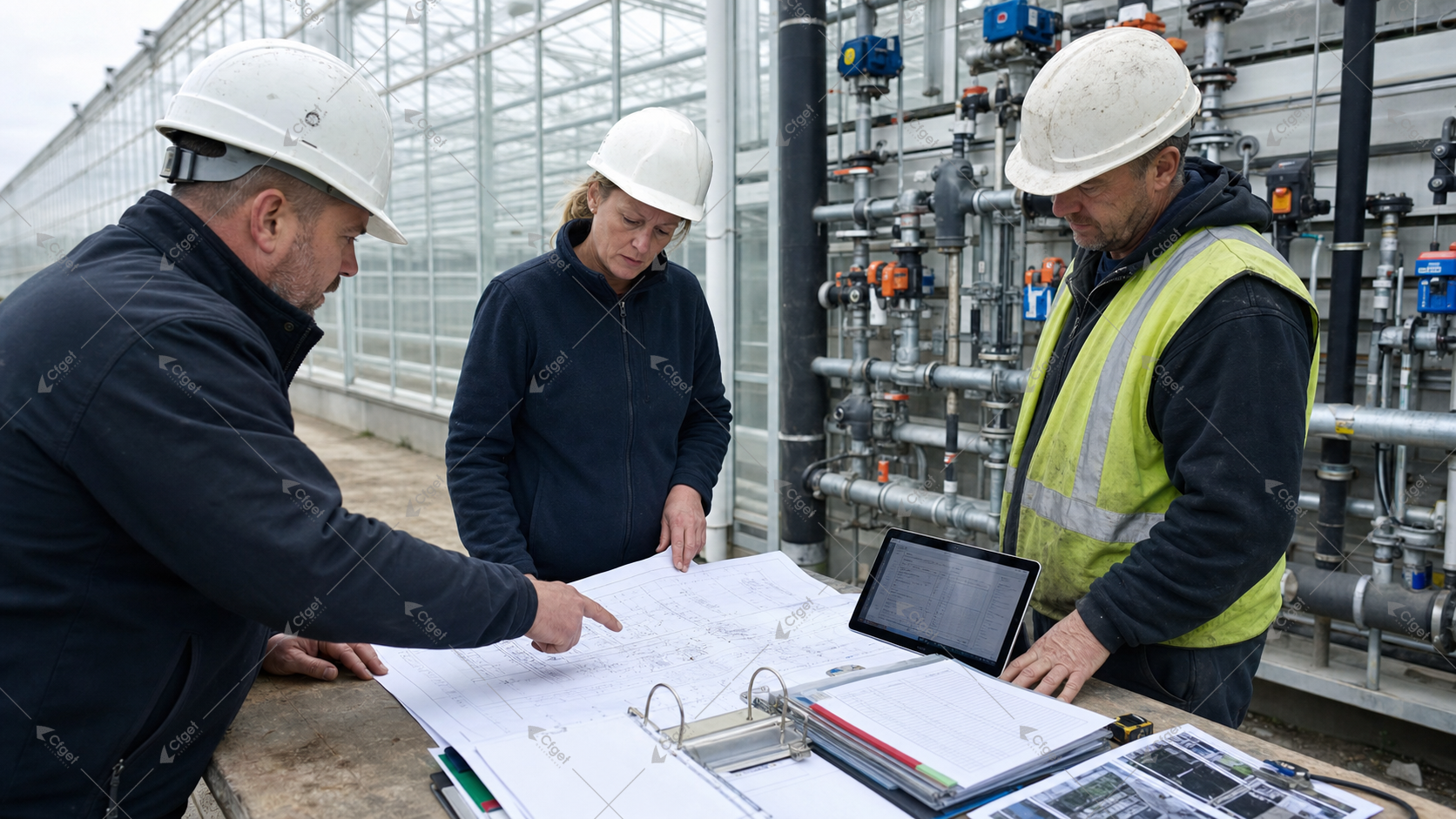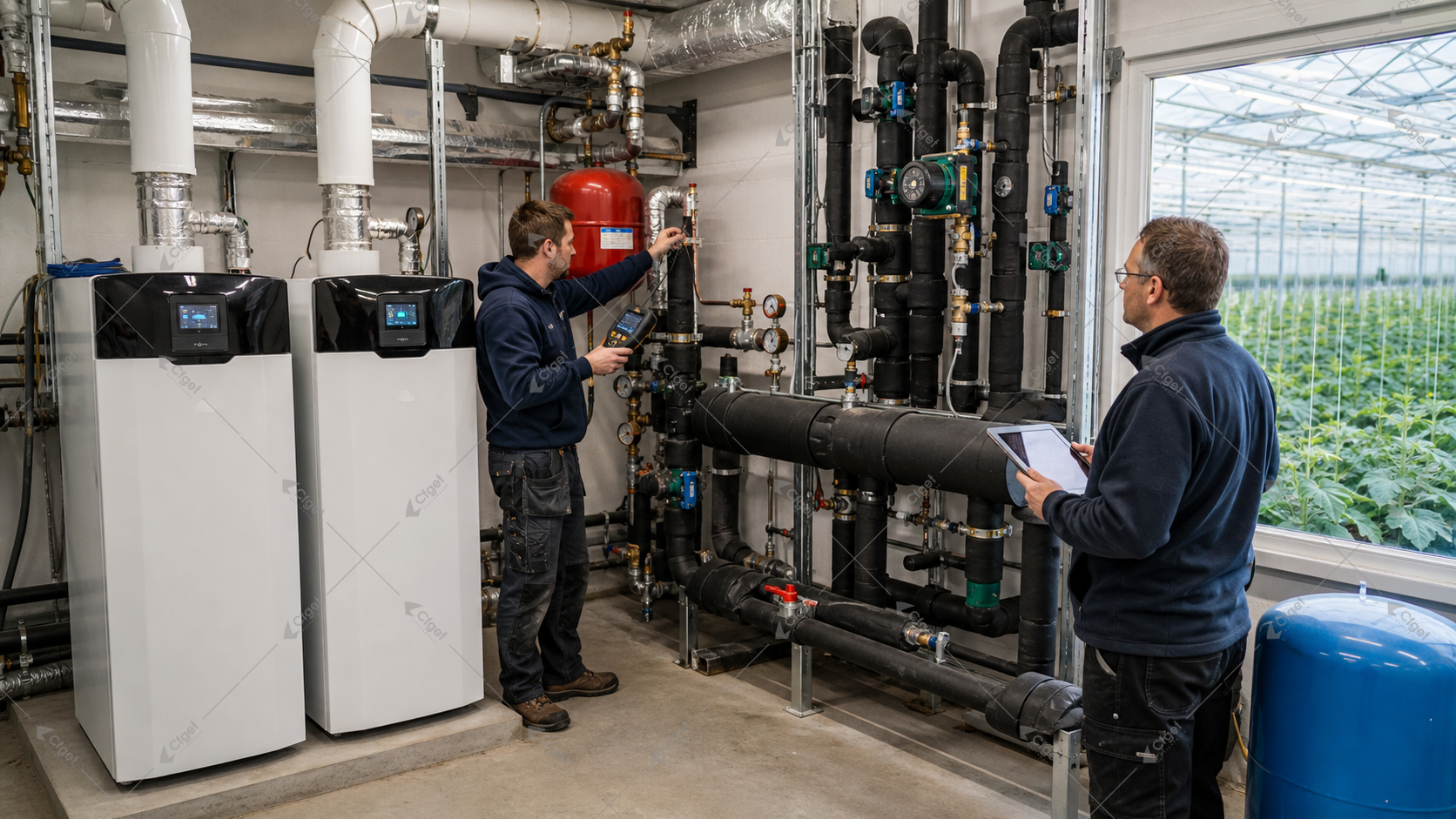
Calibrate greenhouse sensors by defining range, accuracy, reference, method, tolerance, as-found and as-left results, traceability, interval, and failure action. Also verify placement, shielding, sampling, wiring, scaling, controller mapping, alarms, and controlled outputs.
*By Coraline Liao, CEO, CFGET | Updated: September 24, 2026*
*Reviewed by CFGET Project Planning Team*
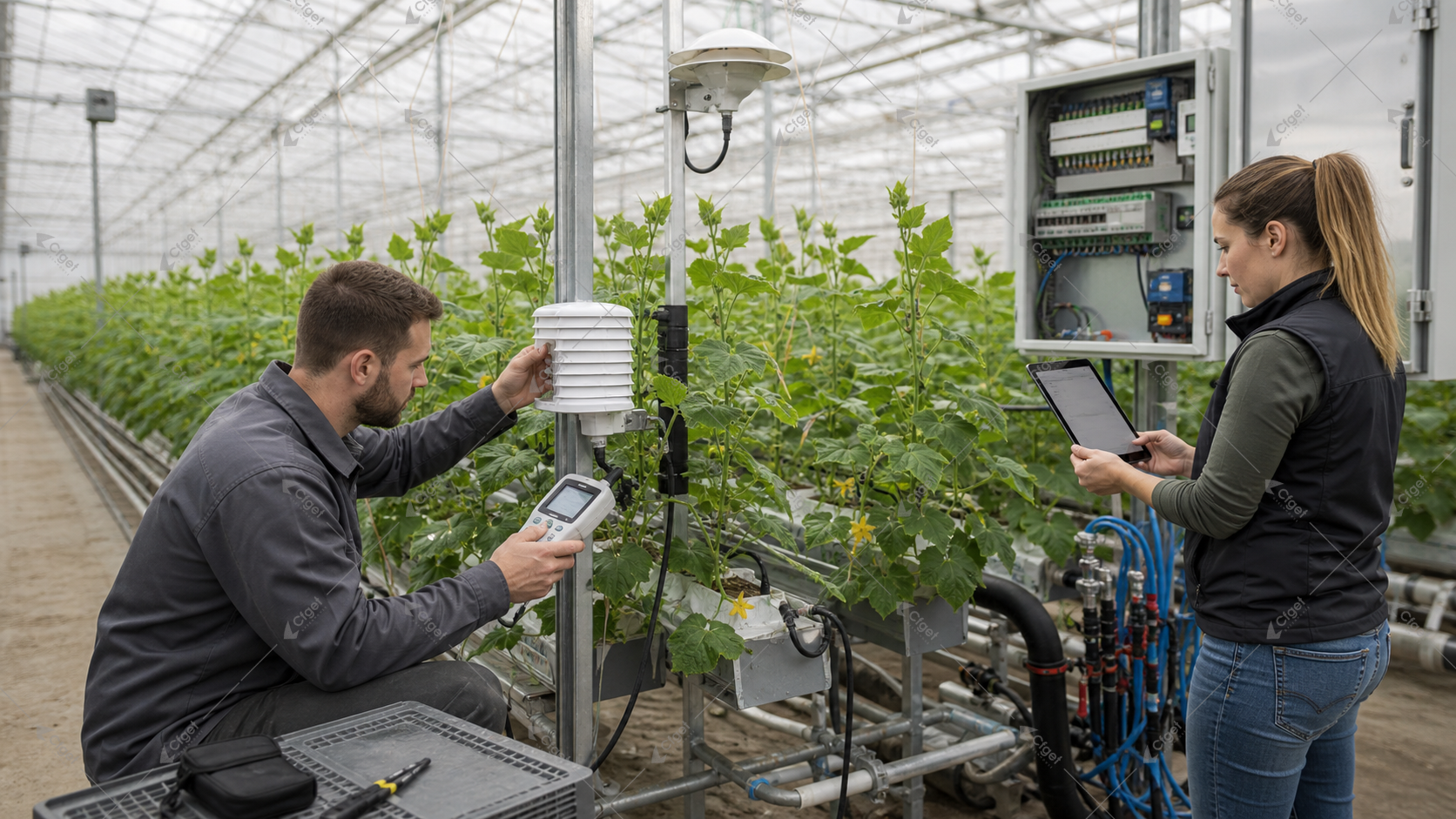
A climate computer can control perfectly around a wrong number. A drifting humidity sensor, shaded radiation sensor, fouled pH probe, or misplaced temperature sensor can waste energy and stress crops while the trend screen still looks smooth.
Use this with our Commercial Greenhouse Buying Guide topic cluster. For a full project, keep it beside Commercial Greenhouse Solutions so the structure, systems, and crop plan do not drift apart.
What matters before a supplier quotes?
- Build a register for temperature, humidity, radiation, CO2, pH, EC, pressure, flow, level, substrate moisture, weather, and safety sensors, including range, location, controller input, and crop consequence.
- Use a reference and test condition that cover the operating range; a one-point comparison cannot reveal slope, hysteresis, response, or cross-sensitivity problems.
- Record as-found data before cleaning or adjustment, then record as-left results, reference traceability, environment, method, technician, and next due date.
- If a sensor fails, review controls, alarms, irrigation or dosing records, product decisions, and redundant measurements for the period since it was last known good.
Key facts worth checking
| Calibration input | What to establish | Evidence |
| Measurement | Range, accuracy need, environment, location, and crop or safety consequence | Instrument register and risk ranking |
| Method | Reference, points, stabilization, tolerance, adjustment, and traceability | Controlled procedure and raw results |
| Failure response | As-found impact, control fallback, correction, verification, and interval change | Deviation and closeout record |
The order I would check the project
I would start from the control consequence, compare the suspect value with an independent reference and neighbouring evidence, record the as-found state, verify placement and the complete signal loop, then review the period of possible bad data before closing the calibration.
Details I would challenge in the offer
- I would compare neighbouring zones and an independent portable reference before touching a suspicious sensor; many apparent calibration faults are placement, radiation, wetting, airflow, or mapping errors.
- Cleaning a pH, EC, radiation, or humidity sensor before recording the as-found state removes evidence of how far the operating system may have drifted.
- A calibration sticker does not prove the controller is using the right value. The loop check has to include wiring, scaling, units, software address, displayed value, alarm, and controlled output.
Buyer checks before price comparison
| Buyer question | What to decide before requesting a price | Why it protects the project |
| Design basis | Measurement: Range, accuracy need, environment, location, and crop or safety consequence | Instrument register and risk ranking |
| Difficult operating case | Method: Reference, points, stabilization, tolerance, adjustment, and traceability | Controlled procedure and raw results |
| Acceptance evidence | Failure response: As-found impact, control fallback, correction, verification, and interval change | Deviation and closeout record |
Evidence pack
Use the following evidence to challenge the design basis. A checklist item is useful only when the supplier attaches a value, drawing, calculation, test, or named responsibility.
Climate and project assumptions to confirm
- Confirm the project-specific measurement chain: Sensor tag, location, wiring, input, scaling, and controlled output. State who verifies it and when.
- Confirm the project-specific method: Reference, points, conditions, tolerance, and stabilization. State who verifies it and when.
- Confirm the project-specific results: As-found error, adjustment, as-left error, and traceability. State who verifies it and when.
Sources worth checking
- Peer-reviewed greenhouse environmental-measurement guidelines
- UConn commercial greenhouse design resource
- UMass greenhouse selection and building resource
Neutral source to keep beside the quote
CFGET project planning note
CFGET’s review would begin by reconciling range, accuracy need, environment, location, and crop or safety consequence with instrument register and risk ranking, then marking every unresolved interface on the drawings and responsibility matrix.
Buyer risk signal
Pause the comparison when sensors are tracked only by type; a sticker follows one convenient reading; or the sensor is adjusted and returned with no impact assessment.
Ask the supplier for these exact specs
Require a completed response for Measurement chain, Method, Results, Failure action, supported by the relevant drawings, calculations, settings, or test records. Do not accept “standard” or “as required” where a project value can be stated.
Project video: smart greenhouse control in use
This field video gives buyers a quick look at greenhouse automation before they compare controllers, motors, sensors, and service scope.
Which greenhouse measurements need calibration or field verification?
List each instrument and the decision it drives. Temperature and humidity may control vents, heat, dehumidification, and disease response; radiation may drive screens and irrigation; pH and EC may drive dosing; pressure and flow may prove irrigation; level and weather instruments may protect equipment.
Set accuracy and interval from crop consequence, process sensitivity, drift history, environment, manufacturer information, redundancy, and the ability to detect failure. Separate formal calibration from routine comparison, cleaning, inspection, and functional testing.
Technical reference for this decision: Soil moisture sensor calibration, actual evapotranspiration….
How should the reference, method, placement, and acceptance limit be chosen?
Choose a reference with adequate accuracy, current traceability, and a method suited to the measurand. Test enough points across the operating range and allow stabilization. Record ambient conditions, sensor condition, reference serial, raw readings, error, repeatability where relevant, and whether adjustment is permitted.
Verify placement and the complete loop. Check radiation shielding and aspiration, crop height, wetting, condensation, sunlight, nearby pipes or doors, gas sampling and tubing, immersion depth, flow, cable and connector condition, controller scaling, units, time stamp, filtering, alarms, and mapped output.
Technical reference for this decision: Peer-reviewed greenhouse environmental-measurement guidelines.
| Check | Good sign | Risk sign |
| Register | Range, location, controller mapping, accuracy, and consequence are known | Sensors are tracked only by type |
| Method | Representative points and as-found results are recorded | A sticker follows one convenient reading |
| Failure | Controls and historical decisions are reviewed | The sensor is adjusted and returned with no impact assessment |
What to request from a supplier
Ask for the instrument register, tags and locations, ranges and required accuracy, controller mapping, risk ranking, calibration and field-verification methods, reference accuracy and traceability, test points, stabilization and tolerance, as-found and as-left forms, cleaning and placement checks, loop and alarm tests, adjustment authority, failed-calibration response, history review, interval rationale, spare instruments, and record retention.
What should happen when a sensor is outside tolerance?
When the as-found error exceeds tolerance, protect the process first. Switch to a verified redundant input, manual limits, or a safe control recipe as appropriate. Identify affected zones and the last credible in-tolerance date.
Review historical trends, setpoints, alarms, irrigation and dosing, energy use, crop observations, and quality decisions made from the signal. Correct the instrument or chain, repeat the calibration and functional test, document the impact decision, and shorten or change the interval when evidence supports it.
Technical reference for this decision: UConn commercial greenhouse design resource.
| Calibration field | Example | Why it matters |
| Measurement chain | Sensor tag, location, wiring, input, scaling, and controlled output | Finds errors beyond the sensing element |
| Method | Reference, points, conditions, tolerance, and stabilization | Makes the result repeatable |
| Results | As-found error, adjustment, as-left error, and traceability | Preserves evidence of drift |
| Failure action | Fallback, affected period, history review, and retest | Protects decisions made from bad data |
Practical next step
Prepare one page covering Measurement chain, Method, Results, Failure action. Add the project city, crop, greenhouse area, available utilities, relevant drawings, and the party responsible for local work. Send that evidence to [email protected] for a first technical-scope review.
Before you use this recommendation
- Treat the article as a decision and RFQ guide, not a final engineering design.
- Replace every example with project-specific climate, crop, utility, code, and operating data.
- Require calculations, drawings, test records, or named assumptions for every important supplier claim.
How these recommendations were assembled
This guide combines the current search evidence listed above with a greenhouse project planning checklist: define the failure case, trace the interfaces, identify measurements, and turn unresolved assumptions into RFQ fields. CFGET observations are labeled as project-review judgment; local engineering and operating data remain the final authority.
Coraline Liao is CEO of CFGET. Her public LinkedIn profile describes her as a Greenhouse Technical Director with more than 15 years in the greenhouse industry, focused on customized climate-control and greenhouse solutions. Her published technical topics include greenhouse structures, climate control, light management, hydroponics, and fertigation. Her article reviews begin with the crop, climate, site, project scope, installation boundaries, and operating constraints. Technical recommendations should be adapted to local climate data, crop plans, budgets, and professional engineering review before implementation.
Professional profile: Coraline Liao on LinkedIn
Company details
CFGET: Founded in 1996, CFGET designs, manufactures, and delivers greenhouse systems and smart farming solutions from its own factory in Sichuan, China.
Address: NO 108, South Area Chengdu Modern Industrial Park, Sichuan, China
Email: [email protected]
About the company: https://cfgreenway.com/about/
Company profile: GreenWay on LinkedIn
Technical videos: Greenhouse project channel on YouTube
Where this fits in the greenhouse buying cluster
Start with the hub, then open the system or crop pages that match your decision.