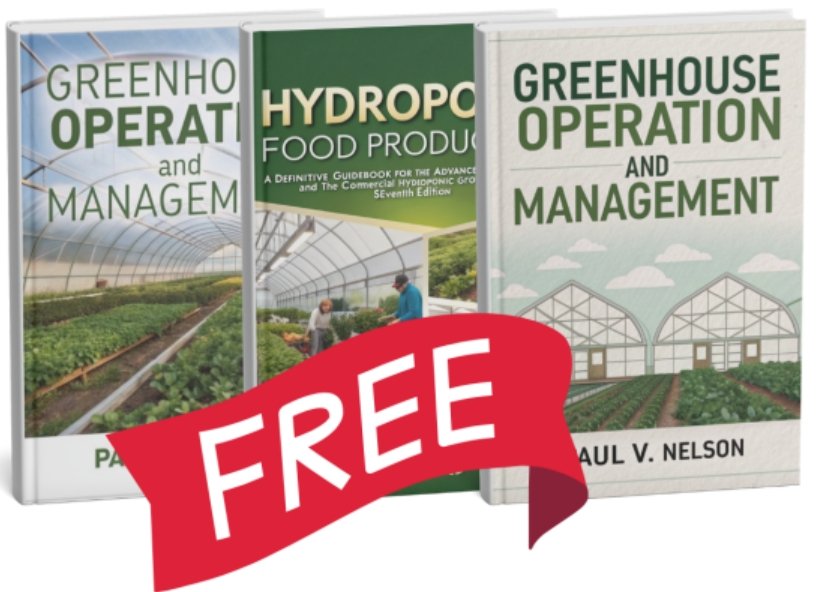
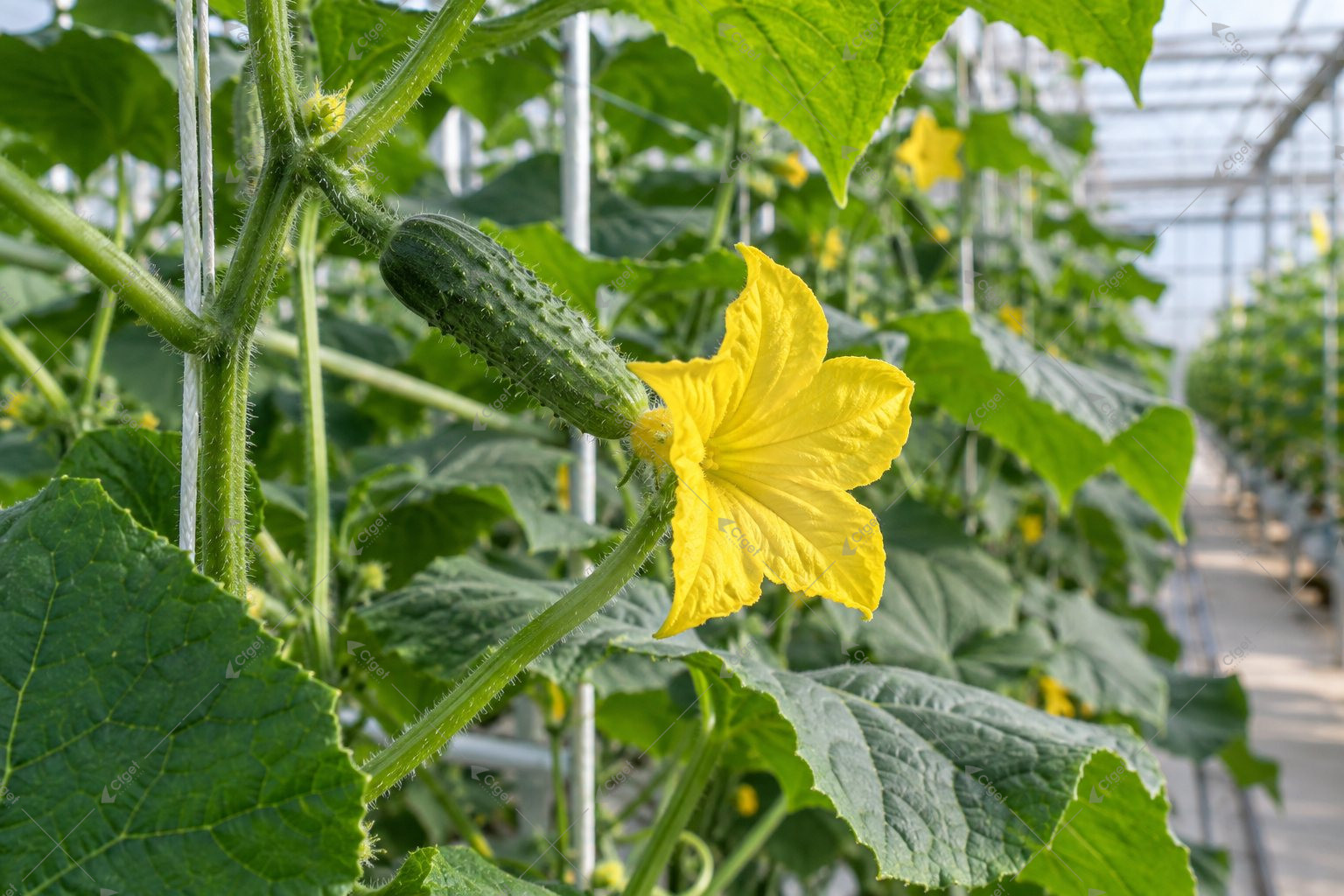
A cucumber crop can have many female flowers and still need pollen. Another can produce marketable fruit without any pollination. Confusing those two crops can lead to a greenhouse with the wrong insect-exclusion plan, unnecessary pollination equipment or an avoidable fruit-set problem.
The deciding information is the cultivar’s documented pollination requirement, not the word greenhouse on a seed packet. Confirm that requirement before ordering seed, introducing pollinators or closing a crop behind insect screens.
Three descriptions that answer different questions
| Term | Meaning | What it does not establish |
|---|---|---|
| Monoecious | Male and female flowers occur separately on the same plant | That sufficient pollen transfer will occur inside a screened house |
| Gynoecious | The plant produces mainly female flowers | That fruit can develop without pollination |
| Parthenocarpic | Fruit can develop without fertilization | That heat, water stress or excessive crop load cannot cause fruit abortion |
Oklahoma State’s cucumber production guide distinguishes mainly female-flowering types from parthenocarpic varieties. These are separate traits, even when both occur in one commercial hybrid. A gynoecious, non-parthenocarpic crop needs an appropriate pollen source and transfer method; a female flower count alone does not answer either requirement.
For seedless greenhouse types, more pollination is not always better
University of Alaska greenhouse cucumber guidance explains the distinction between seedless greenhouse types and varieties that require pollination. Unwanted pollination can compromise the intended fruit quality of susceptible seedless types. Ask the breeder how the particular cultivar responds rather than assuming every parthenocarpic cucumber has identical behavior.
This matters in mixed production. A nearby crop using managed pollinators, flowering volunteer cucumbers or another cucumber variety may change exposure. Draw a simple map of crop compartments, doors and ventilation openings. Then review whether the intended pollination arrangement is compatible with the varieties sharing that space.
Do not diagnose every aborted fruit as missing bees
Small fruits that yellow or stop expanding can trigger an immediate request for pollinators. On a confirmed parthenocarpic variety, that is the wrong starting assumption. Record which nodes and crop ages are affected, whether the pattern follows a weather event, and whether water delivery or root conditions differ across the house.
Use the following sequence to keep the investigation focused:
- Read the cultivar specification and verify the seed lot actually planted.
- If pollination is required, check the pollen source, flowering overlap and permitted pollinator management with the supplier.
- If pollination is not required, inspect crop load, irrigation interruptions and recent climate changes before adding a new biological variable.
- Where fruit shape or seed development is the complaint, ask the breeder to assess photographs and representative fruit.
Do not use fruit appearance alone to certify seed identity. Several stresses can affect fruit shape, and an illustration cannot establish the pollination history of a harvested cucumber.
Make the greenhouse brief match the cultivar
Insect exclusion and ventilation must be considered together. A screen selected for a pest-control purpose changes airflow resistance; excluding visitors does not remove the need to cool the crop. If different compartments need different pollination strategies, include door discipline, handling routes and compartment boundaries in the operating plan.
For a CFGET design discussion, provide the cultivar sheet, production season, local outdoor conditions and whether other crops share the structure. Ask for a ventilation assessment under the proposed screen arrangement, not simply a promise that a greenhouse is bee-proof.
Before purchasing, obtain written answers to three questions: does this cultivar require pollination, what happens if it is pollinated, and which neighboring crop arrangements should be avoided? Keep those answers with the crop plan. The broader greenhouse pollination guide can then be read in the context of the actual crop rather than used as one instruction for all vegetables.