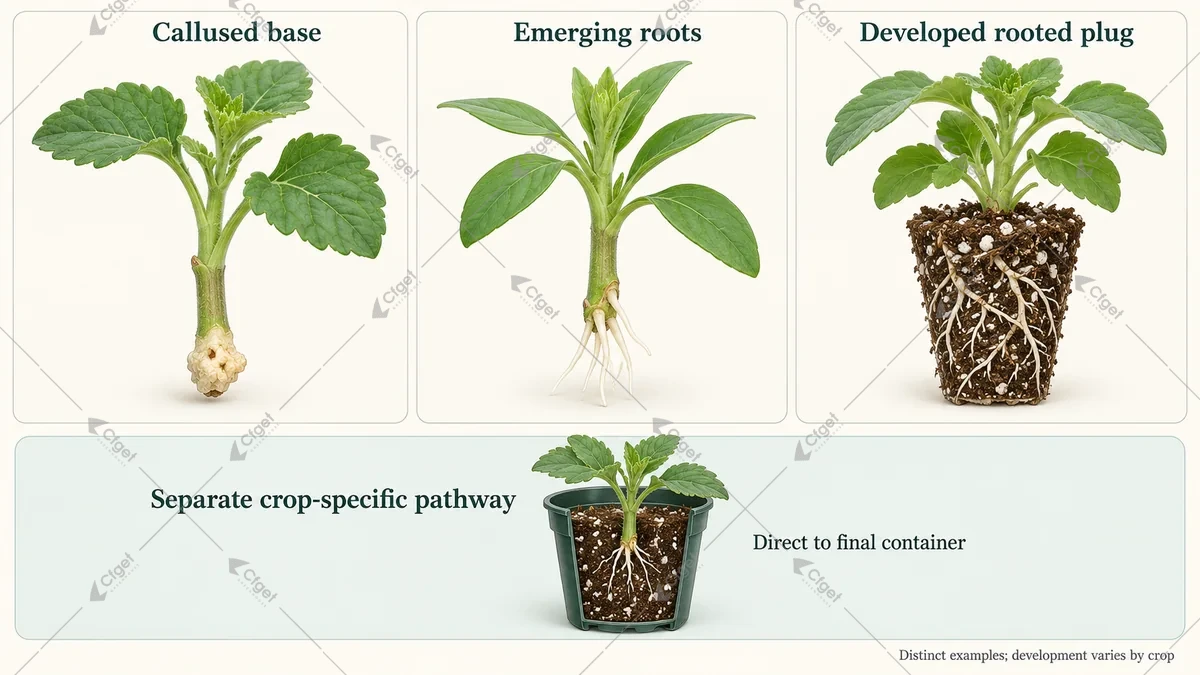
A live, rooted lisianthus plug does not by itself establish that a cut-flower stem schedule is intact. Check whether shoot development is progressing as expected for the cultivar and nursery program before committing finishing space and dispatch dates. Rosetting concerns that developmental pathway.
An affected plant may remain a compact group of leaves with little stem extension instead of progressing toward an elongated flowering stem. However, young lisianthus normally grows slowly. Compact appearance in a single delivery photograph is not enough to diagnose rosetting, reject a lot or prescribe a treatment.
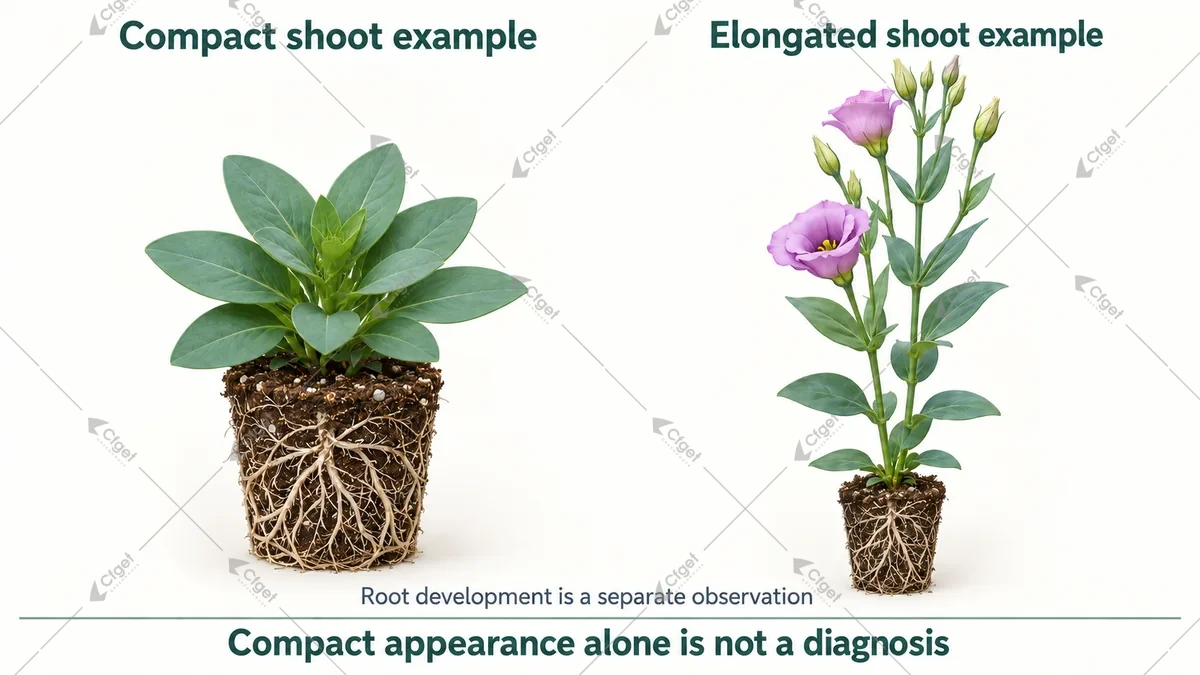
Watch shoot progression as well as root establishment
Roots and shoots provide different evidence. Root establishment concerns the plant’s below-ground development. For a cut-stem program, you also need evidence of the shoot’s progression: how leaves are arranged, whether internodes are extending, and how those observations relate to the cultivar’s expected stage.
Sakata’s linked lisianthus cut-flower guide describes slow early growth, seedling susceptibility to rosetting, and the relevance of nursery temperature and stress history. It distinguishes previously conditioned and non-conditioned production. Those details explain why the history preceding delivery can matter even when roots appear alive.
The practical question is therefore broader than “Has this plug rooted?” Ask: “What developmental progression should this identified cohort show now, and what observations support that expectation?” A nursery’s documented answer is more useful than a generic promise attached to tray size.
Separate early risk from later seasonal planning
The PanAmerican Seed propagation guide links seedling-stage media-temperature conditions with rosetting and subsequent stunting after transplant in its lisianthus entries. Its later cut-flower sections also distinguish seasonal production context. These are related planning issues, but they answer different questions.
- Early development: what happened to the seedling during a susceptible stage, and is later shoot progression supported?
- Root establishment: is the incoming plant’s root development suitable for the agreed next production stage?
- Cultivar and season: does the selected cultivar program fit the planned finishing conditions and market window?
A suitable seasonal group does not supply a missing nursery history. Good roots do not answer the shoot question. Equally, a compact young plant may still be progressing normally for its stage. Discuss the actual cultivar and cohort rather than applying one age, leaf count or height threshold to every lisianthus order.
Compare two fictional deliveries
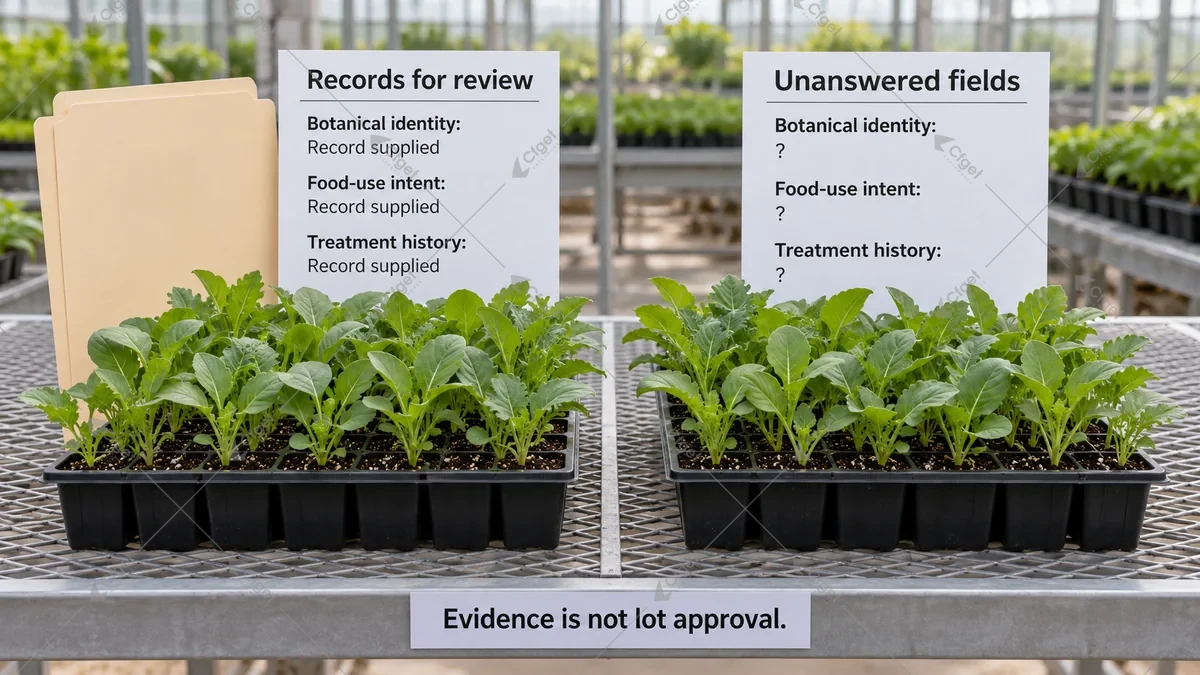
Suppose Lot A and Lot B arrive in similar cells with apparently live roots. These are invented planning cases, not observed customer lots.
Lot A has an identified cultivar, a documented nursery program and successive observations showing the expected shoot progression. That evidence supports continuing the planned developmental pathway, subject to the remaining crop conditions. It still does not guarantee a harvest date.
Lot B remains compact beyond the stage expected in its own program, and the early history is missing. The responsible conclusion is that finishing and dispatch commitments remain unresolved. Ask the nursery to interpret the observations with the crop adviser and identify the evidence needed next. Do not label the lot irrecoverable from this comparison.
Operationally, keep Lot B’s expected stem availability separate from confirmed supply in the sales plan until that review resolves the uncertainty. The purpose is to avoid treating matching trays as interchangeable future stems. It is not an automatic rejection rule or a direction to chill, heat or otherwise rescue the plants.
Build an observation strip the supplier can interpret
- Identify the cultivar and cohort. Preserve the nursery’s stage description and source rather than replacing it with “small plugs.”
- At successive observation dates, photograph or describe the same identified cohort. Note leaf arrangement, observed stem or internode extension, and actual leaf stage using a consistent convention.
- Record root establishment separately. State whether nursery history is available and whether any previous conditioning is documented.
- Ask the supplier to explain whether progression is supported, more stage-specific evidence is needed, or the finishing commitment remains unresolved. Record the explanation and next review point.
Previous conditioning belongs in the history field as a documented nursery process. It is not an instruction for the receiving grower to repeat. Avoid assuming that later heating inevitably repairs an earlier developmental interruption.
If unresolved development changes the time a cohort occupies nursery space, revisit the overlap assumptions in nursery bench-capacity planning. Use the revised evidence rather than inventing extra weeks for every compact plant.
Download the lisianthus shoot-progression strip. This is a manual observation tool with no formulas, diagnosis score or recovery timetable. Import the UTF-8 comma-separated file, widen columns and wrap text, then save a working copy. Use the observation columns for successive dates within one identified cohort. Add columns for later observations while retaining the same definitions. Complete the supplier interpretation and commitment fields after review; leave missing history explicitly unresolved.