A potato-cutting nursery planning its next production cycle should look behind last cycle’s total sales. Which quantities went to projects, which went to farmers, and which buyers have actually confirmed that they will order again?
Both project purchases and farmer purchases can be valuable business. The planning risk comes from treating a completed sale as if it were a continuing order, particularly when the next batch is live planting material intended for a specific planting window.
What six Kenyan nurseries sold
Wauters and colleagues’ Kenyan rooted-apical-cutting study, published online in 2023 and in a 2024 journal issue, reported validated records from six of ten project-supported small nurseries: five in Meru and one in Nandi. Operators were selected purposefully and received support and training, so this was not a representative national nursery survey.
Across three production cycles from February 2019 to January 2021, the six nurseries produced 330,237 cuttings and sold 251,062, about 76% of the quantity produced. Table 7 separates the sold cuttings by buyer category:
| Buyer category | Cuttings sold | Approximate share of sold cuttings |
|---|---|---|
| Farmers | 182,724 | 73% |
| Projects | 68,338 | 27% |
The table does not identify repeat customers or explain the final disposition of the difference between produced and sold counts. That difference cannot be labeled dead plants, waste or a financial loss. The cycles also had different lengths.
Ask what carries forward into the next cycle
The useful question is whether the same customer demand will be present for the next batch. A project may renew, change its requested variety, move its delivery window or finish its purchasing program. Farmer purchases may also be one-off or recurring. The category alone does not tell the nursery which outcome to expect.
Keep buyer and funding information distinct where they differ. If a project pays for cuttings that farmers receive, record the purchasing arrangement clearly rather than assuming the recipients have independently ordered the next batch. Equally, do not discount a confirmed project renewal merely because it is project-funded.
Use customer-level records to establish repeat demand. A second completed purchase from an identifiable customer is useful evidence of a buying pattern. A confirmed order for the coming window is more directly relevant to the next production commitment. Neither should be replaced by an assumption that last cycle’s entire total will recur.
Give different evidence different weight
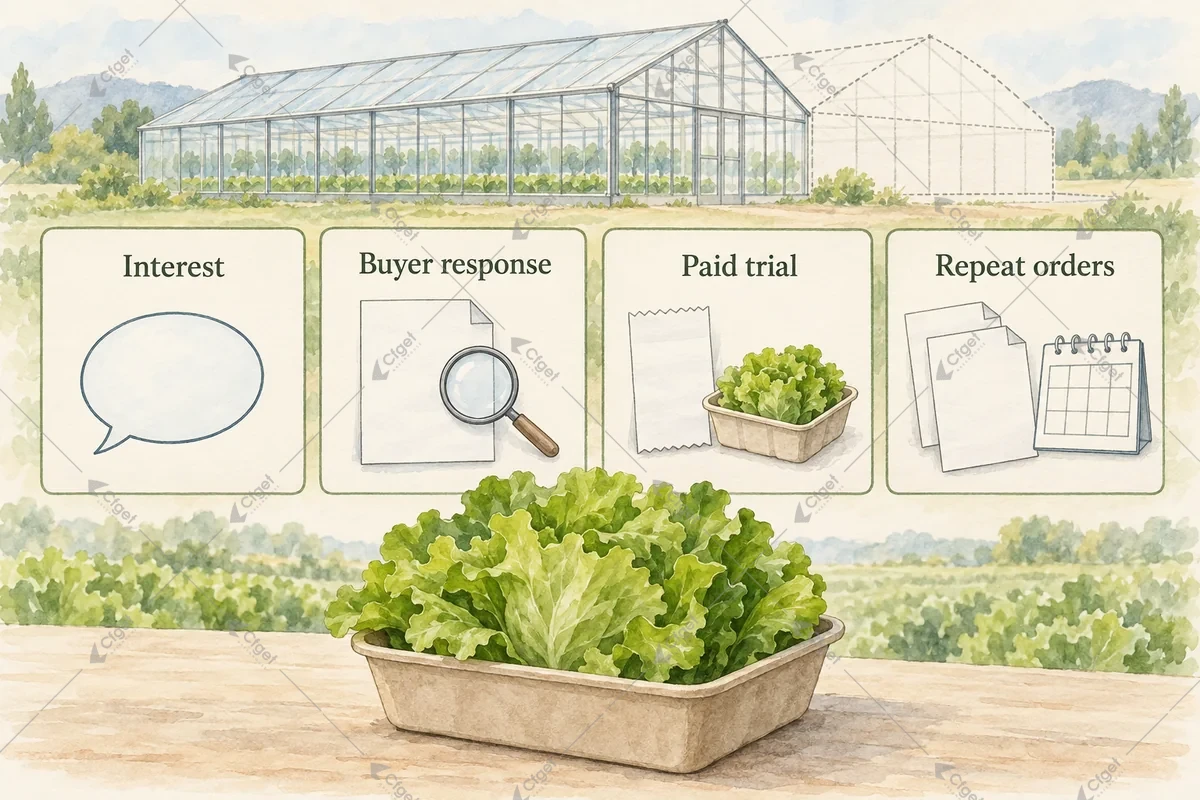
Consider three hypothetical entries in the nursery’s planning discussion: a project has confirmed another order, a farmer has expressed interest without specifying a quantity, and a previous farmer customer has placed a repeat order for a named variety and planting window.
The two defined orders can support planning within their actual terms. The expression of interest supports follow-up, but it does not yet establish how many cuttings to prepare. Keeping those entries separate makes the uncertainty visible without dismissing a potential customer.
Before committing the next live batch, connect the planned quantity to the buyer, variety, required delivery window and current order status. Where an important quantity is still unconfirmed, identify the specific answer needed rather than filling the gap with the historical sales total.
Choose a manageable commitment
Review the unconfirmed portion with the nursery manager before assigning stock and production work. Decide what commitment the available orders support and what additional customer evidence would justify more. Do not infer future demand from technical multiplication capacity alone.
Once the quantity and timing have a defensible basis, use the nursery bench-space guide to check occupancy. The commercial question comes first: which cuttings are being prepared for a documented next purchase, and which still depend on a buyer decision?