A drain percentage is useful only when its numerator and denominator belong to the same crop area and interval. Yesterday’s drain tank total divided by today’s irrigation estimate can look precise while describing no real irrigation event. Begin by defining the measurement boundary, then calculate the fraction.
For a measured container or substrate system, drainage fraction is drained volume divided by applied volume. Whether that fraction is suitable depends on water quality, fertilizer, substrate, crop stage and the way water moves through the root zone. There is no percentage that can be prescribed responsibly for every greenhouse.
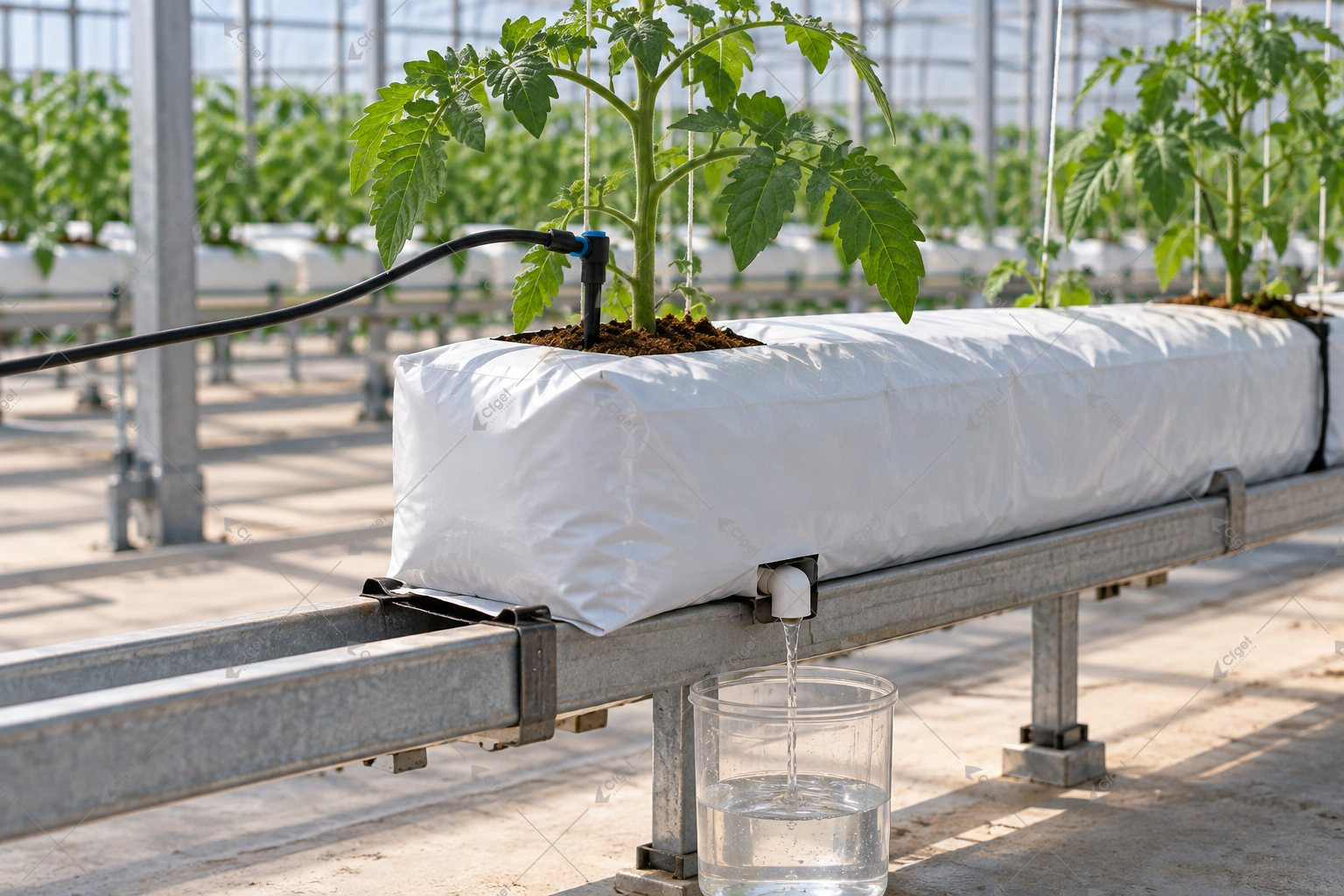
Choose an event test or a daily balance
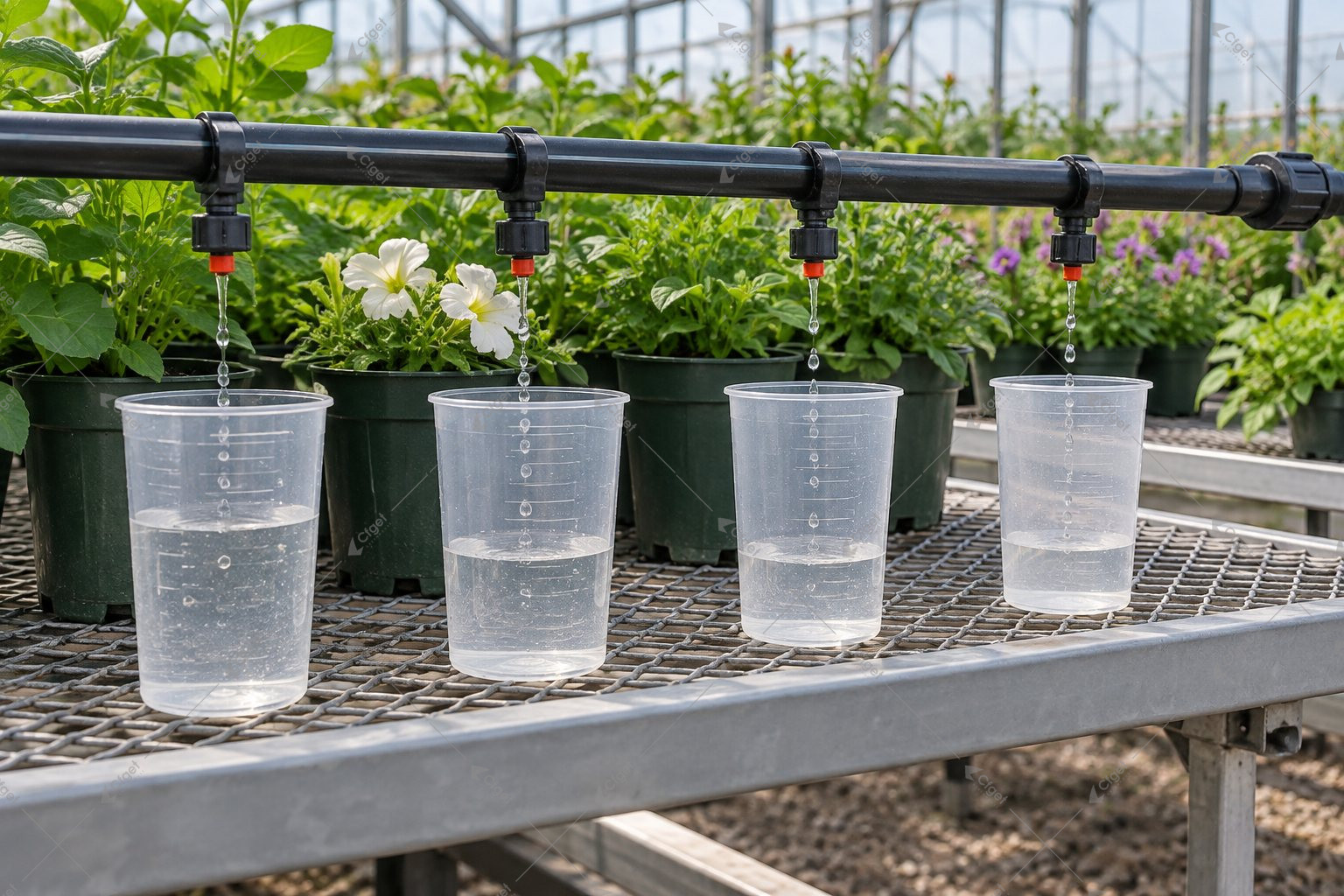
UF/IFAS describes leaching-fraction testing for container nurseries using measured water application and collected leachate. That measurement principle is useful, but the collection arrangement must fit the greenhouse system. An overhead nursery method cannot be copied unchanged into a shared gutter that also receives spills or several crops.
An event test asks what happened after one defined irrigation or pulse sequence. A daily balance asks how much entered and drained from a defined set of plants over the day. Both can be useful. They should not be compared as equivalent when storage in the substrate or delayed drainage crosses the measurement boundary.
- For individual containers, collect actual delivered water from representative outlets and capture drainage without catching unrelated water.
- For a monitored bag or slab, account for every inlet and every drainage outlet serving it.
- For a shared gutter, identify all contributing plants, cleaning water and other inflows. Mark any unmeasured component explicitly.
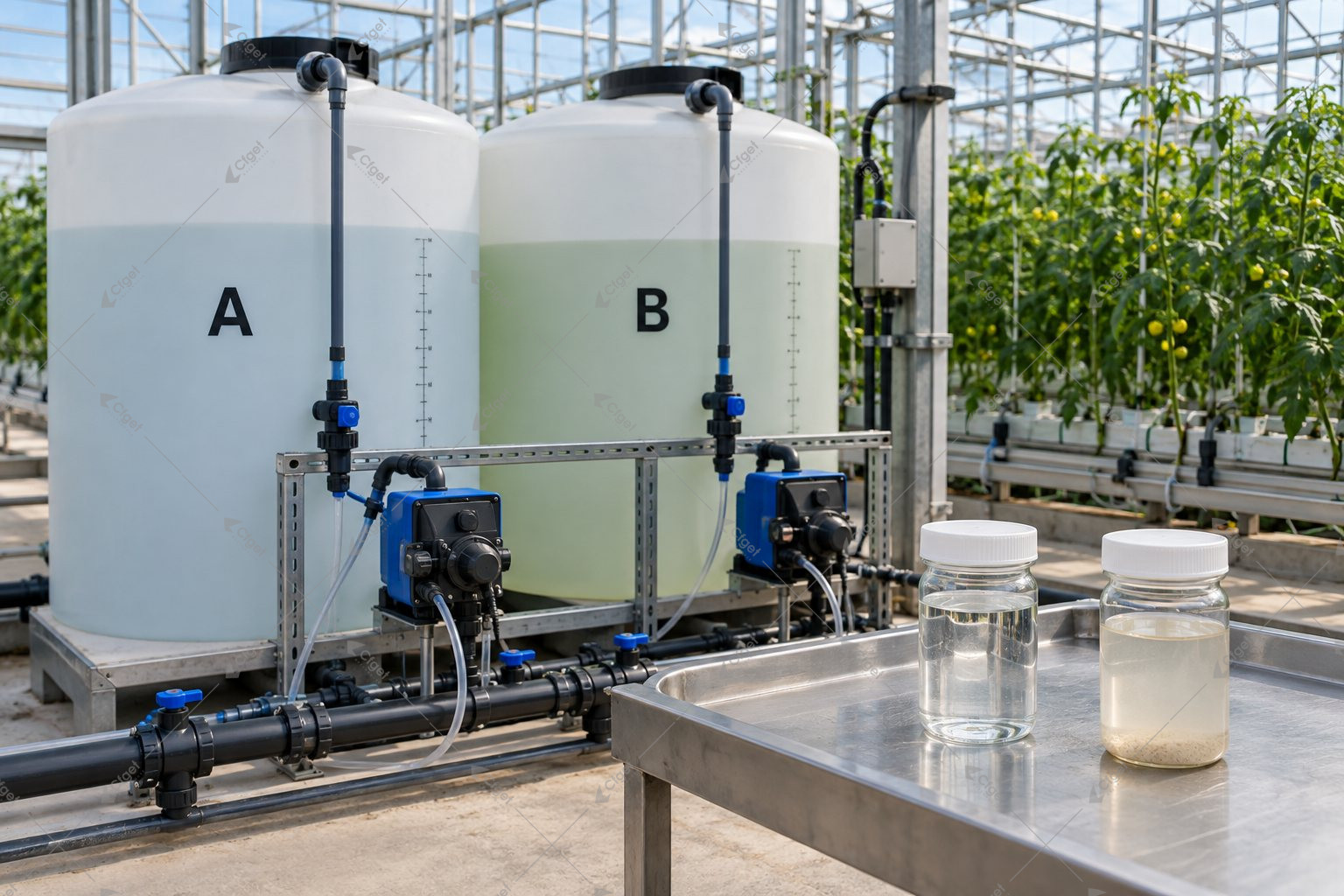
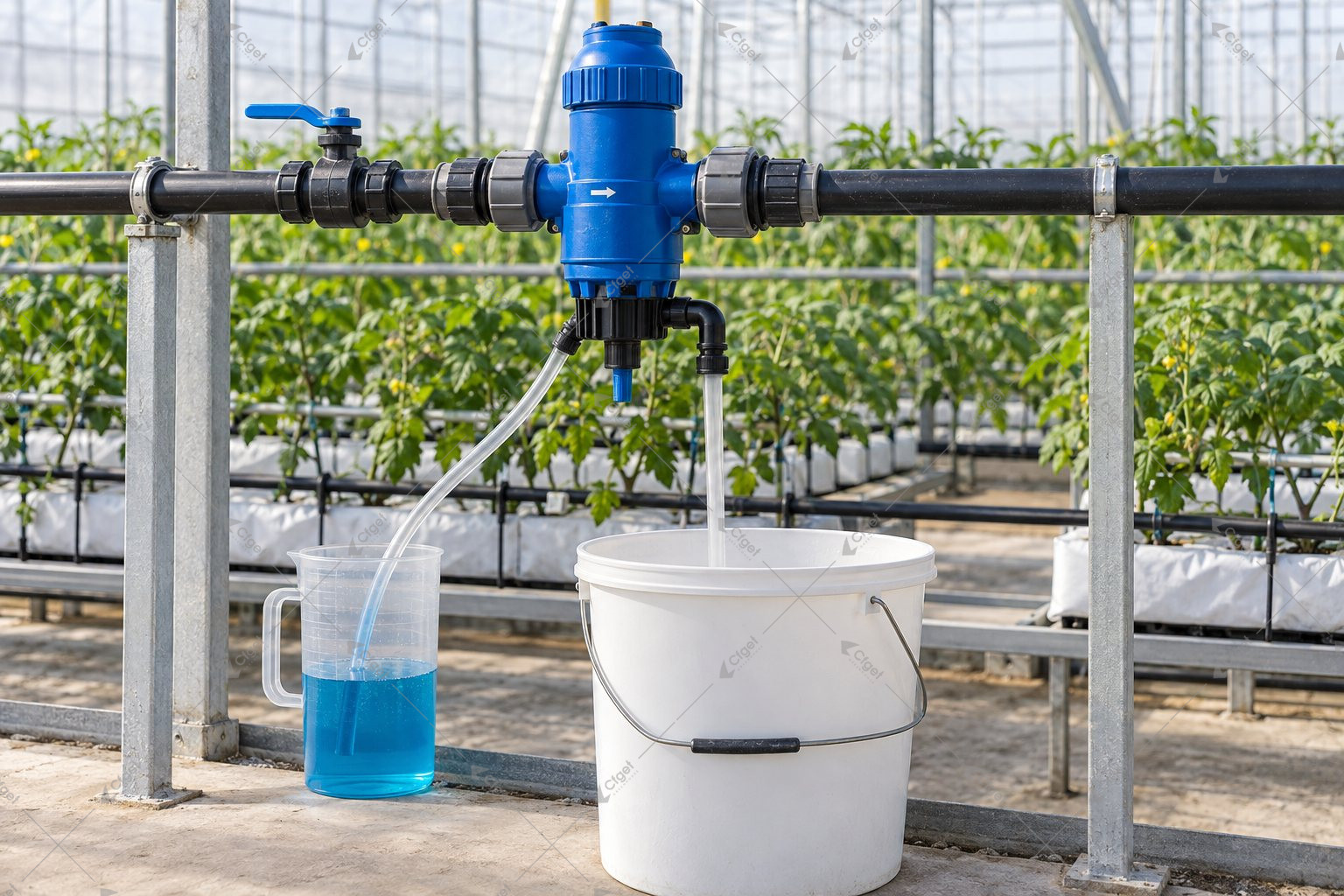
- For recirculation, distinguish the solution delivered to the crop from fresh water added to the system.
Calculate one example and check the units
Assume a group of monitored substrate bags receives 40 L during a defined interval and drains 10 L collected on the same basis. Drainage fraction = 10 / 40 = 0.25, or 25%. These are hypothetical values for calculation, not a recommended target or CFGET field result.
If the drain measurement accidentally includes 5 L from a line-flushing event, the apparent fraction becomes 15 / 40 = 37.5%. Nothing about the crop changed; the measurement boundary did. Record flushing separately rather than trying to correct the crop schedule from that result.
A daily fraction does not have to match every single pulse. Earlier irrigation can refill a partly depleted substrate before appreciable drainage begins. Interpret the sequence with substrate moisture or weight and the grower’s crop observations.
A high drain number can coexist with dry roots
Before reducing water because drainage seems high, check whether the applied solution is bypassing part of the substrate. Inspect the stake position, wetting pattern, bag condition and representative root distribution. Uniform drainage volume is not a measurement of uniform root-zone moisture.
At the other extreme, a low measured fraction may reflect incomplete collection or a delayed outlet rather than an efficient irrigation program. Virginia Tech’s leaching-fraction guidance emphasizes controlled collection of applied and drained water. Use that discipline when adapting the test to your containers and drainage hardware.
| Observation | Pair it with |
|---|---|
| Fraction rises after a schedule change | Actual emitter delivery, moisture pattern and the change in applied volume |
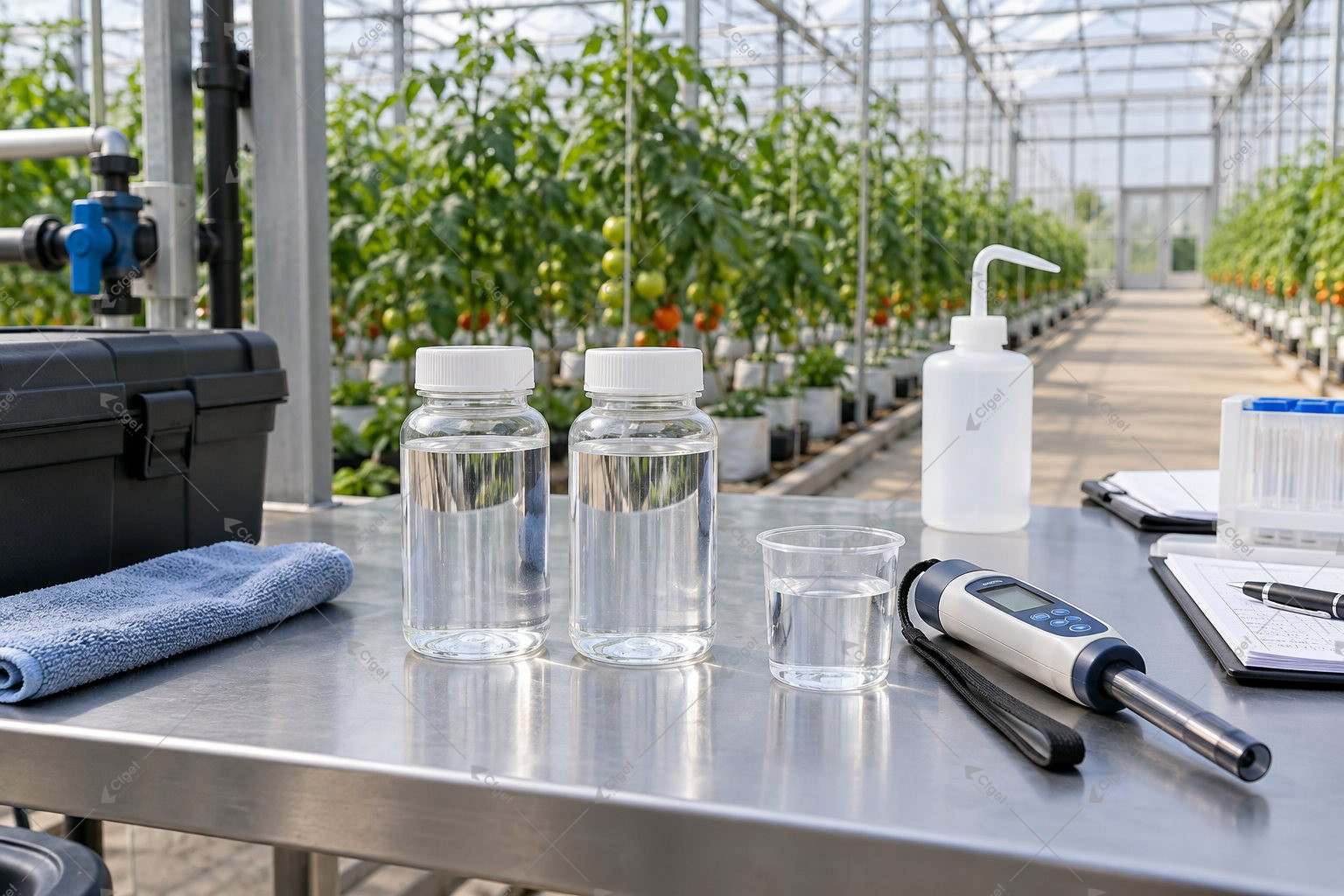
| Drain EC rises | Feed and source-water analysis, extraction method, crop condition and a time series |
| Little drainage reaches the vessel | Outlet inspection, collection losses and the time allowed for drainage |
| One bag differs from the group | Emitter, plant size, substrate and location records before changing the entire zone |
If incoming volumes vary unexpectedly, run the mapped emitter-delivery test first. A drainage percentage calculated from assumed irrigation input can conceal the same distribution fault you are trying to diagnose.
Make the record usable for the next decision
Keep the plant count, container identity, start and stop times, incoming volume, drained volume and any excluded events together. Add feed and drainage EC and pH when those are part of the crop monitoring plan. Agree the action with the crop adviser rather than adjusting to a number in isolation.
For a new greenhouse, mark representative collection points on the growing-system drawing. CFGET can coordinate accessible gutters, sampling locations and service space with the irrigation package. The immediate action for an operating farm is simpler: audit one complete measurement interval and remove unaccounted flows before changing the schedule.