Steam and solarization are possible heat-treatment routes for an in-ground greenhouse bed, but neither can be selected from the word “sterilization” on a proposal. First identify the problem, the soil region that must be treated and the crop-free window available. Then ask whether the proposed route can deliver and demonstrate the required exposure there.
A hot greenhouse-air reading or a contractor’s boiler output is not evidence of successful treatment at soil depth. Before reserving the bay or booking a service, obtain a target-specific feasibility assessment from the crop specialist and a credible delivery and verification plan for the actual bed.
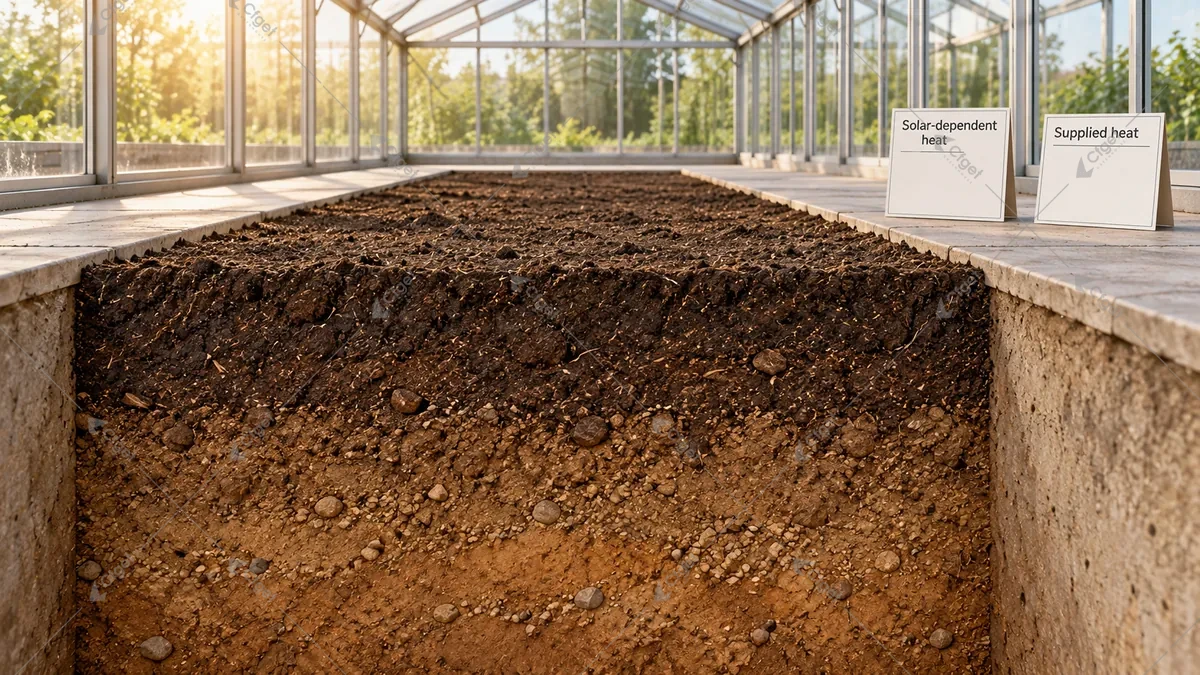
Ask what reaches the relevant soil depth
Solarization uses solar energy to heat the soil under an appropriate covering arrangement. Steam supplies heat from an external source. This gives the routes different practical dependencies, but neither description proves that the coldest relevant part of the treatment volume has received enough heat.
UC IPM’s soilborne-pathogen guidance describes solarization as condition-dependent and distinguishes heat responses among targets. Some viruses and weed seeds can survive treatments effective against other organisms. A claim to eliminate every soil problem therefore goes beyond what a generic treatment name establishes.
Define the target before comparing providers. A diagnosed soilborne disease, a weed-propagule problem and an unexplained weak crop are not interchangeable treatment briefs. If the cause has not been established, that uncertainty belongs ahead of the equipment choice. Heat treatment also does not correct every possible physical or nutritional reason for poor growth.
Compare the routes through their limiting conditions
| Question | Solarization proposal | Steam-service proposal |
|---|---|---|
| Where does the heat come from? | The site’s solar exposure during the proposed window | Contractor-supplied heat and its delivery arrangement |
| What could limit soil exposure? | Season, shading and conditions within the actual soil volume | Access, utilities and heat distribution through the actual soil volume |
| What needs verification? | Target-relevant soil evidence through the proposed period | Target-relevant soil evidence during the specified service |
| What remains after heating? | Assessment of planting suitability and prevention of reintroduction | |
Local conditions can change the comparison. In its California strawberry guidance, UC IPM distinguishes warmer inland solarization conditions from cool coastal districts and notes the specialized equipment needed for steam. That is a regional field-crop example, not proof of performance inside every greenhouse. Its useful lesson is to demand evidence for the proposed place, season and target.
For a covered house, ask the adviser to consider the actual solar exposure reaching the bed, including relevant shading. “The greenhouse becomes hot in summer” does not establish the temperature history within the soil. Equally, a powerful steam unit does not establish how heat reaches an awkward edge, deeper region or otherwise difficult-to-heat part of the bed.
Two impressive measurements can leave the same gap
Imagine two hypothetical quotations. The solarization offer includes a warm afternoon air record from the empty house. The steam offer includes the contractor’s boiler-output rating. Neither includes a target-specific account of soil exposure at the relevant depth.
The air record describes the air; the equipment rating describes the heat source. The missing link is delivery through the soil volume that matters. Ask both teams: “What evidence will cover the difficult-to-heat part of this bed, and how will the crop specialist judge it against this target?” The answer may require a revised proposal or establish that a route is not credible within the available window.
This does not mean the grower should improvise a treatment test. The specialist must define the target-specific validation basis, while the service provider explains how the proposed work and evidence meet it. Keep promised treatment coverage separate from what the supplied evidence actually demonstrates.
Count the whole crop-free commitment
The operational comparison should include access, preparation, the treatment period, evidence review and any post-treatment conditions that must be resolved before planting. Ask the contractor to identify its required access and utility arrangements without assuming they already exist at the bay.
For example, a hypothetical steam service may have an available appointment before the intended planting date, but a required access route is still blocked. A solarization proposal may fit the empty-bay calendar on paper while lacking evidence for that season’s solar conditions. The first question concerns service feasibility; the second concerns heat-delivery feasibility. Writing “available before planting” beside both conceals the different unresolved dependencies.
Use a credible next decision date rather than inventing a universal turnaround. It may be the date the contractor confirms access, the adviser evaluates the seasonal evidence, or the agreed post-treatment results become available.
Keep heat completion separate from planting suitability
UMass transplant-production guidance notes that uneven heating, soil moisture and excessive heat can matter, including possible ammonium and manganese effects. Its context is growing media for vegetable bedding plants. Those cautions support asking about soil condition after treatment; they are not a recipe for treating an in-ground greenhouse bed.
Suppose the contractor has completed the agreed heat work, but the crop adviser still needs to assess a soil-chemistry concern. “Treatment completed” and “bed accepted for planting” should remain separate decisions. Do not add a corrective amendment or assume a cooling interval settles the question without that assessment.
Reintroduction is another boundary. Review how the treated area will be protected from untreated soil, materials and movement under the project’s hygiene plan. The broader crop-changeover guide addresses the surrounding system; heating the bed does not complete that work.
Use the comparison before committing the bay
Download the soil heat-route feasibility comparison. It is a manual adviser-led record, with no treatment calculation. Open it as UTF-8 comma-separated data and compare the same target, bed and crop-free window across both routes.
Complete the soil-exposure evidence and service dependencies before entering a conclusion. Record “credible within stated conditions,” “route or window needs revision,” or the specific unresolved question. Temperatures, treatment times, treatment depth and planting release must come from the qualified, target-specific assessment, not from this worksheet.