Tomato greenhouse for cold climates works only when structure, ventilation, covering, shading, heating or cooling, and crop load are planned together for the local climate.
*By Coraline Liao, CEO, CFGET | Updated: August 9, 2026*
*Reviewed by CFGET Project Planning Team*
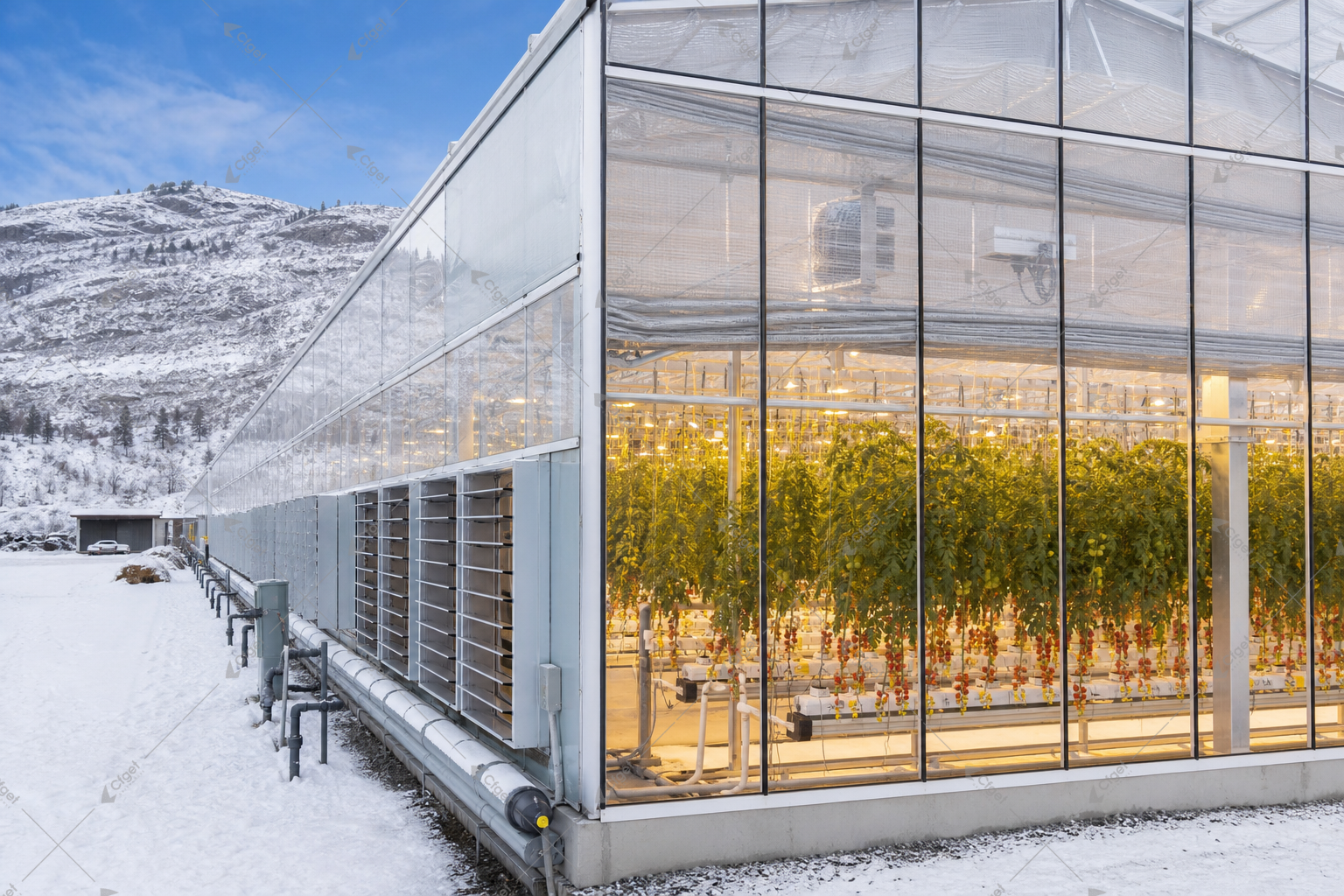
When I review tomato greenhouse for cold climates, I start with the site and the crop before looking at product names. The site, crop, structure, covering, systems, installation scope, and operator skill all change the recommendation.
Use this with our Commercial Greenhouse Buying Guide topic cluster. For a full project, keep it beside Commercial Greenhouse Solutions so the structure, systems, and crop plan do not drift apart.
Where should the decision start?
- Tomato greenhouse for cold climates should be selected from crop targets, water quality, power supply, climate pressure, operator skill, and maintenance capacity.
- Equipment should be sized as one system because ventilation, cooling, shading, irrigation, sensors, and controls affect each other.
- Ask for a layout, system diagram, equipment list, control logic, spare parts plan, and installation boundary before buying.
- A system is risky when the supplier cannot explain operating assumptions or replacement parts.
Key facts worth checking
| Question | Answer to make visible |
| What changes the recommendation? | Tomato greenhouse for cold climates depends on climate, crop, site services, budget, installation, and maintenance ability. |
| What should the buyer send? | Location, crop, area, target season, climate issue, required systems, timeline, and installation scope. |
| What should the supplier prove? | The system layout, equipment scope, assumptions, limitations, spare parts, and support process. |
My project review method
On a real project, I first ask what the greenhouse has to survive and what the crop has to earn. That keeps the decision away from catalog language.
Then I test the recommendation against the same project checklist: climate, crop, structure, systems, budget, installation, and maintenance.
Before ordering, a buyer should still confirm local wind load, snow load, permit rules, energy price, water quality, and crop economics. This can narrow the decision, but the final design still needs project engineering.
What I would inspect in the drawings
- For tomato projects, I check gutter height before I look at the covering material. A low roof can make crop work, ventilation, and harvest labor painful later.
- I would confirm VPD targets, drainage, crop support, row spacing, and runoff collection before calling one tomato greenhouse design better than another.
- If the quote ignores summer humidity and condensation risk, I would treat the design as unfinished, even when the structure price looks attractive.
What the buyer needs to fix in writing
| Buyer question | What to decide before requesting a price | Why it protects the project |
| Crop target | Temperature, humidity, irrigation, drainage, and harvest window. | Keeps equipment sizing tied to the growing plan. |
| Site limits | Water quality, power supply, heat, cold, wind, dust, and maintenance skill. | Prevents over-design or under-design. |
| Serviceability | Spare parts, controls, installation drawings, and operator training. | Reduces downtime after the greenhouse is built. |
Evidence pack
Tomato greenhouse for cold climates needs project evidence before product names or a single price mean much.
| Project input | What to verify | Why it matters |
| Climate data | Monthly temperature, wind, snow, humidity, radiation, and extreme events. | The greenhouse has to fit the site, not just the catalog. |
| Crop plan | Crop, growing method, row spacing, target season, and labor skill. | Crop requirements change height, ventilation, irrigation, and control needs. |
| Supplier scope | Drawings, bill of materials, packing list, installation support, and after sales process. | Clear scope reduces hidden cost and wrong expectations. |
Climate and project assumptions to confirm
- Use local wind and snow load assumptions before confirming structure.
- Check the hottest and coldest operating months, the annual average alone.
- Confirm water quality and power availability before selecting irrigation or climate equipment.
Suitable when
- The crop, climate, structure, systems, and budget are defined together.
- The supplier can provide drawings, specifications, and a clear responsibility boundary.
- The buyer has a realistic plan for installation, operation, and maintenance.
Not suitable when
- The design is copied from another country without local climate review.
- The quote lists only product names and total price.
- Yield, payback, or lifespan is promised without assumptions.
What this guide adds to the basic answer
- Translate the crop plan into gutter height, working clearance, root-zone control, drainage, labor routes, and sensor placement.
- Separate designed environmental conditions from yield promises that depend on the grower and market.
Sources worth checking
- Growing Winter Tomatoes in a Greenhouse | HOrT COCO-UC…
- Oregon State University greenhouse tomato resource
- UConn commercial greenhouse design resource
- UMass greenhouse selection and building resource
Neutral source to keep beside the quote
CFGET project planning note
For tomato projects, I would confirm gutter height, plant density, VPD target range, crop support, drainage, and whether condensate or nutrient runoff needs collection before comparing greenhouse types.
Buyer risk signal
Risk signal: the tomato greenhouse quote ignores gutter height, crop support, ventilation path, drainage, and summer humidity control.
Ask the supplier for these exact specs
| Spec to request | Why it matters |
| Gutter height, row spacing, plant density, and crop support method | Tomato crop height and labor flow can decide whether the greenhouse is practical. |
| Ventilation path, shade, heating or cooling, and humidity-control assumptions | Tomatoes are sensitive to heat stress, condensation, and disease pressure. |
| Drainage, fertigation zoning, and runoff collection plan | Water and nutrient management affects both yield stability and operating cost. |
Project video: greenhouse climate control in practice
This field video shows a greenhouse climate system in use, which helps buyers check whether the quoted equipment matches the site conditions.
What does the crop plan require from the greenhouse section?
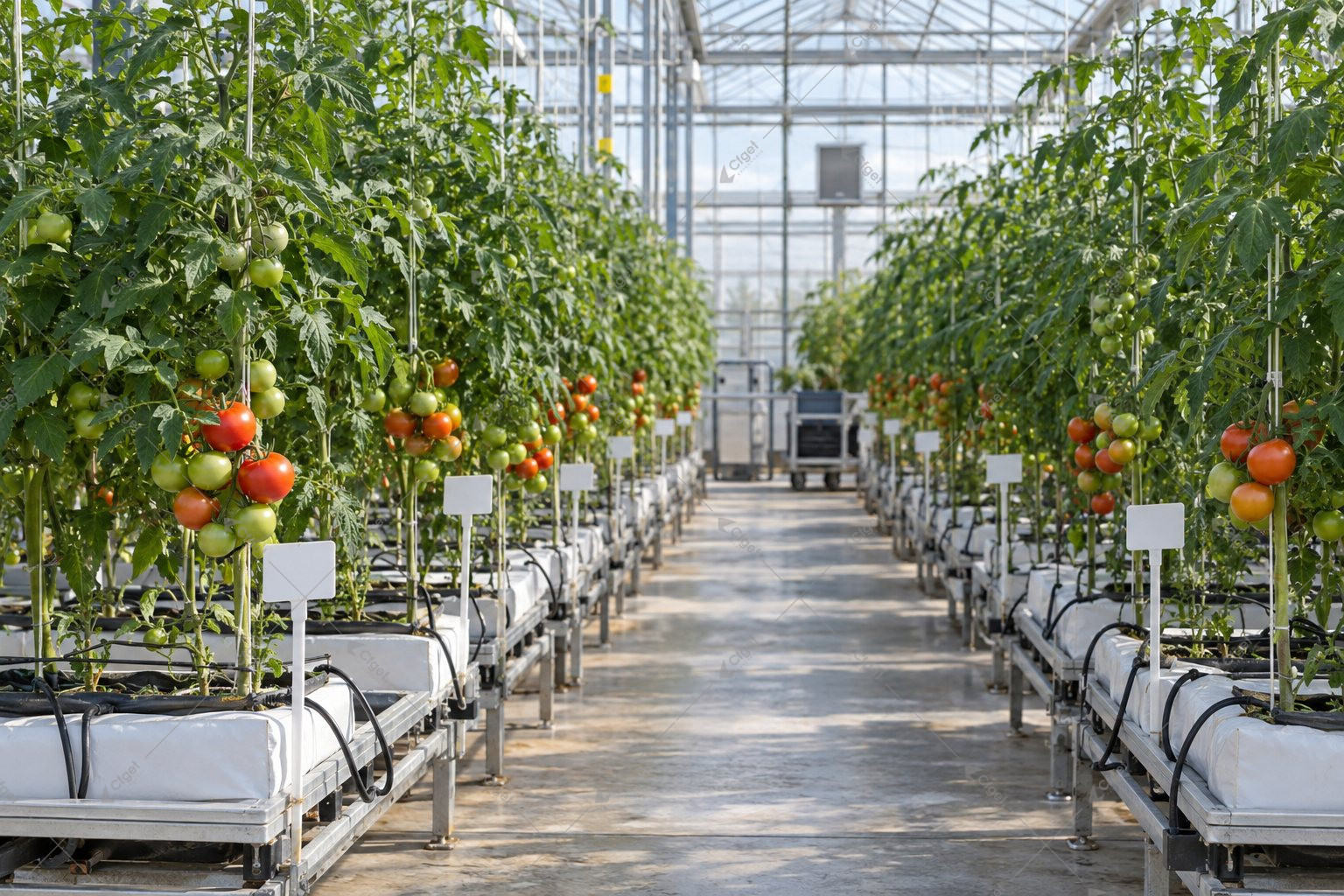
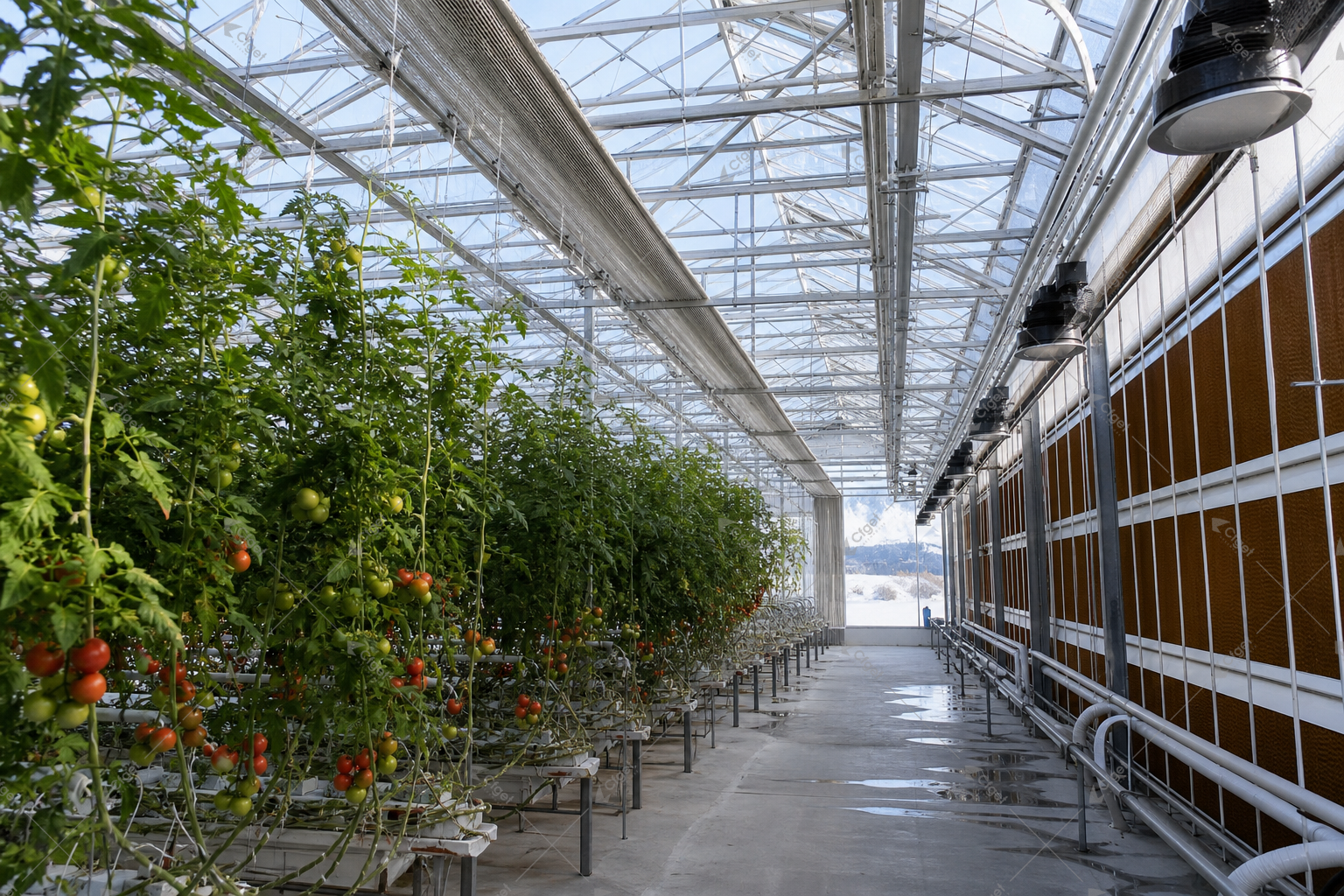
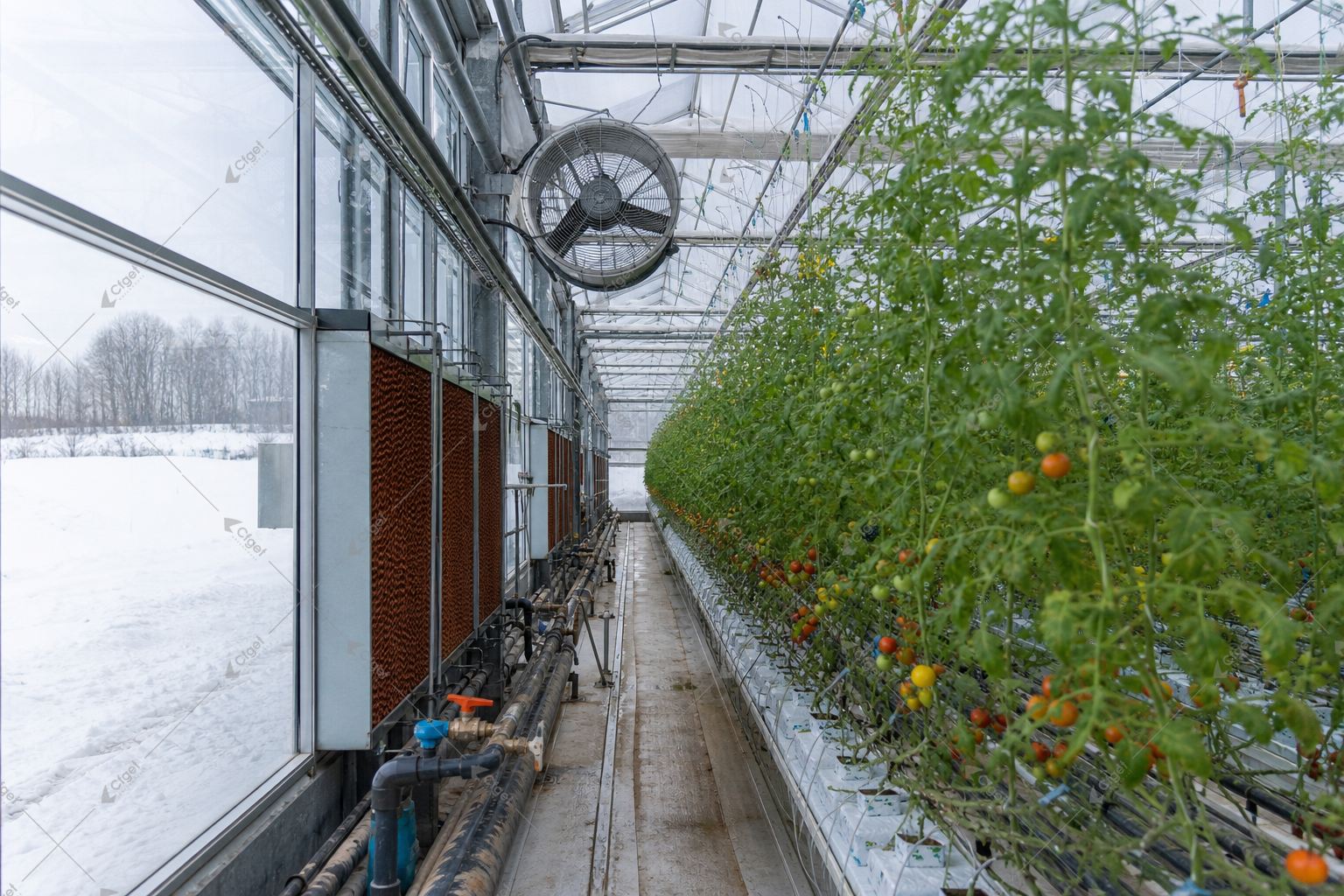
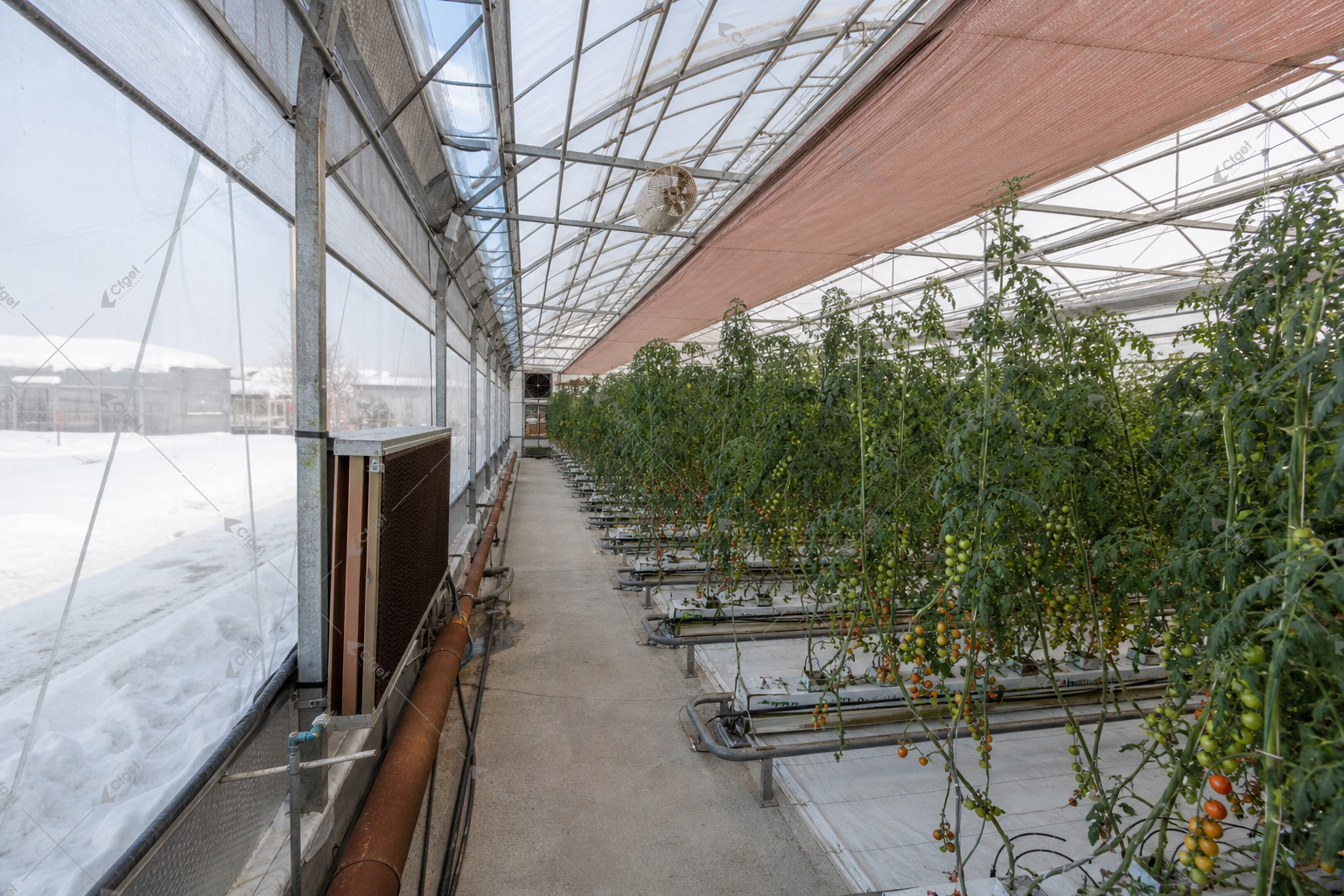
For tomato greenhouse for cold climates, the section drawing should show gutter height, crop-wire height, truss clearance, row spacing, work-cart routes, irrigation lines, and drain collection. A generic floor area says little about daily crop work.
Tall tomatoes need room for lowering and leaning. Leafy crops may care more about uniform air and irrigation over dense beds. The crop plan should decide the geometry before the structure is priced.
| Crop requirement | Design consequence | Drawing or record |
| Canopy and work height | Gutter, crop wire, truss clearance and labor access. | Greenhouse section with crop profile. |
| Root zone | Irrigation pulses, drain collection, EC and sanitation. | Irrigation and drainage layout. |
| Climate operation | Sensor locations, VPD, condensation and air movement. | Control sequence and trend plan. |
How I would evaluate it
I would place the crop profile on the greenhouse section and walk through one working day: irrigation, crop work, pollination or scouting, harvest, sanitation, and drainage. The layout has to serve that routine.
How do humidity, light, and root-zone control affect the choice?
Temperature alone is a poor operating target. I would review VPD, leaf temperature, condensation hours, root-zone EC, drain timing, and air movement through the canopy, then check whether the proposed sensors can actually measure those conditions.
The expensive mistake is often a mismatch between climate volume and crop density. A low house may be cheaper to buy but harder to cool, dehumidify, spray, and work in once the canopy fills the bay.
| Check | Good sign | Risk sign |
| Geometry | Crop height, rows and work routes appear on the section. | The layout shows only structural bays. |
| Environment | VPD, condensation, root-zone and sensor assumptions are stated. | One air-temperature target is used for every crop stage. |
| Performance | Designed conditions and utility demand are defined. | Yield is promised without grower and market assumptions. |
What to request from a supplier
Ask for a section with the crop profile, row and work layout, crop-support loads, irrigation and drain plan, climate targets, sensor locations, utility assumptions, and the conditions used for any production estimate.
Which operating assumptions belong in the RFQ?
The RFQ should state cultivar or crop type, planting density, production season, target market grade, crop support load, irrigation method, sanitation routine, harvest flow, and the operator’s technical level.
Yield promises do not belong in an equipment quote without assumptions. Ask instead for the environmental range the house is designed to maintain, the utility demand at that condition, and the measurements used during commissioning.
| RFQ field | Example | Why it matters |
| Crop plan | Variety, density, season and market grade | Sets geometry and environmental targets. |
| Working section | Crop wire, truss and aisle clearances | Protects daily labor flow. |
| Root zone | Irrigation, substrate, drain collection and EC | Connects structure to crop control. |
| Designed condition | Temperature, VPD and utility basis | Replaces vague yield promises. |
Practical next step
For a first CFGET review of this crop operation decision, send country and city, crop, area, target season, covering preference, cooling or heating need, irrigation method, and installation scope. Include the climate challenge, crop method, required systems, and installation scope. Photos, water data, climate files, drawings, or a site sketch also help. Email [email protected].
Final buying note
Tomato greenhouse for cold climates works best when the buyer writes down the assumptions before looking at product names. A good decision combines engineering trade-offs with supplier proof and a realistic operating plan.
Before you use this recommendation
- Treat this as a planning guide, not a final engineering design.
- Check the local climate data, crop plan, water quality, energy cost, and building rules before ordering.
- Ask the supplier to show drawings, material specifications, equipment scope, packing details, and installation responsibilities.
- Avoid any quotation that promises yield, payback, or structural performance without stating the assumptions.
Research and review method
I prepare these notes the same way I review an early buyer request: start with the search question, translate it into a greenhouse project planning checklist, check available project media, and keep neutral technical sources beside the quote when reliable public references are available. The point is to make assumptions, limits, and RFQ requirements visible before a buyer compares suppliers.
Coraline Liao is CEO of CFGET. Her public LinkedIn profile describes her as a Greenhouse Technical Director with more than 15 years in the greenhouse industry, focused on customized climate-control and greenhouse solutions. Her published technical topics include greenhouse structures, climate control, light management, hydroponics, and fertigation. Her article reviews begin with the crop, climate, site, project scope, installation boundaries, and operating constraints. Technical recommendations should be adapted to local climate data, crop plans, budgets, and professional engineering review before implementation.
Professional profile: Coraline Liao on LinkedIn
Company details
CFGET: Founded in 1996, CFGET designs, manufactures, and delivers greenhouse systems and smart farming solutions from its own factory in Sichuan, China.
Address: NO 108, South Area Chengdu Modern Industrial Park, Sichuan, China
Email: [email protected]
About the company: https://cfgreenway.com/about/
Company profile: GreenWay on LinkedIn
Technical videos: Greenhouse project channel on YouTube
Where this fits in the greenhouse buying cluster
Start with the hub, then open the system or crop pages that match your decision.
- Commercial Greenhouse Buying Guide
- Commercial Greenhouse Solutions
- How to Choose Tomato Greenhouse
- Vegetable Greenhouses
- Greenhouse Growing Systems
- Greenhouse Climate Control
- Greenhouse Humidity Control
- Smart Greenhouse Control
- Greenhouse Project Cases