Start with country, contract, and crop schedule
Northern European winter production faces a different light and heat balance from Mediterranean cucumber production. Record coordinates, elevation, hourly weather, wind, snow, solar radiation, humidity, and the required delivery weeks. Add local planning, water, discharge, labor, energy, and food-safety obligations.
Name the cucumber type, cultivar group, customer specification, pack format, crop cycles, high-wire method, plant density, marketable-grade definition, and delivery frequency. State whether the business case depends on winter supply, shoulder-season extension, or lower-input seasonal production. The greenhouse should follow that plan instead of copying a successful structure from a different latitude and tariff.
Compare greenhouse concepts with integrated simulation
| Decision | Buyer input | Evidence to request |
|---|---|---|
| Envelope | Site loads, useful light, heat retention, condensation, and service life | Installed assembly data, framing shade, joints, seals, gutters, cleaning, and replacement plan |
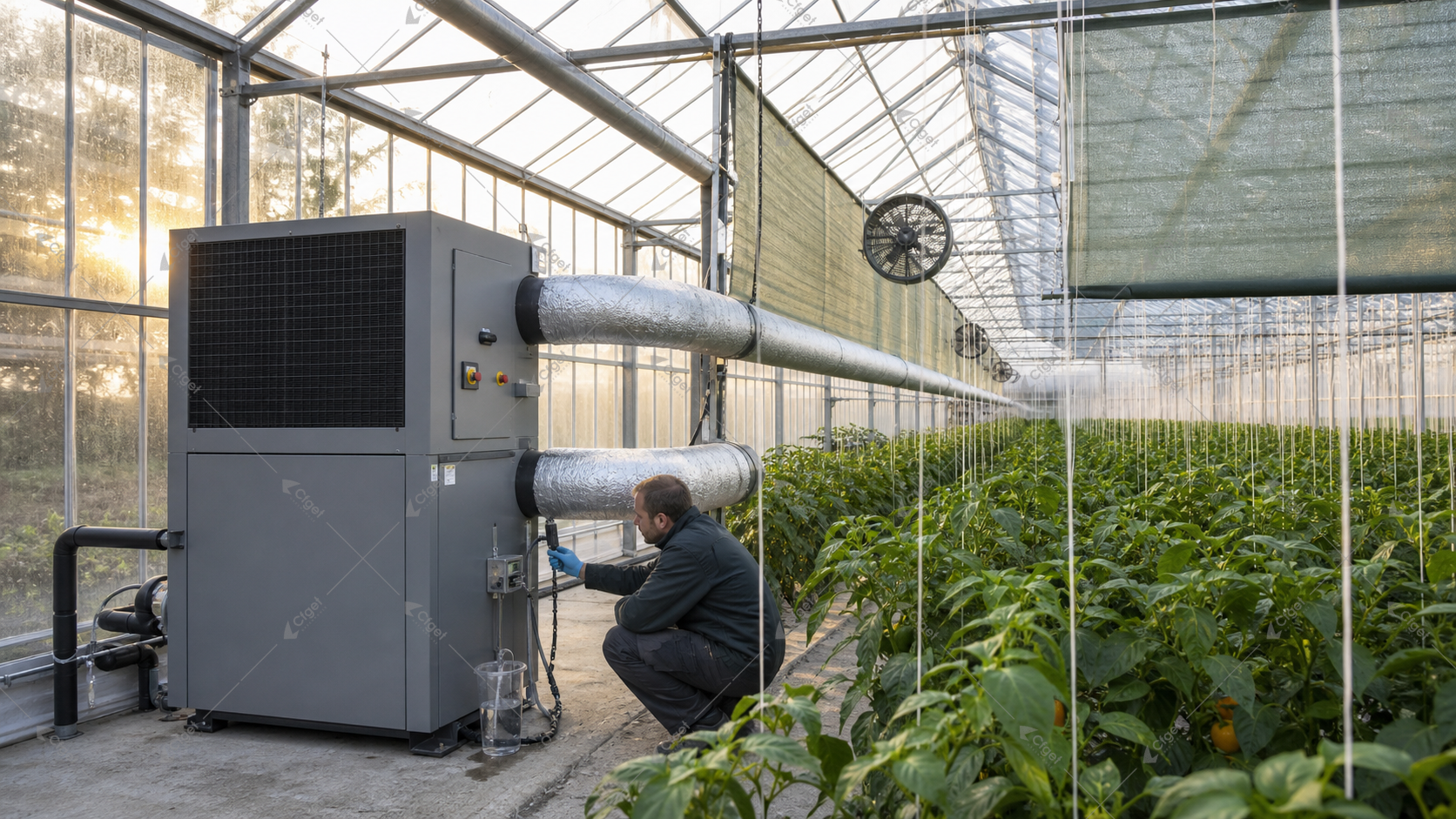
| Climate systems | Crop boundaries, hourly weather, energy source, and tariff | Hourly model, peak duties, equipment schedule, sequence, and operating limits |
| Water and root zone | Source analysis, cultivar, substrate, drainage, and reuse policy | Treatment basis, zones, flow uniformity, sampling, sanitation, and failure response |
| Labor and logistics | Crop work, harvest frequency, trolley, grading, packing, and dispatch | Coordinated layout, aisle and door checks, cold-room duty, and staffing assumptions |
Wageningen’s adaptive greenhouse work emphasizes matching location, crop, and operating strategy through integrated climate, crop, energy, water, and economic models. Use that approach before choosing the frame. A vendor comparison should keep the weather, crop schedule, indoor boundaries, and included scope constant.
Protect useful light without ignoring heat and humidity
At higher latitude, winter light can limit cucumber production, but more transmission is not the only duty. Covering, frame shade, screens, condensation, dirt, and vent geometry affect crop-level light. Ask for the measurement or simulation basis and state whether values describe a clean product, an installed assembly, or annual operation with screens.
WUR’s Winterlight cucumber study combined optical changes with screens, dehumidification, heat recovery, and a named crop strategy. Its results describe that facility and experiment. They do not guarantee the same production or energy outcome elsewhere. Use the study to ask better questions about light, screen hours, moisture removal, and model validation.
Build an hourly energy and moisture case
Ask for heat demand, electricity, cooling, dehumidification, lighting, carbon dioxide where applicable, and water use by hour or representative design periods. State energy prices, connection limits, fuel availability, heat-source temperatures, equipment efficiency, maintenance, and backup assumptions. Annual totals can hide a capacity shortage during a cold morning or a high-price operating hour.
The controls narrative should explain heating, vents, screens, circulation, dehumidification, lighting, and irrigation as one sequence. Record what happens during condensation risk, a screen transition, power restriction, communication loss, and an extreme-weather event. Avoid a control package that can only be evaluated through a vendor dashboard.
Specify crop-zone sensing and control ownership
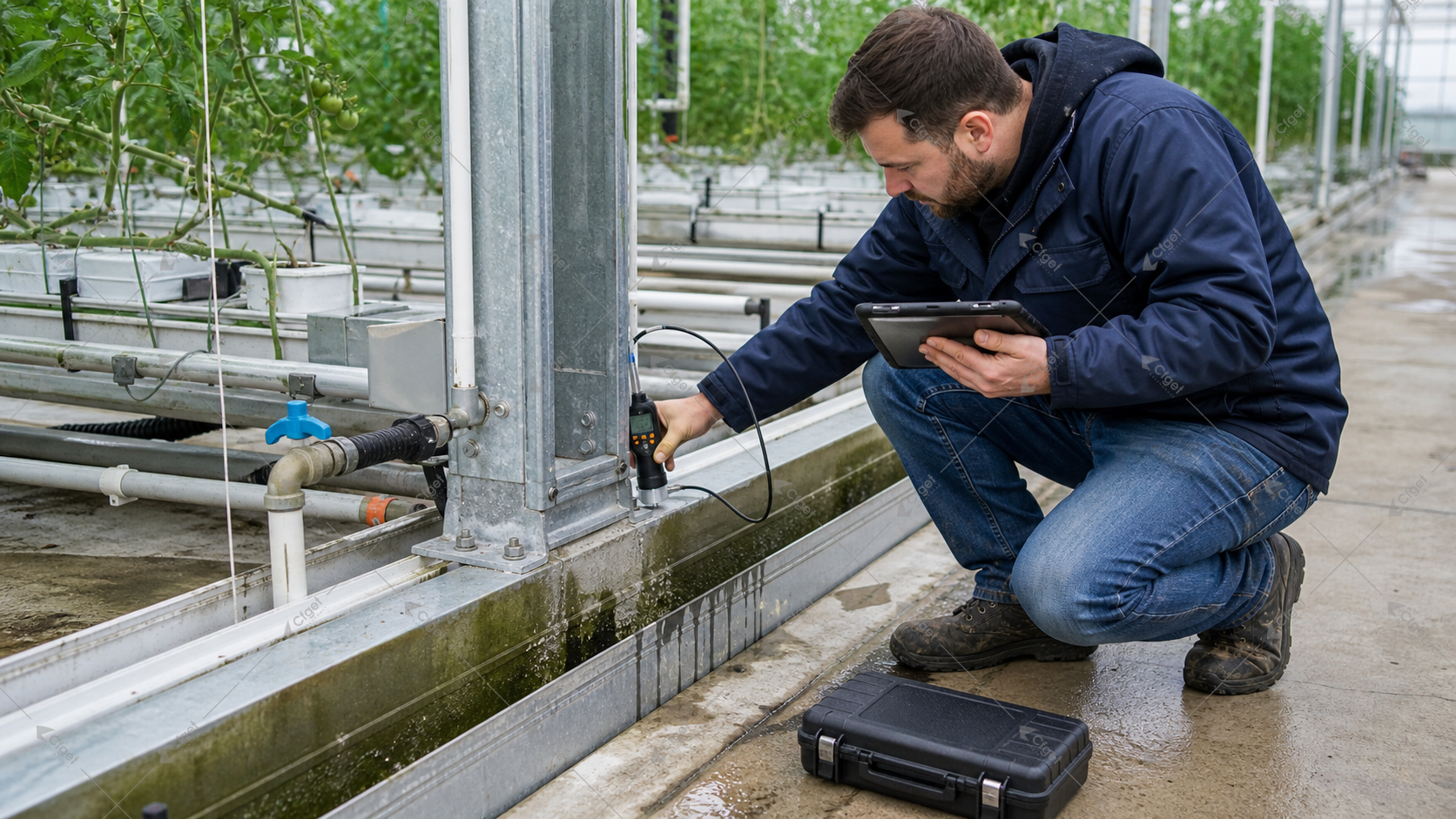
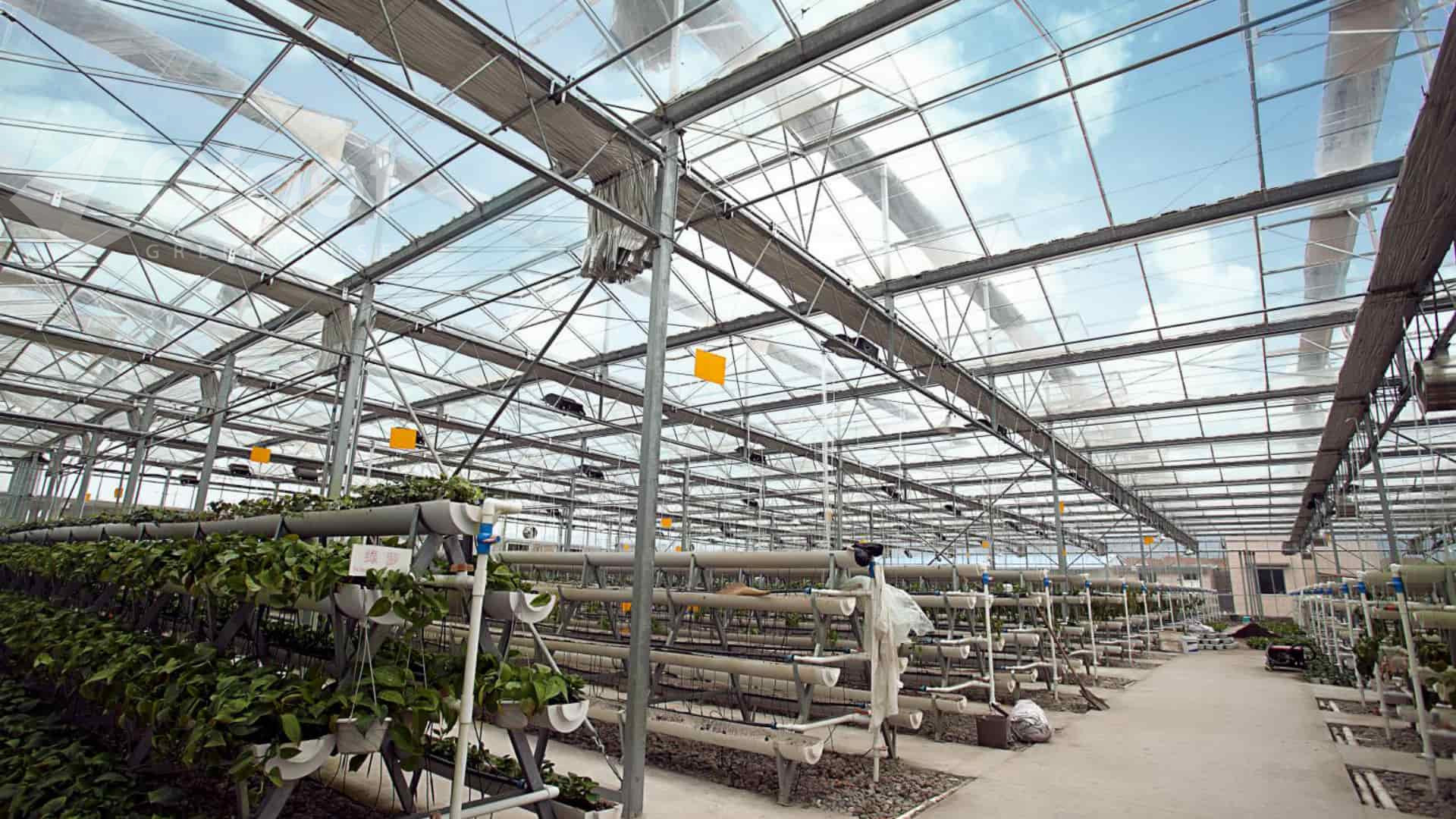
Place representative temperature, humidity, light, carbon dioxide, substrate, drain, and water sensors with the crop adviser. Define calibration, comparison with portable instruments, data retention, alarm limits, and who may change setpoints. A single wall sensor does not describe a tall cucumber canopy.
Autonomous and model-based control can support decisions, but it still needs reliable measurements, safe limits, and human responsibility. WUR’s AGROS cucumber work uses crop, climate, and substrate information and also documents the need for robust sensors. Ask how the control system detects implausible data and what it does when the model, network, or sensor is unavailable.
Design water, nutrient, and drain systems as one loop
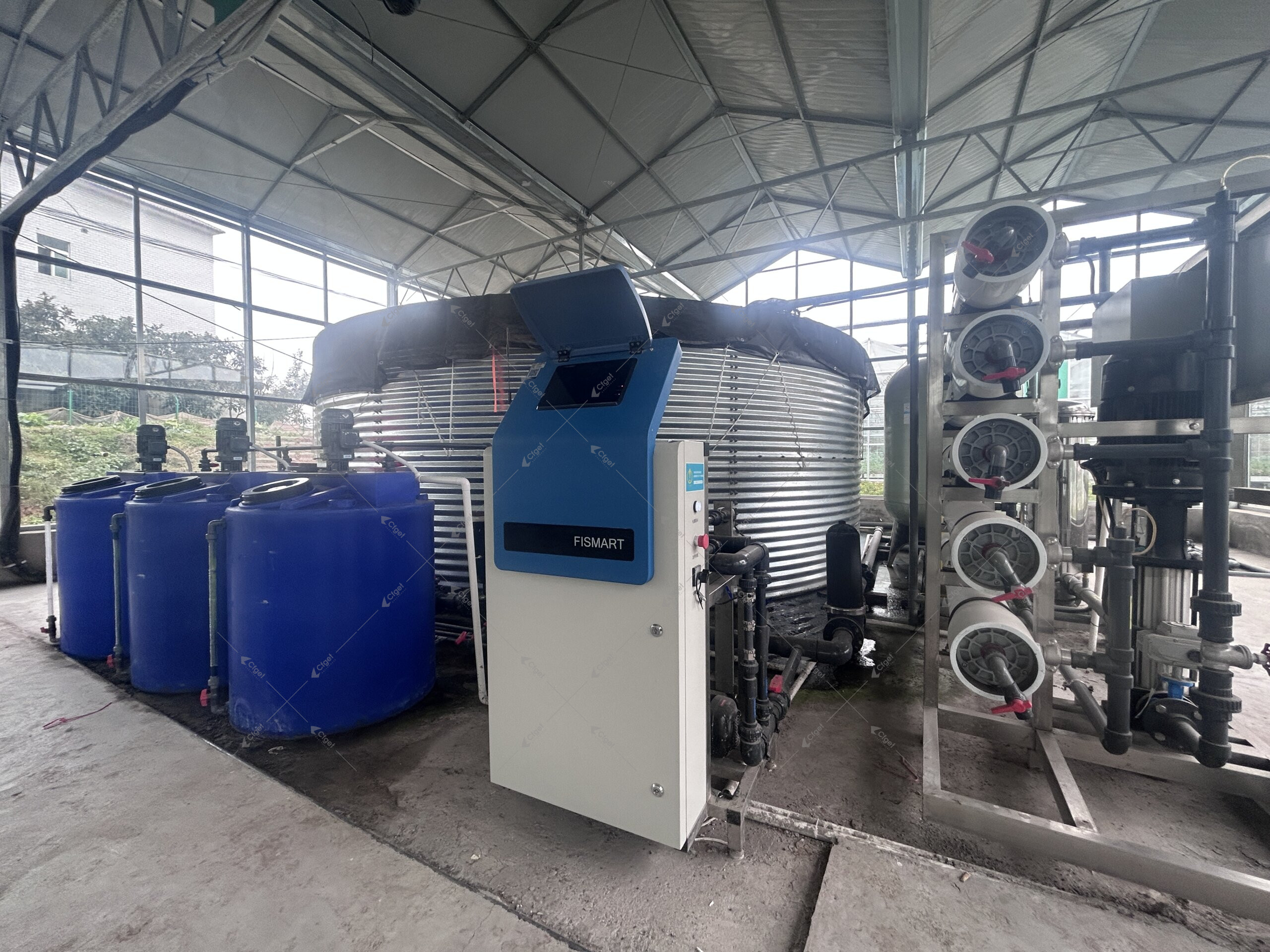
Provide a laboratory water analysis, source capacity, treatment scope, storage, irrigation zones, dosing method, drain collection, disinfection, reuse policy, and discharge constraints. State the cucumber system, substrate, plant density, gutter slope, emitter arrangement, sampling points, and cleaning chemicals.
Commission flow and drain distribution at the highest and farthest locations. Record allowable variation, tank levels, dosing accuracy, sensor checks, and failed-pump response. Where nutrient solution is reused, the responsible crop and water advisers should approve sanitation and monitoring. The supplier should expose material compatibility and maintenance access.
Map crop work, labor, and post-harvest flow
Show plant arrival, propagation, crop work, lowering and leaning, harvest, grading, packing, cooling, dispatch, waste, hygiene, and maintenance routes. Confirm trolley size, pipe-rail or floor transport, aisle width, turning circles, door clearance, floor loading, and crossings with utility rooms.
Labor assumptions should use the planned crop and market process. Automation can change tasks, skill requirements, spare parts, and outage exposure. Ask bidders to state what equipment replaces, what staff must still do, and how the site operates when a cart, lift, grader, or control system is unavailable.
Keep the Europe page distinct from other regions
This page owns European cucumber procurement and the interaction among light, energy, humidity, labor, and water. The China cucumber greenhouse guide covers Chinese regional routes, including solar-greenhouse considerations. The Egypt cucumber guide covers hot-arid cooling and water constraints.
Use the climate-control scope to assign system interfaces and the irrigation and fertigation scope for the water brief. These supporting pages should not repeat the regional crop decision.
Normalize capital and operating comparisons
Separate site work, foundations, structure, covering, vents, screens, heating, cooling, humidity control, lighting, carbon dioxide equipment where used, irrigation, growing system, crop support, controls, electrical work, water treatment, packing, cooling, installation, permits, commissioning, training, spares, and service.
Use one responsibility matrix and one set of design points. Ask for annual and peak consumption assumptions, maintenance intervals, replacement periods, labor requirements, and exclusions. Build a downside case for energy price, lower marketable output, downtime, and delayed commissioning. The equipment supplier cannot promise a universal yield or payback.
Commission systems and failed states
Test the envelope, vents, screens, heating, cooling, humidity control, irrigation, dosing, lighting where installed, sensors, alarms, and backup power. Include sensor drift, network loss, pump or fan failure, loss of normal power, and a stuck actuator where safe. Record the expected safe state, response time, alarm recipient, and recovery method.
Handover should include approved drawings, equipment schedules, controls narrative, energy and water model assumptions, calibration records, software backups, data-export method, spare parts, manuals, and training. Keep a clear record of settings and changes made during crop startup.
RFQ inputs for a commercial cucumber greenhouse in Europe
Use the same inputs for every quotation so scope and operating assumptions can be compared directly.
- Country, coordinates, survey, planning context, access, drainage, and expansion plan.
- Hourly weather, wind, snow, solar radiation, humidity, and required production weeks.
- Cucumber type, cultivar group, crop calendar, market contract, pack, and grade definition.
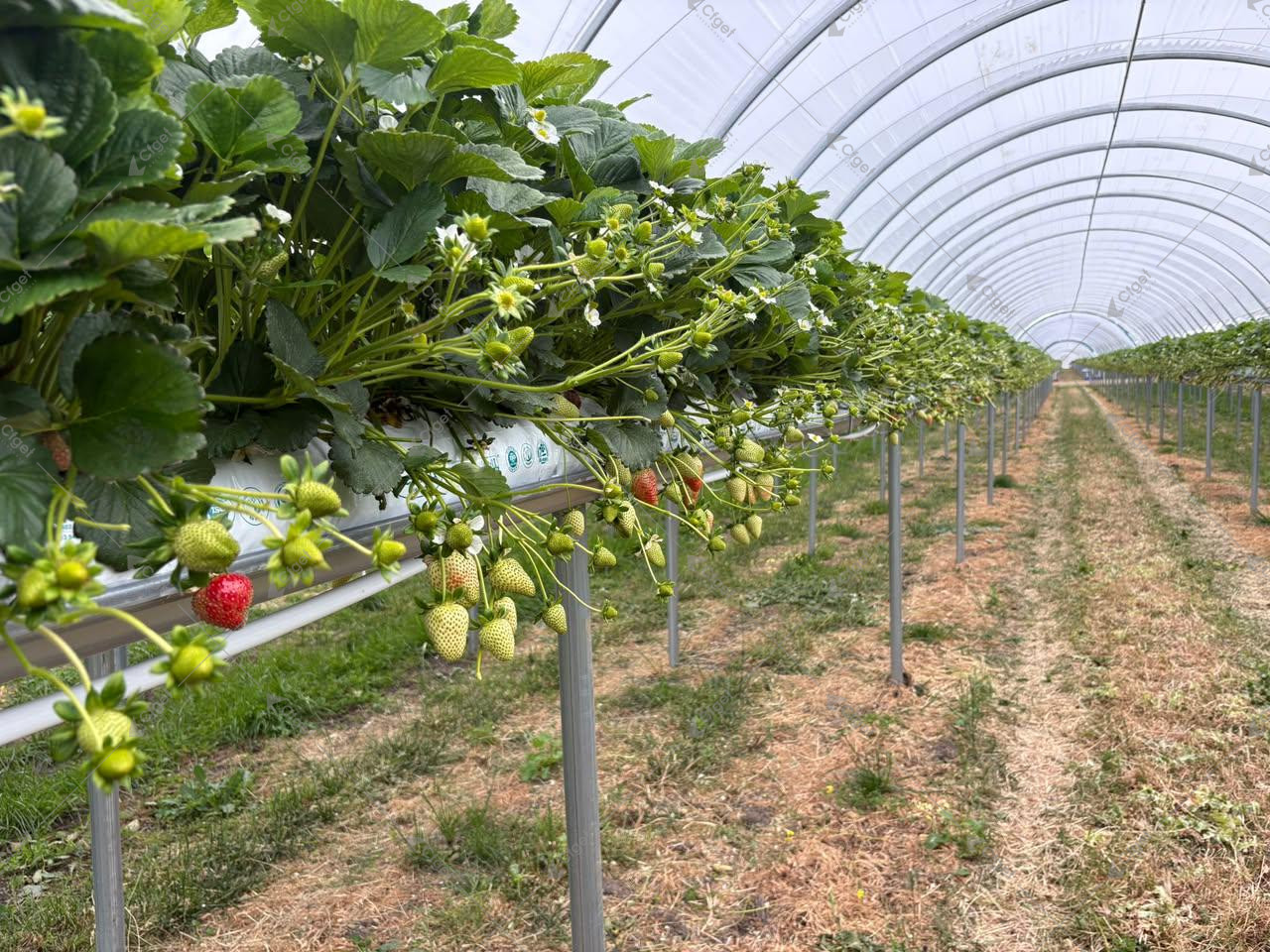
- Growing system, plant density, crop support, work height, transport, and harvest flow.
- Useful light, temperature, humidity, carbon dioxide, and extreme-event boundaries.
- Energy sources, tariffs, connection capacity, restrictions, backup, and emissions boundary.
- Water analysis, treatment, storage, fertigation, drain reuse, sanitation, and discharge plan.
- Envelope, screens, climate equipment, lighting, sensors, and control responsibilities.
- Packing, cooling, food safety, waste, staff, maintenance, and service requirements.
- Installation, permits, commissioning, training, spares, warranties, data access, and exclusions.
Technical references
- Wageningen University and Research: Adaptive Greenhouse Design
- Acta Horticulturae: Winterlight greenhouse cucumber experiment
- Wageningen University and Research: AGROS II cucumber control research
Send CFGET the country, site, crop and market plan, weather, energy, water, growing system, and responsibility matrix. The proposal should show its calculations, installed duties, coordinated drawings, operating assumptions, exclusions, and acceptance tests.