A buyer offering a higher price per box may leave less money after the crop is graded, packed, delivered and paid for. The difference often sits in details that are easy to leave out of the first conversation: accepted size, packaging, delivery frequency, order administration, rejected product and deductions.
Compare buyers using the same crop, the same quantity available for sale and the same period. Then show what each route leaves after its own costs. This produces a useful route-to-market comparison without confusing it with whole-farm profit.
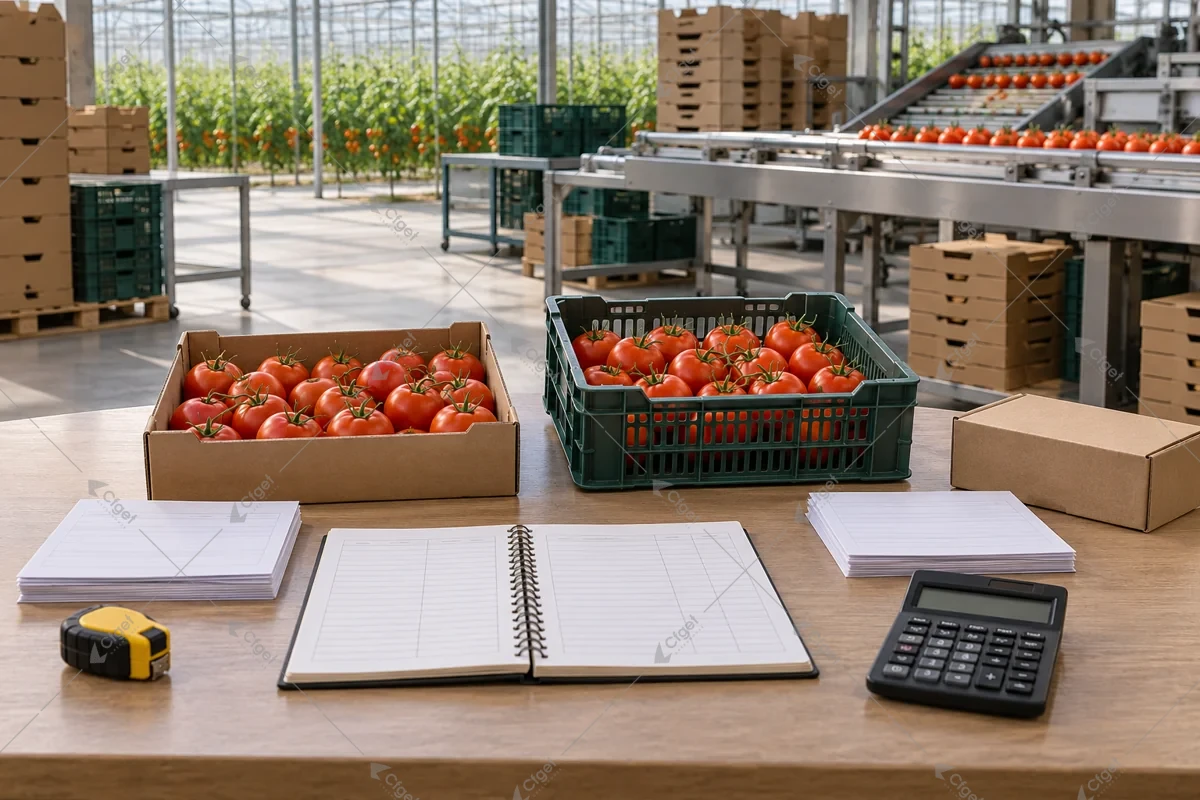
Start with the offer the buyer will actually accept
Write down the specification behind the price. A quoted box may contain a different net weight, grade or pack format from your usual box. Confirm whether the price is collected at the farm or delivered, who supplies the packaging and when quality is assessed.
Ask how changes are communicated. Does the buyer place a confirmed order before harvest, take product on consignment or decide after inspection? What happens to a short delivery? Who decides whether produce is rejected, and what evidence accompanies a deduction? These answers describe the transaction you are comparing.
Keep an offered price separate from a completed sale. Until there is an order or a transaction record, label the figure as a quotation or planning assumption, with a date and the conditions attached.
Compare two different offer structures
Compare a hypothetical bulk, farm-collected offer with a graded, grower-packed, scheduled-delivery offer. Replace every term with the actual written offer before making a decision. The structures below are planning examples, not current buyer offers. Prices and quantities are intentionally blank.
| Term | Offer A: bulk, farm collected | Offer B: graded, packed and delivered |
|---|---|---|
| Offer status | Hypothetical structure; replace with the written buyer offer | Hypothetical structure; replace with the written buyer offer |
| Acceptance and settlement basis | Net collection weight meeting the agreed bulk specification; confirm weighing and acceptance point | Accepted quantity by specified grade and pack; confirm inspection point and credit rules |
| Quoted unit and rate | Unit: ________; rate: ________ | Unit: ________; rate: ________ |
| Net produce weight per quoted pack, if relevant | ________ | ________ |
| Accepted quantity from the same available crop | ________ | ________ |
| Crop left outside this offer and its destination | ________ | ________ |
| Packing and handling responsibility | Confirm bulk container supply, loading and associated grower labor | Confirm grower grading, pack materials, labeling and packing labor |
| Collections or deliveries in the comparison period | Buyer collections: ________; grower preparation and loading hours: ________ | Grower delivery trips: ________; loading, driving and waiting hours: ________ |
For a quoted pack price, establish the specified net produce weight before comparing it with a weight-based offer. Keep grade-specific prices and accepted quantities separate, then total their sales value over the same period. Farm collection does not eliminate grower handling work. Scheduled delivery must include every required trip, including lightly loaded trips. Enter the resulting quantities and costs in the comparison below.
Put the comparison on one basis
Choose a sale unit, such as net kilograms, and a defined week or delivery cycle. Retain the buyer’s original unit too. If boxes differ, document the conversion using the specified net produce weight rather than container weight.
Use the same quantity of available crop when comparing alternatives. Otherwise a route taking only the best grade can appear stronger because the remaining crop disappears from the worksheet. Give that remainder its own destination, handling cost and expected outcome. Where it has no confirmed outlet, do not assign it a convenient selling price.
Penn State’s price and pricing guidance separates variable and fixed costs and explains contribution margin. The worksheet below adapts that basic cost discipline to a fresh-produce buyer comparison. Its narrower “channel contribution” measure deducts channel-specific costs only, so production costs and whole-farm overhead still need separate treatment.
Use three lines before adding more detail
- Net sales value: gross invoiced sales less credits, discounts and other sales adjustments that have not already reduced the invoice.
- Channel-specific variable costs: the relevant packing, selling and delivery costs incurred for that route.
- Channel contribution: net sales value less those channel-specific variable costs.
Illustrative comparison using invented figures: suppose both buyers accept the same 1,000 kg in one week, with no additional credits or deductions. Offer A pays $1.50/kg and requires $100 of grower handling, leaving $1,400: (1,000 × $1.50) − $100. Offer B pays $1.90/kg but requires $250 of packing, $200 of delivery and $100 of selling and administration, leaving $1,350: (1,000 × $1.90) − $550. The higher-priced offer leaves $50 less after these channel costs. These are not actual buyer prices or farm results. Production costs and whole-farm overhead remain outside this comparison.
Define where commissions and similar deductions sit, then keep that treatment consistent. If a commission is already removed in a settlement statement used as net sales, do not subtract it again as a cost. Likewise, rejected produce that never entered invoiced sales should not be deducted from revenue a second time. Its harvest, packing, return or disposal costs may still belong in the comparison.
Channel contribution tells you what remains from that route to help cover costs outside the comparison. It is not net profit, and it is not a forecast of an investor’s return.
Fill in a buyer comparison sheet
| Field | Offer A: farm-collected bulk | Offer B: graded delivery |
|---|---|---|
| Crop, grade and period | ________ | ________ |
| Available crop quantity and comparison unit | ________ | ________ |
| Accepted quantity and pack specification | ________ | ________ |
| Gross invoiced sales | ________ | ________ |
| Credits or discounts not already deducted | ________ | ________ |
| Net sales value | ________ | ________ |
| Packaging and route-specific packing labor | ________ | ________ |
| Commissions or fees not already deducted | ________ | ________ |
| Delivery, return collection and route labor | ________ | ________ |
| Selling and order-administration time and cost | ________ | ________ |
| Other route costs, including rejected-product handling | ________ | ________ |
| Total channel-specific variable costs | ________ | ________ |
| Channel contribution | ________ | ________ |
| Unsold remainder and proposed destination | ________ | ________ |
| Payment due date and actual receipt date | ________ | ________ |
| Evidence and unresolved assumptions | ________ | ________ |
For a forecast, leave actual receipt date blank. For a completed period, reconcile the sheet with invoices, credit notes, settlement statements and bank receipts. Record unpaid balances separately rather than treating them as cash already available.
Count the work that does not appear on an invoice
Track time spent sending availability lists, answering messages, changing orders, labeling packs, waiting at delivery and arranging returns. Owner time should be visible even when no wage leaves the bank account. If you assign it a cost, state the rate and whether it is a planning allowance or an actual payroll cost.
Penn State’s discussion of produce auctions and other outlets highlights differences in marketing effort, customized packing and delivery logistics. It does not establish which outlet will be best for your farm. That result depends on your own orders, operating records and buyer terms.
Shared delivery routes need an explicit allocation method. A dedicated trip can be traced directly. A trip serving several buyers needs a consistent way to allocate vehicle and labor costs. Keep the method visible so a change in allocation cannot quietly reverse the conclusion.
Look at the busy week, not only the average
A route can fit the cost sheet and still exceed available packing hours or vehicle capacity on its delivery day. Add the required labor window, order cut-off and delivery appointment to the review. Check whether meeting one buyer’s requirements would prevent the farm from serving another confirmed order.
Test uncertainties one at a time using values supported by records or clearly marked assumptions. What changes if accepted quantity falls, packaging needs change or an extra trip is required? Then consider combinations that could realistically occur together. Do not assign probabilities without evidence.
Payment timing belongs beside this operating review. Two routes with similar contribution can create different cash collection schedules. Showing the dates helps the farm plan its own commitments.
Make the next decision small enough to verify
If the evidence is incomplete, agree a limited trial whose quantity, specification, delivery method and payment terms are clear. Decide in advance which records will be collected. After the trial, replace assumptions with actual accepted quantities, costs and receipts.
The strongest buyer comparison makes both the money and the work visible. Choose the route that fits the farm’s crop, capacity and commercial priorities, then keep checking whether the completed transactions support that choice.
Download the working files
Use these CSV files with the instructions in this article.