A shelf-life promise needs a defined starting point, a quality standard and evidence from the delivery chain the buyer will actually use. Fruit that holds well in an ideal room may face different packaging, delays and handling on its way to the customer.
Before quoting a number of days, run a quality-holding trial with traceable lots, representative conditions and repeat observations. Keep the conclusion limited to what was tested. Visual quality checks cannot establish microbiological safety or replace the validation required for a food-safety claim.
What exactly are you promising the buyer?
Replace “good shelf life” with a question that can be checked. Is the requirement acceptable appearance at delivery, a defined period of retail display after receipt, or acceptable quality after a particular transport route? Choose the endpoint and state when the clock starts.
Agree the buyer’s quality criteria before selecting samples. These may include a defined color range, firmness method, allowable visible defects, package condition and the proportion of fruit that must still meet the specification. Use the buyer’s actual standard rather than inventing a general passing score.
Keep arrival acceptance separate from any later holding claim. If the trial begins at harvest, record the time spent packing and transporting as well as the time after receipt. A claim measured from delivery cannot be substituted for one measured from harvest without explaining the difference.
Use a storage reference to frame the trial, not to supply the answer
The UC Davis tomato fact sheet distinguishes maturity stages and describes quality attributes and temperature-related disorders. It is a useful commodity reference. It does not establish a guaranteed holding period for a particular cultivar, package and delivery route.
For method context, Thole and colleagues’ tomato postharvest protocol describes recording texture, weight and rotting during storage. That research setting is different from a commercial delivery trial. Its controlled preparation and separate pathogen experiments should not be copied into routine packhouse work or treated as validation of a marketing claim.
Ask a qualified postharvest or food-safety adviser to help set the trial scope and any appropriate measurements. Keep the operation’s approved handling and food-safety procedures in place. Equipment duty belongs in the separate produce precooling and cold-storage review. Do not expose saleable produce to an unapproved condition simply to see how long it lasts.
Compare packages without changing everything else
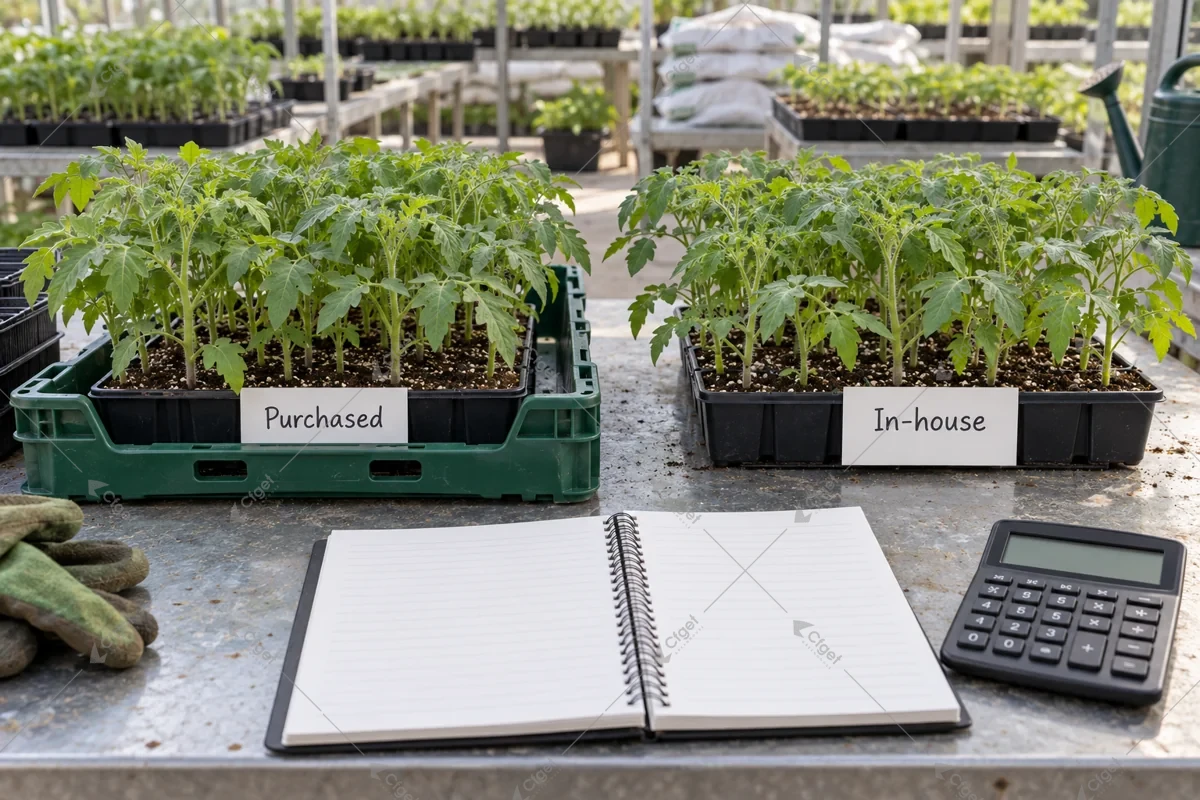
Start with a small number of treatments that answer the actual buying question. If the question is packaging, use comparable fruit from the same defined harvest window and distribute it fairly between the package treatments. Record cultivar, crop block, harvest maturity, harvest time and initial quality.
Decide the sampling unit before starting. A fruit, retail pack and shipping case answer different questions. Several fruit within one case do not represent several independent delivery events. Have the adviser set sample size and independent repetitions appropriate to the claim and available resources.
Document the chain to be represented: harvest to packing, dispatch, travel, receipt and the intended holding or display period. Use actual route information and representative temperature and handling records where available. If a stage is simulated, identify it as simulated and explain how its conditions were chosen.
Keep the package ID linked to its lot and treatment throughout. Record departures from the plan, such as a delayed dispatch or a missing logger. Do not silently replace a poor result with a fresh sample midway through the observation.
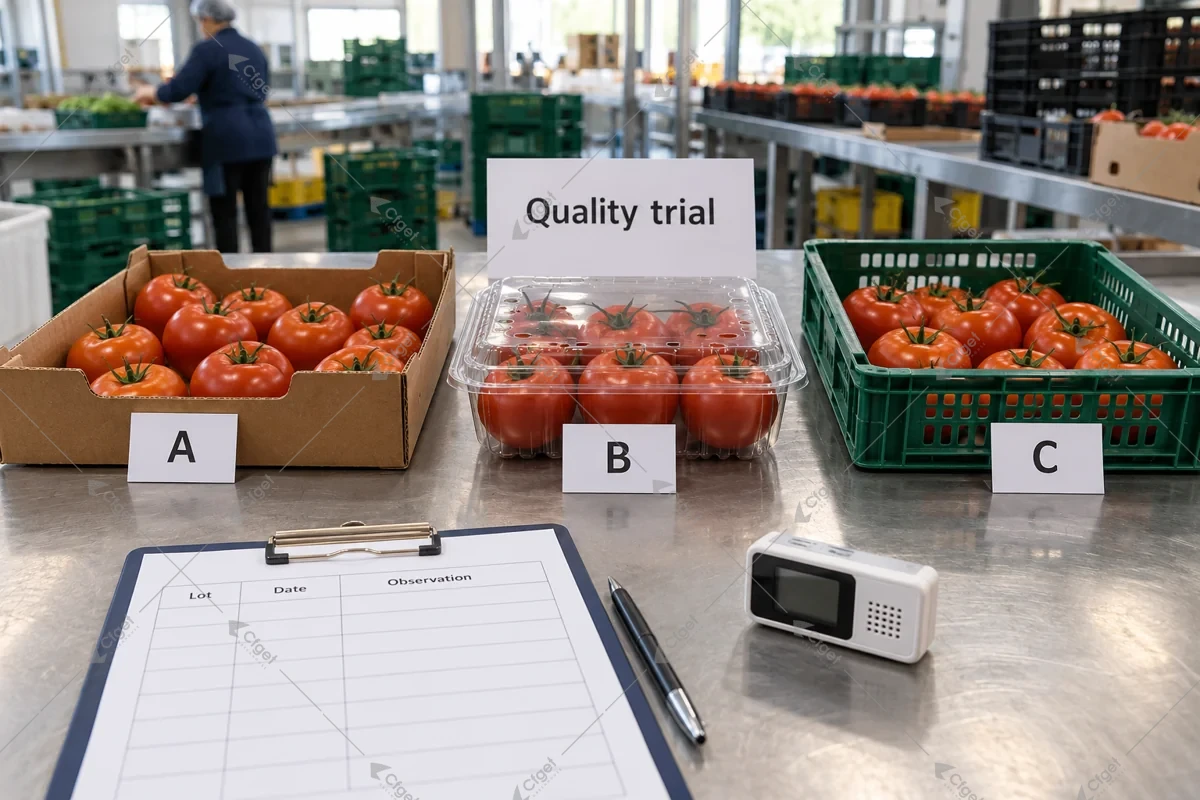
Prepare the trial card before the first harvest
Download the quality-trial plan and the repeated-observation log. These are blank planning tools. They contain no assumed shelf-life result.
| Decision field | Record before the trial |
|---|---|
| Claim and clock | Exact quality question, start event, endpoint and intended buyer or market |
| Material | Lot, cultivar, maturity definition, harvest window and initial acceptance condition |
| Comparison | Package or handling treatment, control, sampling unit and allocation method |
| Chain | Actual or simulated stages, holding conditions, logger IDs and handling record |
| Assessment | Quality criteria, method, observer, observation times and treatment of removed samples |
| Repetition | Independent lots or harvest dates, planned coverage and known limits |
| Review | Adviser, decision-maker, evidence needed and permitted conclusion |
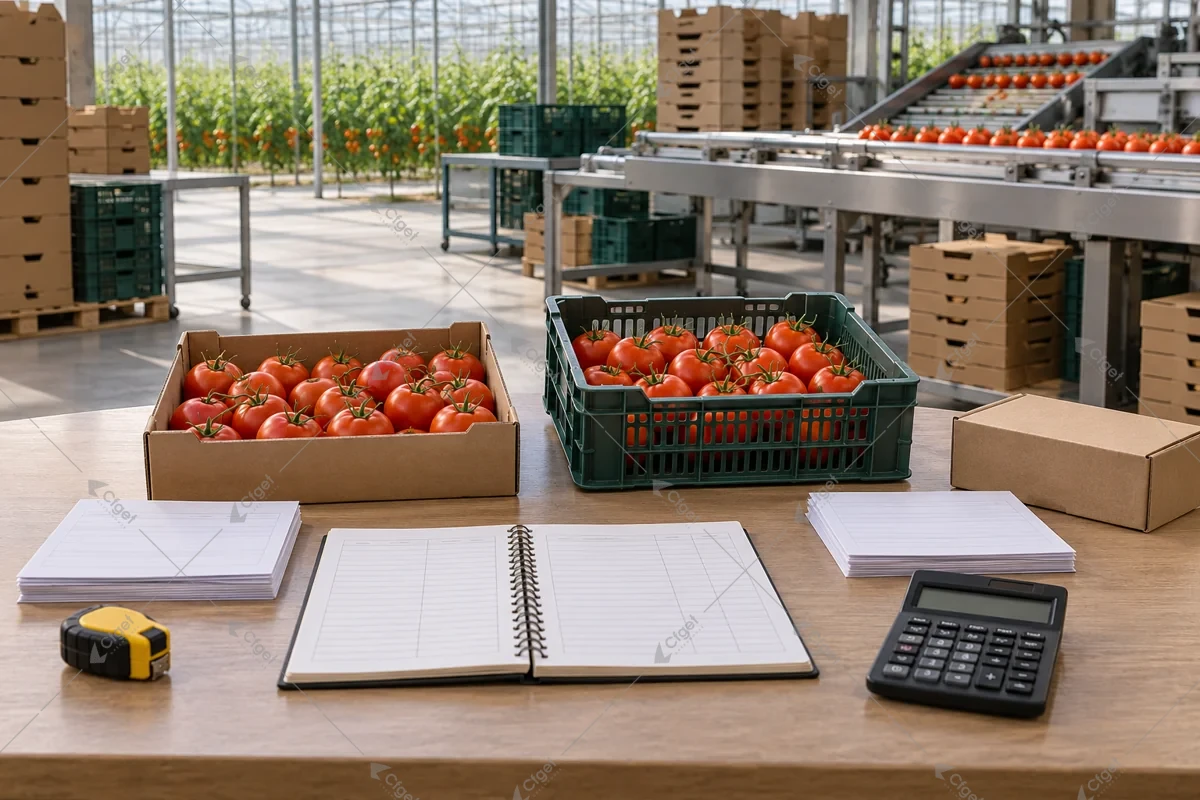
At each planned observation, record time, sample ID, the number or weight assessed, criterion results, visible losses and any deviation. Take photographs under a consistent setup if appearance is part of the assessment. A photograph should support the record, not replace the stated scoring method.
If a measurement destroys or materially alters a sample, record its removal and use the planned sampling arrangement. Repeatedly handling the same fruit is a different method from assessing a separate sample each time. Decide which method fits the question, then apply it consistently.
Read failures and missing observations honestly
Report the proportion meeting each agreed quality criterion at the planned times. State the denominator and account for samples removed, lost or unavailable. A sample that was not observed is not a passing sample.
If fruit met the criterion at one observation and failed at the next, the exact failure time lies somewhere between those observations. Do not claim an exact extra day of life that the observation schedule could not resolve. If the trial ends while quality remains acceptable, report acceptance through the last observed time, without inventing what happened afterward.
Examine individual lots before combining results. A strong result from one favorable harvest does not describe an untested hot-season route or a different maturity stage. Keep unusual events visible and decide with the adviser whether additional repeats are needed.
Do not taste suspect or spoiled fruit as an improvised clearance check. Any safety concern belongs in the operation’s established food-safety process. A quality trial has no authority to release a questionable lot for sale.
Turn evidence into a bounded commercial statement
A useful result states the cultivar and maturity, packaging, chain conditions, observation period, number of independent repeats and quality criterion. It also identifies what was not tested. Have the appropriate commercial and technical reviewers approve any claim before it appears in an offer or label.
If packaging, maturity, route or holding practice changes materially, review whether the evidence still supports the promise. Keep the raw records, photographs and temperature history together so that the decision can be revisited.
The aim is a delivery commitment grounded in the product and route you sell. A shorter, well-supported claim is more useful than a longer number borrowed from a storage table.