Greenhouse corrosion protection should match each exposure zone, not one blanket coating label. Specify materials, coating thickness and standard, fasteners, cut-edge repair, drainage, chemical compatibility, inspection evidence, and a maintainable repair system.
*By Coraline Liao, CEO, CFGET | Updated: September 15, 2026*
*Reviewed by CFGET Project Planning Team*
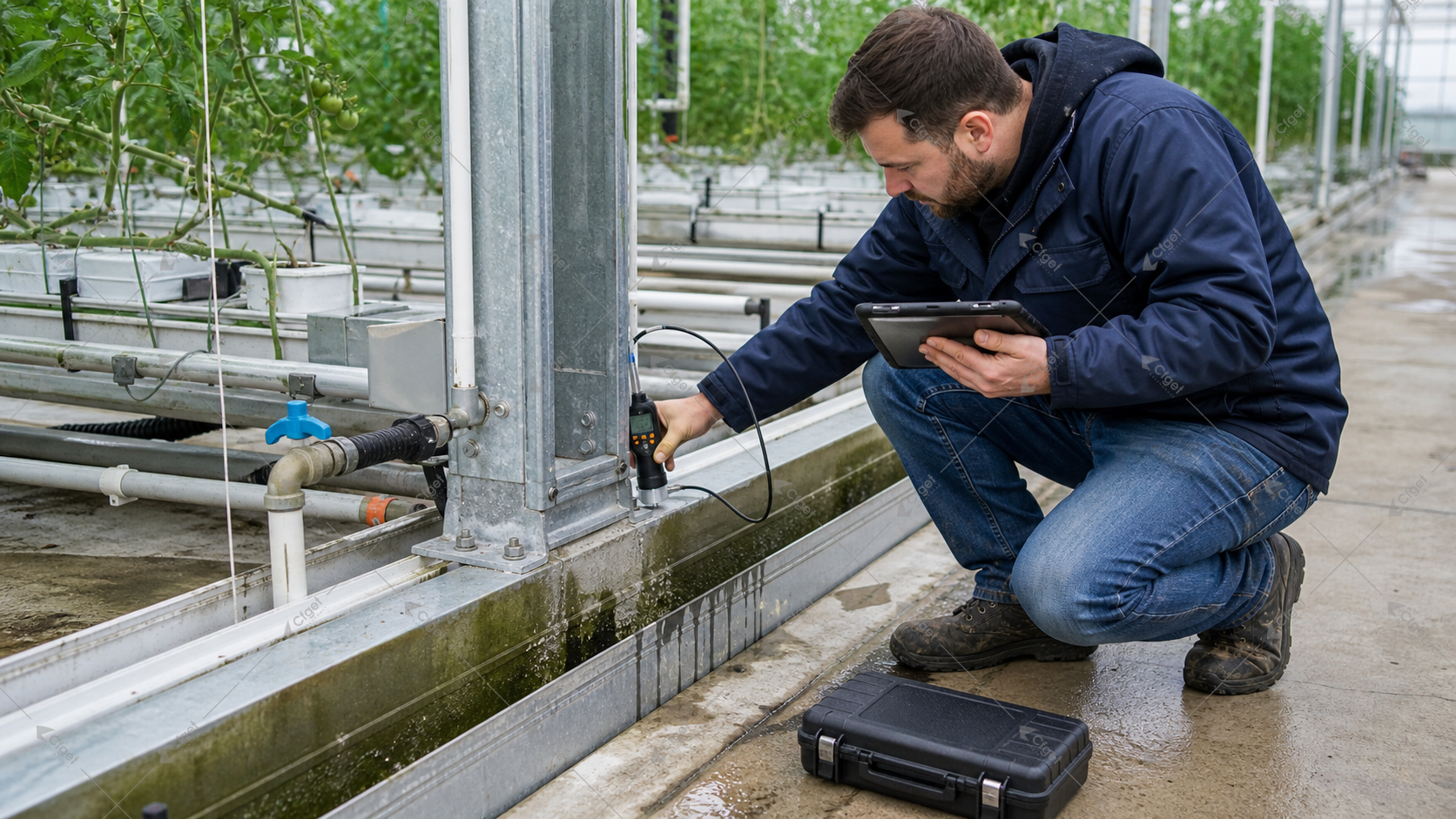
Corrosion specifications often stop at the word galvanized. That is not enough for a greenhouse where condensation, fertilizer salts, disinfectants, coastal air, wet floors, cut edges, and mixed metals can attack different details at very different rates.
Use this with our Commercial Greenhouse Buying Guide topic cluster. For a full project, keep it beside Commercial Greenhouse Solutions so the structure, systems, and crop plan do not drift apart.
Quick answer
- Map condensation, fertilizer, disinfectant, soil, coastal, combustion, and wet-floor exposure separately.
- State the galvanizing or paint standard, measured thickness, preparation, repair method, and compatible fasteners instead of writing corrosion resistant.
- Keep water from sitting inside hollow sections, base plates, laps, gutters, and screen pockets; detailing is part of corrosion protection.
- Inspect delivered steel, site cuts, drilled holes, weld repairs, damaged coating, and dissimilar-metal contacts before they are hidden.
Key facts worth checking
| Exposure input | What to establish | Evidence |
| Environment | Wetness, salts, chemicals, temperature, and cleaning regime by zone | Exposure map and owner chemical list |
| Protection system | Base material, preparation, coating standard, thickness, and fasteners | Certificates and inspection plan |
| Field work | Cuts, holes, welds, handling damage, drainage, and repair | Approved method and closeout records |
How I would make this decision on a real project
I would divide the project into exposure zones, trace how water and chemicals reach each detail, then check material compatibility, coating evidence, field modifications, drainage, inspection access, repair ownership, and the threshold for engineering review.
Field notes to check before the quote
- I would spend more time at column bases, gutter joints, evaporative-cooling zones, fertilizer rooms, and field-modified connections than on clean interior members.
- A thick coating cannot compensate for a water trap or an untreated site cut, so the drawings and erection method belong in the coating review.
- The owner needs a compatible repair product and inspection interval at handover; otherwise small damage remains untreated until it becomes structural or causes leaks.
Buyer checkpoint
| Buyer question | What to decide before requesting a price | Why it protects the project |
| Design basis | Environment: Wetness, salts, chemicals, temperature, and cleaning regime by zone | Exposure map and owner chemical list |
| Difficult operating case | Protection system: Base material, preparation, coating standard, thickness, and fasteners | Certificates and inspection plan |
| Acceptance evidence | Field work: Cuts, holes, welds, handling damage, drainage, and repair | Approved method and closeout records |
Evidence pack
Use the following evidence to challenge the design basis. A checklist item is useful only when the supplier attaches a value, drawing, calculation, test, or named responsibility.
Climate and project assumptions to confirm
- Confirm the project-specific exposure zones: Crop bay, gutter, wet wall, fertigation room, and column base. State who verifies it and when.
- Confirm the project-specific protection: Standard, preparation, minimum thickness, and fastener material. State who verifies it and when.
- Confirm the project-specific field repair: Cut, weld, hole, and handling-damage procedure. State who verifies it and when.
Sources worth checking
- ISO 14713-2 corrosion-protection design guidance
- UConn commercial greenhouse design resource
- UMass greenhouse selection and building resource
Neutral source to keep beside the quote
CFGET project planning note
CFGET’s review would begin by reconciling wetness, salts, chemicals, temperature, and cleaning regime by zone with exposure map and owner chemical list, then marking every unresolved interface on the drawings and responsibility matrix.
Buyer risk signal
Pause the comparison when the offer says hot dip galvanized only; hollow sections and laps can retain solution; or crews cover damage with unspecified spray paint.
Ask the supplier for these exact specs
Require a completed response for Exposure zones, Protection, Field repair, Acceptance, supported by the relevant drawings, calculations, settings, or test records. Do not accept “standard” or “as required” where a project value can be stated.
Project video: greenhouse project reference
This field video gives a quick project visual to read beside the specifications and RFQ checklist.
Where are the highest corrosion exposures in a greenhouse?
Walk the greenhouse as several environments. Roof and gutter steel sees condensation; column bases see splash and floor chemicals; fertigation rooms see acid and nutrient exposure; cooling pads and coastal sites may add persistent moisture or chlorides. Attached packhouses and boiler rooms create still other conditions.
Record cleaning products, disinfectants, fertilizers, pesticides, combustion gases, water chemistry, and expected wetness. Material compatibility should follow the actual concentrations and contact conditions, not a generic claim that galvanized steel suits agriculture.
Technical reference for this decision: ISO 1461 hot-dip galvanized coating specification.
How should steel, fasteners, coatings, and repairs be specified?
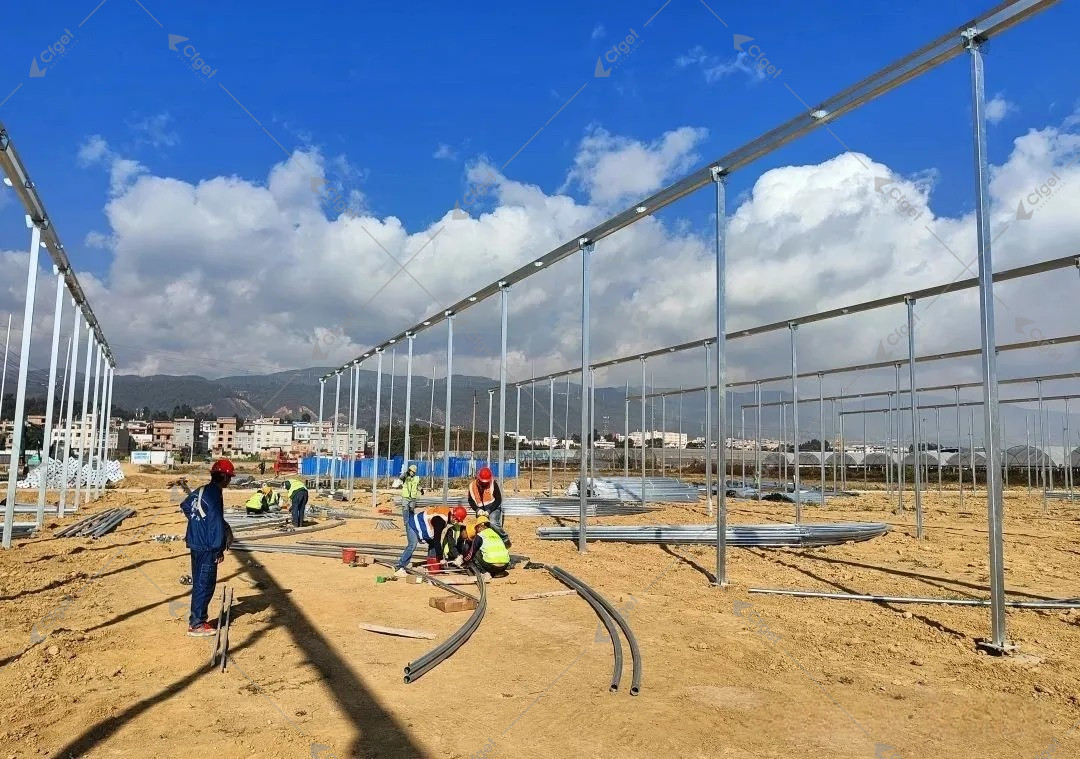
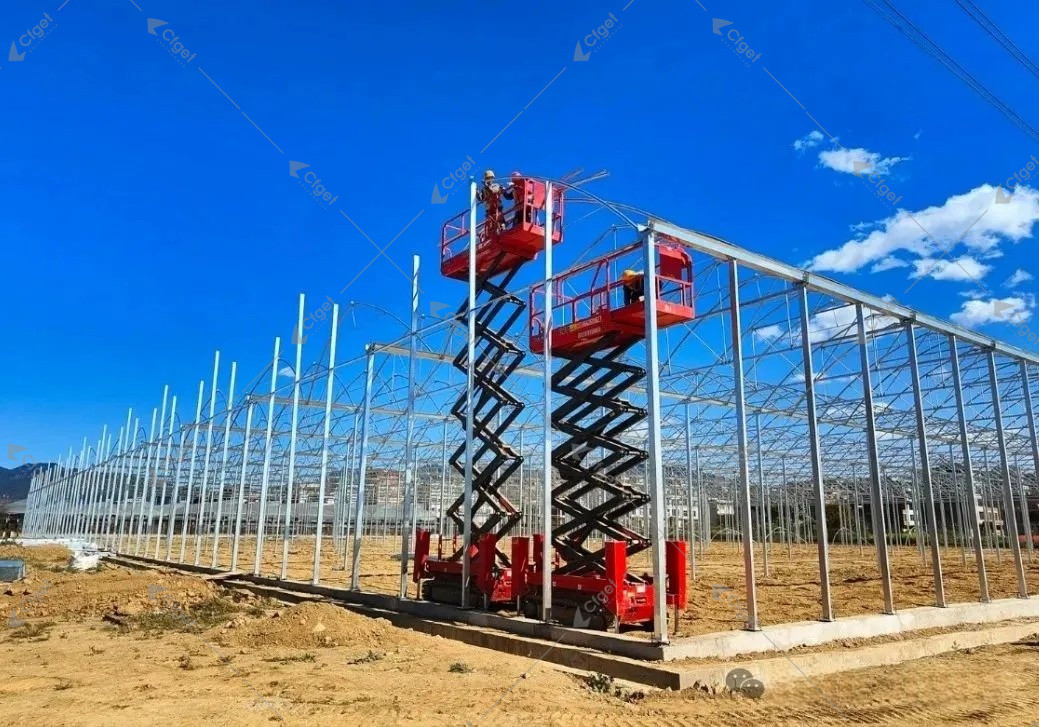
Specify the substrate and protection system together: steel grade, fabrication route, surface preparation, galvanizing or paint standard, minimum local thickness, appearance limits, fastener material, and treatment of enclosed or drainage-sensitive details.
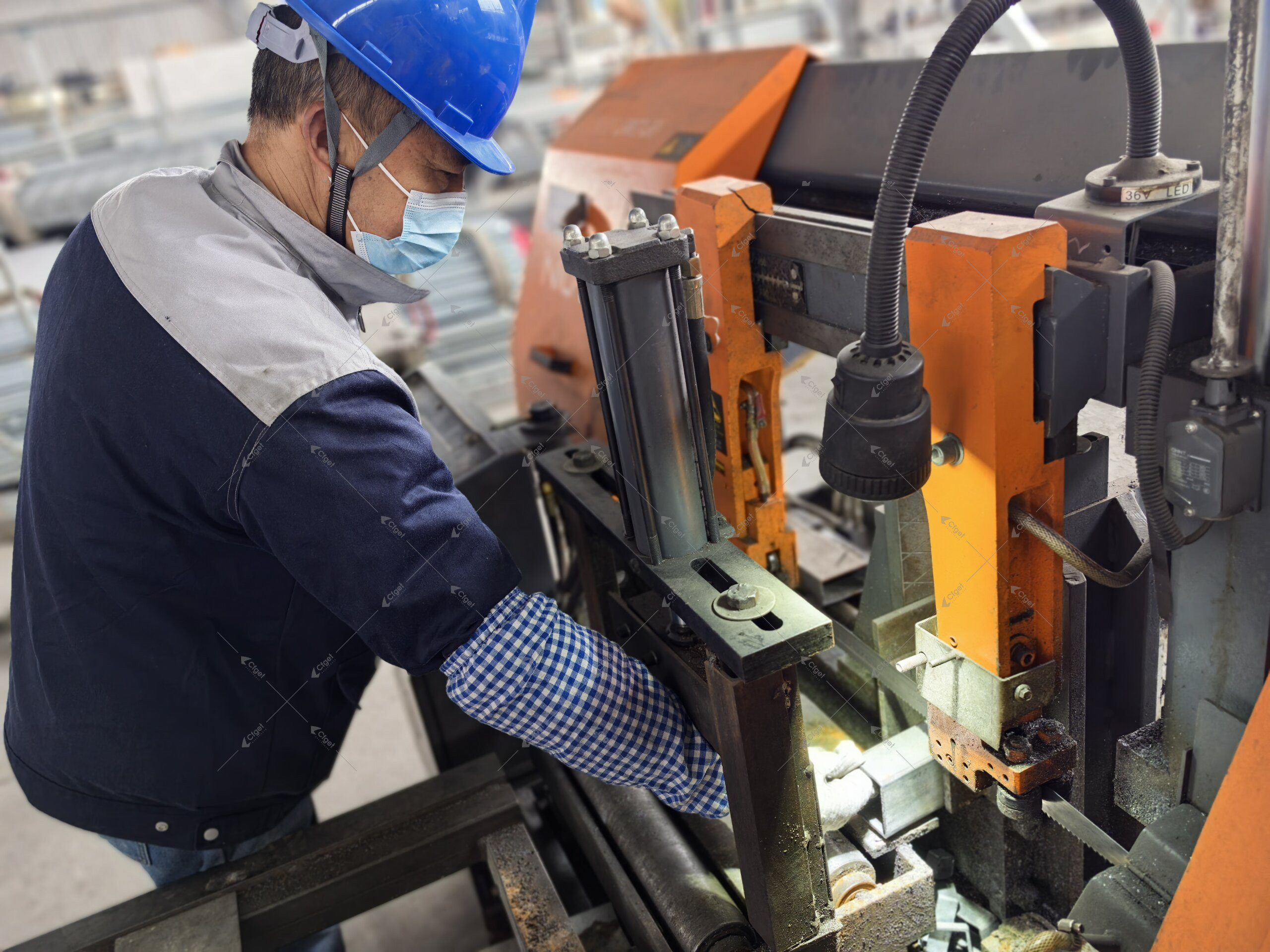
Field drilling, cutting, welding, grinding, and handling can break the factory system. The project needs an approved repair method with preparation, product, thickness, curing conditions, inspection, and restrictions on unapproved aerosol paint.
Technical reference for this decision: ISO 14713-2 corrosion-protection design guidance.
| Check | Good sign | Risk sign |
| Specification | Standard, preparation, thickness, and zone are stated | The offer says hot dip galvanized only |
| Detailing | Water drains and mixed metals are controlled | Hollow sections and laps can retain solution |
| Field repair | Cuts and damage have an approved inspected method | Crews cover damage with unspecified spray paint |
What to request from a supplier
Ask for the exposure-zone schedule, material and coating standards, thickness criteria, certificates, fastener specification, drainage and vent details, chemical compatibility limits, storage method, field-repair procedure, inspection forms, maintenance products, warranty conditions, and escalation criteria for section loss.
What inspection and maintenance evidence should the owner keep?
Incoming inspection should identify coating damage, blocked vent or drain holes, white rust, contamination, mixed fasteners, storage above wet ground, and pieces that no longer match the drawing. Record each repair before erection removes access.
During operation, inspect known wet and chemical zones on a risk-based schedule. Photograph the same locations, clean deposits, correct leaks and water traps, measure deterioration where justified, and escalate section loss or connection damage to an engineer rather than painting over it.
Technical reference for this decision: UConn commercial greenhouse design resource.
| RFQ field | Example | Why it matters |
| Exposure zones | Crop bay, gutter, wet wall, fertigation room, and column base | Prevents one coating assumption everywhere |
| Protection | Standard, preparation, minimum thickness, and fastener material | Makes the system measurable |
| Field repair | Cut, weld, hole, and handling-damage procedure | Protects altered components |
| Acceptance | Certificates, thickness checks, and repair register | Creates a handover baseline |
Practical next step
Prepare one page covering Exposure zones, Protection, Field repair, Acceptance. Add the project city, crop, greenhouse area, available utilities, relevant drawings, and the party responsible for local work. Send that evidence to [email protected] for a first technical-scope review.
Before you use this recommendation
- Treat the article as a decision and RFQ guide, not a final engineering design.
- Replace every example with project-specific climate, crop, utility, code, and operating data.
- Require calculations, drawings, test records, or named assumptions for every important supplier claim.
How this guide was prepared
This guide combines the current search evidence listed above with a greenhouse project planning checklist: define the failure case, trace the interfaces, identify measurements, and turn unresolved assumptions into RFQ fields. CFGET observations are labeled as project-review judgment; local engineering and operating data remain the final authority.
Coraline Liao is CEO of CFGET. Her public LinkedIn profile describes her as a Greenhouse Technical Director with more than 15 years in the greenhouse industry, focused on customized climate-control and greenhouse solutions. Her published technical topics include greenhouse structures, climate control, light management, hydroponics, and fertigation. Her article reviews begin with the crop, climate, site, project scope, installation boundaries, and operating constraints. Technical recommendations should be adapted to local climate data, crop plans, budgets, and professional engineering review before implementation.
Professional profile: Coraline Liao on LinkedIn
Company details
CFGET: Founded in 1996, CFGET designs, manufactures, and delivers greenhouse systems and smart farming solutions from its own factory in Sichuan, China.
Address: NO 108, South Area Chengdu Modern Industrial Park, Sichuan, China
Email: [email protected]
About the company: https://cfgreenway.com/about/
Company profile: GreenWay on LinkedIn
Technical videos: Greenhouse project channel on YouTube
Where this fits in the greenhouse buying cluster
Start with the hub, then open the system or crop pages that match your decision.
- Commercial Greenhouse Buying Guide
- Commercial Greenhouse Solutions
- Choose Greenhouse Supplier
- Project Enquiry
- Technical Downloads
- Greenhouse Project Cases