Greenhouse circulation fans should create a gentle, continuous air path through and above the crop without using a high-speed jet as a substitute for ventilation. Layout must follow bay geometry, canopy density, screens, obstructions, heat sources, and measured dead zones.
*By Coraline Liao, CEO, CFGET | Updated: September 3, 2026*
*Reviewed by CFGET Project Planning Team*
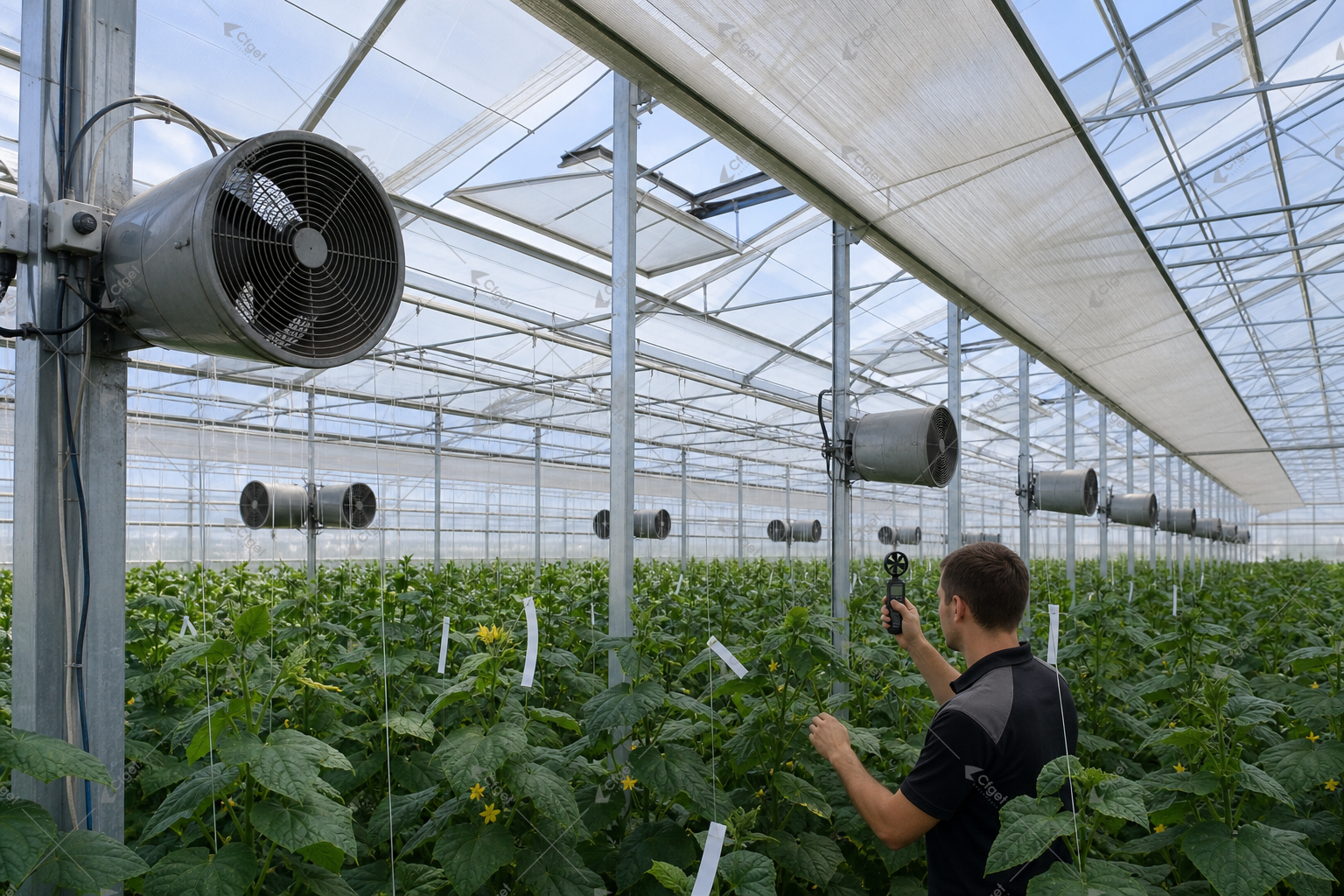
When I review greenhouse air circulation fan layout, I start with the crop and the operator. Equipment that looks advanced can still fail if water quality, climate, labor skill, or maintenance is not planned.
Use this with our Commercial Greenhouse Buying Guide topic cluster. For a full project, keep it beside Commercial Greenhouse Solutions so the structure, systems, and crop plan do not drift apart.
What should the buyer know first?
- Distinguish internal circulation from outside-air exchange; circulation fans redistribute heat and moisture but do not remove them from the greenhouse.
- Draw intended airflow loops around crop rows, partitions, screens, trusses, equipment, and doors before choosing fan count.
- Avoid direct high-speed air on sensitive leaves, flowers, workers, or pollinators; check canopy-level velocity and uniformity.
- Commission with smoke or ribbon observations and an anemometer grid under several screen, vent, and crop conditions.
Key facts worth checking
| Question | Answer to make visible |
| What changes the recommendation? | Greenhouse air circulation fan layout depends on climate, crop, site services, budget, installation, and maintenance ability. |
| What should the buyer send? | Location, crop, area, target season, climate issue, required systems, timeline, and installation scope. |
| What should the supplier prove? | The system layout, equipment scope, assumptions, limitations, spare parts, and support process. |
How I would test this before pricing
On a real project, I first ask what the greenhouse has to survive and what the crop has to earn. That keeps the decision away from catalog language.
Then I test the recommendation against the same project checklist: climate, crop, structure, systems, budget, installation, and maintenance.
Before ordering, a buyer should still confirm local wind load, snow load, permit rules, energy price, water quality, and crop economics. This can narrow the decision, but the final design still needs project engineering.
Notes from an early project review
- I would walk the house at dawn, screen transitions, and dense-canopy conditions because condensation and stagnant corners often appear outside the midday design case.
- Fans lined up neatly on a drawing can short-circuit above the crop or fight vent airflow if direction and mounting height ignore the real obstructions.
- Maintenance access, guards, vibration, noise, cleaning, and motor replacement matter because one failed fan can break an otherwise continuous loop.
Questions to settle before the RFQ
| Buyer question | What to decide before requesting a price | Why it protects the project |
| Crop target | Temperature, humidity, irrigation, drainage, and harvest window. | Keeps equipment sizing tied to the growing plan. |
| Site limits | Water quality, power supply, heat, cold, wind, dust, and maintenance skill. | Prevents over-design or under-design. |
| Serviceability | Spare parts, controls, installation drawings, and operator training. | Reduces downtime after the greenhouse is built. |
Evidence pack
Greenhouse air circulation fan layout needs project evidence before product names or a single price mean much.
| Project input | What to verify | Why it matters |
| Climate data | Monthly temperature, wind, snow, humidity, radiation, and extreme events. | The greenhouse has to fit the site, not just the catalog. |
| Crop plan | Crop, growing method, row spacing, target season, and labor skill. | Crop requirements change height, ventilation, irrigation, and control needs. |
| Supplier scope | Drawings, bill of materials, packing list, installation support, and after sales process. | Clear scope reduces hidden cost and wrong expectations. |
Climate and project assumptions to confirm
- Use local wind and snow load assumptions before confirming structure.
- Check the hottest and coldest operating months, the annual average alone.
- Confirm water quality and power availability before selecting irrigation or climate equipment.
Suitable when
- The crop, climate, structure, systems, and budget are defined together.
- The supplier can provide drawings, specifications, and a clear responsibility boundary.
- The buyer has a realistic plan for installation, operation, and maintenance.
Not suitable when
- The design is copied from another country without local climate review.
- The quote lists only product names and total price.
- Yield, payback, or lifespan is promised without assumptions.
What this guide adds to the basic answer
- Replace general product claims with project assumptions, measurable specifications, and a clear buyer risk boundary.
- Give the buyer documents and acceptance evidence that can be requested from the supplier.
Sources worth checking
- Horizontal Air Flow Systems | Integrated Pest Management
- Horizontal Air Flow is Best for Greenhouse Air Circulation
- UConn commercial greenhouse design resource
- UMass greenhouse selection and building resource
Neutral source to keep beside the quote
CFGET project planning note
For greenhouse air circulation fan layout, I would first check the local climate file, crop workflow, structure drawings, system scope, installation boundary, and spare parts plan before treating any supplier answer as complete.
Buyer risk signal
Risk signal: the answer sounds confident but does not state climate assumptions, crop requirements, equipment scope, or maintenance responsibility.
Ask the supplier for these exact specs
| Spec to request | Why it matters |
| Steel specification, load assumptions, bay/span size, and foundation boundary | These decide whether the structure offer is comparable. |
| Covering material, ventilation, irrigation, controls, and optional systems | Missing systems often explain why one quote looks cheaper. |
| Packing list, installation responsibility, spare parts, and warranty boundary | These details matter after payment and delivery, when fixes become expensive. |
Project video: greenhouse climate control in practice
This field video shows a greenhouse climate system in use, which helps buyers check whether the quoted equipment matches the site conditions.
Where does air stall around the crop and structure?
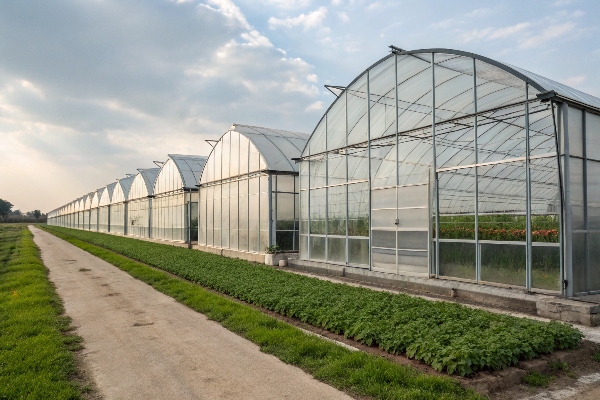
Dead zones usually form behind dense canopy, end walls, partitions, equipment rooms, thermal-screen pockets, and changes in bay geometry. Observe condensation, leaf stillness, temperature gradients, and disease patterns, then confirm with measurements rather than adding fans wherever space is available.
Draw circulation in plan and section. The intended loop must pass through the occupied crop zone and return without immediately short-circuiting into the next fan. Crop rows and hanging gutters can turn a theoretical round pattern into separate air compartments.
| Layout input | What to check | Evidence |
| Air path | Loop direction, partitions, screens, doors, and obstructions | Plan and section with fan throw |
| Crop response | Canopy density, sensitive stages, leaf movement, and drying risk | Crop-level velocity map |
| Operation | Vent, heat, screen, dehumidification, and night modes | Control sequence and trend review |
How I would evaluate it
I would map air direction and speed at crop level through a full loop, then repeat with screens, vents, heat, and mature canopy in their difficult positions. The result should improve uniformity without creating damaging jets or pretending to provide fresh-air exchange.
How should fan direction, spacing, speed, and controls be coordinated?
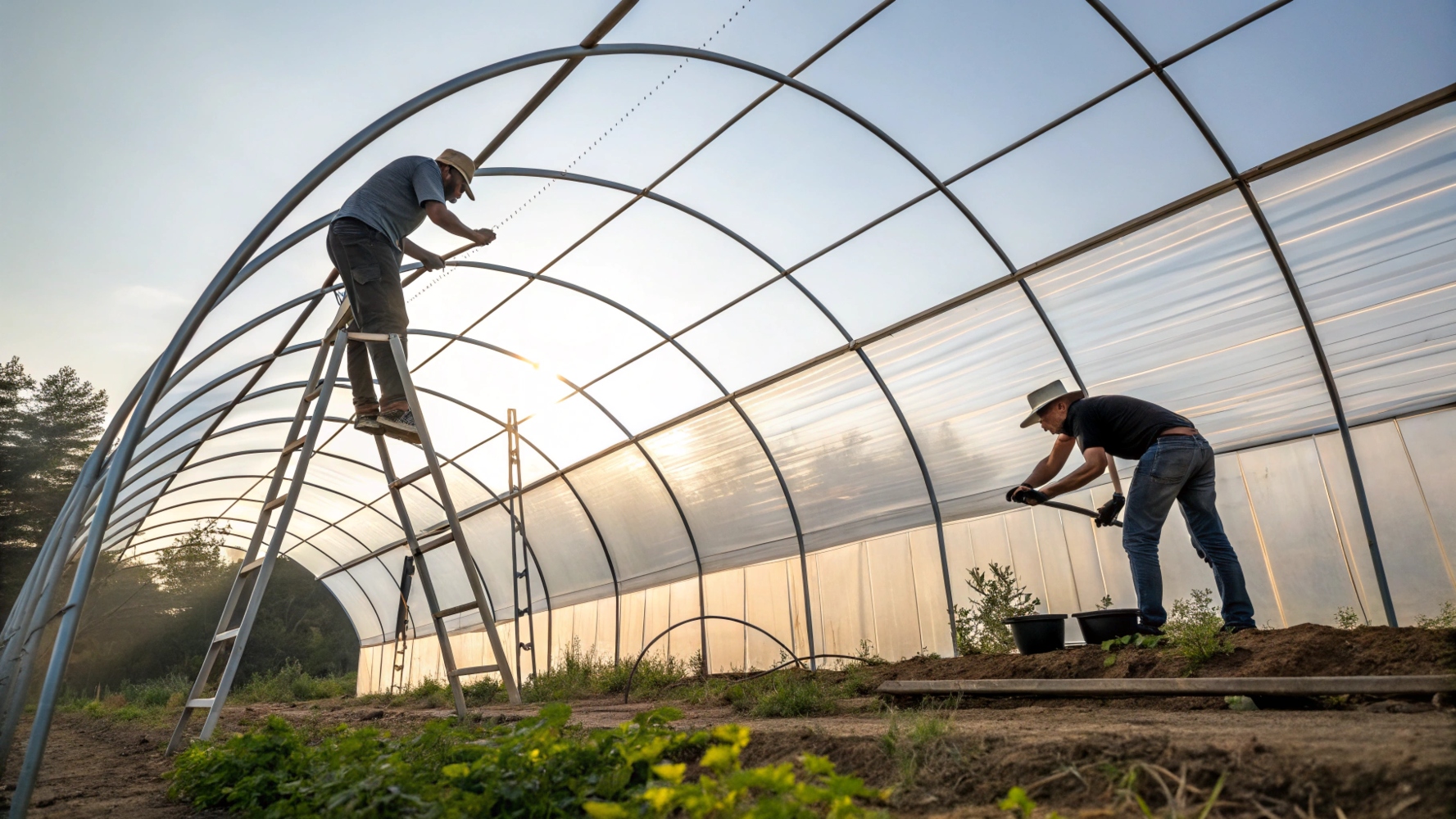
Fan spacing depends on verified throw at the selected speed, mounting height, angle, nearby obstructions, and the resistance of the mature canopy. More speed is not always better: concentrated jets can increase transpiration, edge burn, blossom movement, or worker discomfort while remote corners remain still.
Coordinate controls with heating, screens, vents, fogging, and dehumidification. Night circulation may need a different speed from daytime mixing, and open roof vents can redirect the loop. Staging also reduces unnecessary electrical use when the house is naturally well mixed.
| Check | Good sign | Risk sign |
| Purpose | Circulation and ventilation duties are separate | Fans are sold as humidity removal |
| Layout | Throw and return paths are shown around obstructions | Fans are spaced only by floor area |
| Proof | Crop-level direction and speed are mapped | Acceptance is based on visible fan rotation |
What to request from a supplier
Ask for the crop and obstruction plan, fan performance and throw basis, mounting height and angle, intended airflow loops, canopy-level speed criteria, operating modes, power and isolation, guards, vibration limits, cleaning and replacement access, spares, and commissioning map.
What airflow map should be completed before acceptance?
Create an airflow grid at representative canopy and aisle heights. Record fan state, crop stage, vent and screen position, outdoor wind, temperature and humidity, then measure velocity and direction. Smoke or ribbons reveal direction; an anemometer gives comparable values.
Acceptance should also cover guards, support vibration, electrical isolation, controls, alarms, noise, cleaning access, and motor replacement. Keep the baseline map so a future dense canopy or layout change can be compared with the original condition.
| RFQ field | Example | Why it matters |
| Crop geometry | Mature canopy, rows, gutters, and partitions | Defines resistance and dead zones |
| Operating modes | Night heat, closed screen, and open-vent day | Tests changing air paths |
| Fan basis | Verified throw at selected speed and mounting | Sets spacing |
| Acceptance | Direction and velocity grid at crop level | Proves uniform circulation |
Practical next step
For a first CFGET review of this air distribution decision, send country and city, crop, area, target season, covering preference, cooling or heating need, irrigation method, and installation scope. Include the climate challenge, crop method, required systems, and installation scope. Photos, water data, climate files, drawings, or a site sketch also help. Email [email protected].
Final buying note
Greenhouse air circulation fan layout works best when the buyer writes down the assumptions before looking at product names. A good decision combines engineering trade-offs with supplier proof and a realistic operating plan.
Before you use this recommendation
- Treat this as a planning guide, not a final engineering design.
- Check the local climate data, crop plan, water quality, energy cost, and building rules before ordering.
- Ask the supplier to show drawings, material specifications, equipment scope, packing details, and installation responsibilities.
- Avoid any quotation that promises yield, payback, or structural performance without stating the assumptions.
How I researched this guide
I prepare these notes the same way I review an early buyer request: start with the search question, translate it into a greenhouse project planning checklist, check available project media, and keep neutral technical sources beside the quote when reliable public references are available. The point is to make assumptions, limits, and RFQ requirements visible before a buyer compares suppliers.
Coraline Liao is CEO of CFGET. Her public LinkedIn profile describes her as a Greenhouse Technical Director with more than 15 years in the greenhouse industry, focused on customized climate-control and greenhouse solutions. Her published technical topics include greenhouse structures, climate control, light management, hydroponics, and fertigation. Her article reviews begin with the crop, climate, site, project scope, installation boundaries, and operating constraints. Technical recommendations should be adapted to local climate data, crop plans, budgets, and professional engineering review before implementation.
Professional profile: Coraline Liao on LinkedIn
Company details
CFGET: Founded in 1996, CFGET designs, manufactures, and delivers greenhouse systems and smart farming solutions from its own factory in Sichuan, China.
Address: NO 108, South Area Chengdu Modern Industrial Park, Sichuan, China
Email: [email protected]
About the company: https://cfgreenway.com/about/
Company profile: GreenWay on LinkedIn
Technical videos: Greenhouse project channel on YouTube
Where this fits in the greenhouse buying cluster
Start with the hub, then open the system or crop pages that match your decision.
- Commercial Greenhouse Buying Guide
- Commercial Greenhouse Solutions
- Greenhouse Cooling System
- Greenhouse Climate Control
- Greenhouse Temperature Control
- Greenhouse Project Cases