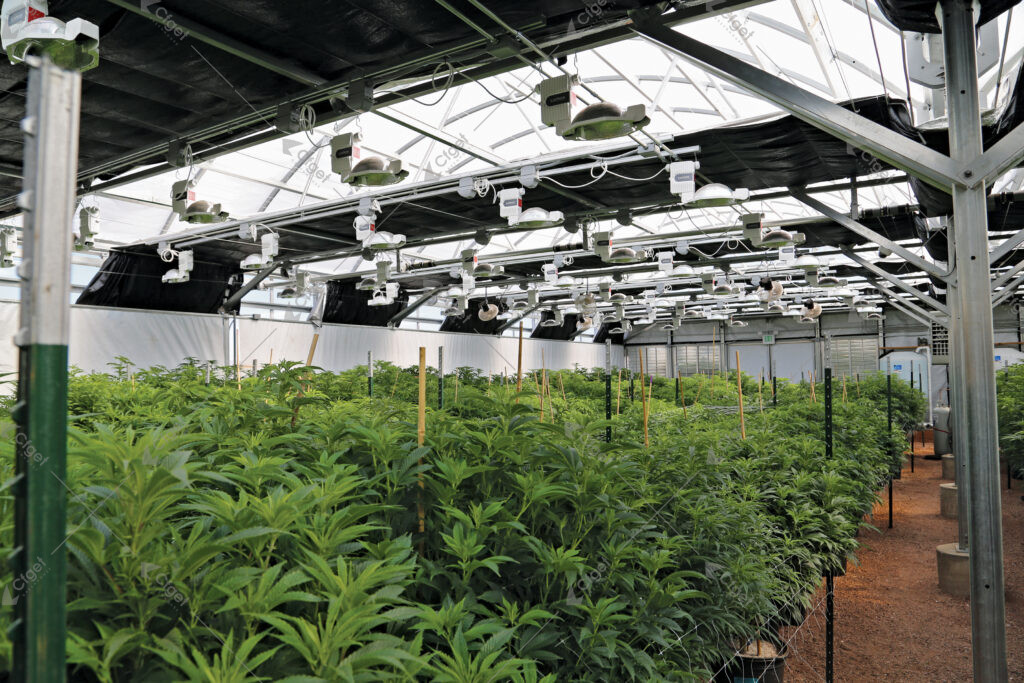
Nearly all electrical energy used by greenhouse grow lights becomes heat inside or near the greenhouse. Climate design must place radiant, convective, driver, and crop-transpiration effects into the hours and zones where the lighting schedule actually operates.
*By Coraline Liao, CEO, CFGET | Updated: September 7, 2026*
*Reviewed by CFGET Project Planning Team*
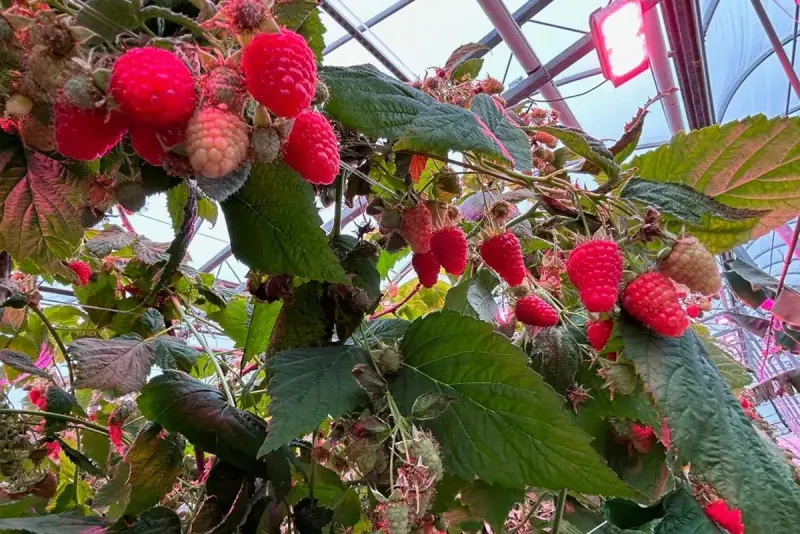
Lighting and climate are often priced as separate packages, but the crop experiences them as one system. A lighting schedule changes leaf temperature, air temperature, transpiration, screen operation, cooling demand, and the hours when moisture must be removed.
Use this with our Commercial Greenhouse Buying Guide topic cluster. For a full project, keep it beside Commercial Greenhouse Solutions so the structure, systems, and crop plan do not drift apart.
Where should the decision start?
- Use installed and coincident electrical power by zone, including drivers and distribution losses, rather than fixture count.
- Separate radiant energy reaching crop and surfaces from convective heat released to air and heat rejected outside by remote drivers.
- Model lighting together with solar gain, canopy transpiration, screens, vents, cooling, heating, and dehumidification for each operating hour.
- Commission power, light, temperature, humidity, and equipment response at representative dimming levels and crop stages.
Key facts worth checking
| Heat-load input | What to quantify | Evidence |
| Electrical | Fixture, driver, controls, and coincident zone power | Load and dimming schedule |
| Heat path | Radiant, convective, surface, crop, and remote-driver fractions | Equipment data and project assumptions |
| Climate | Solar overlap, transpiration, screens, vents, cooling, and drying | Hourly operating cases |
My project review method
I would map electrical power and heat release by lighting zone and hour, then test the combined solar, crop, screen, cooling, heating, and moisture case rather than handing fixture wattage to the climate designer as one undifferentiated number.
What I would inspect in the drawings
- I would overlay lighting zones on climate zones because a partial lighting schedule can create temperature and humidity gradients the main sensor never sees.
- Moving drivers outside changes where heat appears but does not erase electrical demand or cable losses.
- A winter lighting plan may reduce boiler demand while increasing moisture production, so heating and dehumidification cannot be sized independently.
What the buyer needs to fix in writing
| Buyer question | What to decide before requesting a price | Why it protects the project |
| Design basis | Electrical: Fixture, driver, controls, and coincident zone power | Load and dimming schedule |
| Difficult operating case | Heat path: Radiant, convective, surface, crop, and remote-driver fractions | Equipment data and project assumptions |
| Acceptance evidence | Climate: Solar overlap, transpiration, screens, vents, cooling, and drying | Hourly operating cases |
Evidence pack
Use the following evidence to challenge the design basis. A checklist item is useful only when the supplier attaches a value, drawing, calculation, test, or named responsibility.
Climate and project assumptions to confirm
- Confirm the project-specific lighting zone: Installed kW and dimming schedule. State who verifies it and when.
- Confirm the project-specific driver location: Inside bay or external service corridor. State who verifies it and when.
- Confirm the project-specific crop case: Full canopy under closed screen. State who verifies it and when.
Sources worth checking
Neutral source to keep beside the quote
CFGET project planning note
CFGET’s review would begin by reconciling fixture, driver, controls, and coincident zone power with load and dimming schedule, then marking every unresolved interface on the drawings and responsibility matrix.
Buyer risk signal
Pause the comparison when fixture count substitutes for kW; all heat is placed at one air node; or lighting and HVAC are accepted separately.
Ask the supplier for these exact specs
Require a completed response for Lighting zone, Driver location, Crop case, Acceptance, supported by the relevant drawings, calculations, settings, or test records. Do not accept “standard” or “as required” where a project value can be stated.
Project video: greenhouse climate control in practice
This field video shows a greenhouse climate system in use, which helps buyers check whether the quoted equipment matches the site conditions.
Where does grow-light electrical power appear as heat?
Build a zone load schedule with fixture input power at each dimming state, driver location, control gear, and realistic simultaneity. The useful light fraction still ends as heat after plants and surfaces absorb it, although its timing and location differ from direct convective heat.
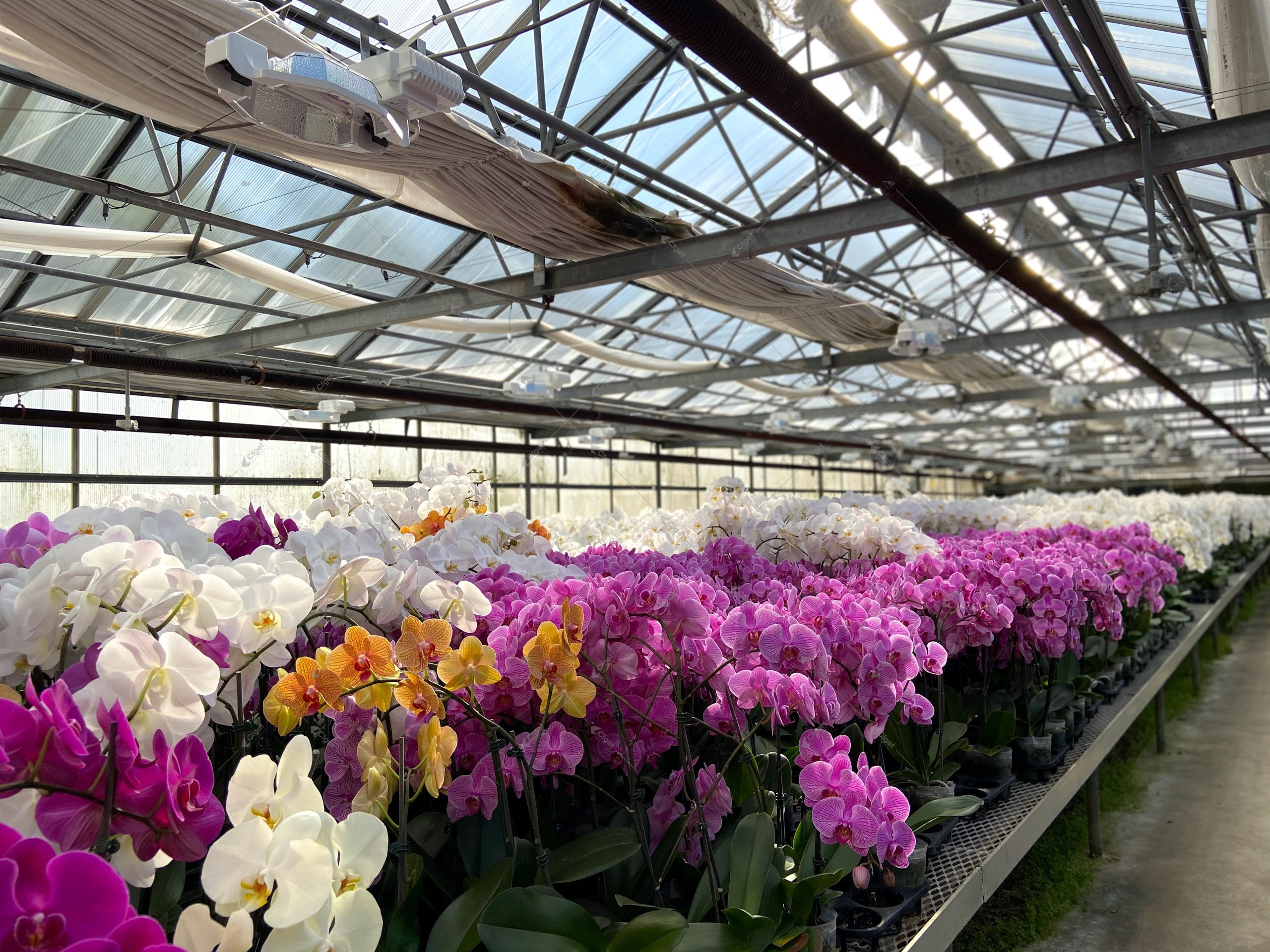
Radiant energy can warm leaves, floor, pipes, and structure before warming air. Convective heat affects air sooner. That distinction matters for leaf temperature, transpiration, sensor interpretation, and whether a roof-level unit removes heat from the crop zone.
Technical reference for this decision: Controlled Environment Agriculture: Understanding Grow….
How does the lighting schedule change cooling and humidity duty?
Place the lighting schedule on the local weather and crop calendar. Night or winter lighting may replace some heating demand, while shoulder-season or closed-screen operation can create an unexpected cooling and moisture-removal case.
More light can increase crop transpiration when other conditions permit. The dehumidification duty therefore includes both equipment heat and crop response. A model that adds fixture kW but leaves moisture load unchanged can miss the controlling case.
Technical reference for this decision: UConn commercial greenhouse design resource.
| Check | Good sign | Risk sign |
| Load | Coincident power and dimming schedule are stated | Fixture count substitutes for kW |
| Heat path | Drivers, radiation, air, crop, and surfaces are considered | All heat is placed at one air node |
| Verification | Power, light, temperature, and humidity are measured together | Lighting and HVAC are accepted separately |
What to request from a supplier
Ask for fixture and driver input data, zone and dimming schedule, driver location, electrical diversity, radiant and convective assumptions, crop response, hourly climate cases, screen and vent logic, cooling and dehumidification calculations, sensor map, and integrated commissioning tests.
What measurements should verify the combined light and climate design?
Commission selected zones at several dimming levels. Record real power, crop-plane light, air and leaf temperature, humidity or dew point, screen and vent position, cooling or heating output, and dehumidifier response.
Compare measured gradients with the design. Adjust zone grouping, air movement, setpoint offsets, and ramp rates where needed, but keep changes tied to crop-light targets rather than reducing climate complaints by sacrificing the lighting plan.
Technical reference for this decision: UMass greenhouse selection and building resource.
| RFQ field | Example | Why it matters |
| Lighting zone | Installed kW and dimming schedule | Sets coincident load |
| Driver location | Inside bay or external service corridor | Locates heat release |
| Crop case | Full canopy under closed screen | Sets moisture response |
| Acceptance | Power, PAR, temperature, and dew-point trend | Tests the integrated system |
Practical next step
Prepare one page covering Lighting zone, Driver location, Crop case, Acceptance. Add the project city, crop, greenhouse area, available utilities, relevant drawings, and the party responsible for local work. Send that evidence to [email protected] for a first technical-scope review.
Before you use this recommendation
- Treat the article as a decision and RFQ guide, not a final engineering design.
- Replace every example with project-specific climate, crop, utility, code, and operating data.
- Require calculations, drawings, test records, or named assumptions for every important supplier claim.
Research and review method
This guide combines the current search evidence listed above with a greenhouse project planning checklist: define the failure case, trace the interfaces, identify measurements, and turn unresolved assumptions into RFQ fields. CFGET observations are labeled as project-review judgment; local engineering and operating data remain the final authority.
Coraline Liao is CEO of CFGET. Her public LinkedIn profile describes her as a Greenhouse Technical Director with more than 15 years in the greenhouse industry, focused on customized climate-control and greenhouse solutions. Her published technical topics include greenhouse structures, climate control, light management, hydroponics, and fertigation. Her article reviews begin with the crop, climate, site, project scope, installation boundaries, and operating constraints. Technical recommendations should be adapted to local climate data, crop plans, budgets, and professional engineering review before implementation.
Professional profile: Coraline Liao on LinkedIn
Company details
CFGET: Founded in 1996, CFGET designs, manufactures, and delivers greenhouse systems and smart farming solutions from its own factory in Sichuan, China.
Address: NO 108, South Area Chengdu Modern Industrial Park, Sichuan, China
Email: [email protected]
About the company: https://cfgreenway.com/about/
Company profile: GreenWay on LinkedIn
Technical videos: Greenhouse project channel on YouTube
Where this fits in the greenhouse buying cluster
Start with the hub, then open the system or crop pages that match your decision.
- Commercial Greenhouse Buying Guide
- Commercial Greenhouse Solutions
- Greenhouse Climate Control
- Greenhouse Humidity Control
- Smart Greenhouse Control
- Light Deprivation Greenhouses
- Greenhouse Light Management
- Greenhouse Project Cases