Greenhouse irrigation filters should be sized from emitter protection, measured source-water solids, peak operating flow, acceptable pressure loss, and the water and pressure available for cleaning. Nominal mesh and pipe diameter alone do not define a reliable filter station.
*By Coraline Liao, CEO, CFGET | Updated: September 8, 2026*
*Reviewed by CFGET Project Planning Team*
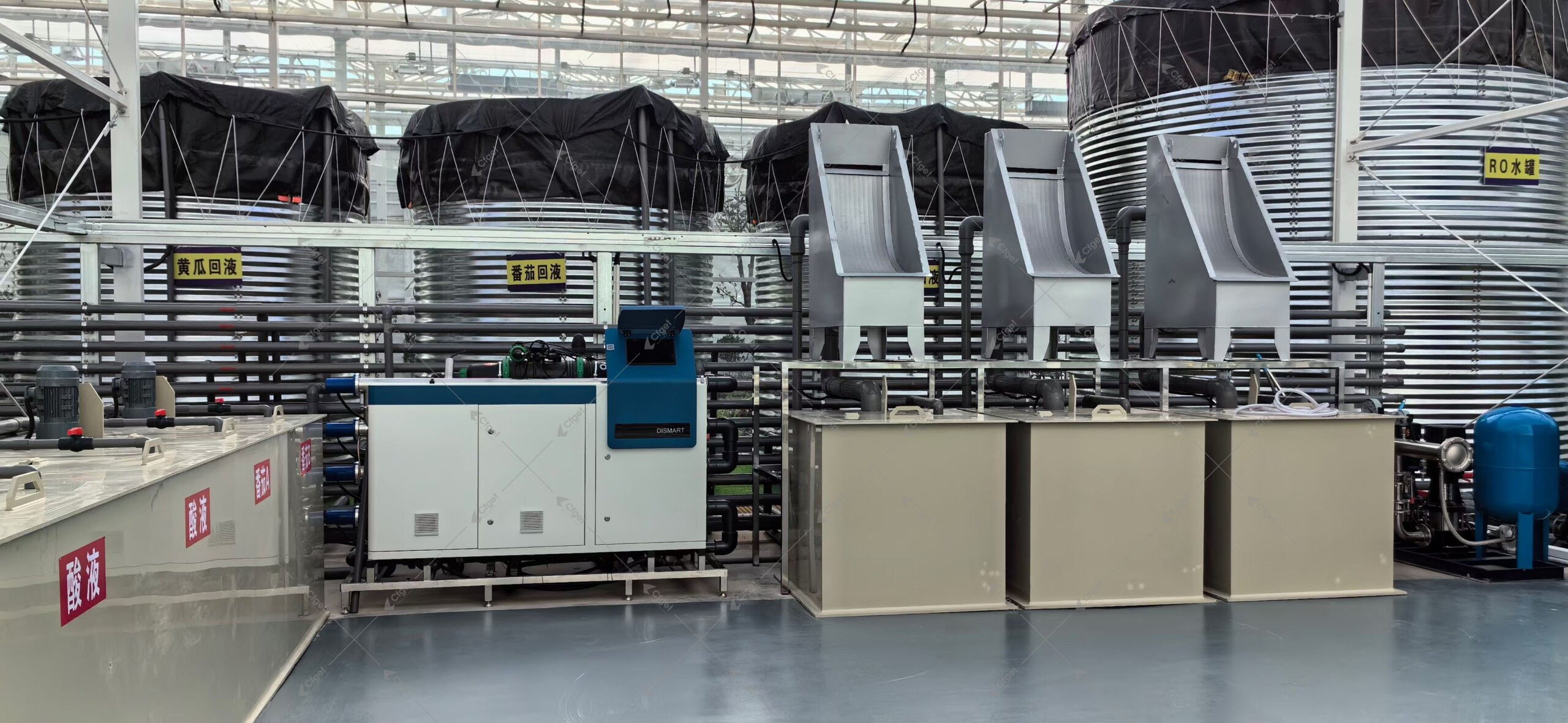
A filter station can pass its first leak test and still let a crop down weeks later. The usual gap is not pipe diameter; it is a design that never reconciled emitter protection, changing source water, dirty-filter pressure loss, and the flow required to clean the filters.
Use this with our Commercial Greenhouse Buying Guide topic cluster. For a full project, keep it beside Commercial Greenhouse Solutions so the structure, systems, and crop plan do not drift apart.
What matters before a supplier quotes?
- Match filtration rating to the emitter manufacturer’s requirement and the actual particle shape and load in the source water.
- Use peak simultaneous irrigation, dosing, flushing, and filter-cleaning cases rather than average daily flow.
- Confirm clean and dirty pressure loss, backwash flow, backwash pressure, waste route, and whether irrigation continues during cleaning.
- Provide differential-pressure monitoring, manual isolation, sampling points, safe bypass control, spare elements, and a commissioning particle check.
Key facts worth checking
| Filter input | Value to establish | Evidence |
| Water | Particle load, algae, organics, sand, iron, and variability | Representative analysis and site observation |
| Hydraulics | Peak process flow and allowable clean/dirty loss | Pump and network calculation |
| Cleaning | Backwash flow, pressure, duration, frequency, and disposal | Control sequence and measured test |
The order I would check the project
I would follow the worst water and peak hydraulic case through pretreatment, filter area, pressure loss, automatic cleaning, waste discharge, alarm handling, and continued irrigation, then compare measured post-filter water with emitter requirements.
Details I would challenge in the offer
- I would ask for a water sample after seasonal disturbance or tank cleaning because a calm-day sample can understate the solids duty.
- Automatic backwash can fail even with a large filter if the source pump cannot provide cleaning pressure while zones are operating.
- The filtration station should protect dosing and emitters without sending concentrated backwash water into floors, foundations, or untreated reuse tanks.
Buyer checks before price comparison
| Buyer question | What to decide before requesting a price | Why it protects the project |
| Design basis | Water: Particle load, algae, organics, sand, iron, and variability | Representative analysis and site observation |
| Difficult operating case | Hydraulics: Peak process flow and allowable clean/dirty loss | Pump and network calculation |
| Acceptance evidence | Cleaning: Backwash flow, pressure, duration, frequency, and disposal | Control sequence and measured test |
Evidence pack
Use the following evidence to challenge the design basis. A checklist item is useful only when the supplier attaches a value, drawing, calculation, test, or named responsibility.
Climate and project assumptions to confirm
- Confirm the project-specific water source: Pond plus seasonal turbidity range. State who verifies it and when.
- Confirm the project-specific emitter: Manufacturer filtration limit and passage. State who verifies it and when.
- Confirm the project-specific peak case: Largest simultaneous zones plus cleaning. State who verifies it and when.
Sources worth checking
Neutral source to keep beside the quote
CFGET project planning note
CFGET’s review would begin by reconciling particle load, algae, organics, sand, iron, and variability with representative analysis and site observation, then marking every unresolved interface on the drawings and responsibility matrix.
Buyer risk signal
Pause the comparison when mesh is chosen from crop area; only clean-filter flow is shown; or acceptance is a leak check.
Ask the supplier for these exact specs
Require a completed response for Water source, Emitter, Peak case, Acceptance, supported by the relevant drawings, calculations, settings, or test records. Do not accept “standard” or “as required” where a project value can be stated.
Project video: greenhouse irrigation and growing equipment
This field video shows greenhouse production equipment in use, which helps buyers connect the quote with daily operation.
What must the filter remove before water reaches the emitter?
Start with the most sensitive downstream component. Drippers, valves, injectors, UV systems, and membranes may need different protection. Screen or disc rating must be considered with particle shape, compressibility, biological growth, and the manufacturer’s emitter guidance.
Characterize wells, canals, ponds, rainwater, storage tanks, and recirculated drain separately. Their solids can change after storms, algae blooms, maintenance, or mixing, so the design should state the difficult water case.
Technical reference for this decision: Protecting Your Water System with a Good Filter.
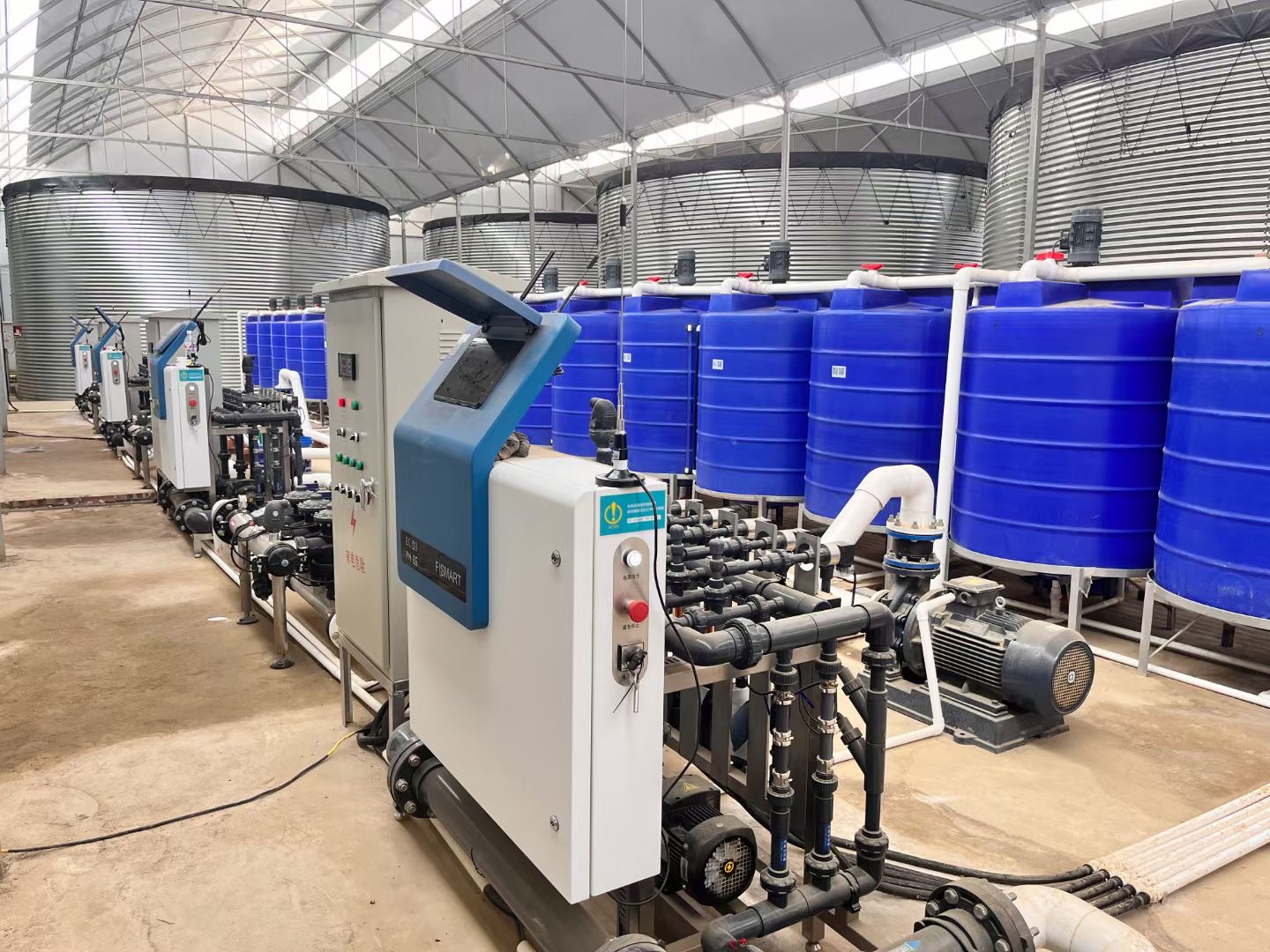
How do peak flow and backwash duty set the filter station size?
Calculate pressure loss through clean and dirty filters at peak flow. Add valves, meters, manifolds, elevation, and the longest route. Then calculate the backwash case: required flow and pressure, simultaneous irrigation demand, and whether another filter keeps the process online.
A bank sized for nominal flow may short-cycle if filter area is too small for the solids load. Conversely, oversizing without good flow distribution can leave elements unevenly loaded. The manifold and control valves matter as much as the filter label.
Technical reference for this decision: UConn commercial greenhouse design resource.
| Check | Good sign | Risk sign |
| Selection | Rating follows emitter and water evidence | Mesh is chosen from crop area |
| Hydraulics | Dirty loss and backwash duty are calculated | Only clean-filter flow is shown |
| Proof | Pressure and cleaning tests are recorded | Acceptance is a leak check |
What to request from a supplier
Ask for water analysis, particle and biological assumptions, emitter filtration requirement, peak-flow calculation, clean and dirty pressure loss, filter area, manifold layout, backwash flow and pressure, waste route, control sequence, instruments, redundancy, consumables, spares, and acceptance forms.
Which pressure and water-quality tests prove performance?
Commission by recording upstream and downstream pressure at several flows, triggering differential-pressure and timed cleaning, measuring backwash flow, and checking the waste route. Take samples before and after filtration where practical.
Keep baseline pressure loss, cleaning frequency, inspection findings, and replacement criteria. Rising backwash frequency can indicate source-water change, failed pretreatment, biological growth, or damaged elements rather than a need to change the alarm blindly.
Technical reference for this decision: UMass greenhouse selection and building resource.
| RFQ field | Example | Why it matters |
| Water source | Pond plus seasonal turbidity range | Sets solids duty |
| Emitter | Manufacturer filtration limit and passage | Sets protection target |
| Peak case | Largest simultaneous zones plus cleaning | Sets hydraulic capacity |
| Acceptance | Pressure-loss and backwash-flow test | Proves installed operation |
Practical next step
Prepare one page covering Water source, Emitter, Peak case, Acceptance. Add the project city, crop, greenhouse area, available utilities, relevant drawings, and the party responsible for local work. Send that evidence to [email protected] for a first technical-scope review.
Before you use this recommendation
- Treat the article as a decision and RFQ guide, not a final engineering design.
- Replace every example with project-specific climate, crop, utility, code, and operating data.
- Require calculations, drawings, test records, or named assumptions for every important supplier claim.
How these recommendations were assembled
This guide combines the current search evidence listed above with a greenhouse project planning checklist: define the failure case, trace the interfaces, identify measurements, and turn unresolved assumptions into RFQ fields. CFGET observations are labeled as project-review judgment; local engineering and operating data remain the final authority.
Coraline Liao is CEO of CFGET. Her public LinkedIn profile describes her as a Greenhouse Technical Director with more than 15 years in the greenhouse industry, focused on customized climate-control and greenhouse solutions. Her published technical topics include greenhouse structures, climate control, light management, hydroponics, and fertigation. Her article reviews begin with the crop, climate, site, project scope, installation boundaries, and operating constraints. Technical recommendations should be adapted to local climate data, crop plans, budgets, and professional engineering review before implementation.
Professional profile: Coraline Liao on LinkedIn
Company details
CFGET: Founded in 1996, CFGET designs, manufactures, and delivers greenhouse systems and smart farming solutions from its own factory in Sichuan, China.
Address: NO 108, South Area Chengdu Modern Industrial Park, Sichuan, China
Email: [email protected]
About the company: https://cfgreenway.com/about/
Company profile: GreenWay on LinkedIn
Technical videos: Greenhouse project channel on YouTube
Where this fits in the greenhouse buying cluster
Start with the hub, then open the system or crop pages that match your decision.
- Commercial Greenhouse Buying Guide
- Commercial Greenhouse Solutions
- Greenhouse Irrigation and Fertilization
- Greenhouse Hydroponics
- Greenhouse Growing Systems
- Greenhouse Project Cases