A field-first greenhouse site review covering land, survey, drainage, soil, climate, utilities, logistics and construction evidence.
CFGET original buyer tool
Commercial Greenhouse Site Due Diligence Workbook
Free editable Excel workbook with 6 working sheets. No email is required. Save a controlled project copy before the team begins entering evidence.
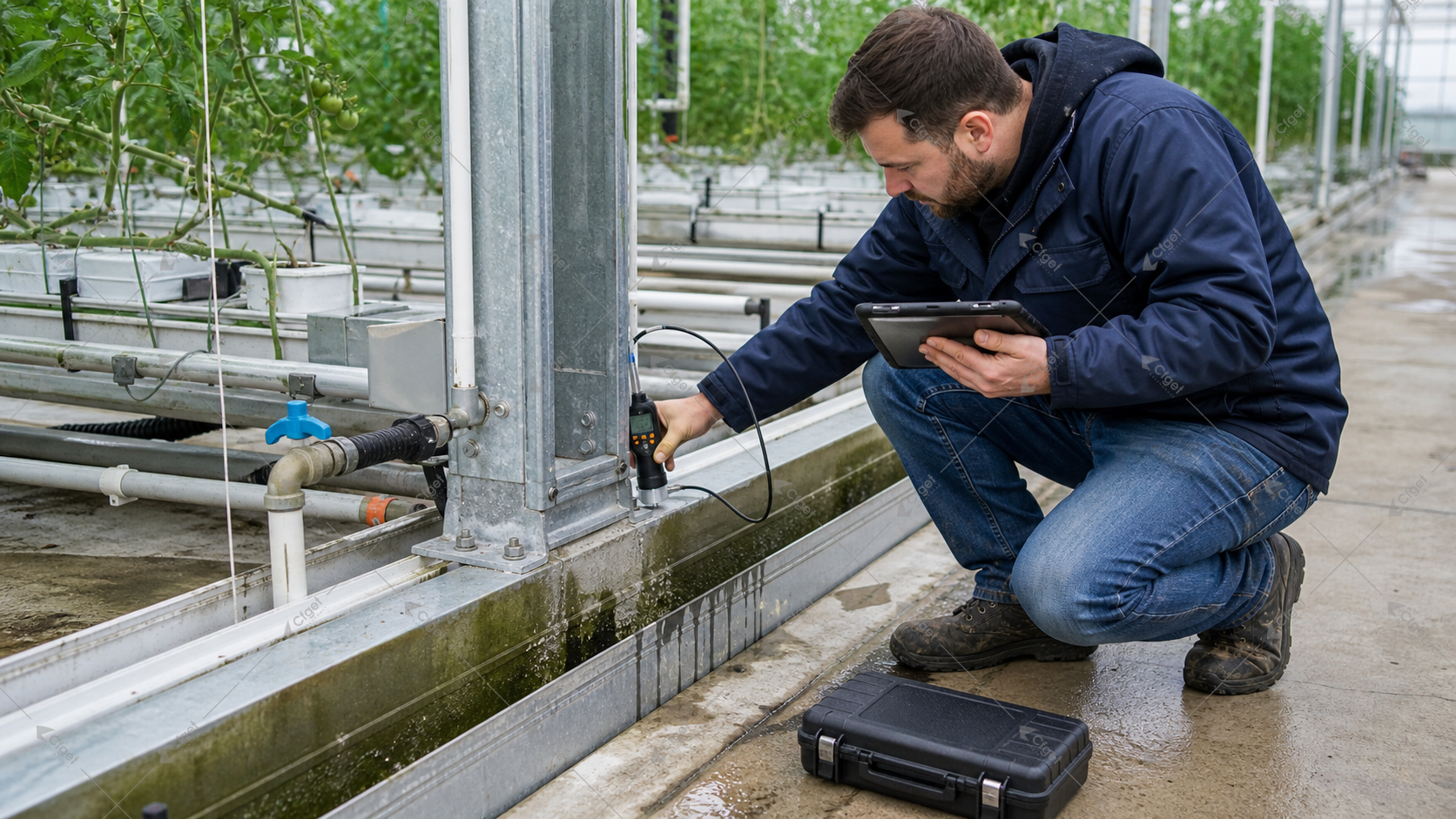
A flat parcel beside a road can still be a difficult greenhouse site. Water may cross it after a storm. The electrical connection point may sit on the wrong boundary. A container may reach the village but not make the final turn. None of these problems appears in a supplier’s structure drawing.
Site due diligence turns a promising location into a controlled design basis. It should happen before the greenhouse grid, finished floor level and foundation concept become expensive to change.
Walk the water before placing the greenhouse
Start with levels and runoff. Trace water entering the parcel, moving across it and leaving it. Ask about past flooding, but do not rely on memory alone. Obtain the applicable authority information, a topographic survey and a drainage concept. Roof water, process water and emergency overflow need routes that remain useful after roads and packing areas are built.
A dry-day walk is not enough where seasonal rain is material. Record wet-weather evidence when practical. If that cannot be done before the decision, mark the limitation and assign the follow-up rather than describing drainage as “good.”
Keep structural inputs traceable
“Designed for local wind” is not a structural basis. Ask the local engineer for the governing code and edition, risk category, basic wind speed, exposure, topography and enclosure assumptions. Where relevant, include snow, drift, rain-on-snow, seismic, hail and corrosion conditions.
The geotechnical report should address bearing, settlement, groundwater and uplift. The foundation drawing must then use the same column grid, levels and load reactions as the greenhouse design. A mismatch between those documents is an interface problem, even when both documents look professional.
Verify utilities at the connection point
| Utility | Field evidence | Decision risk |
|---|---|---|
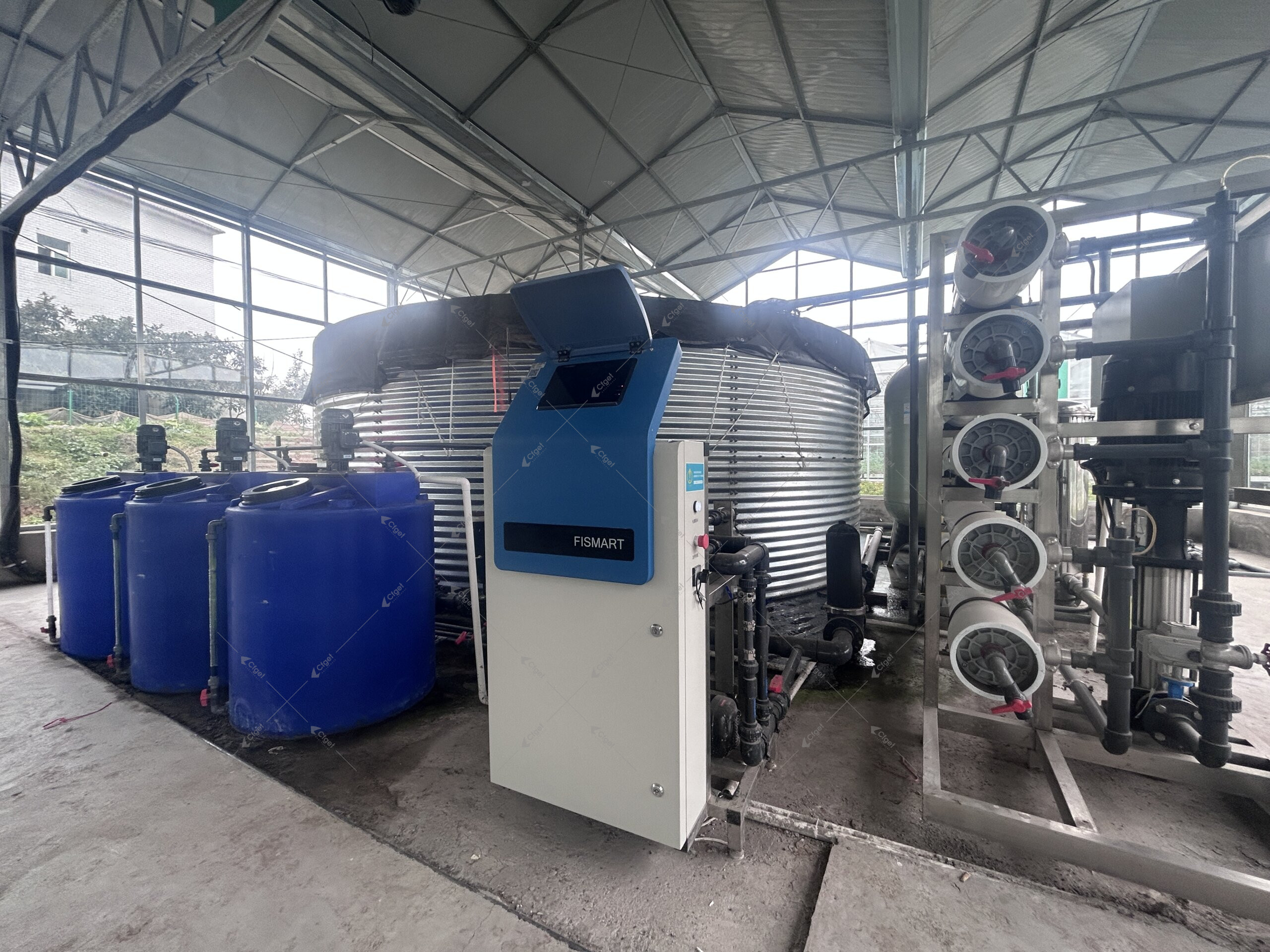
| Water | Witnessed flow, pressure, recovery, seasonal history and laboratory sample | Storage, treatment or production capacity is based on a nameplate claim |
| Power | Utility letter, voltage, phase, frequency, capacity, route and energization date | Equipment arrives before the permanent supply |
| Fuel or heat | Delivered cost, storage approval, route and winter reliability | A heating concept cannot be operated economically or legally |
| Data | On-site coverage test and alarm communication plan | Remote alarms fail when staff are away |
Use the workbook during the site walk
The Site Basis sheet records the survey, geotechnical report, local professionals and accepted weather source. The Field Survey contains 36 checks. Use Not checked until evidence exists; use Concern or Critical when the evidence shows a problem.
The Tests and Documents sheet tracks 14 items, including title review, zoning, survey, geotechnical work, flood evidence, water tests and the utility letter. A received report is not automatically accepted. Record who reviewed it and whether it is suitable for design.
Move material findings to the Risk Register. Describe the condition, consequence, treatment, owner and due date. “Drainage risk” is too vague. “Existing ditch overtops the planned east access during the wet season” gives the team something to investigate and fix.
What should stop layout release?
Hold the layout when the owner cannot confirm boundaries, setbacks, survey datum, flood route, soil basis or critical utility locations. Hold the foundation release when structural reactions and geotechnical inputs are not coordinated. Hold procurement when the route survey shows that the specified package or crane cannot reach the site.
Not every concern stops the project. Some change the layout, budget or schedule. The point is to make that effect visible before drawings are frozen.
Keep the completed workbook with the project’s controlled documents. You can also review the CFGET download library, greenhouse climate control options, irrigation and fertilization systems, and the commissioning and handover guide.
A CFGET project view to use with the workbook
Common Mistakes When Building Greenhouses gives the project team a visual reference. Watch for interfaces, access, equipment position and work sequence, then record project-specific findings in the workbook rather than treating the clip as a design specification.
Who prepared this workbook?
Frequently asked questions
Can a supplier site visit replace a survey?
No. A supplier visit is useful for coordination, but the project still needs controlled survey, legal, geotechnical, utility and authority evidence from the responsible parties.
What water test is needed before greenhouse design?
Use an agricultural irrigation-water laboratory report with a traceable sample point and date. Interpret pH, EC, alkalinity, major ions, hardness and solids for the selected crop and equipment.
Should future expansion be included in the first site review?
Yes. Protect future bays, roads, drainage routes and utility capacity even when only the first phase is funded.