By Coraline Liao, CEO, CFGET | Reviewed by CFGET Project Planning Team | Updated: July 24, 2026
The climate computer can show a comfortable average while flowers remain wet in a cold corner and edge-row containers overheat in direct sun. One sensor near the service aisle cannot represent leaf temperature, root conditions and condensation across a commercial block.
Blueberry climate control is a measurement problem before it becomes an equipment problem.
This guide explains how to:
- place measurements where crop decisions occur;
- use relative humidity, dew point and VPD without confusing their roles;
- connect light and airflow to temperature and water demand;
- write stage-specific control priorities instead of one permanent setpoint.
The climate-based blueberry greenhouse design guide covers structure and equipment sizing. This page is about operating and diagnosing the built environment.
Start with the plant, not the wall sensor
Air temperature affects the plant, but it is not the plant’s temperature. Sunlit leaves and fruit may be warmer than the measured air. A wet surface can be cooler. A container on a reflective floor may experience a different thermal load from the central canopy.
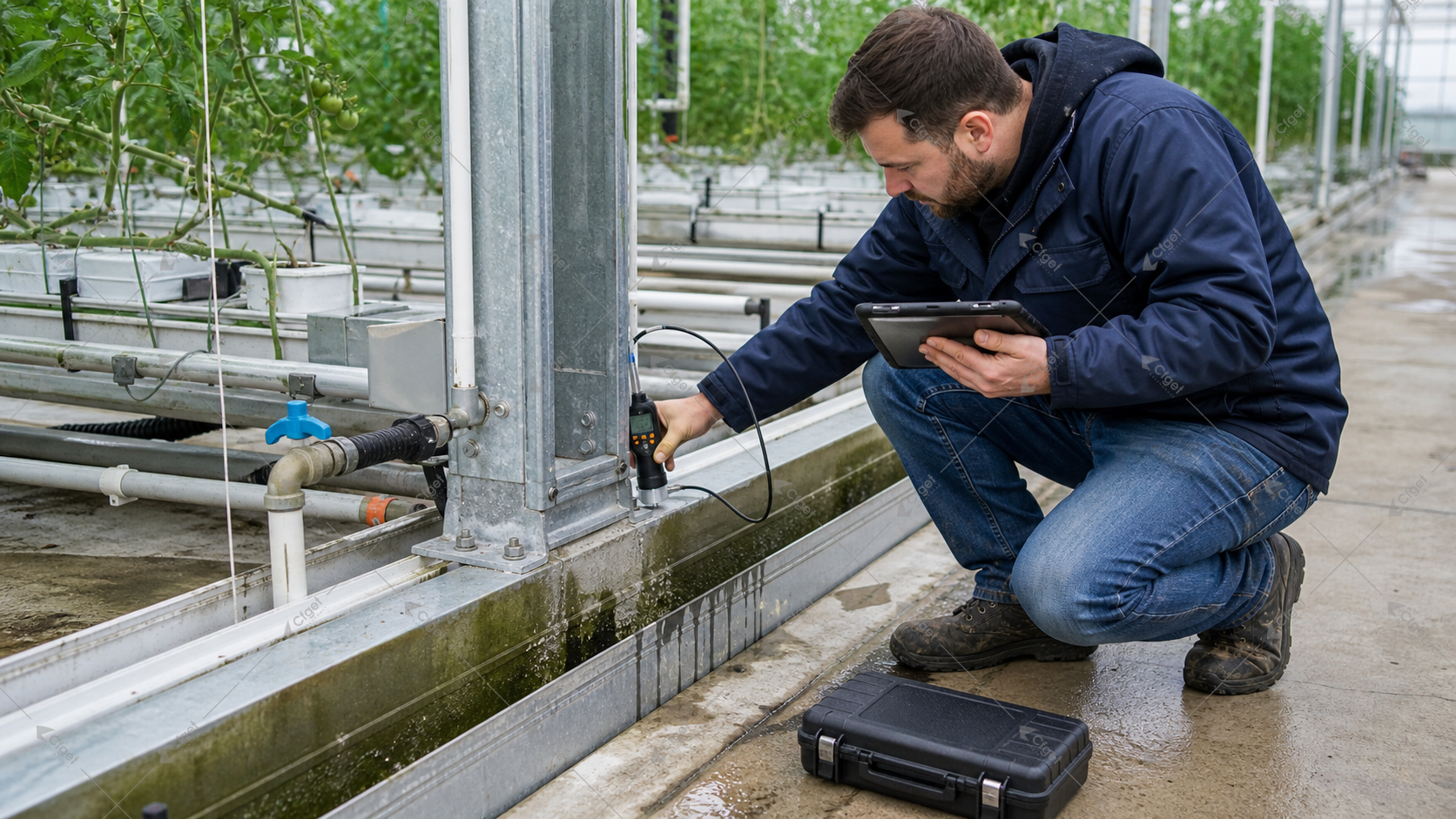
At minimum, build a sensor map that represents:
- crop height at centre and edge positions;
- the expected hot zone and cold zone;
- near-inlet and far-from-inlet conditions for active cooling;
- root-zone temperature in representative containers;
- outdoor temperature, humidity, radiation, wind and rainfall;
- a movable verification sensor for spot checks.
Shield and ventilate air sensors correctly. Keep maintenance and calibration records. A precise controller cannot repair a sensor that is sun-heated, wet or badly placed.
The complete blueberry greenhouse planning guide explains why the crop calendar and market goal need to be defined before these measurements receive control priorities.
Relative humidity describes the air, dew point warns about surfaces
Relative humidity changes when air temperature changes, even if the amount of water vapour stays the same. Dew point is the temperature at which that air becomes saturated. A leaf, fruit, pipe or cover surface below the dew point can collect condensation.
Penn State Extension explains this relationship in Psychrometric Chart Use. Its psychrometric principles are general; the acceptable crop conditions still depend on stage and production context.
Use the two measurements differently:
| Measurement | Useful question |
| Relative humidity | How close is air to saturation at its current temperature? |
| Dew point | Which surfaces may become wet if they cool? |
| Surface temperature | Is this flower, leaf, fruit or cover below the dew point? |
| Duration | How long did the risky condition persist? |
A brief humid period and an entire night of wet flowers are not the same event. Trend duration and location alongside the daily maximum RH.
Beginner takeaway
Condensation starts on a surface, not on the climate-screen display. Compare dew point with the coldest relevant surface in the crop zone.
VPD is a decision aid, not a crop recipe
Vapour pressure deficit, or VPD, expresses the difference between how much moisture the air could hold at a temperature and how much it currently holds. It can help interpret drying demand.
Its value depends on which temperature is used. Air-temperature VPD is convenient. Leaf-temperature VPD may better represent the immediate leaf-air relationship, but it requires a reliable leaf-temperature measurement.
Do not turn one VPD range into a universal blueberry target. Cultivar, crop stage, leaf area, radiation, root-zone water, air movement and acclimation all matter.
Use VPD to ask better questions:
- Did atmospheric demand rise faster than the root zone could supply water?
- Did shade reduce leaf temperature enough to change demand?
- Did a cold surface create condensation even when average VPD looked acceptable?
- Are edge rows operating under a different leaf-air gradient?
- Did a vent or heating change dry the crop without causing excessive demand?
Professional grower note
Store the underlying temperature and RH readings alongside the calculated VPD. When a result looks wrong, the team needs to inspect the inputs and sensor positions.
Light drives both crop opportunity and stress
Blueberries need light for photosynthesis and fruit development, but greenhouse decisions should use measured crop-level light rather than cover-transmission claims alone.
Map:
- daily light through key crop stages;
- shade from structure, gutters, curtains and neighbouring houses;
- high-radiation periods that coincide with heat or root stress;
- seasonal cover ageing and contamination;
- differences between top, middle and edge canopy positions.
Shade can lower solar load and leaf temperature. It also reduces photosynthetic light. The right control decision depends on whether the current limitation is heat, water supply, light or fruit quality.
The CFGET light-management solution is relevant when the measured problem calls for shade or screening. It should not replace a site light survey.
Airflow has a direction and a crop-level result
An operating fan does not prove useful airflow through the crop. Visualize or measure movement at flower and canopy height.
Look for:
- stagnant pockets behind screens, partitions or dense foliage;
- strong jets that dry one row and miss another;
- short-circuit flow between inlet and outlet;
- blocked paths after the crop fills the row;
- cold air settling near the floor;
- condensation on still nights;
- wind effects on natural vent performance.
The user-identified CFGET ventilation greenhouse video shows large openings or screened zones, container rows, overhead components and a suspended display. These are direct visual observations. The video does not state air speed, vent area, screen resistance or control setpoints.
Use smoke tests or appropriate air-speed instruments where safe and permitted. Repeat with different vent, fan and screen states.
Write priorities by crop stage
One control sequence should not govern dormancy, bloom and harvest in the same way.
| Crop stage | Climate question to prioritize | Linked observation |
| Dormancy or winter management | Is the intended chill and cold-protection strategy being delivered? | Protected and outdoor temperature history |
| Bud break | Is rapid warming advancing the crop into frost risk? | Bud stage, heat accumulation, forecast |
| Bloom | Are flowers dry enough, undamaged and accessible to pollinators? | Flower-zone climate, condensation, visits |
| Fruit set and expansion | Can roots and canopy meet atmospheric demand? | Leaf temperature, light, root moisture, drainage |
| Ripening and harvest | Are heat and wetness reducing fruit condition? | Fruit-zone temperature, condensation duration |
| Postharvest growth | Is the plant rebuilding without excessive late growth? | Canopy, root and nutrient records |
The cultivar and chill guide defines the winter program. The pollination guide adds bloom service, and the crop calendar assigns observations to the team.
Use control actions in a sensible order
On a hot, bright afternoon
1. Check leaf and root-zone response, not air temperature alone.
2. Use shade according to the crop’s light and heat condition.
3. open vents within rain and wind limits.
4. maintain useful crop-level air movement.
5. operate active cooling only when outdoor conditions support it.
6. let irrigation respond to measured root-zone demand.
7. confirm that edge and far zones responded.
On a cold, humid night
1. Review whether late irrigation added avoidable moisture.
2. keep air moving through known cold pockets.
3. compare dew point with crop and cover surface temperatures.
4. use a justified heat-and-vent or dehumidification sequence.
5. avoid control moves that cool surfaces below dew point.
6. check the crop at dawn, when hidden condensation is often visible.
Cornell’s greenhouse guidance on Botrytis blight links condensation, sanitation, heating, ventilation and air circulation to disease management. It is greenhouse pathology guidance rather than a blueberry humidity prescription.
Diagnose the map, not the average
| Pattern | Likely system questions |
| Hot edge, normal centre | Solar exposure, external wind, container temperature, shade coverage |
| Wet flowers in one corner | Cold surface, stagnant air, sensor representation, local leakage |
| High demand after shade opens | Control timing, leaf temperature, irrigation response |
| Good climate reading, weak fruit set | Flower condition, pollination distribution, cultivar overlap |
| Condensation after heating stops | Surface cooling, dew point, curtain and vent sequence |
| Repeated alarm with no crop response | Sensor placement, calibration or alarm threshold |
Before buying equipment, test whether the problem is capacity, distribution, control sequence or measurement.
About this review
Coraline Liao, CEO of CFGET, reviewed this page with attention to sensor placement, control sequence and crop-level climate verification. Her public LinkedIn profile describes her as a Greenhouse Technical Director with more than 15 years in the greenhouse industry.
The CFGET Project Planning Team completed the technical review. Cited research, direct observations from CFGET’s Chengdu footage and professional interpretation are kept separate. Local crop advisers, laboratories, engineers and authorities must confirm decisions that depend on cultivar, site or regulation.
Project video: smart greenhouse control in use
This field video gives buyers a quick look at greenhouse automation before they compare controllers, motors, sensors, and service scope.
Frequently asked questions
What temperature should a blueberry greenhouse use?
There is no single setpoint for every cultivar and stage. Dormancy, bloom, fruit development and harvest have different priorities. Build settings from local cultivar guidance and measured plant response.
Is high humidity always harmful?
No. The risk depends on temperature, duration, condensation, crop stage, airflow and disease pressure. Persistent surface wetness is more informative than one RH peak.
Should a grower control VPD or relative humidity?
Use both as decision tools. VPD helps interpret drying demand, while RH and dew point help explain saturation and condensation. Keep temperature and surface observations beside them.
Where should greenhouse climate sensors be placed?
Use representative crop-height positions across expected hot, cold, edge and equipment-gradient zones. Add outdoor reference and periodic movable checks. Avoid direct sun, wetting and unrepresentative service areas.
Your next action
Create a seven-day climate map before changing setpoints:
1. label centre, edge, hot, cold, inlet and far positions;
2. verify air sensors and add representative root-zone measurements;
3. record leaf or fruit surface temperature during critical periods;
4. calculate dew point and retain raw temperature and RH data;
5. note shade, vent, fan, cooling, heating and irrigation states;
6. compare the map with flower, fruit and root observations;
7. change one control sequence and verify every zone again.
Use the evidence to define sensors, zones, alarms and control sequences in the blueberry greenhouse RFQ. CFGET’s climate-control systems should be selected against that written operating logic.