By Coraline Liao, CEO, CFGET | Reviewed by CFGET Project Planning Team | Updated: July 24, 2026
Two blueberry greenhouse quotations can carry the same area and cover type while describing very different projects. One includes local structural loads, screens, controls and commissioning. The other stops at steel and film. Comparing their totals would reward the missing scope.
A useful RFQ makes each supplier answer the same crop and engineering questions.
This checklist is the final step in the blueberry greenhouse planning guide. It does not replace technical design. It makes assumptions, exclusions and proof visible before a contract is signed.
Issue a design brief before requesting price
The first page should identify:
- owner and project location;
- site coordinates and elevation;
- planned construction and crop-start dates;
- intended structure area and expansion plan;
- blueberry cultivar group and plant source;
- soil, raised-bed or container production;
- winter state and target harvest window;
- the commercial loss or opportunity the project must address;
- applicable language, currency and commercial terms;
- local designer, agronomist and approving authority.
Leave an item marked `TBC` when it is unknown. Hidden uncertainty is more dangerous than an open question.
The blueberry greenhouse investment checklist should support the market, utility and owner-side assumptions.
Attach the crop calendar
Suppliers need to know when the crop is dormant, flowering, filling fruit and being harvested.
Provide:
- cultivar and pollination partners;
- chill model and winter strategy;
- expected bud break and bloom;
- pollinator method and service access;
- fruit-development and harvest period;
- pruning and canopy-management approach;
- crop-protection constraints;
- labour and maintenance windows.
If dates are preliminary, state the source and confidence. Do not ask the greenhouse supplier to invent the crop programme.
Use the cultivar and chill guide, pollination plan and stage-based crop calendar as supporting schedules.
State the structural design basis
Ask for a signed or traceable structural basis that includes:
| Required item | What a complete supplier answer should state |
| Design code and edition | Named standard, edition, local amendments and the party responsible for engineering approval |
| Importance or risk category | Selected category, reason for selection and any confirmation required from the local authority |
| Basic wind speed and exposure | Wind speed with units, averaging basis or return period, exposure category, topographic factor and data source |
| Enclosure and pressure assumptions | Open, enclosed or partially enclosed classification, pressure coefficients and assumed vent or door positions |
| Ground and roof snow loads | Ground and calculated roof loads, units, source and the factors used to convert between them |
| Drift and unbalanced snow | Load cases checked, affected roof zones and any operating or snow-removal assumptions |
| Seismic basis where applicable | Referenced standard, mapped hazard, site class, structural system and design parameters |
| Soil bearing and uplift assumptions | Allowable bearing value, geotechnical source and the resistance credited for uplift, sliding and overturning |
| Foundation type and owner inputs | Foundation and anchor concept, design reactions, required soil report and owner or civil-contractor responsibilities |
| Cover attachment and deflection limits | Cover system, fastener spacing, allowable deflection and load combinations used for checking |
| Bracing and connection standard | Bracing layout, member and connection standards, bolt or weld specifications and field inspection requirements |
| Storm position for vents and screens | Required open or closed position, wind threshold, interlock, manual override and power-failure position |
| Corrosion environment and coating | Exposure category, steel grade, galvanizing or coating specification, minimum thickness or mass and repair method |
| Design life and warranty boundary | Intended structural life, separate warranty periods, exclusions, maintenance duties and replaceable-component limits |
Local code, the approving authority and a qualified engineer govern the final design. UConn Extension’s greenhouse weather-event guidance shows why wind and snow assumptions cannot remain a catalogue footnote.
Give suppliers the same weather file and crop risks
Attach hourly weather where available and list the design events to solve:
- highest heat and radiation period;
- humid nights and condensation risk;
- frost during sensitive crop stages;
- extreme wind, snow, hail or rain;
- outdoor wet-bulb conditions for evaporative cooling;
- power, fuel or water interruptions;
- air quality, dust, salt or corrosion exposure where relevant.
Ask each supplier to return:
1. the design condition used;
2. the intended control response;
3. the calculation or simulation method;
4. expected limits;
5. backup mode after equipment failure.
The climate-based greenhouse design guide provides a risk table for this attachment.
Specify the root zone and water path
The RFQ should trace water from source to final discharge or reuse.
Source and treatment
- seasonal source capacity;
- complete laboratory water report;
- storage requirement and reserve;
- filtration and treatment objectives;
- reject-water route;
- treatment consumables and service interval;
- sampling points and validation method.
Penn State Extension’s irrigation-water guide explains why pH, alkalinity, salinity and specific ions belong in the same review.
Container and substrate
- internal container dimensions and outlets;
- support above floor or ground;
- substrate components and batch tolerances;
- physical and chemical test methods;
- expected use period;
- emitter number and placement;
- drainage collection or release.
Irrigation and dosing
- zone map and design flow;
- operating pressure range;
- emitter model and uniformity evidence;
- filter performance and alarm;
- injector range and stock channels;
- acid and fertilizer compatibility;
- flushing arrangement;
- feed and drainage pH and EC measurement;
- recirculation treatment and safeguards, if proposed.
The root-zone design and irrigation monitoring guides explain the crop-side acceptance checks.
Request climate-system performance with boundaries
Equipment lists should become testable statements.
| System | Exact specification to request |
| Roof and side vents | Gross and net free area, actuator, stages, screen effect, storm position |
| Insect screen | Mesh or aperture, material, clean pressure drop, access for cleaning |
| Shade screen | Material, location, measured shading property, drive and control sequence |
| Circulation fans | Model, layout, power, service access and crop-level verification method |
| Evaporative cooling | Design wet-bulb condition, pad or fog basis, water quality, distribution limit |
| Heating | Design temperature, heat-loss calculation, fuel, output, distribution and backup |
| Dehumidification | Moisture-removal basis, temperature condition, energy and condensate route |
| Sensors | Type, accuracy, location, calibration and replacement |
| Controller | Inputs, outputs, sequences, alarms, data retention and manual override |
| Power failure | Safe positions, backup supply, alarm route and operator response time |
Ask for the operating sequence in plain language. “Smart control included” does not explain what moves first on a hot afternoon or a cold humid night.
The CFGET climate-control and smart-control pages show available system families. The supplier response still needs project-specific capacities and logic.
Separate supply boundaries
Use a responsibility matrix with `Supplier`, `Owner`, `Local contractor` or `Excluded`.
Include:
- survey and geotechnical work;
- permits and engineering approval;
- earthworks and drainage;
- foundations and embedded parts;
- structure and covering;
- unloading, storage and lifting;
- mechanical and electrical installation;
- source-water connection;
- tanks, pumps and treatment;
- growing system and crop support;
- power, fuel and communications;
- packing and cold chain;
- testing and commissioning;
- training, manuals and spares;
- plant material and crop establishment;
- waste, reject water and final discharge.
Each row needs a deliverable, interface point and acceptance owner. “By buyer” is incomplete when neither side has defined the drawing, voltage, pressure or completion date.
Ask for drawings and proof before shipment
The document submittal list should include:
- site layout and levels;
- foundation loads and details;
- structural calculations;
- general arrangement and component schedule;
- vent, screen and shade layouts;
- hydraulic calculation and process diagram;
- irrigation zone and drainage drawing;
- electrical load list and single-line diagram;
- sensor and control-point schedule;
- control sequence and alarm matrix;
- installation method and quality checks;
- commissioning plan;
- operation and maintenance manuals;
- recommended spares.
Set review times and approval status. A drawing approved for manufacturing should be clearly distinguished from a preliminary sales layout.
Define acceptance tests before contract
Factory or pre-shipment checks
- component quantity and identification;
- certificates and material records where specified;
- control-panel inspection and software backup;
- motor, actuator and sensor documentation;
- packing list matched to installation sequence.
Site installation checks
- survey, levels, anchors and frame alignment;
- bolt torque or connection inspection as designed;
- covering and seal condition;
- vent, screen and door travel;
- pipe flushing and pressure test;
- electrical protection and earthing;
- drainage flow under a planned test.
Functional commissioning
- irrigation flow and pressure by zone;
- emitter output at representative positions;
- dosing and sensor calibration;
- alarm and communication tests;
- vent, shade, fan, cooling and heating sequence;
- safe state during power or sensor failure;
- operator training using real scenarios;
- punch-list closure and handover records.
Crop start-up verification
- container, substrate and emitter wetting test;
- fixed feed and drainage sample points;
- climate sensor map;
- pollination access and bloom plan;
- scouting route and hygiene boundary;
- first-week review of alarms, flow, drainage and crop response.
Do not make “successful commissioning” depend on a future yield promise. Construction and system acceptance need tests that can be completed at handover. Crop performance belongs in a separate operating and agronomic review.
Check the commercial offer line by line
Require:
- equipment price by system;
- freight, insurance, duties and taxes;
- installation and supervision days;
- travel, accommodation and local support;
- commissioning and training;
- software, licences or subscriptions;
- warranty start, exclusions and response;
- spare parts package;
- payment milestones tied to deliverables;
- change-order method;
- schedule and delay assumptions;
- offer validity and currency basis.
The lowest total may be the quote with the largest owner scope. Normalize every offer against the responsibility matrix before ranking it.
Buyer risk signal
Pause when a proposal lists a greenhouse model and price but cannot return the structural basis, water process, operating sequence and installation boundary.
Use the CFGET footage as an RFQ prompt, not a specification
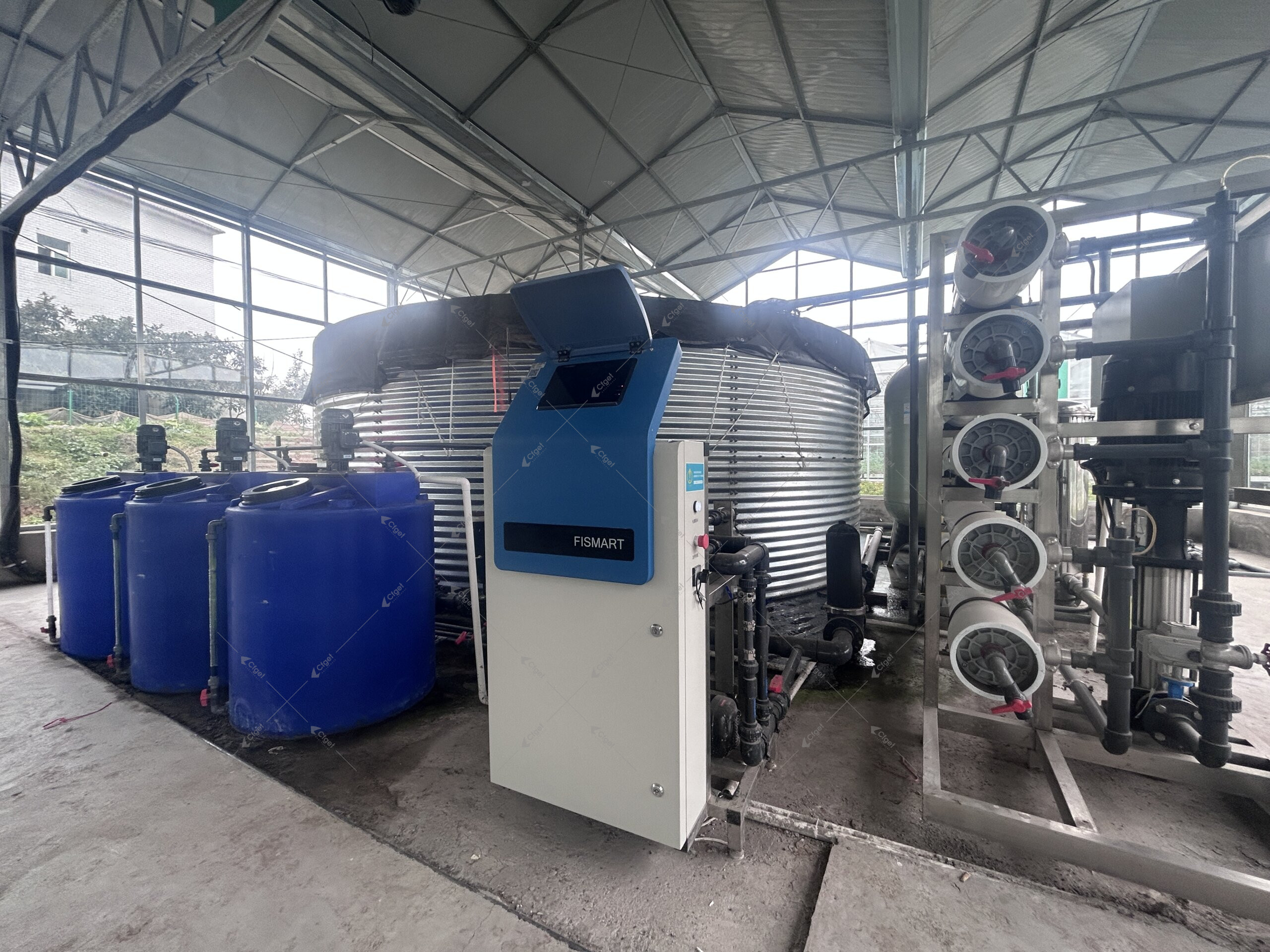
The CFGET Farm aerial video shows several protected structure forms at the Chengdu site. The local site video shows containers, side openings, pressure vessels, pumps, dosing hardware and tanks. These views help a buyer ask which systems belong in the project.
They do not specify capacity, model, performance or cost. Your RFQ must supply those boundaries.
The Chengdu video-based case review lists the visible facts and the evidence that remains missing.
About this review
Coraline Liao, CEO of CFGET, reviewed this page with attention to supplier scope, calculations, commissioning and owner responsibility. Her public LinkedIn profile describes her as a Greenhouse Technical Director with more than 15 years in the greenhouse industry.
The CFGET Project Planning Team completed the technical review. Cited research, direct observations from CFGET’s Chengdu footage and professional interpretation are kept separate. Local crop advisers, laboratories, engineers and authorities must confirm decisions that depend on cultivar, site or regulation.
Project video: supplier scope and project delivery
This field video helps buyers connect the supplier quote with packing, delivery, installation responsibility, and after sales support.
Frequently asked questions
What information does a greenhouse supplier need first?
Send location, hourly climate, local loads, cultivar and crop calendar, water analysis, growing system, target harvest period, area, utilities and scope boundary.
Should an RFQ specify brand names?
Specify performance, compatibility, service and evidence first. A brand may be required for owner standards or local support, but it should not hide the function the equipment must deliver.
How can buyers compare two greenhouse quotes?
Normalize design assumptions, equipment capacity, owner scope, freight, installation, commissioning, documentation and commercial terms. Record every exclusion and unresolved item.
When should plants be ordered?
Plant timing depends on verified source, cultivar programme, quarantine rules, construction schedule and completed crop-start systems. Do not let plants arrive before water, root zone, climate and staff are ready.
Your next action
Build a controlled RFQ package:
1. complete the design brief and crop calendar;
2. attach site, weather, load and water records;
3. issue one responsibility matrix to every supplier;
4. request calculations, drawings, operating sequences and exclusions;
5. define factory, site and crop-start tests;
6. normalize the returned offers;
7. close critical assumptions before contract.
For a CFGET proposal, send this package through the project contact form. A useful first response should identify missing design inputs and confirm the next evidence needed, rather than rush to a final equipment price.