By Coraline Liao, CEO, CFGET | Reviewed by CFGET Project Planning Team | Updated: July 24, 2026
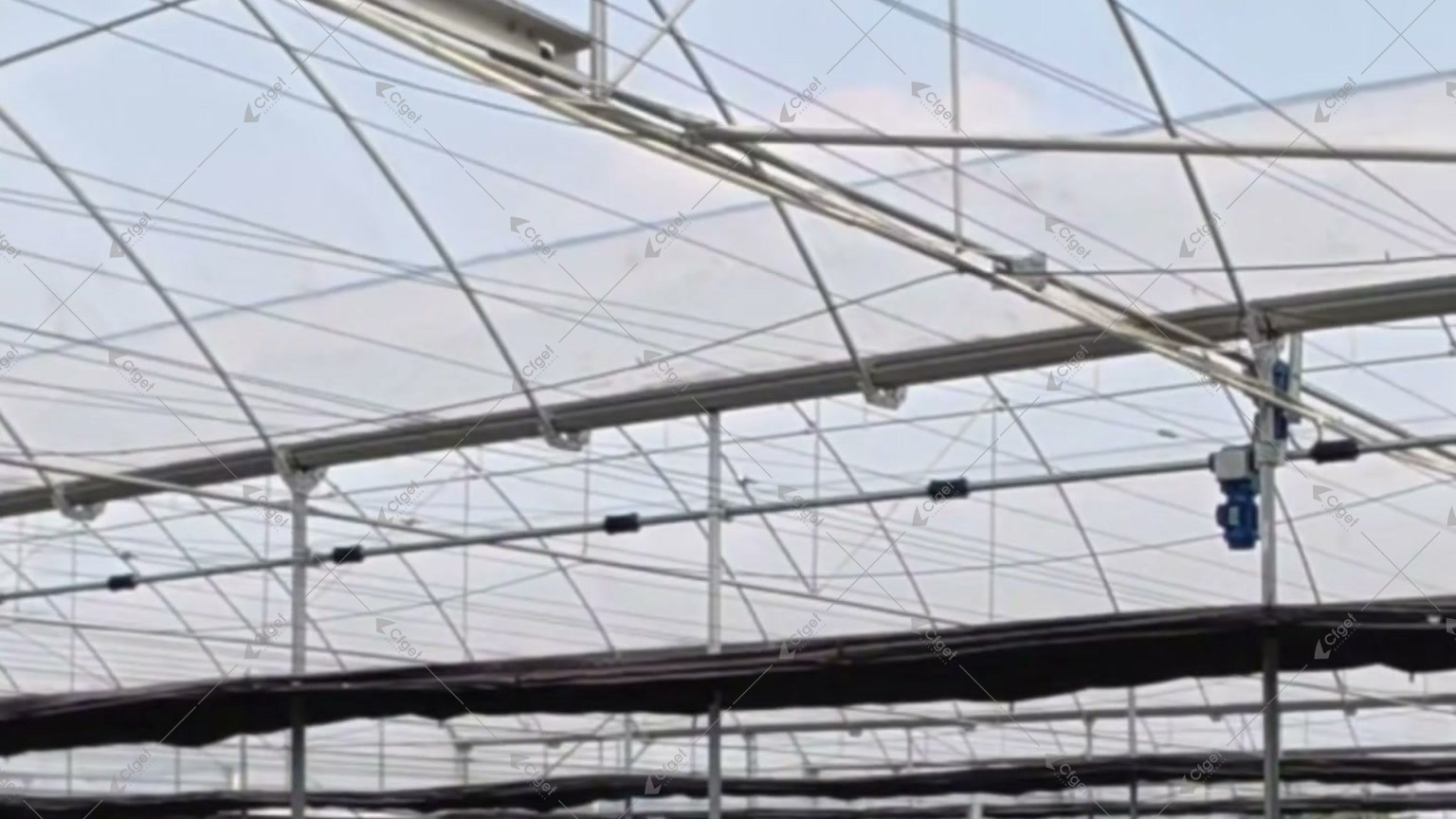
A blueberry greenhouse can protect flowers, move a harvest window, keep rain off ripe fruit or create an acidic root zone where the native soil will not cooperate. It can also trap heat, complicate pollination and turn a short irrigation failure into a row of damaged plants.
That mixed picture is the right place to begin. Protected production is a tool, not a yield guarantee.
This guide helps you decide whether the tool fits the job. By the end, you should be able to:
- state the commercial or weather constraint that protection must solve;
- identify the crop decisions that belong ahead of greenhouse design;
- separate a root-zone problem from an air-climate problem;
- prepare the first version of a project brief.
Start with the loss you are trying to prevent
The most useful first question is not “Which greenhouse is best for blueberries?” Ask what currently keeps saleable fruit out of the packhouse.
Perhaps bloom is exposed to frost. Rain may split or soften fruit near harvest. A hot afternoon may raise fruit and root-zone temperatures faster than the crop can recover. The farm may have alkaline soil or water. In another project, production is already sound and the main objective is an earlier market window.
Write the constraint in a form that can be tested:
| Weak project goal | Useful project goal |
| Grow more blueberries | Reduce rain exposure during the final four weeks before harvest |
| Control the climate | Keep flower and fruit conditions within the cultivar plan during the local frost-risk period |
| Use a modern growing system | Isolate roots from unsuitable soil and measure water, pH, EC and drainage by irrigation zone |
| Sell off season | Test whether the expected price premium pays for the added structure, labour and energy |
If the project team cannot describe the loss, it cannot tell whether a rain shelter, high tunnel, ventilated film house or more tightly controlled greenhouse is proportionate.
The separate blueberry protection-system comparison provides a go/no-go method for that choice.
Check the crop before the structure
Blueberries are woody perennials. A poor decision can remain in the production block for years, so the plant program needs more attention than a seasonal crop plan.
Cultivar, chill and harvest timing
Each cultivar has its own chilling, heat, flowering and harvest behaviour. Chill is also more complicated than counting every hour below one temperature. UF/IFAS explains that warm periods can affect accumulated chill and that the Dynamic Model handles fluctuating winter temperatures differently from the simple Chilling Hours Model. The same source warns that protected production can change dormancy, flowering, fruit set and pest management. See UF/IFAS guidance on blueberry dormancy and freeze protection.
A sound cultivar brief records:
- cultivar and plant supplier;
- chill requirement and the model used;
- deciduous or evergreen management;
- expected bloom and harvest dates at this site;
- pollination partners and bloom overlap;
- known heat, cold and disease sensitivities;
- intended market window.
Do not ask the greenhouse supplier to select a cultivar from a global list. A qualified local crop adviser or breeder should confirm that part of the plan. The greenhouse team can then test whether the structure supports it. The cultivar and chill planning guide explains the handoff.
Pollination is part of production capacity
Flowers inside a protected structure still need viable pollen and effective transfer. Protection may alter bee access, flight behaviour, bloom timing and pesticide choices.
Research for southern highbush blueberries in Florida found that mixed cultivars with overlapping bloom can improve cross-pollination, but management compatibility also matters. Cultivars in one block still need workable irrigation, spray and harvest schedules. That is useful logic, not a universal planting recipe. Read the regional context in the UF/IFAS cross-pollination guide.
Your plan should name who supplies pollinators, where colonies or alternative pollinators can be placed, how vents and screens affect movement, and how crop protection will be managed during bloom. The focused blueberry greenhouse pollination guide turns these questions into a bloom plan.
Treat the root zone as a separate climate
Blueberry roots are fine and shallow. Oregon State University describes how drip irrigation can concentrate roots near emitters and how rooting patterns respond to the position of water in the soil or substrate. See How blueberry plants develop and grow.
In containers, the margin for error narrows. The crop depends on a limited volume of substrate, reliable emitters and free drainage. Irrigation water can gradually change root-zone chemistry even when its pH looks acceptable on the day of testing.
Four measurements answer different questions:
| Measurement | What it tells you | Common mistake |
| Source-water alkalinity | How strongly the water can push the substrate pH upward | Looking at water pH alone |
| Irrigation EC | The dissolved salt load entering the root zone | Treating EC as a fertilizer recipe |
| Drainage pH and EC | How the root zone is changing over time | Sampling one easy container and calling it representative |
| Applied and drained volume | Whether irrigation reaches the crop evenly and leaves enough air in the substrate | Using runtime without checking emitter output |
Penn State’s guide to interpreting irrigation water tests explains why pH and alkalinity are not interchangeable. For a container example, UF/IFAS recommends regular leachate pH and EC monitoring in southern highbush systems and describes short, frequent irrigation events. Its numeric ranges apply to that production context and need local validation. See Introduction to Southern Highbush Blueberry Cultivation in Containers.
The container and substrate guide covers physical design. The irrigation and fertigation guide covers monitoring and adjustment.
Design for local extremes, not a generic blueberry setpoint
One temperature table cannot design a greenhouse for coastal humidity, desert radiation, a cold continental winter and a windy highland site.
Build a design-weather sheet before choosing equipment:
1. Record hourly outdoor temperature and relative humidity for representative and extreme periods.
2. Add solar radiation, wind direction and speed, rainfall intensity, snow load and any hail exposure.
3. Mark the crop stages present during each risk period.
4. Define what passive protection can achieve.
5. Size active systems for the remaining gap.
The greenhouse specification then follows the dominant risk. A hot, humid site may need generous vent area and air movement before evaporative cooling is considered. A dry site may make evaporative cooling more useful, but water quality and root-zone temperature still matter. Cold sites need a load calculation, condensation strategy and a realistic energy budget. Wind and snow loads belong to local code and a qualified structural engineer.
The blueberry greenhouse design guide covers structure and equipment. Daily plant-climate decisions belong in the temperature, humidity and VPD guide.
Beginner takeaway
Air temperature is only one part of greenhouse climate. Root moisture, root temperature, humidity, leaf wetness, light and pollinator activity can fail while the main temperature sensor still looks normal.
Professional grower note
Ask the designer to show sensor locations and control sequences rather than equipment capacity alone. One sensor above the crop cannot describe a long row, a leeward corner or the root zone.
Decide what the operator must be able to see
Automation has value when it helps the team notice drift and act before damage spreads. It does not remove the need for crop walks or calibration.
A practical first monitoring list includes:
- outdoor weather and solar radiation;
- air temperature and relative humidity at crop height in more than one zone;
- substrate moisture or weight in representative containers;
- source, irrigation and drainage pH and EC;
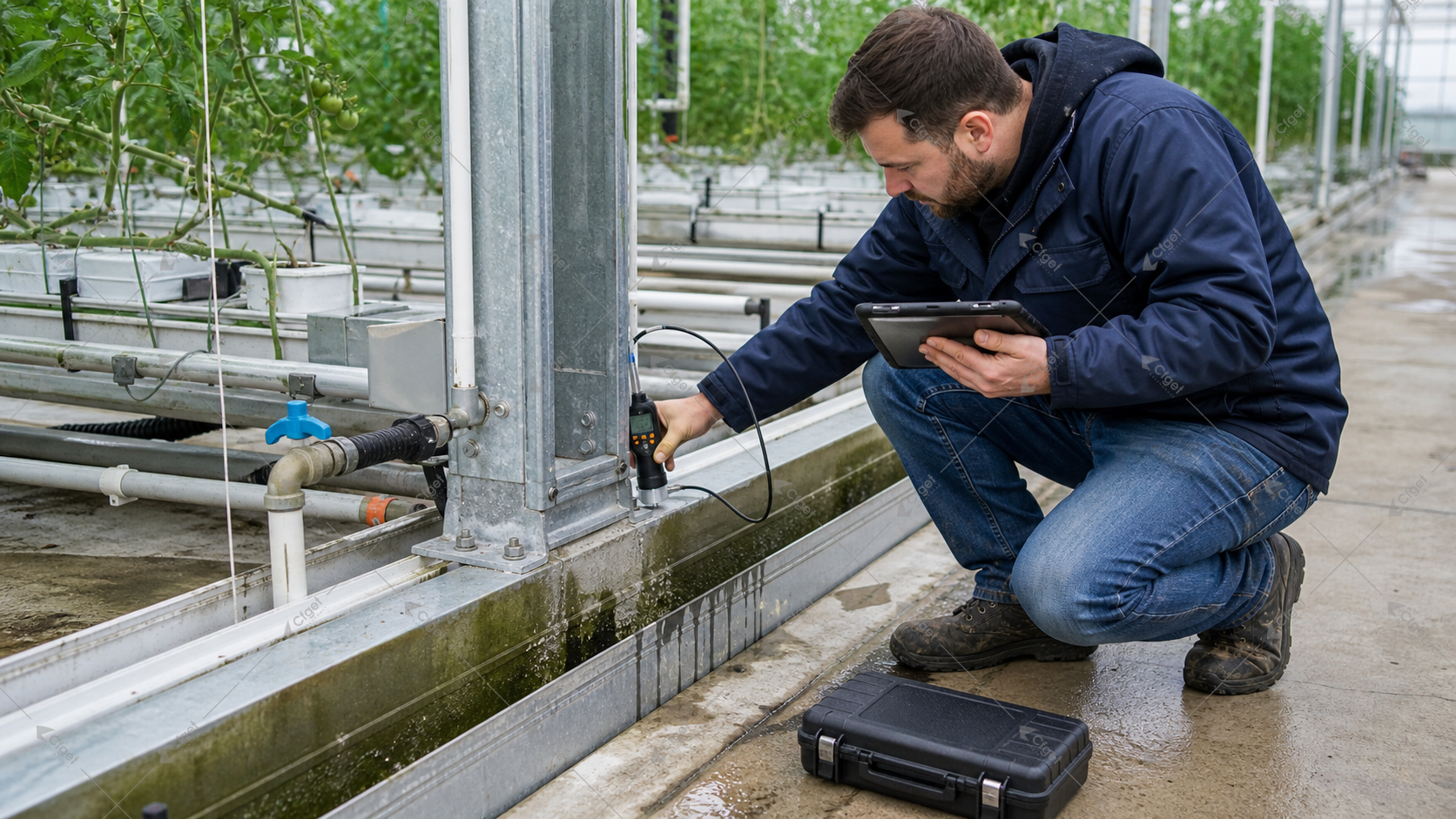
- irrigation pressure and flow by zone;
- tank levels, filter pressure difference and dosing alarms;
- bloom, fruit stage, pest observations and harvest records.
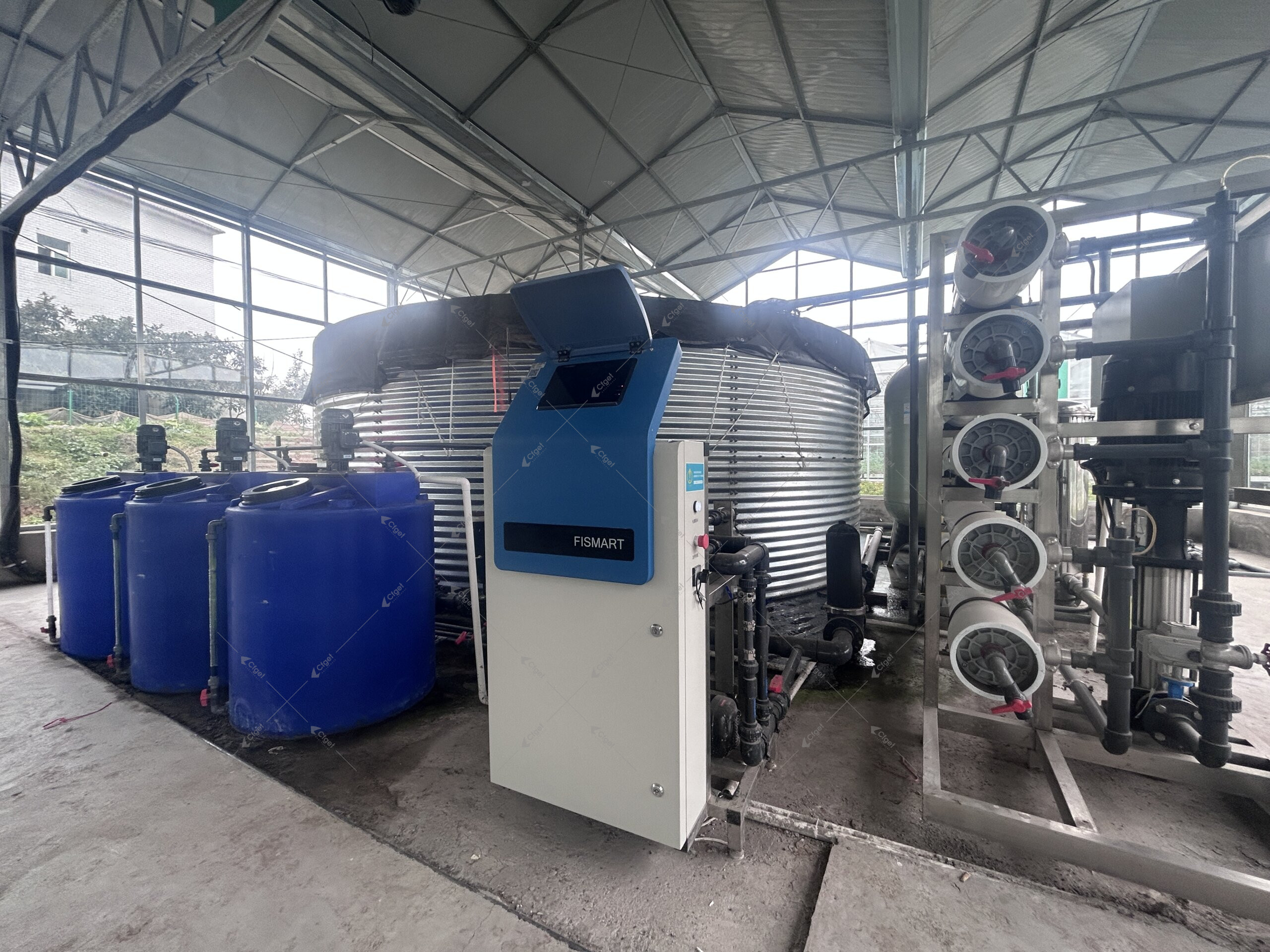
CFGET’s Chengdu blueberry video shows why system integration matters. Container-grown plants sit inside arched film houses, while a separate utility area contains treatment vessels, dosing lines, tanks, pumps and controls. The footage does not prove capacities or performance. It does show that the crop row and utility room are parts of the same production system. The video-based Chengdu case review separates visible facts from engineering interpretation.
The short CFGET Farm aerial video provides wider site context and shows several protected structures. It does not identify the crop in each house, so it should be read as a view of the farm layout rather than proof of blueberry performance.
Test the commercial model before requesting a price
Protected production should create a measurable advantage. Put that advantage into a monthly model rather than an annual yield promise.
At minimum, include:
- plant and substrate establishment;
- production ramp-up by plant age;
- saleable pack-out, not gross fruit weight;
- price by week or market window;
- labour for pruning, pollination support, scouting, harvest and packing;
- water treatment, fertilizer and crop protection;
- energy, repairs, cover replacement and spare parts;
- cooling, packing, storage and freight;
- financing and working capital;
- weak-price and delayed-production scenarios.
A simple decision equation keeps the discussion honest:
`protected-production value = added saleable revenue + avoided loss – added capital and operating cost`
Every term needs a source. Historical farm records, buyer agreements and local utility tariffs are stronger than a supplier’s generic return estimate. The blueberry greenhouse investment checklist provides the full due-diligence sequence.
Build the first project brief
You do not need a finished design to ask for useful technical input. You do need enough information to stop suppliers from making different hidden assumptions.
Prepare:
| Section | Minimum information |
| Site | Coordinates, elevation, layout, drainage, access and expansion limits |
| Weather | Hourly data, extreme events and applicable structural code |
| Crop | Cultivar, plant age, crop calendar, pollination plan and target harvest window |
| Root zone | Soil or container system, substrate, drainage and replacement access |
| Water | Laboratory analysis, source capacity, storage and discharge constraints |
| Utilities | Electrical supply, fuel, backup power and communications |
| Operation | Labour, technical skills, service response and spare parts plan |
| Commercial | Market, quality standard, packing route and monthly price assumptions |
| Scope | Owner work, supplier work, installation, commissioning and training |
Use the blueberry greenhouse RFQ checklist before comparing offers. For relevant CFGET system references, review the commercial fruit greenhouse range, growing systems, irrigation and fertilization and climate-control solutions.
About this review
Coraline Liao, CEO of CFGET, reviewed this page with attention to crop fit, project sequence and the hand-off from biology to engineering. Her public LinkedIn profile describes her as a Greenhouse Technical Director with more than 15 years in the greenhouse industry.
The CFGET Project Planning Team completed the technical review. Cited research, direct observations from CFGET’s Chengdu footage and professional interpretation are kept separate. Local crop advisers, laboratories, engineers and authorities must confirm decisions that depend on cultivar, site or regulation.
Project video: greenhouse project reference
This field video gives a quick project visual to read beside the specifications and RFQ checklist.
Frequently asked questions
Do blueberries need a fully controlled greenhouse?
No. A rain shelter or ventilated tunnel may be enough when the job is rain exclusion or modest season extension. Full control only makes sense when its added precision has a defensible crop and market value.
Can a greenhouse replace chilling?
It can alter the winter environment, but it does not remove cultivar biology. The team must match cultivar, chill model, leaf status and temperature strategy. Artificial chilling is an engineering and operating cost, not a shortcut to ignore cultivar fit.
Is container production safer than native soil?
It gives the operator more control over the root zone, especially where soil is unsuitable. It also creates dependence on irrigation uniformity, drainage and water chemistry. A blocked emitter can become serious quickly.
Which number should I request first from a supplier?
Request the design assumptions before the price: local loads, crop calendar, ventilation logic, water analysis, irrigation zones and scope boundaries. The price only becomes comparable after those items match.
Your next action
Before selecting a greenhouse type, complete these four tasks:
1. Write one sentence describing the loss or market window the structure must address.
2. Confirm the cultivar, chilling model and bloom period with a qualified local adviser.
3. Test the source water for pH, alkalinity, EC and relevant ions.
4. Assemble hourly weather data and a rough monthly cash-flow model.
CFGET can review the structure and system boundary once those inputs exist. Send the project location, crop plan, water report, target harvest period and proposed growing system through the project contact form. The first review should expose missing assumptions, not rush to a equipment price.