A climate-design input workbook that connects site weather, crop targets, greenhouse geometry, control logic and acceptance evidence.
CFGET original buyer tool
Greenhouse Climate Design Input Workbook
Free editable Excel workbook with 7 working sheets. No email is required. Save a controlled project copy before the team begins entering evidence.
“Keep the greenhouse at 24掳C” sounds precise until the design team asks when, under which outdoor condition, at what crop stage and for how long. The answer changes the ventilation area, cooling concept, heating load, screen strategy and control sequence.
A climate design input is not a shopping list. It is the agreed boundary that lets engineers and suppliers test whether a proposed system fits the crop and site.
Use coincident weather, not isolated extremes
Cooling potential depends on temperature and moisture at the same time. Natural ventilation depends on wind as well as thermal buoyancy. Condensation risk depends on surface temperature and dew point. Monthly averages hide the hours that drive equipment and crop risk.
NASA POWER can help with early screening in many locations, while accepted local stations or climatic design sources may be better for final work. Record the coordinates, elevation, period, missing-data treatment and responsible reviewer. Do not quietly mix sources.
Write crop targets by stage
A seedling zone, flowering crop and mature canopy do not create the same load. Record the day and night temperature target, allowed excursion, humidity or VPD approach, light strategy, CO2 strategy and estimated crop moisture load for each operating stage.
VPD, or vapor pressure deficit, describes the drying force of the air. It can help growers discuss crop response, but it does not remove the need to check humidity, dew point and leaf or surface temperatures. Choose the metric with the grower and state how it will be measured.
Check system interactions
| Decision | Input that changes it | Common mistake |
|---|---|---|
| Roof and side vents | Net opening, screens, wind, geometry and crop obstruction | Using gross vent dimensions as effective area |
| Pad and fan cooling | Coincident wet-bulb condition, water quality and airflow path | Quoting an ideal temperature drop without site conditions |
| Heating | Envelope loss, leakage, crop target, distribution and redundancy | Selecting boiler capacity without checking uniform delivery |
| Screens | Light, heat, airflow, gaps and condensation strategy | Treating one screen as a single-purpose component |
| Controls | Sensor location, averaging, sequence, failure mode and alarms | Good equipment following poor measurements |
Set acceptance conditions before procurement
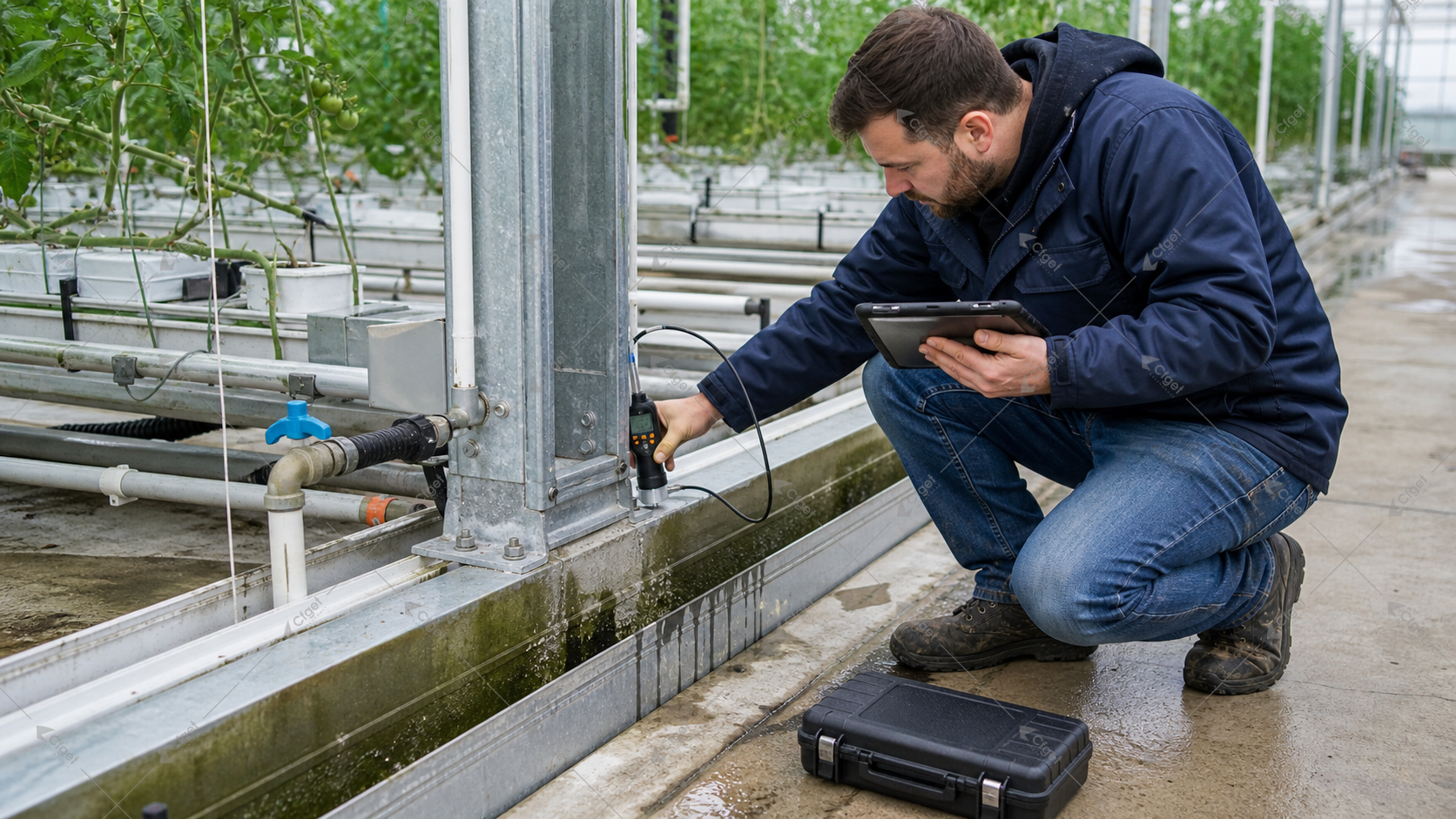
A test result is useful only when the team knows the outdoor condition, crop or simulated load, operating mode, sensor location, instrument and duration. If the weather window is unavailable at handover, define a seasonal test and its effect on payment or acceptance.
The workbook separates Design Inputs, Indoor Targets, System Decisions and Controls and Acceptance. It does not calculate final equipment capacity. It gives the qualified designer a controlled input set and gives the buyer a way to spot assumptions that still need approval.
A field note for buyers
Ask where each climate sensor will be mounted and what happens when it fails. A drawing that shows one sensor symbol can hide a large operational question. The crop experiences zones, sunlight, wet surfaces and air paths, not the average shown on a dashboard.
Keep the completed workbook with the project’s controlled documents. You can also review the CFGET download library, greenhouse climate control options, irrigation and fertilization systems, and the commissioning and handover guide.
A CFGET project view to use with the workbook
Quick Guide to Ventilation Systems gives the project team a visual reference. Watch for interfaces, access, equipment position and work sequence, then record project-specific findings in the workbook rather than treating the clip as a design specification.
Who prepared this workbook?
Frequently asked questions
Can monthly climate data be used for greenhouse design?
It is useful for orientation, but hourly and coincident conditions are normally needed for ventilation, cooling, heating, condensation and control decisions.
Is one temperature and humidity target enough?
Usually not. Targets and allowable excursions change with crop, cultivar, stage, light, irrigation and production objective.
Does the workbook size the equipment?
No. It controls inputs, decisions and evidence. A qualified project designer should perform the calculations and select equipment for the accepted project basis.